Tag

indulgeatrestore

Browsing

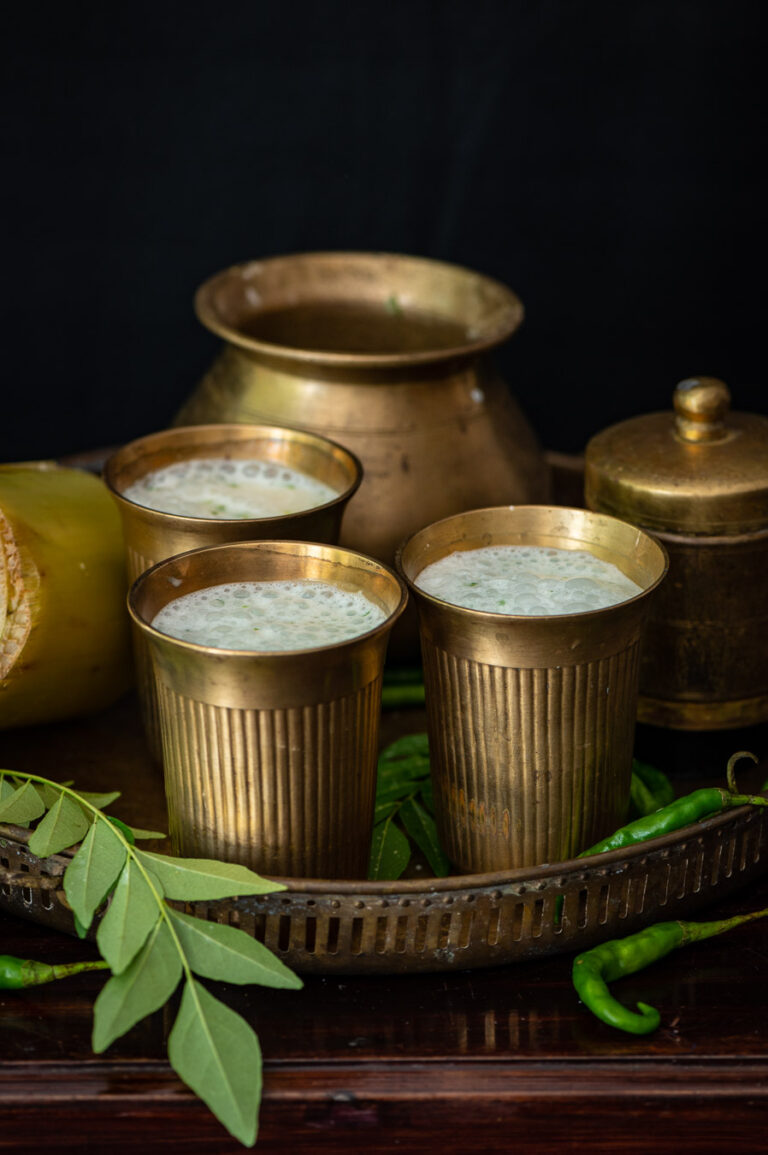
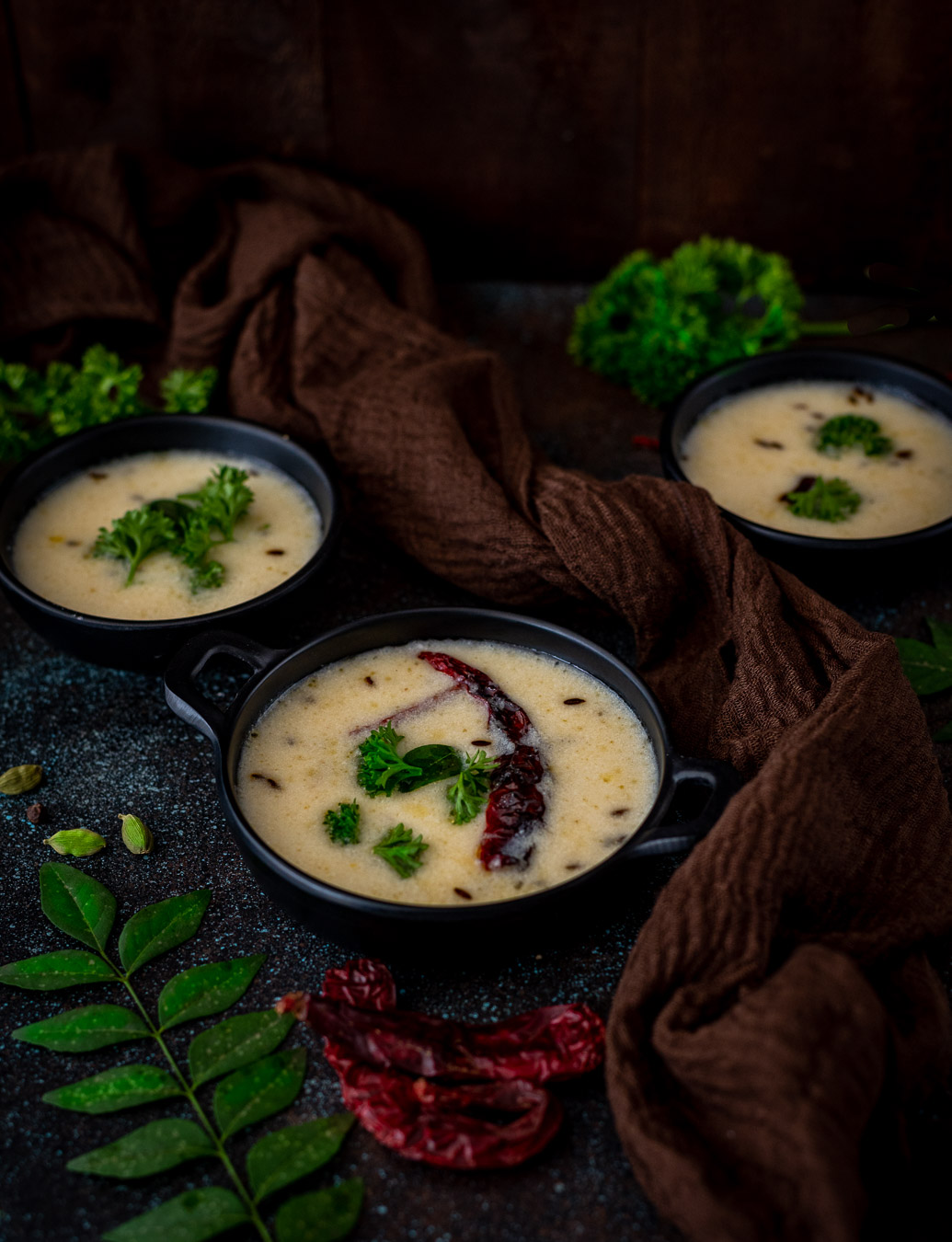
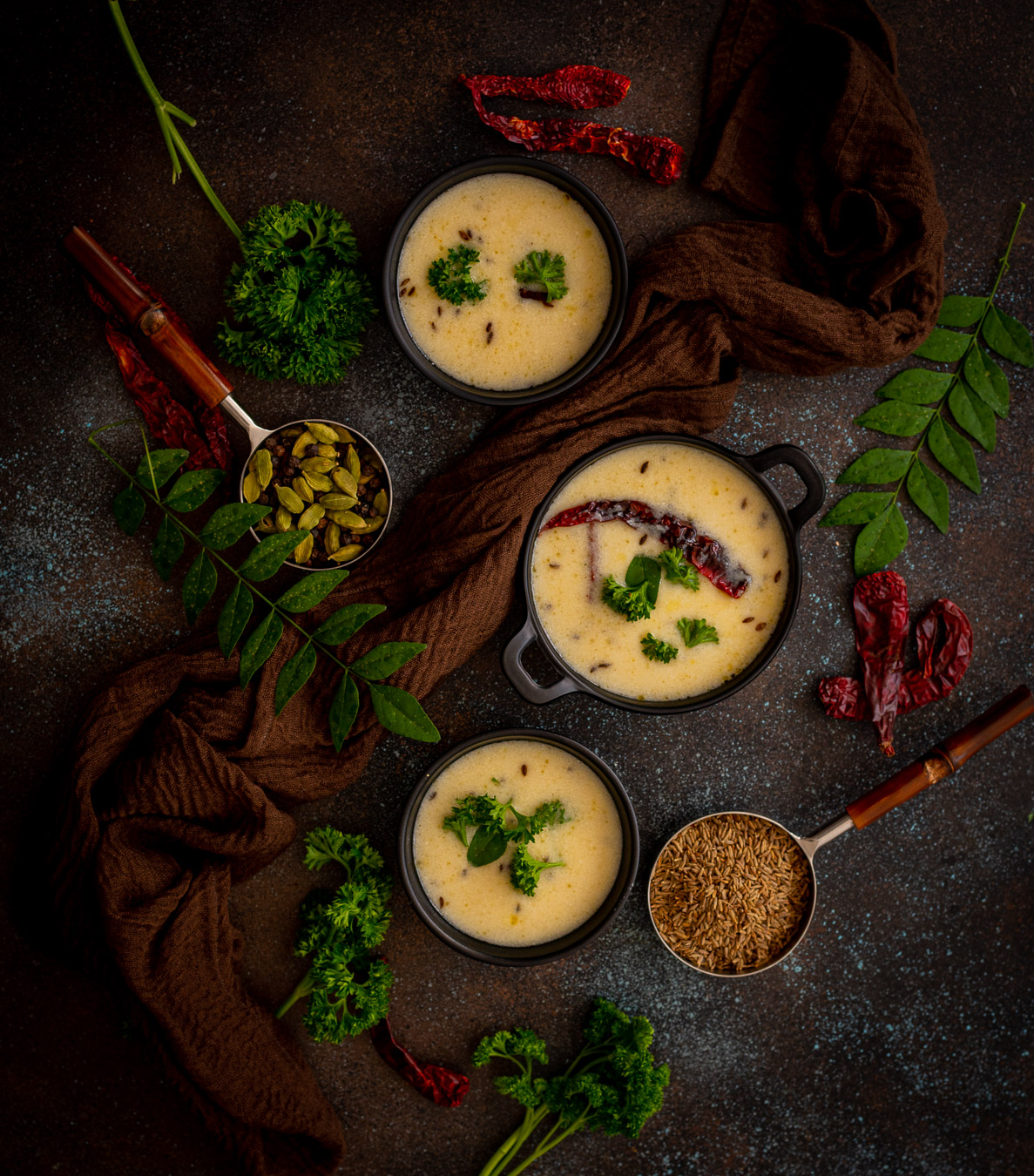
Dairy is a huge part of the pan-Indian diet, and among its many forms, buttermilk is consumed across the length and breadth of the country during the summer. It is mentioned in Ayurvedic texts as a coolant, and provably has this effect on the body. In lore, it was among the delicious goods that Krishna often stole from the cowherds, with his mother Yashoda usually discovering his theft quickly and reprimanding him for it. It has been in our history and mythology for millennia, and in our kitchens as well. A few years ago, I shared a recipe for spiced buttermilk, and today I am sharing one for a flavoured variant: banana stem buttermilk.

As I mentioned in a recent recipe, my mother made butter at home while we were growing up, and its sour residual buttermilk was used in kadhi and other dishes. As a beverage, I prefer my buttermilk less sour and make it with fresh homemade yoghurt, which you can also get into a daily routine of preparing yourself.
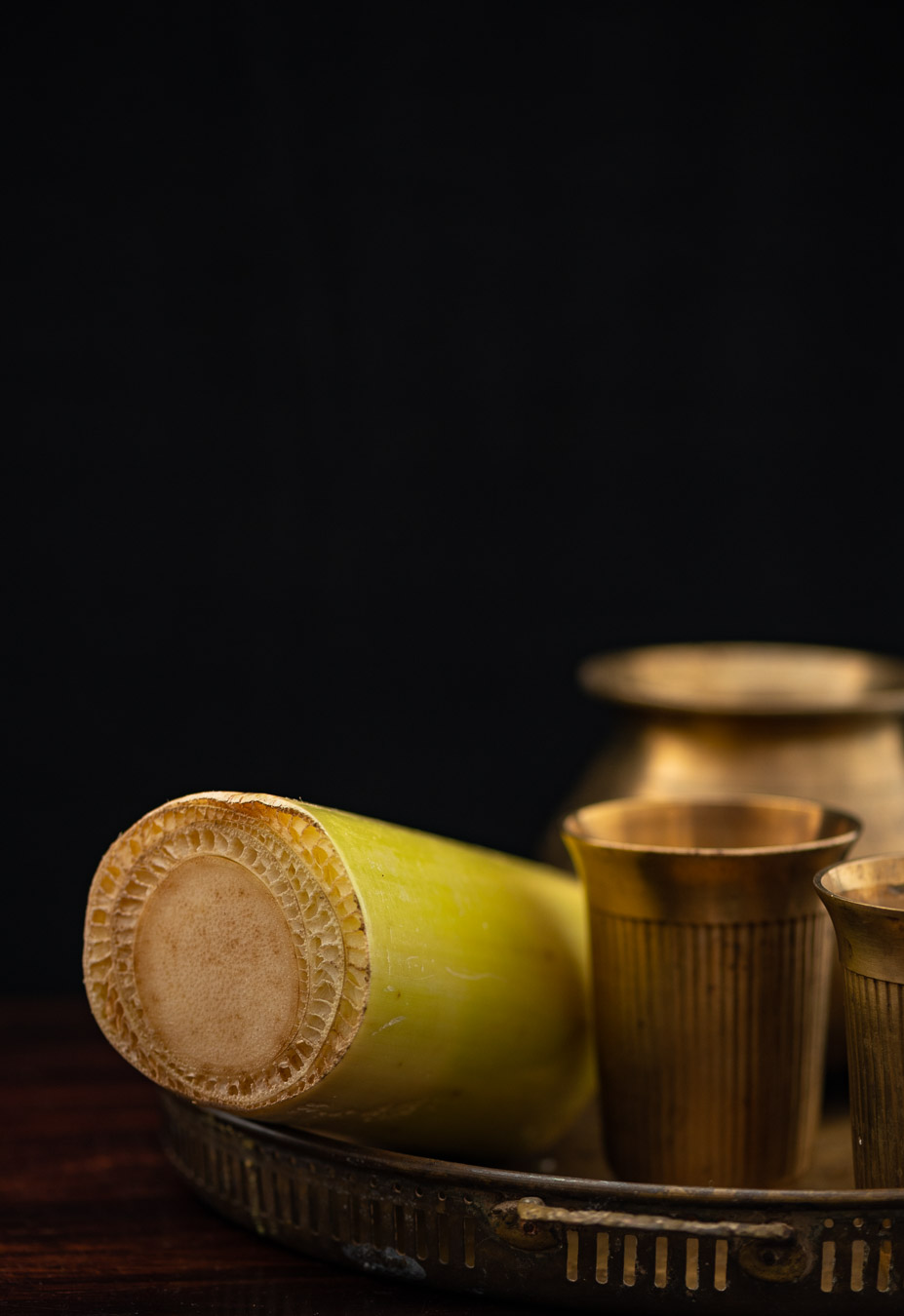
How the straightforward buttermilk that I regularly consume came to be pepped up with banana stem is really a photographer’s story. Some time ago, I had been preparing banana stem poriyal, a Tamil stir-fry side dish, when something caught my eye as I was slicing the ingredient. A beautiful geometric pattern (designed by Nature) along the edges of the stem captivated me. I was moved to pause my cooking and pick up my camera. Somehow, as I worked, the thought of adding the ingredient to our regular post-lunch buttermilk occurred to me. From stir-fry to shoot subject to summer heat-buster, the humble banana stem had quite a journey in my hands that day.

Though it is humble indeed, and sometimes neglected for this reason, banana stem is a much-loved ingredient in Tamil cuisine due to its powerful health benefits. It is most famous for being able to dissolve kidney stones, and also has anti-diabetic and detoxification properties. It is rich in iron, fibre, potassium and Vitamin B. It can be eaten raw, but not everyone’s constitution reacts well to this, so you can lightly steam it before consumption without losing much of its nutritious qualities too. Although I was inspired that day to put my photographic muse into my afternoon drink, it was not a brainwave that simply came out of nowhere. Somewhere in my growing years, at some friend’s house or another, I certainly drank banana stem buttermilk. As a local, accessible and inexpensive ingredient, it has always been put to good use by cooks over the centuries.
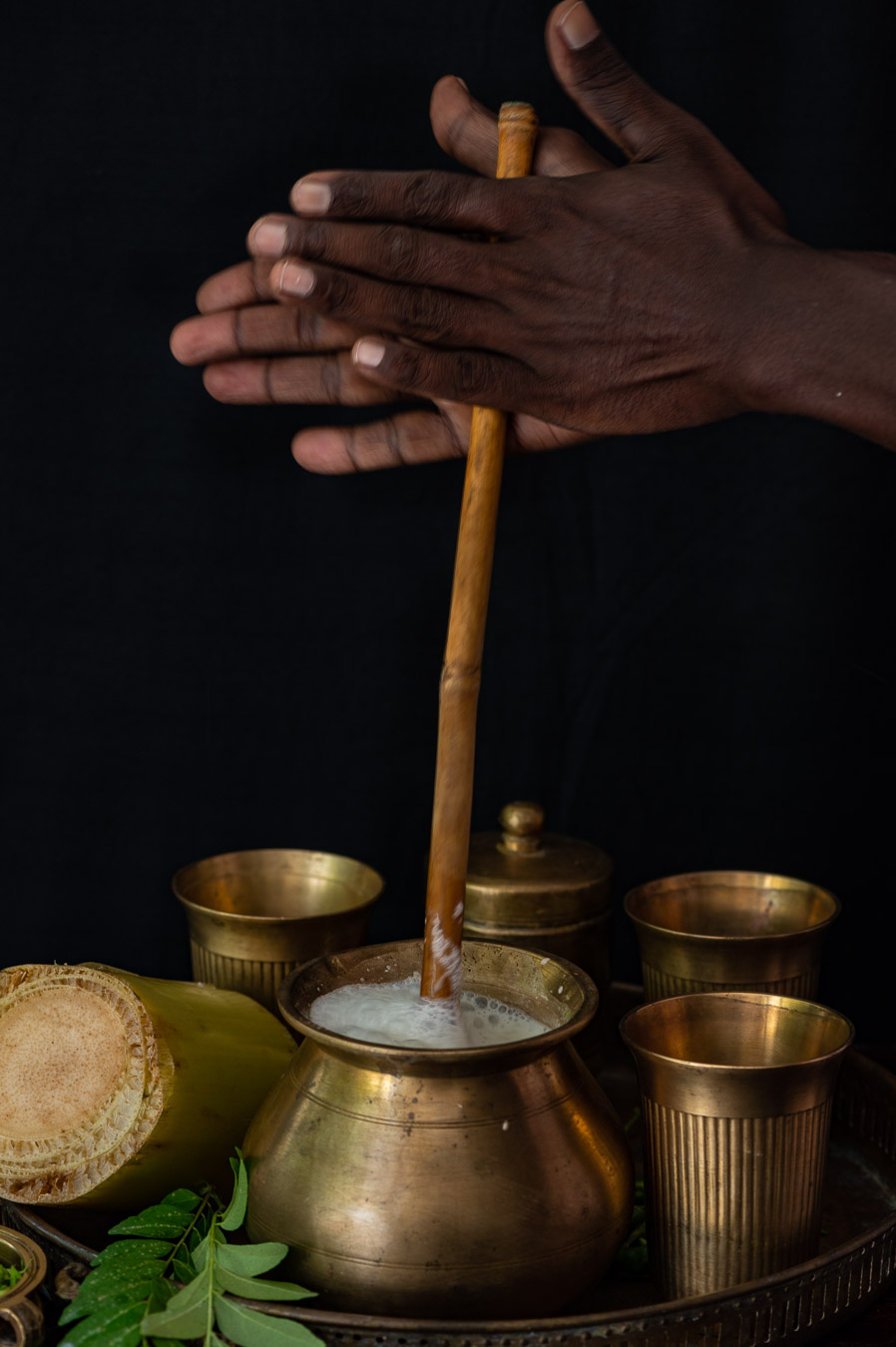
As mentioned, we have buttermilk with our summer lunches daily, or else a banana. Either a drink to cool the body down, or else the fruit of the same plant to assist with digestion. This was the case when I was a child as well, when my mother would prepare plain buttermilk that was seasoned with nothing but salt and cumin powder. During the summers, our school holiday time, we would play with our neighbourhood friends in the afternoon, climbing trees and tiring ourselves out in a happy way, then have a glass of this and go off for a siesta. The drink was especially vital because it would also be mango season. Mangoes in high quantities increase body heat. Of course, we would have gorged on them, so something had to be consumed to counter this.

Buttermilk really is a summer beverage for so many reasons, and I always find it interesting and awe-inspiring how Nature laid everything out for us in such a way that there is always a seasonal logic. Isn’t it marvellous that yoghurt just takes 3-4 hours to set at this time of year, when it is a more necessary part of our diets, as opposed to needing to set overnight in winter? To this natural design, we also add our common sense: we consume cooling buttermilk during the day, when the sun is high, and not at dinner time.

As a Gujarati born and brought up in Tamil Nadu, bringing the local banana stem into my traditional buttermilk was an intuitive choice. You can make it with other flavours too. The sweetened version of this drink, the lassi, is similarly versatile, and you may remember a fruity version from my recent mango series.
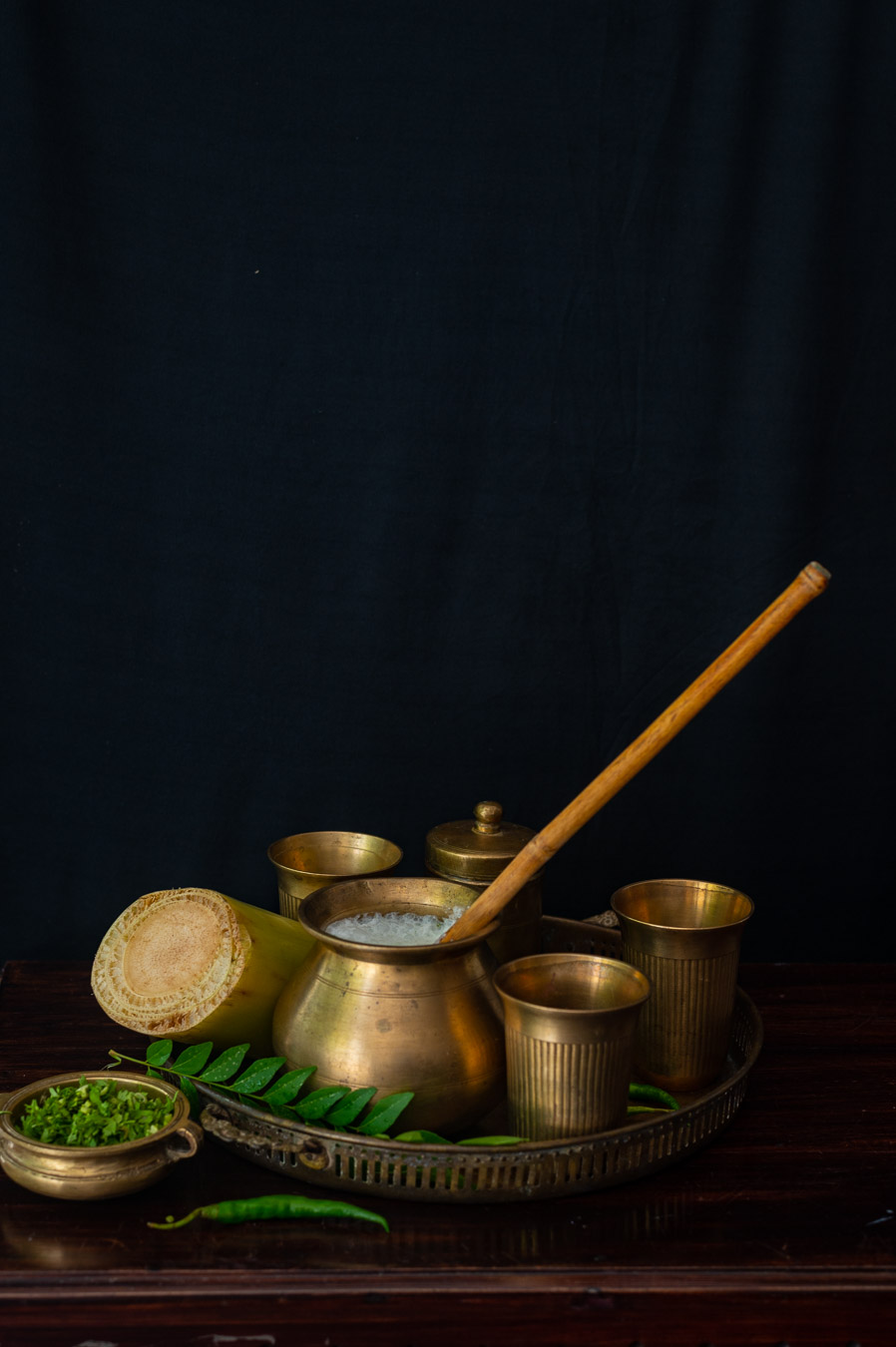
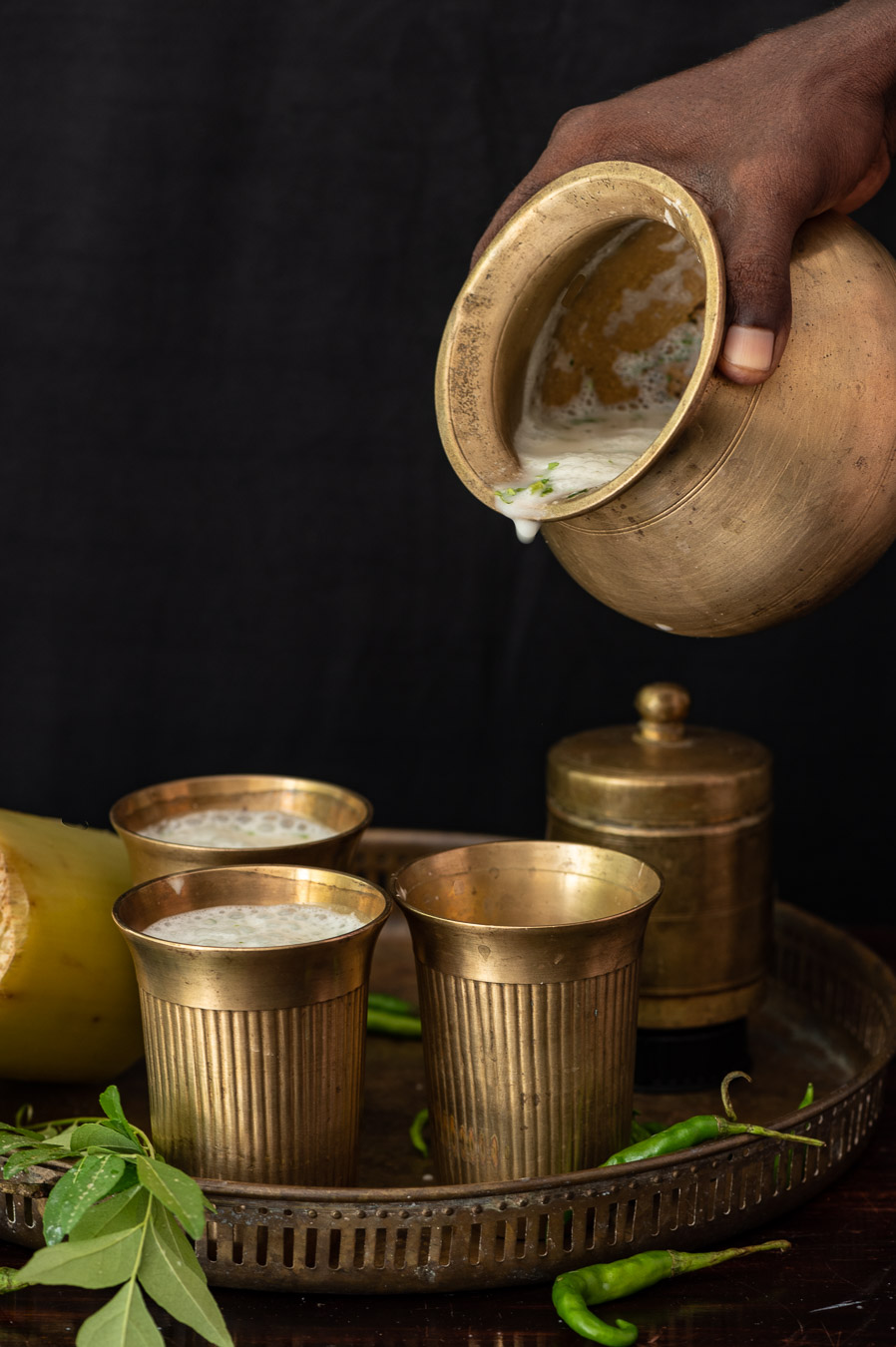
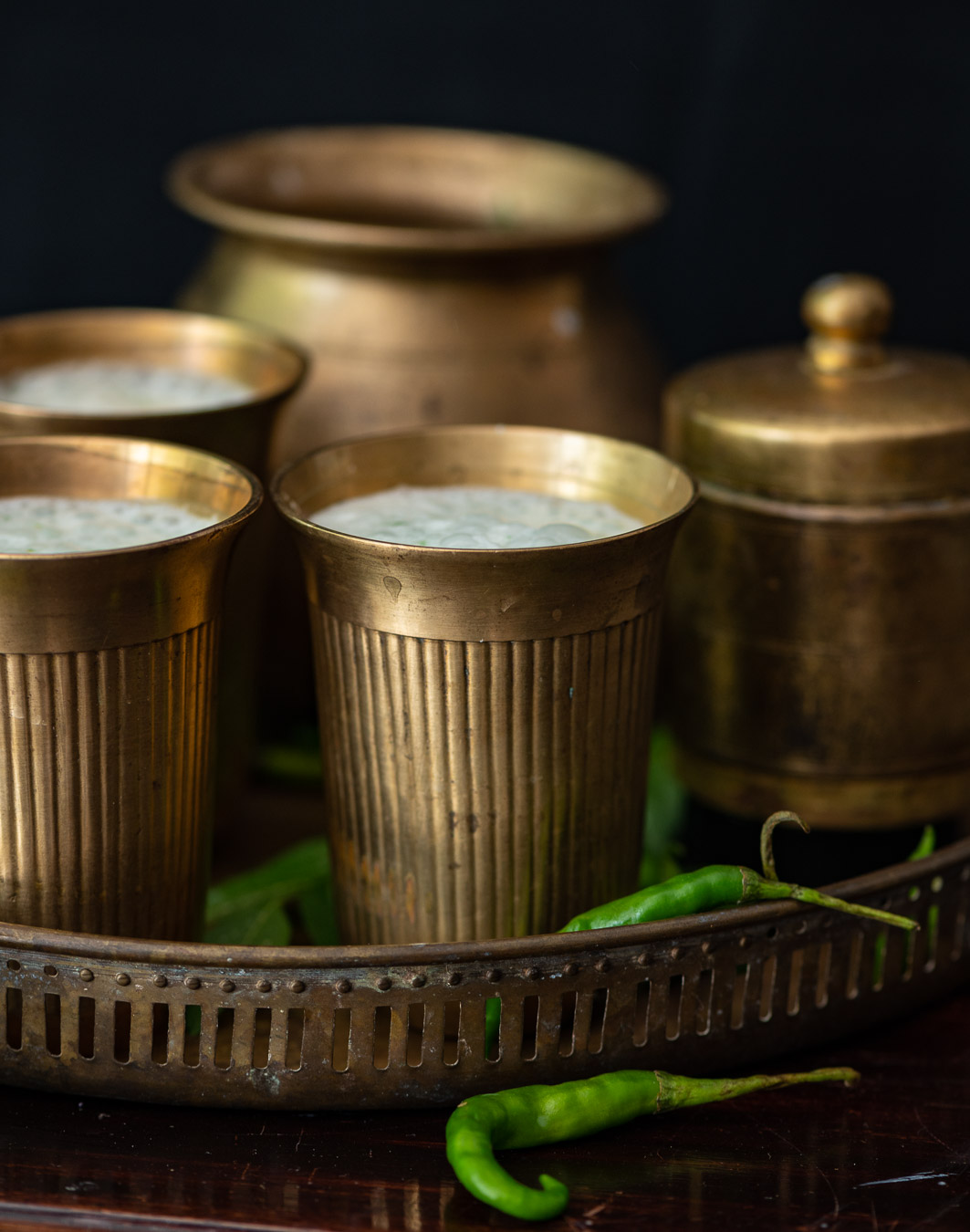
Banana Stem Buttermilk

(Yield: 2 cups)

1 cup chopped banana stem

2 cups yoghurt

1 piece ginger

¼ teaspoon asafoetida

A few curry leaves

A handful of chopped coriander leaves

1 green chilli

½ teaspoon roasted cumin powder

Salt to taste

2 -3 cups water

Juice of half a lime/lemon

Chop the banana stem and soak the pieces in water. Set aside while you prepare the other ingredients. If you tend to find consuming raw banana stem difficult on your digestion, lightly steam it beforehand.

In a bowl, prepare the yoghurt by adding salt and cumin powder. Add 2 ½ cups water and beat well. Keep aside.

Discard the water that the chopped banana stem was soaking in. Put the chopped stem pieces into a blender. Add the green chili, coriander leaves, asafoetida, ginger and curry leaves. Add the remaining ½ cup water and blend well. The quantity of water you use depends on how thick you want your beverage. Then, strain the thick purée into the prepared buttermilk. Add a dash of lime/lemon juice, for a bit of a sour tang.  Beat well. Consume immediately, before it starts to change colour.

I hope you’ll enjoy this nutritious banana stem buttermilk! I’ve shared quite a few summery beverages over the years, and here are some more recipes for your enjoyment too, shared with good wishes for your health and well-being: strawberry-rose smoothie, barley lime drink, rose sherbet and curry leaf and raw mango cooler.
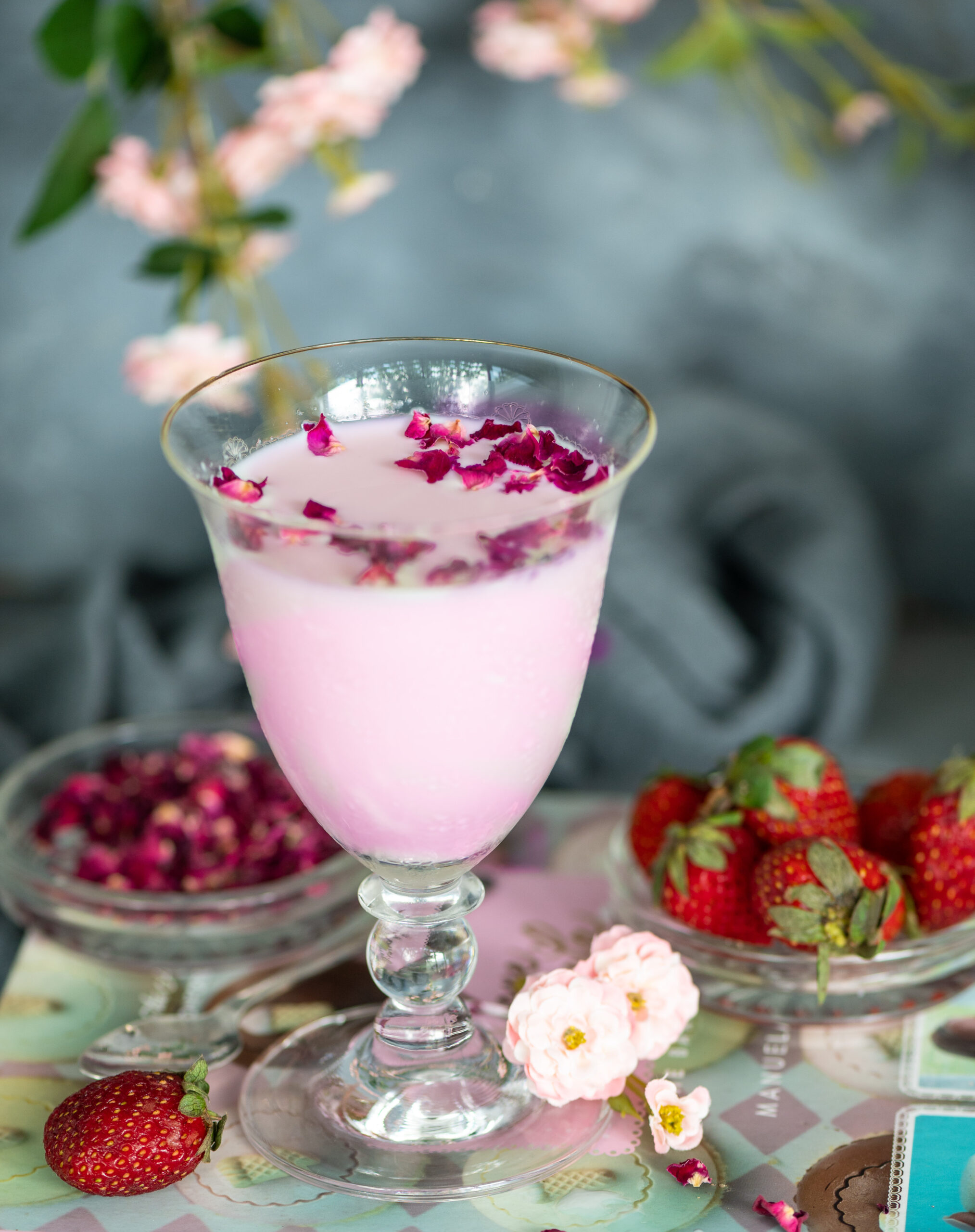
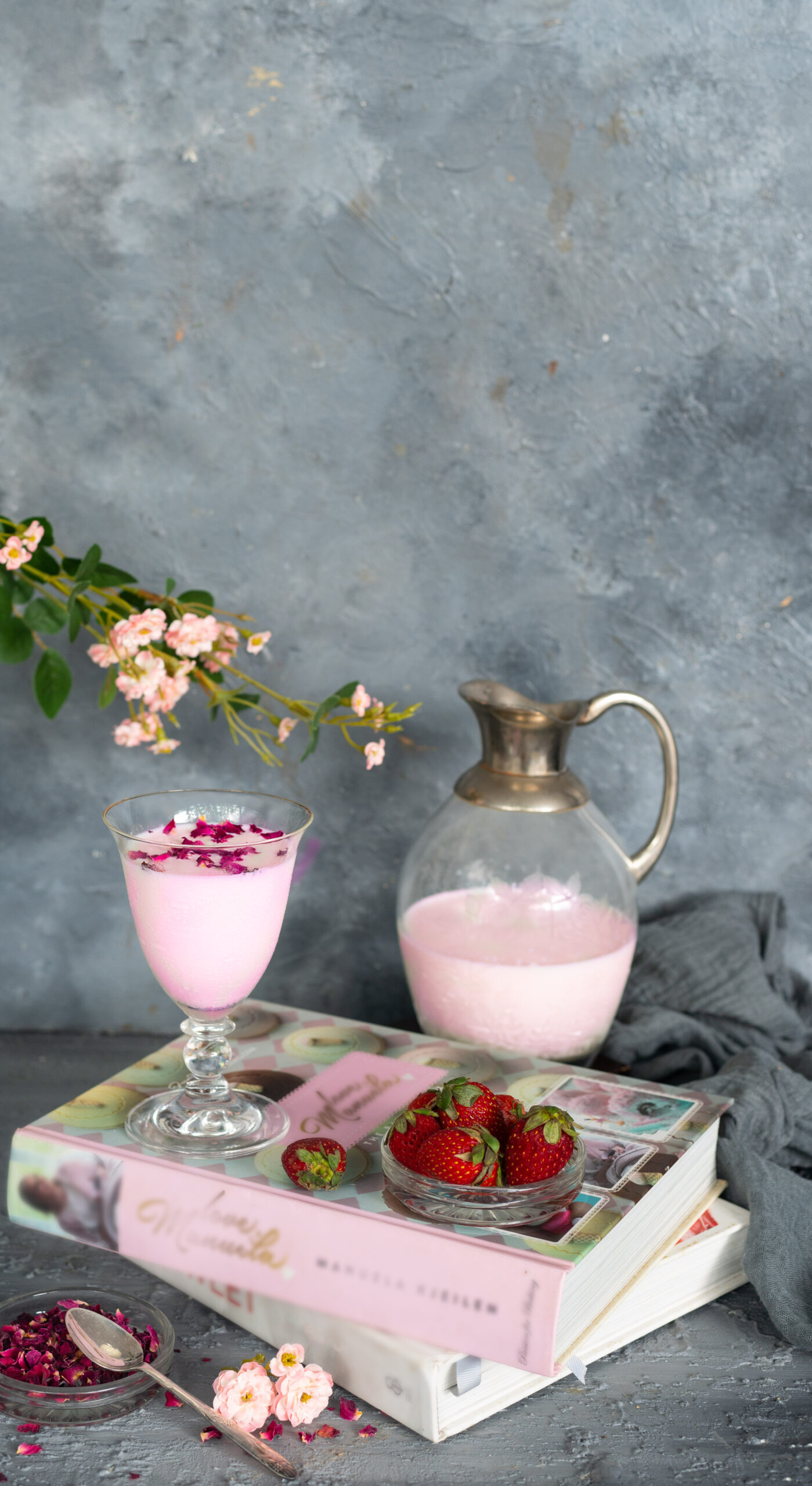
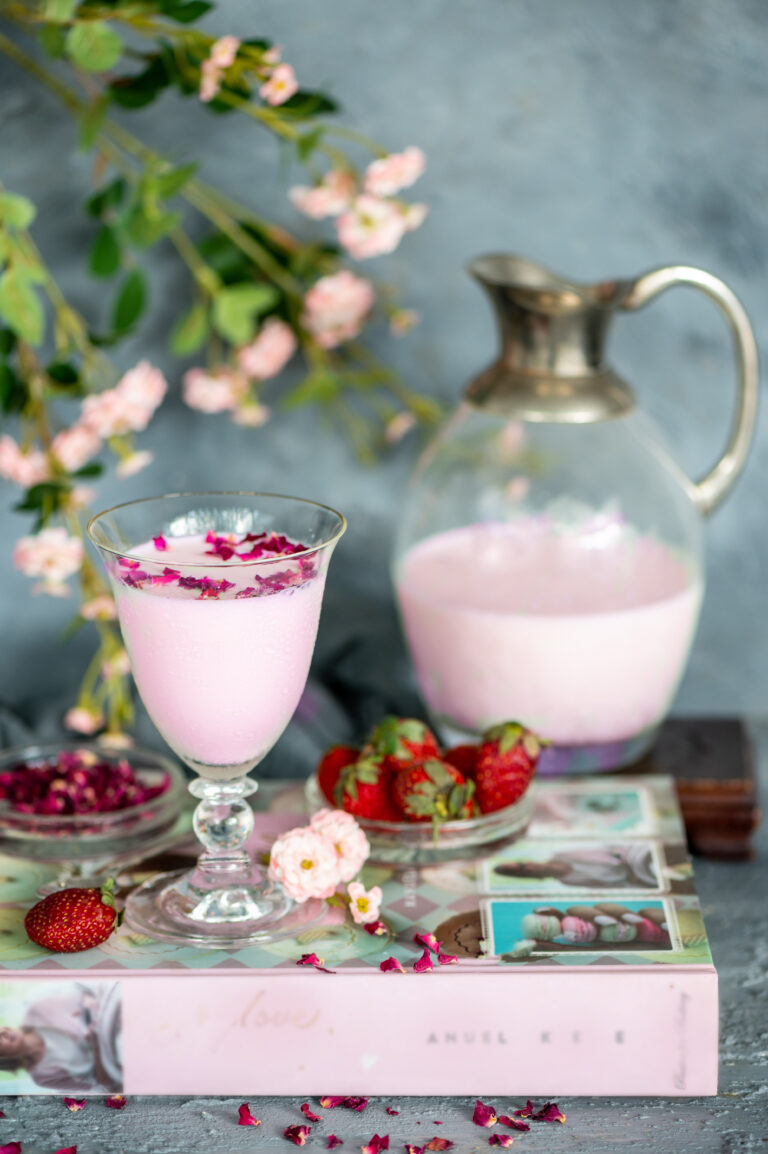
It’s an ongoing story of mine that I’m avoiding carbs, but I confess that I’m sneaking them in from time to time. To beat this craving, I’ve been reaching out for more smoothies than ever, as they are very filling, thus cancelling out the carb craving, and also take care of my protein needs. I always add a fruit of some kind, and with strawberries being in season right now, and a beautiful bounty of them in my fridge, they have been an obvious choice these days. Of course, this vegan strawberry-rose smoothie is also perfect for beating the summer heat!

This recipe features one of my all-time favourite elements – rose – and, all in all, it makes for a wonderfully uplifting and healthy beverage. Regular re:store customers will know that I’m obsessed with the flavour and that it’s a signature of mine. I have just not had my fill of adding rose to everything, and I hope that you will also enjoy its intoxicating aroma and delicate taste in this recipe just as much. But this is not just indulgence. This smoothie is vegan, and I usually use almond milk or oats milk (you can even just use water). It is also ideal for exercise enthusiasts like me, and lately I’ve been keeping a tall glass of it ready in my fridge as my post-workout boost each morning.

The rose plays so well with the strawberries, so while the drink itself may look a little bland, it is very flavourful. To offset the visual nondescriptness of the drink, however, I ensure that I serve it elegantly. The glassware that I use in these photos aren’t just props. During this lockdown, I’ve begun to use for our daily meals all the special crockery, cutlery and other serving ware that are usually saved for important occasions. I try to dress everything up, including myself. Even though I don’t leave the house, I put on clothing that makes me feel confident. Even though it’s just us family at home, I ensure the presentation of meals is just as attractive as it would be if we had guests over. I feel that these small things make a big difference. We should enjoy life, every day. Why wait? This is one of the many lessons of the pandemic.

So, my friends, let me encourage you to do the same. Don’t wait for the day when you will next be entertaining. Don’t wait for a celebration. Put up those beautiful curtains that you promised yourself you would deck your windows with when the lockdown lifts. Take the good porcelain out of storage, and see for yourself how it brightens the vibe at the dining table. Unfurl that gorgeous handmade bedspread you were saving for the guest bedroom and enjoy a hearty nap on it. All the carefully chosen things that have lain in cupboards for years deserve to be enjoyed, and you deserve to enjoy them! Use them, flaunt them, let them give you joy!

Bring more life into your home with small planters. A touch of green here and there not only adds beauty and freshness, but also helps purify the air. You don’t need a whole garden for this: old kitchen utensils are lovely spots to grow money plants and other low-maintenance greenery. The daily act of nurturing the plant is itself so fulfilling.

This is self-care, not selfishness. We must learn to do things for our own pleasure, to lift our own spirits. Live for today. Live for right now. We never know what may happen tomorrow, so we may as well enjoy what we have, when we have it.

So yes, this is just a recipe for a simple smoothie. But how I make it, how I serve it for myself (choosing a different cup or glass every day from my collection), how I set the table if I’m having it over a chat with a family member, how I put on some music as we share bigger meals together – these are the things that pep me up, keep me going, and help to create pleasant experiences even during a time that is frightening and difficult. This is what it means to bring positivity and hope into our day-to-day lives. It’s all about the small things, and showing gratitude by enjoying those small things. I really hope that the few minutes of your day in which you prepare and relish this vegan strawberry-rose smoothie will be one of those small things for you, too.

Vegan Strawberry-Rose Smoothie

(Yield: 2 small cups)


8-10 strawberries

2 tablespoons powdered almonds

Your preferred quantity of protein powder

2 cups almond milk (or milk of your choice)

1 teaspoon chia seeds

A drizzle of honey or maple syrup or a date (optional)

Rose extract

Rose petals to garnish (optional)


Simply put all the ingredients into a blender, and blend well. Make sure you use powdered almonds – that’s the trick to perfecting the texture, ensuring that there are no chunks. You may later garnish the drink with some whole or broken nuts, if you’d like more texture. You may eliminate the rose ingredients if you prefer and just enjoy the strawberries’ flavour on their own. The chia seeds make the drink deliciously creamy, in addition to bringing their numerous health benefits to it, so I would suggest that you retain them.

Pour into a glass and enjoy. Don’t forget to refrigerate it first, if you prefer it cool, or just add some ice if you’re in a hurry.

I hope this nourishing beverage brings some sweetness your way this summer. You may remember that I shared a different strawberry smoothie recipe last year too. I hope you’ll try both out and tell me which one you prefer and why, in the comments. One can never get enough of strawberry season – so why not?

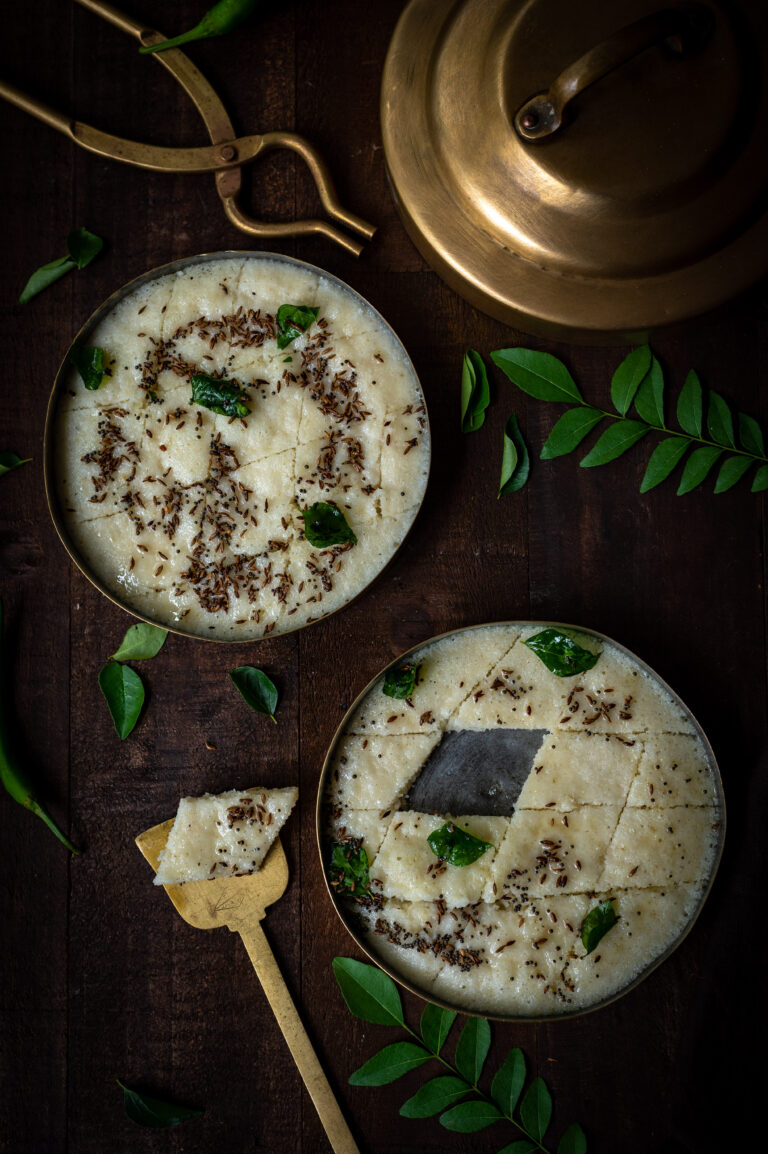
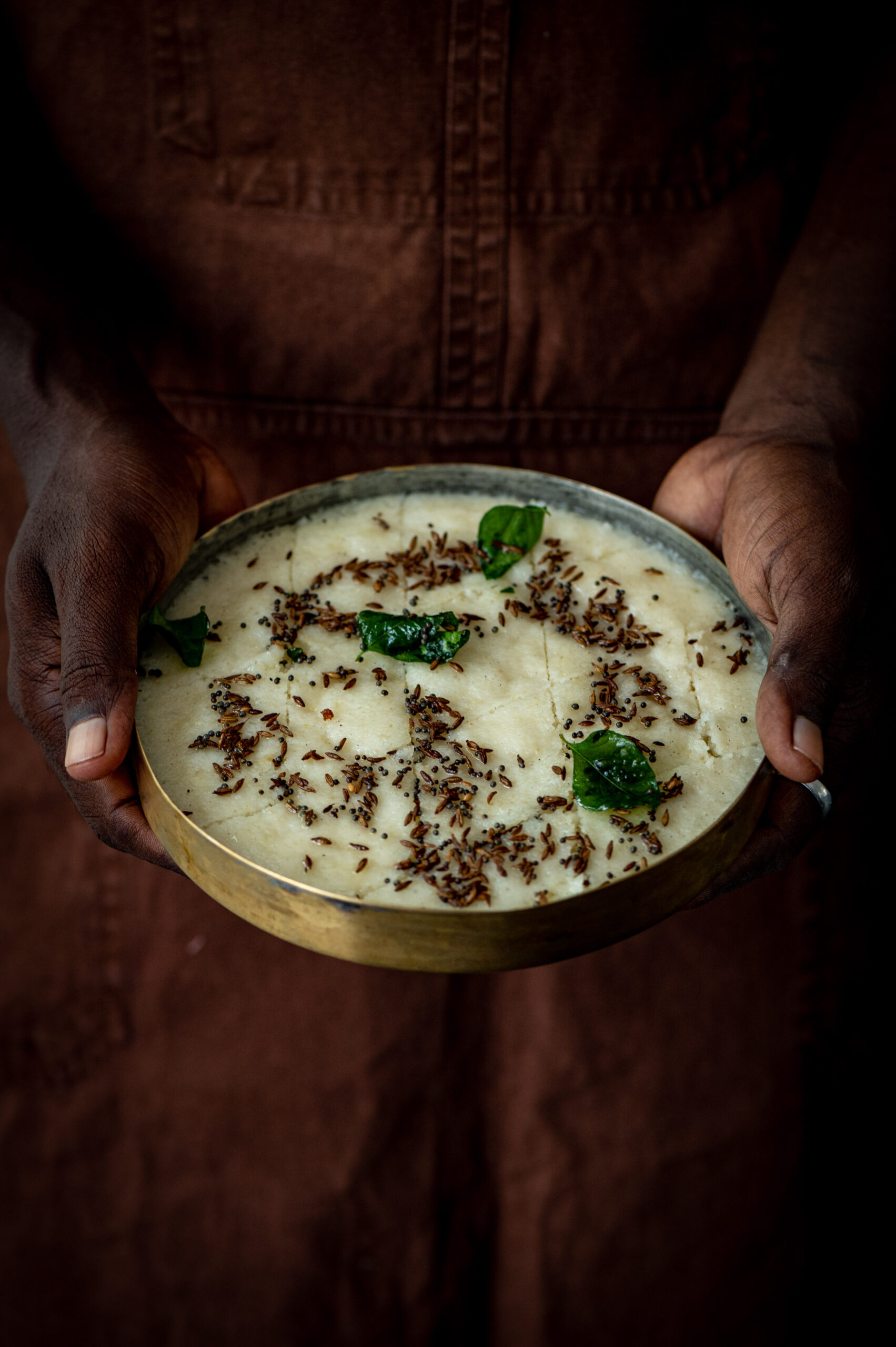
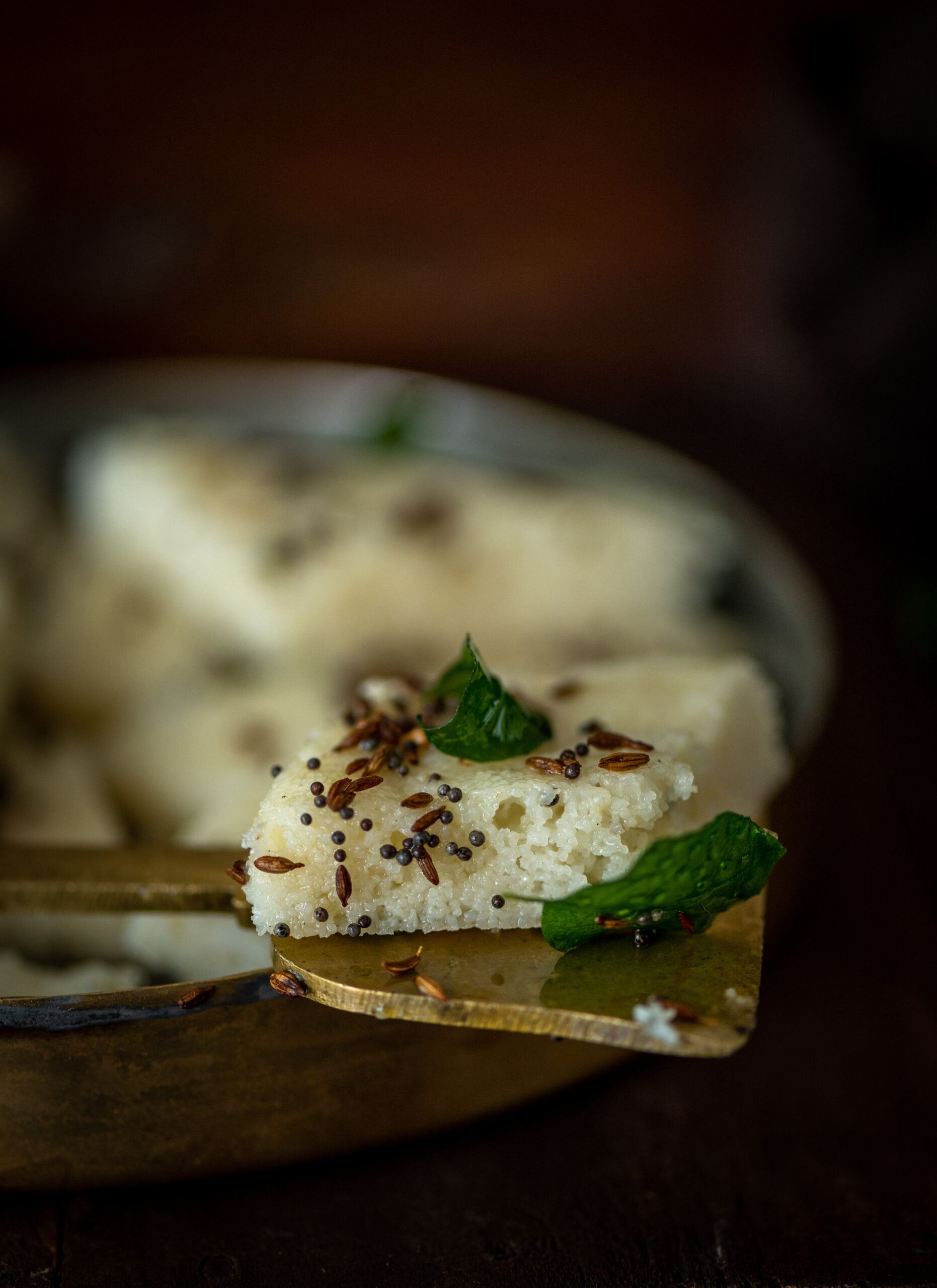
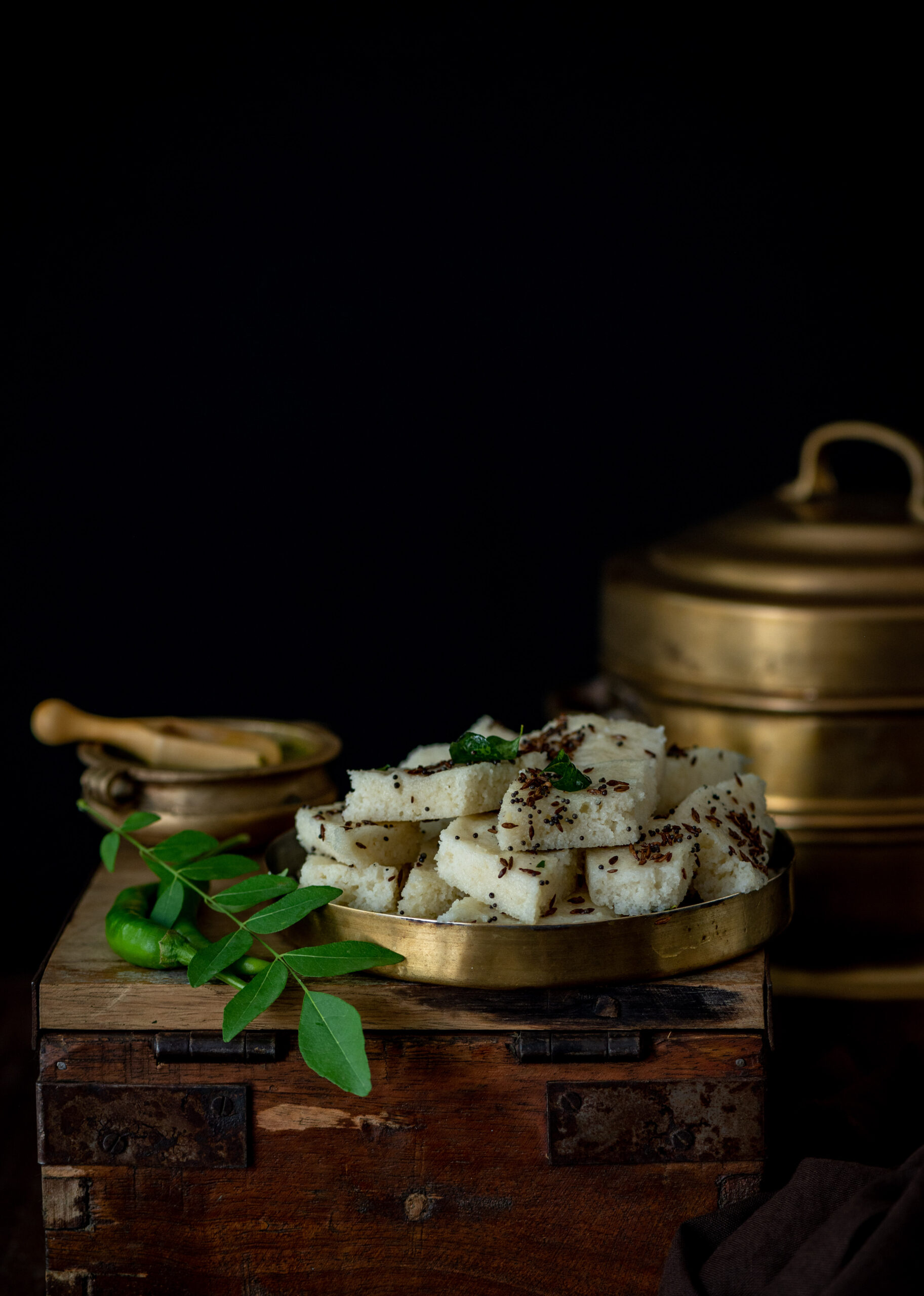
When I shared this recipe for a dhokla made of green moong a couple of years ago, I had mentioned that Gujaratis are so famous for this item of food that it’s what we are stereotypically called. “Hey, dhokla!” – there is hardly a Gujarati who hasn’t heard this phrase, just as there is hardly a Gujarati who doesn’t, as stereotyped, love this dish. Dhoklas are a kind of savoury cake, spongy in texture. There are numerous varieties of dhoklas, and the khaman dhokla (yellow in colour, and made with channa dal) is the most popular one, and the one you may be acquainted with from restaurants. But the one that Gujaratis mostly consume at home is the white dhokla, which I am sharing the recipe for today.

There are two kinds of white dhoklas: a version that is more tedious to prepare, which entails washing rice, drying it in the sun and then powdering it. My mother would make these traditional rice flour dhoklas often, but for a quick go-to it was always the rava dhokla. The rava dhokla is the other version of white dhokla, and the recipe that I’ll share today. It tastes quite similar to the rice flour dhokla, and has a quick and easy process. It makes for a light dinner, or as a tasty snack when you have company, and is often had with garlic chutney or a sweet mango pickle.

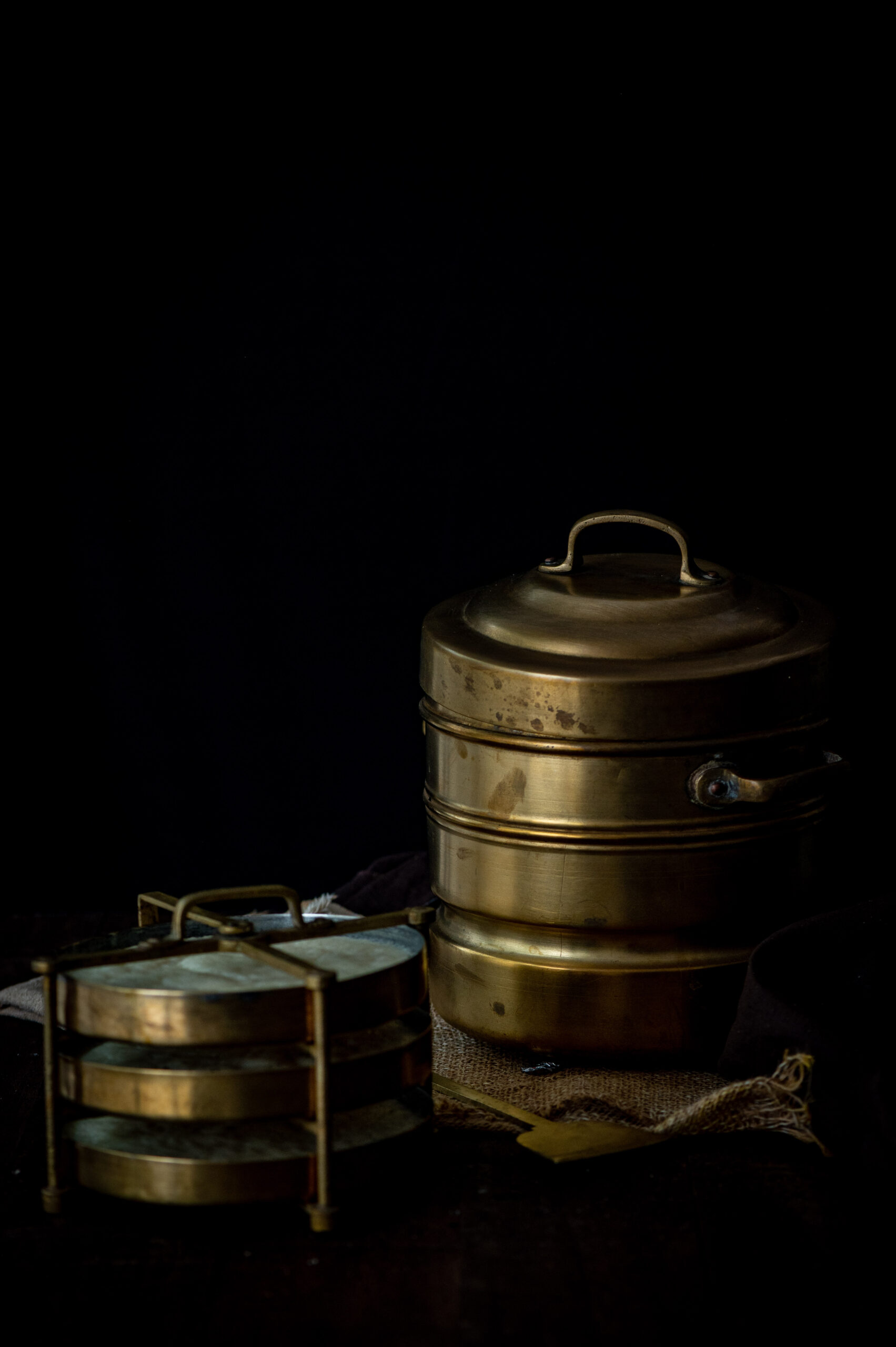
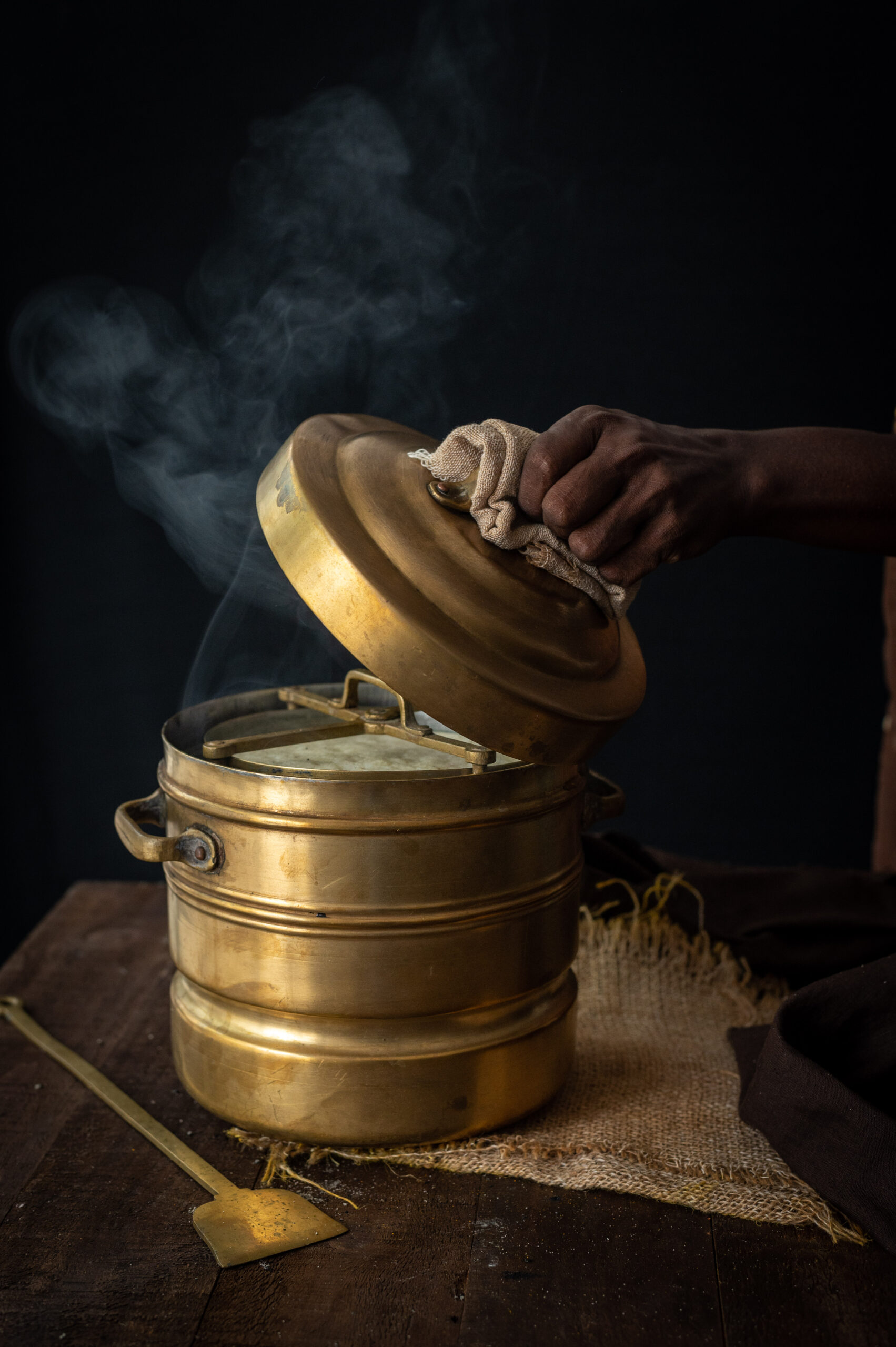
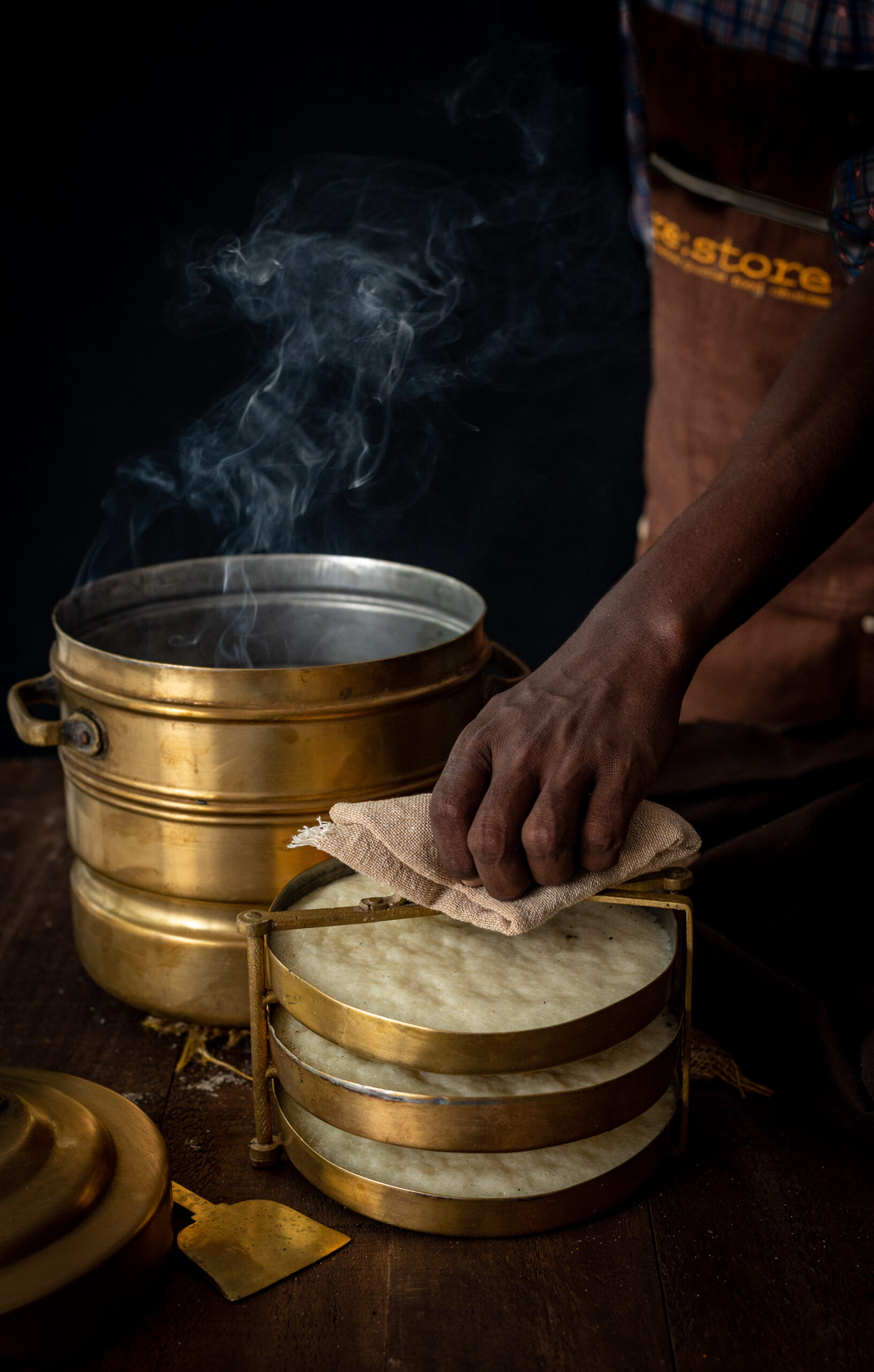
As you may know from some of my photography, I love antique kitchen objects. They are not only subjects or props to me, but are functional too. I have an old dhokla maker, one that feels like it has always been with me. I cannot remember when it entered my kitchen. Similar to an idly cooker, except flat, it has a set of plates stacked on top of each other. The dhoklas are steamed on these, then cut and served.

To be honest, I don’t use my dhokla maker very often because I don’t make dhoklas at home frequently, even though we all enjoy this dish very much. I think this is because, for me, the perfect dhokla was always my mother’s. Even when she became really old and would rarely cook, and I would send her all her meals, I would ask her to prepare just dhoklas for me. With great love, she and I had a recurrent jesting conversation in which I would make fun of her – “What’s this, why are you sitting around? Time to start training for a marathon! Or how about getting started on the cooking, and make me some dhoklas?” I would say, and she would laugh, or offer one of her famous smiles – to be followed shortly by a mouthwatering beautiful treat. My sister’s dhoklas are a close second, but as for me, I am still learning – and as always, eager to share what I know.

That reminds me also of how, not so long ago when we were all still zipping up and down the country and around the world with ease, I would pack dhoklas for short flights of under three or four hours. They travel well as they don’t need accompaniments, and the best part is that they don’t have a strong smell. The whole plane doesn’t find out that you’re eating dhoklas when you open your lunchbox. So I’d fly off to Mumbai, eating my own dhoklas in the air, and when I arrived, my sister would be ready to serve me a fresh batch of her own.  I guess it’s true what they say: no matter where we are, Gujaratis can’t get enough of a good dhokla.

White Dhokla

(Yield: Serves 2)


1 cup rava

½ cup yoghurt

1 cup + ½ cup water

Salt to taste

1 tablespoon oil

½ teaspoon ENO fruit salt

½ teaspoon green chili-ginger paste


Tempering:

2-3 tablespoons oil

¼ teaspoon mustard seeds

¼ teaspoon cumin seeds

A few curry leaves


In a bowl, add rava, yoghurt, 1 cup of water, salt, green chili-ginger paste and oil. Mix well. You will get a thick batter. Set this aside for at least half an hour.

Now, the batter would have thickened further. It needs to be of the consistency of idly batter, so add the remaining half cup of water if required.

Add the ENO fruit salt and gently mix the batter. At this point, it will be frothing.

Prepare the dhokla cooker / plates by greasing them. Then, pour the batter into the plates and steam for about 20-25 minutes with the lid on.

Remove the plates from the cooker once the batter has cooked. Allow to cool.

Finally, temper the dhokla. For this, heat the oil and add the mustard seeds and cumin seeds. Allow them to splutter, then add the curry leaves. Immediately, pour this hot mixture over the dhokla.

Cut and serve plain or with accompaniments of your choice. Once again, I would recommend trying out one or all of the three dips in my recent Indian condiments series. The raw mango thovayal, the lasun ki chutney or the ginger chutney will beautifully elevate the soft, spongy dhokla. I hope you’ll enjoy this delicious white dhokla – and that it will make you clearly understand why we Gujaratis love it so much! If you do, don’t forget to try out the green moong dhokla variant too. Let me know which one you prefer!

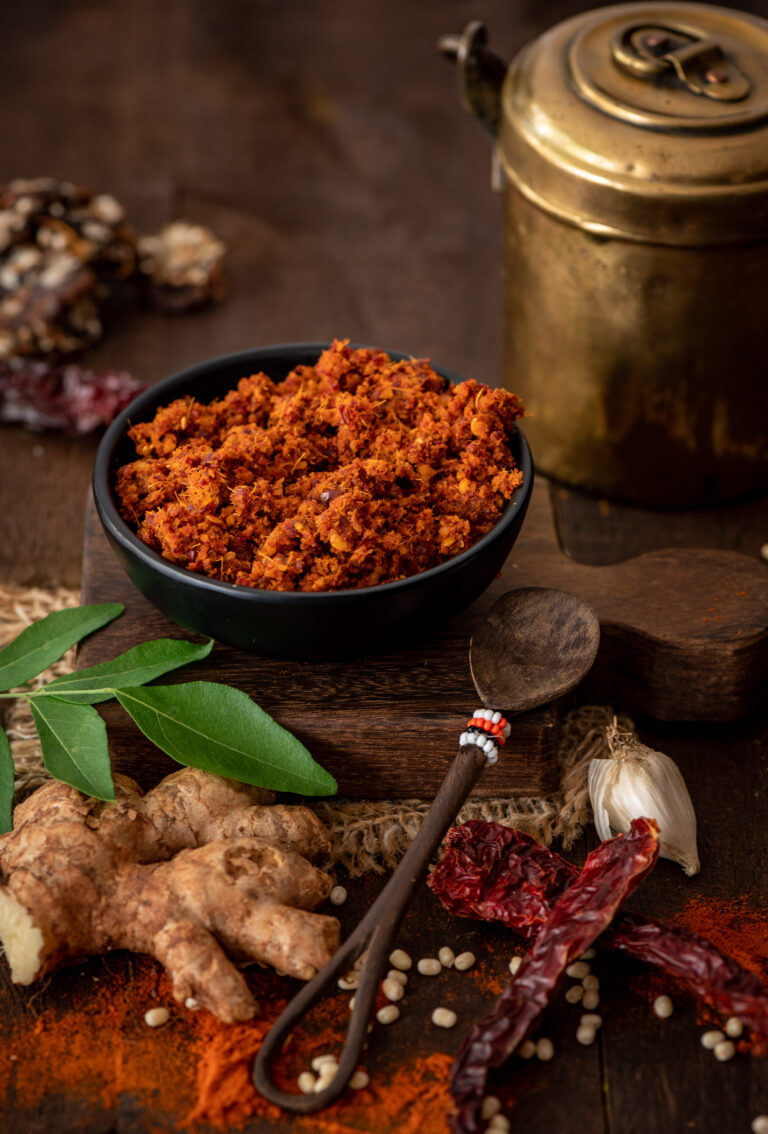
For many years, a lovely lady named Hamsa has visited a few times a week, to conduct a chanting class for me. She teaches me Sanskrit scriptures like the Vishnu Sahasranamam and the Lalitha Sahasranamam. I’ve been chanting for the last fifteen years and it’s a source of immense solace for me. Hamsa is from Andhra Pradesh, a region known for its spicy cuisine, and it so happens that one of my favourite condiments comes from there. It’s a ginger chutney sweetened with a hint of jaggery, and I’m delighted to share the recipe for it with you today.

Before the pandemic, I was a frequent customer at a wonderful South Indian restaurant where an array of chutneys would be served. No matter how diverse the spread, I would always reach instantly for the ginger chutney, so much so that I’d even ask to have any leftovers of it packed to take back home and enjoy with the next meal. One day, as we were chatting after class, I asked Hamsa if she knew how to make that fabulous dish. I was thrilled to hear her say, casually, that she made it daily! Of course, she then kindly brought me some a couple of times, after which I asked that she teach me the recipe. I’m a hands-on learner and I wanted to watch her preparing the dish. So one day when she visited, she prepared it in my kitchen as I eagerly watched the process, and I’ve been making it happily ever since.

I believe that we all experience learnings from any person. It doesn’t matter who they are, or in what form the learning comes, but it enriches us just the same. This is something that’s so crucial for us to keep in mind at this difficult time for India. If we keep our eyes and our minds open, we will perceive that all of life itself is a learning, and that we are amidst so many ongoing lessons given what is happening is the country and the world. We are learning about what works and what doesn’t, and what has to change for a better future. In our personal lives and relationships, we are learning something every day about how to get through this crisis – seeing which relationships can withstand it and how, seeing sometimes that the problem isn’t the other person but us, and so much more. These are valuable learnings that we must carry forward.

I’m grateful to have learnt this recipe from Hamsa, to add to all the knowledge she has given me over the years spiritually. She doesn’t just teach me chants, but also talks about culture and ritual, deepening my understanding of the same. When I’m feeling down, she will often suggest a mantra that I can say to strengthen myself. This is advice that has kept me in good stead through my adversities.

I’m sharing the recipe for ginger chutney with you today along with a slice of my life. After I have completed my baking, cooking and exercise schedule in the morning, I always sit down to chant. I genuinely believe in prayer, and in the power of hope. I believe that as a human race we will come out of this darkness, and when I am in prayer, my conviction in this is at its strongest.

With the current lockdown in Chennai, I now take virtual classes from Hamsa daily. I can read Sanskrit, and one of the things I appreciate about her teaching style is that she is very particular about pronunciation. This takes me back to when I was a little girl in a convent school full of wonderful Irish nuns, who insisted on precision in handwriting and enunciation. The lovely Mrs. Martanda, my English teacher, would teach us the difference between the spoken words “vow” and “wow”, for example. She used the Wren and Martin grammar book and various dictionaries as teaching tools. That I am able to recall these details decades on is a testament to the influence a good teacher can have, in any aspect of life. As I said earlier: we learn something from someone, every day. We are all students, and we are all teachers.

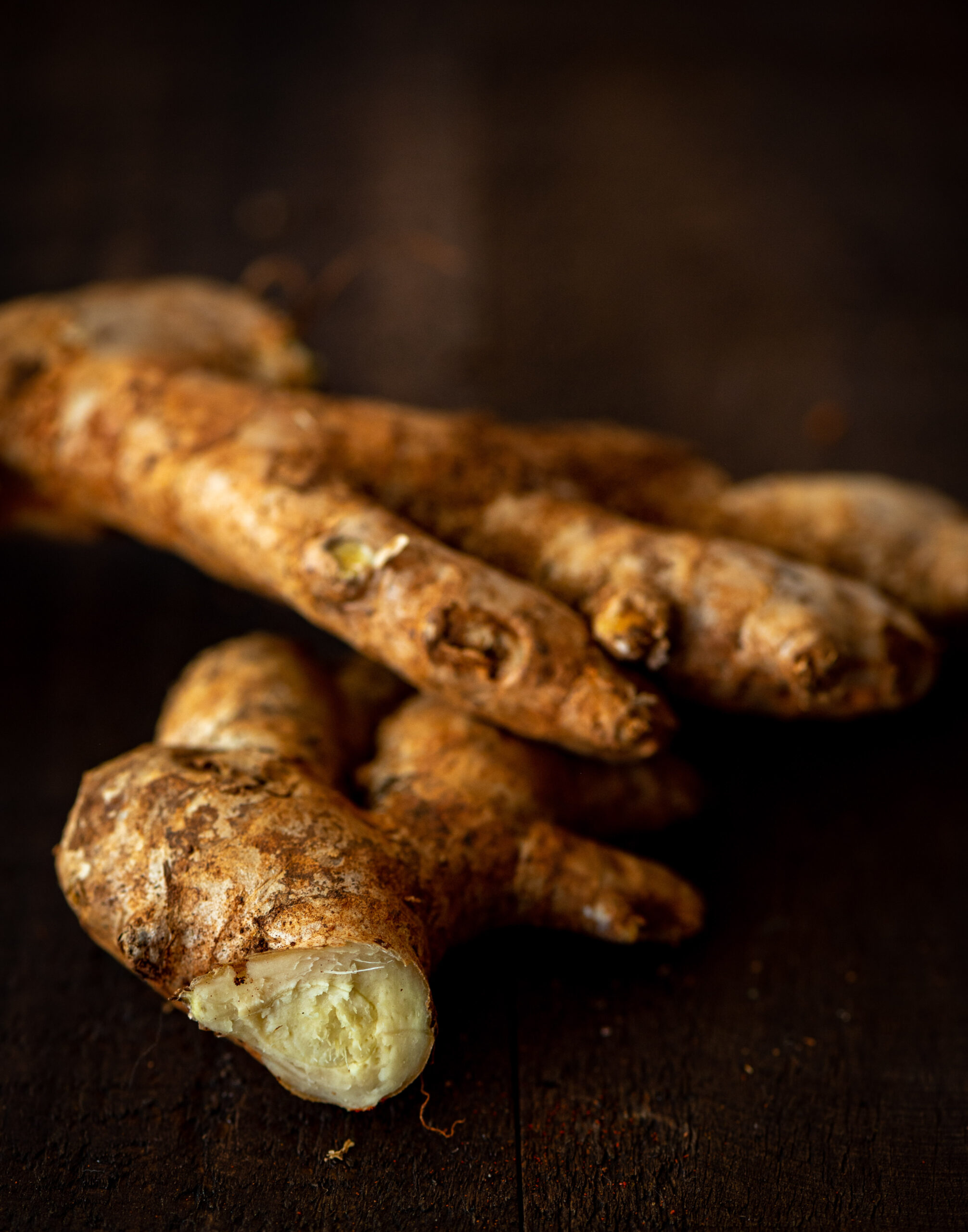
And so – I learnt this from Hamsa and I am now teaching it to you. It’s a brilliant ginger chutney made in the Andhra style. My version is drier than Hamsa’s, and I make it this way so that it lasts longer. It has a perfect combination of flavours – sweet jaggery, spicy red chilli and piquantly aromatic ginger, the last one being a particular favourite of mine. It’s so Indian, yet so doable in any part of the world, consisting of simple ingredients and a quick and easy process. In case you cannot source jaggery, try brown sugar or coconut sugar as a substitute. This ginger chutney lifts up the flavours of my Buddha bowls, my dhoklas, my dosas… it adds such a sumptuous taste to anything I pair it with.

Ginger Chutney

(Yield: 1 cup)

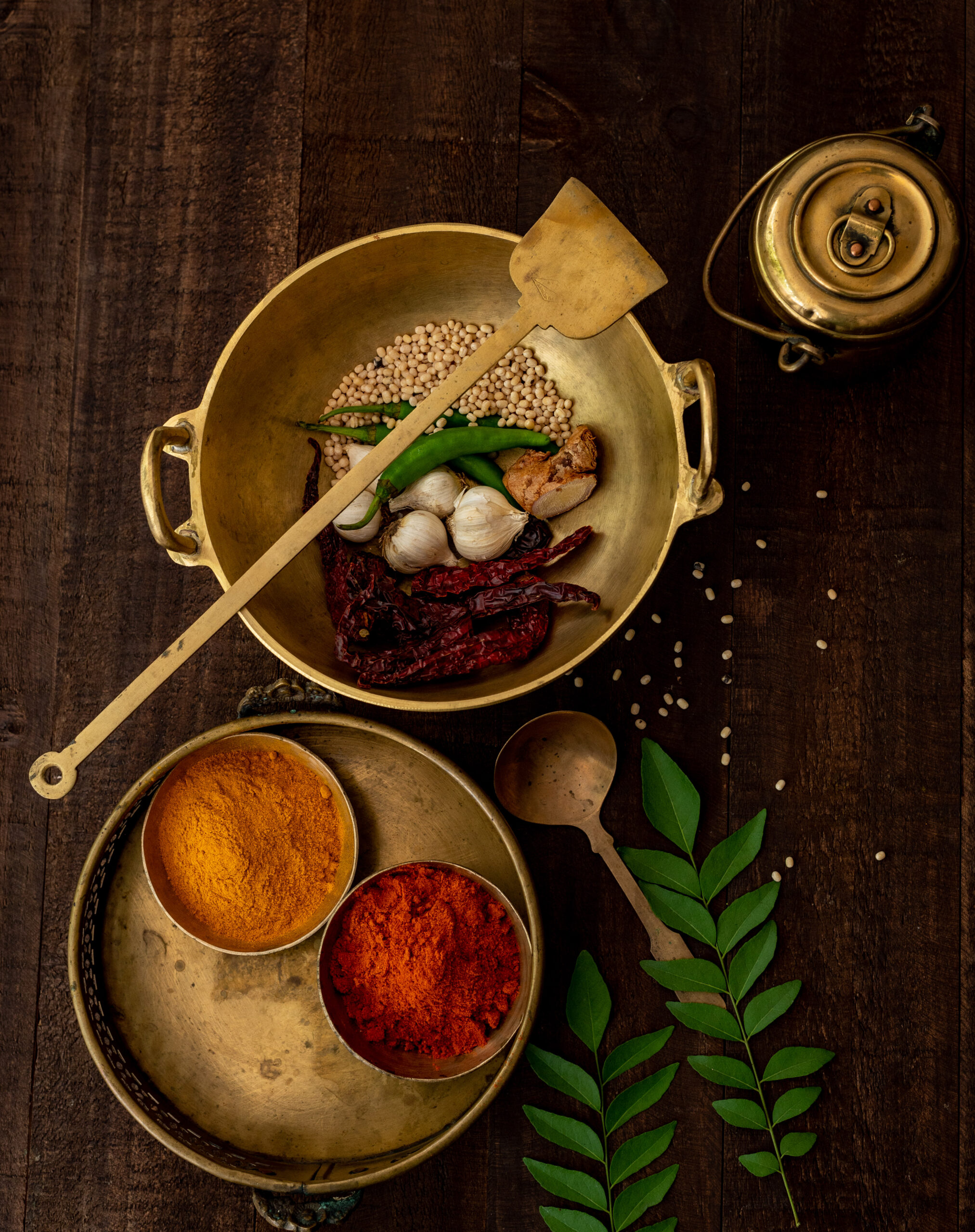
2 small cups washed, finely cut ginger

1 small (lime-sized) ball tamarind

8 dry red Kashmiri chillies

2 tablespoons urad dal

Salt to taste

2 teaspoons cumin seeds

2 tablespoons jaggery powder

2 tablespoons sesame oil


Add the oil to a pan. Dry roast all the ingredients – except the jaggery – until they all turn golden, on a medium flame. Finally, add the jaggery.

Allow to cool. Blend well together without adding any water. You can store this in the refrigerator for 10-15 days. As a dry chutney, it is inherently more long-lasting.

I’d love to know how you’ve been pairing the various dips I’ve been sharing. The previous two in this Indian condiments series were the Tamil-style raw mango thovayal and the Gujarati-style dry garlic chutney. In the past, I’ve also shared several fusion and Indian dips and condiments, all of which can be used creatively, and I hope you’ll be curious about exploring those too. Here they are: curry leaf and green chilli hummus, plum chutney, wood-apple chutney, coriander chutney and date chutney. Enjoy!

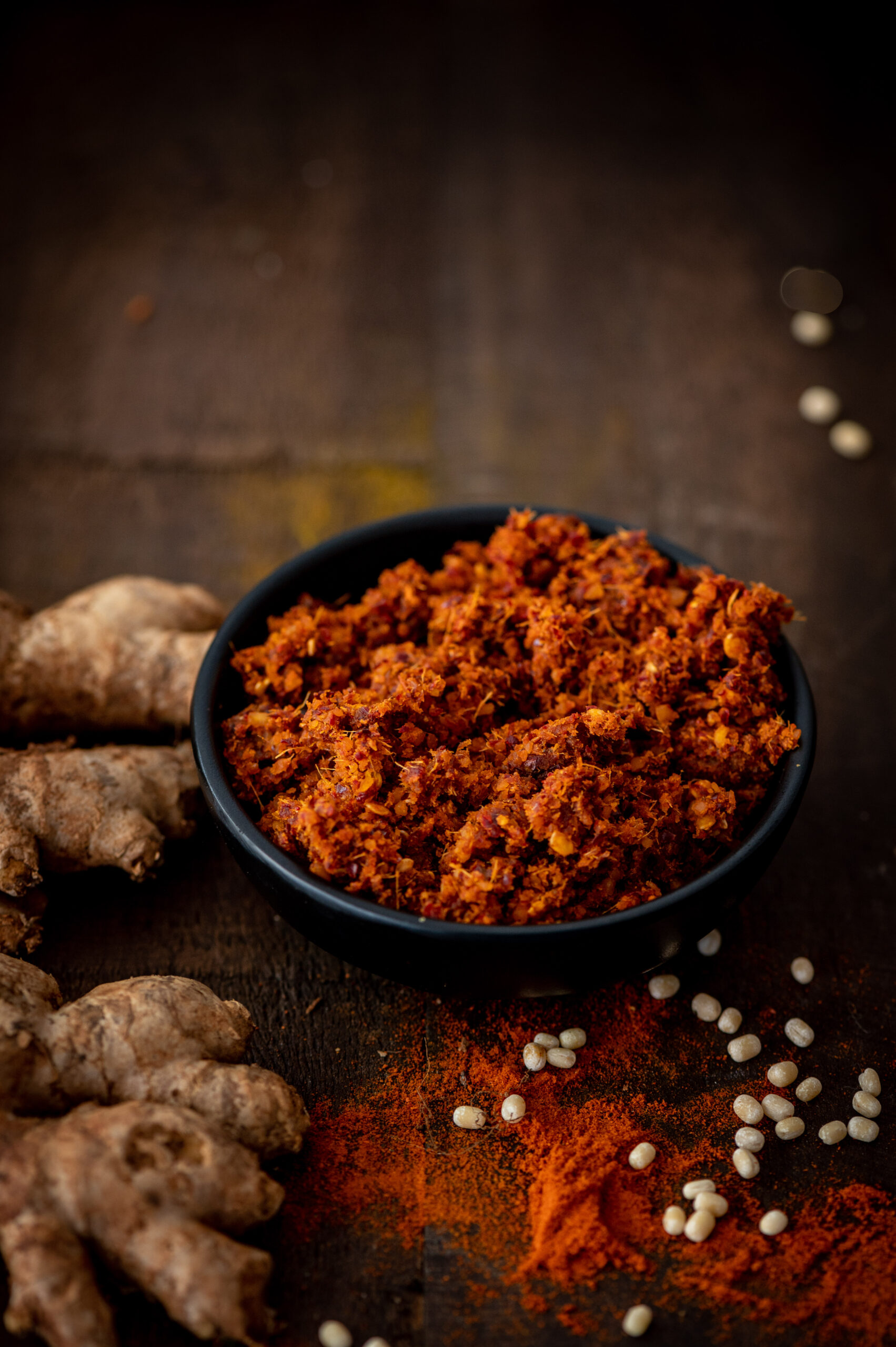
What did you think of the raw mango thovayal that I shared in my previous post? I hope it added a tangy kick to your meals, and if you used it in any offbeat ways (such as as a marinade, or in a fusion dish), I’d love to know. The next dish I’m sharing in this dip series is another recipe that could lend itself to versatile use too. It also has an interesting dry-to-wet storage solution built into its preparation, which you’ll learn about below. This lasun ki chutney (dry garlic chutney) is a Gujarati condiment, one that always existed in my childhood food experiences, and I know it is also made Maharashtra, which borders Gujarat.

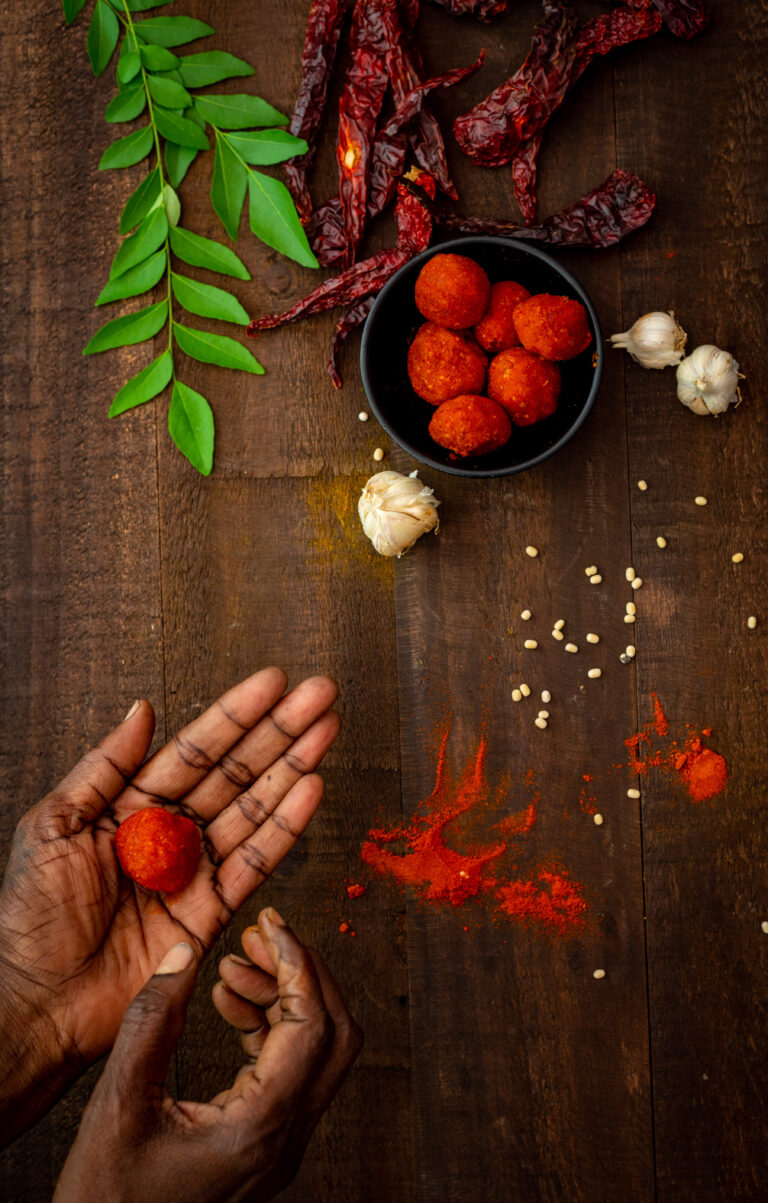
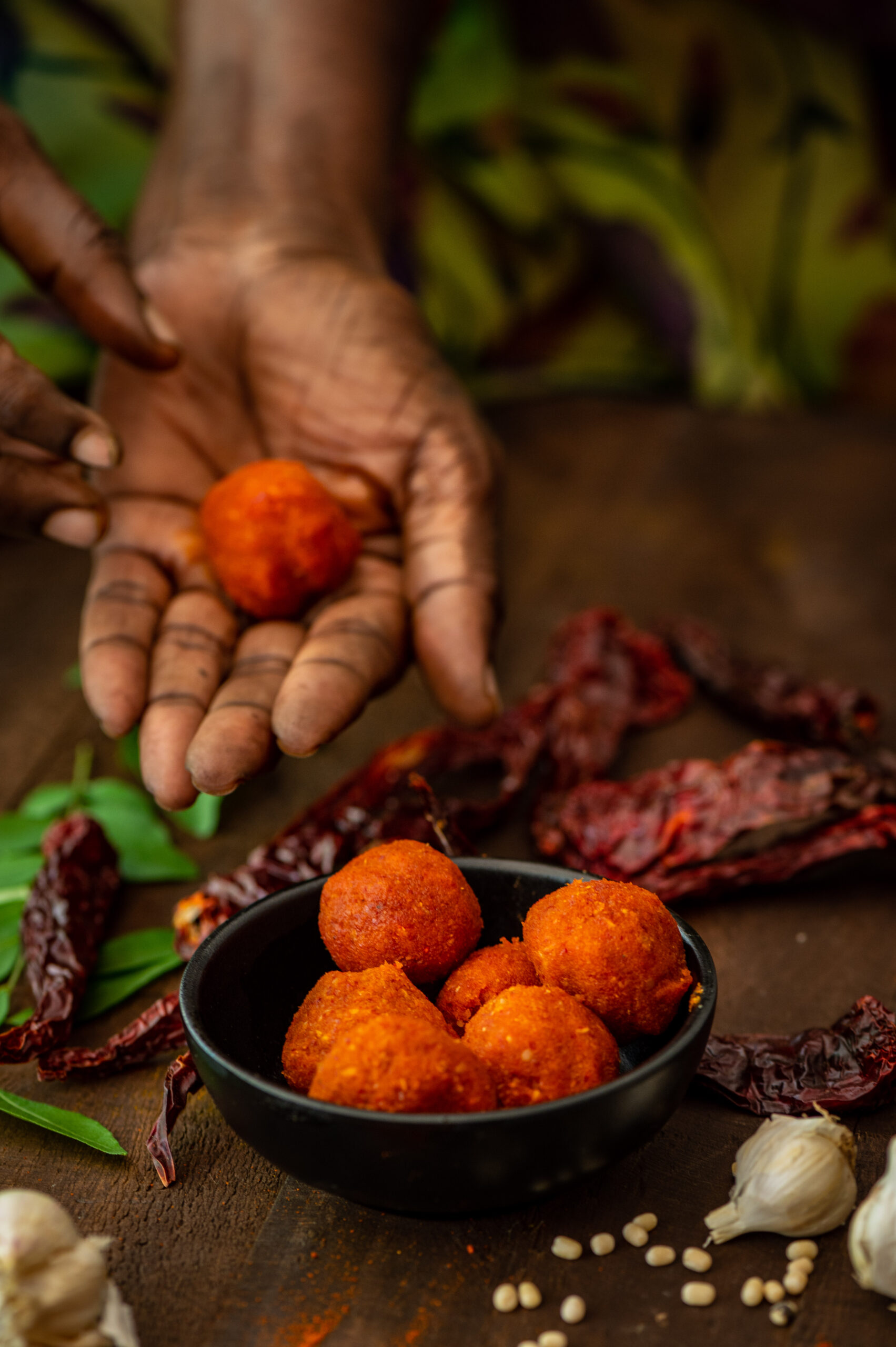
It is a dry garlic chutney with a fiery colour, and is made in a ball form that is supposed to last two or three days without refrigeration. This means it travels well, so it is often paired with the equally durable thepla on train journeys and so on. While I was growing up, my mother kept her lasun ki chutney in the fridge, which extended its shelf life a little further too. The concept is like this: it’s a dry chutney, made with minimal water, that is rolled into a ball and stored. Whenever one wants to consume it, one simply pinches some off, adds warm water, makes a paste and enjoys it as an accompaniment. Once water is added, it needs to be consumed immediately.

Aside from theplas, it is typically an accompaniment for bajra ki rotla, dhokla or handvo. Although we now enjoy it year-round, in concept it is the ideal winter condiment for more frugal meals. I am told that farmers in Gujarat typically consume it with bajra ka rotla, a flatbread made with pearl millet flour, in winters. Being very flavourful, it uplifts the thepla or other main staple without the need for other side dishes, especially when the harvest is scarce.

When I first started making lasun ki chutney, I began by making the soft version directly rather than the storable dry balls. I learnt the recipe for my grandfather, who came to live with us when he was 93 and absolutely had to have some of this lovely condiment at every meal. And at every meal, without fail, he would always say, “Garlic is very good for you.” He would sit on the floor and have a full Gujarati main course served to him, and he relished dipping his chapati into a bowl of ghee and eating it with lasun ki chutney. Perhaps because he reminded us every day that this is a nutritious dish, it grew on the rest of us too, and soon we began to have a side of spicy garlic chutney with most of our meals as well.

Garlic is indeed very good for us, and is well-known as an immune system booster, and as an ingredient that keeps blood pressure and cholesterol under control. It’s rich in antioxidants, manganese and fibre, among other nutritious elements. Plus – it’s delicious. Aromatic and pungent, it’s a pleasure for the senses.

That said, I would be remiss not to mention that there are communities that avoid garlic entirely as some believe that it affects the hormones in such a way as to charge us up and make us express our anger. If you do not eat garlic for this reason or any other, I’m afraid this recipe won’t suit you – and I hope you’ll explore the archives and find another one that does.


Lasun Ki Chutney

(Yield: 1 small cup)


10-12 cloves garlic

1 tablespoon toasted sesame seeds

4 Kashmiri red chillies (fried)

½ cup shredded coconut

1 tablespoon sesame oil

Salt to taste


Set aside all the ingredients, except the oil, in a food processor. In a flat pan, add the oil and once it has heated, pour the oil into the food processor along with the other ingredients. Make sure that you grind the mixture well. Your dry, coarse garlic chutney is now ready.

Now, make small balls and store them in the refrigerator. When you’re sitting down to a meal over the next few days, pinch off as much as you need, add warm water to make a paste, and enjoy. Have it with dhoklas or theplas, or even add it to Asian stir fries to spice them up, like I do. I’d love to know how you use it!

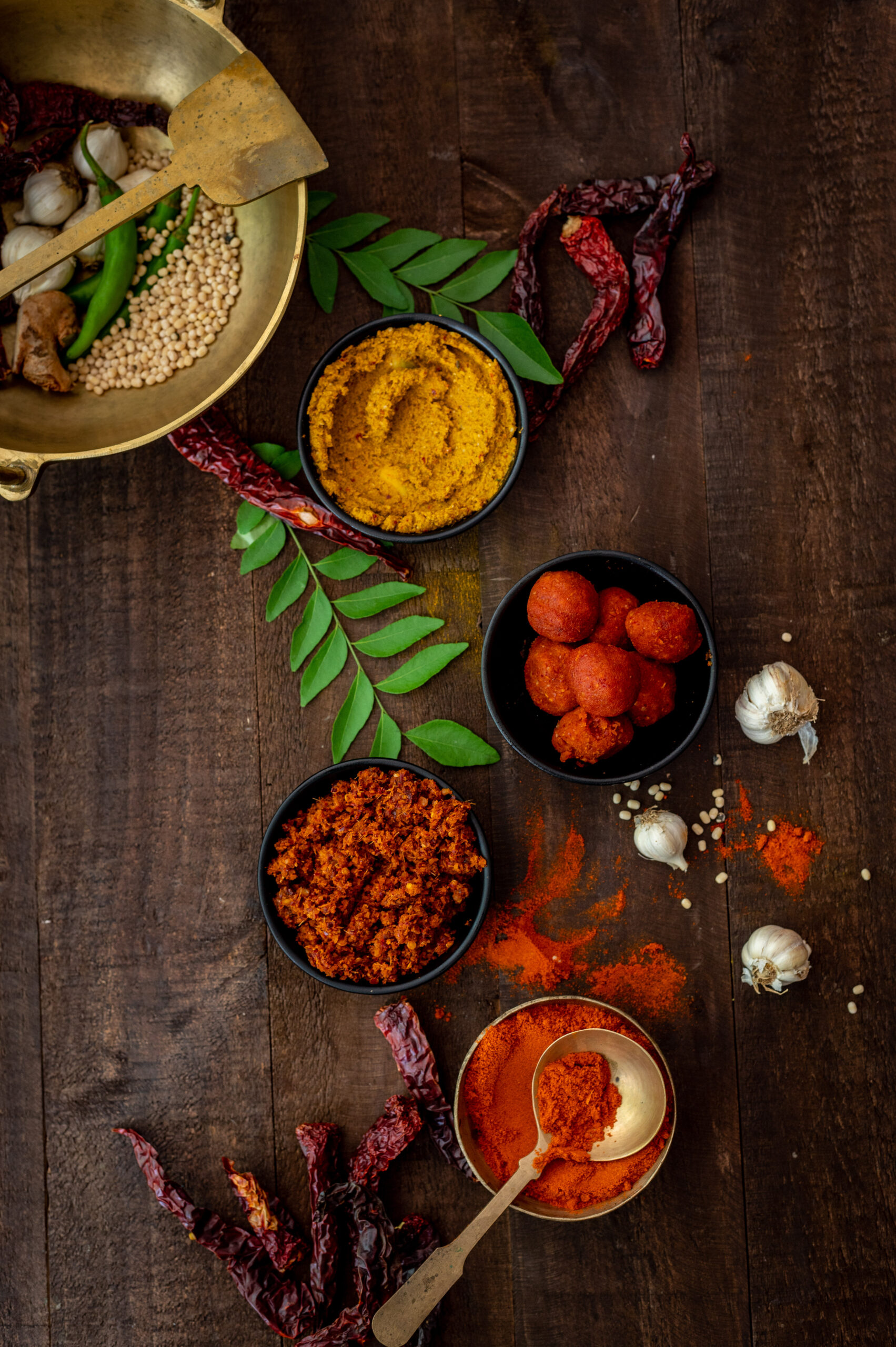
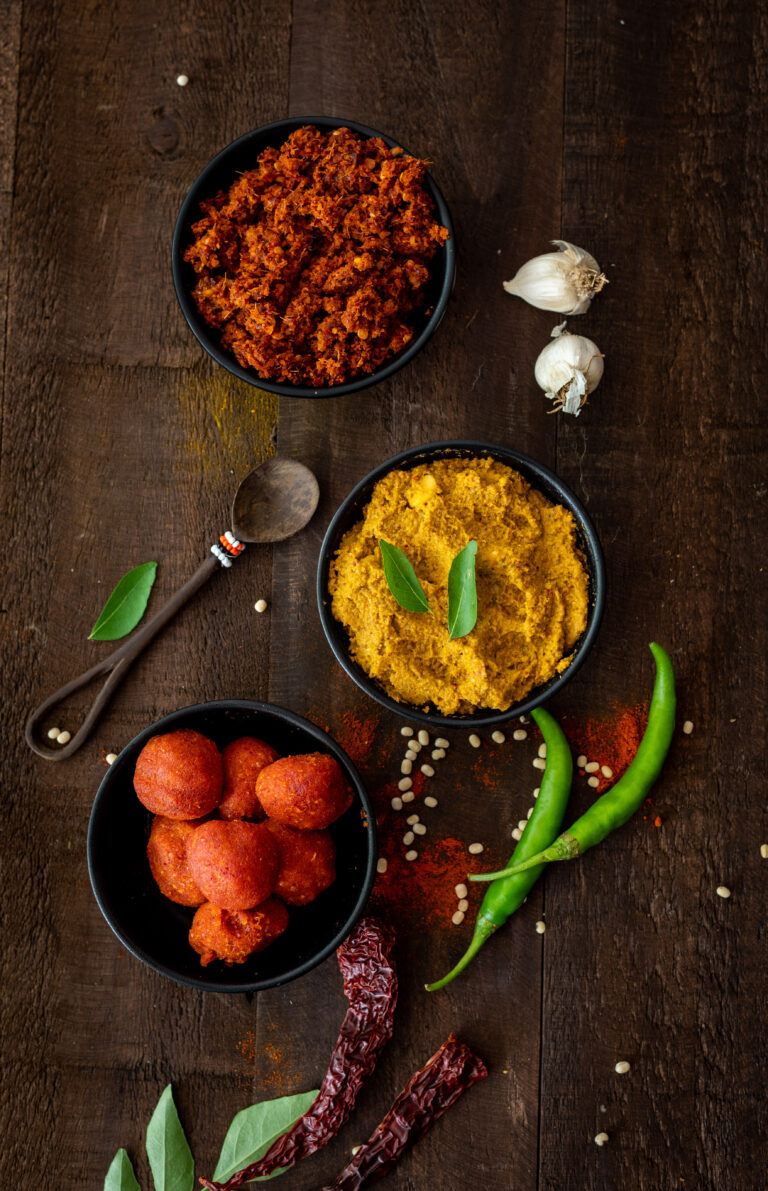
I’ll end this post by giving you a visual glimpse of the recipe that will round out this dip trilogy. In the photo below, you can see the raw mango thovayal and the lasun ki chutney – along with the forthcoming dish. Any guesses about what it is, or what its chief ingredient is?


This year’s mango series on my blog comes to a conclusion with a recipe that seamlessly leads into my next series: Indian dips and condiments. Call them chutneys, thovayals, sambals, pickles, relishes or by any name. They serve the purpose of enhancing a meal, and there are a huge range eaten across the subcontinent, often particular to certain communities. They tend to be heavy in spices and masalas so as to lend their strong flavours to otherwise mildly flavourful main dishes. It’s important to choose the right condiment, to complement rather than clash with the rest of the meal. Over the next few weeks, I’ll be sharing a selection of particularly tasty ones, which I hope you’ll enjoy pairing with mains of your choice. Today, I will be sharing the recipe for raw mango thovayal (or thogayal), a Tamil-style condiment that will elevate a variety of traditional and fusion meals.

I was born and brought up in Chennai, and I learnt Gujarati culinary traditions from my mother, who was also born and brought up in South India. She learnt her repertoire from her mother, who was raised in Gujarat but migrated, and who had replicated a menu that was as close to authentic as possible. However, it was also limited in terms of ingredient availability, as well as adapted to suit the climate here. This meant that certain winter vegetables consumed seasonally in Gujarat were not something my siblings and I, or indeed my mother and her own siblings, could have eaten growing up. There were certain recipes that I had no exposure to, and I am continuing to expand what I know about this cuisine. Many other food bloggers have provided inspiration, as has my sister, who lives in Mumbai and who learnt a multitude of dishes in the Gujarati Jain style from her mother-in-law. As you may know if you’ve been reading this blog for a while, I’ve also gained so much knowledge from my friends, who generously give their recipes not only to me, but encourage me to share them with my readers too.

Adaptability, resourcefulness and innovation are the traits of all good cooks everywhere, and a sense of culinary curiosity is what makes preparing everyday meals exciting. My own personal style is a medley of Gujarati cuisine, South Indian cuisines, Macrobiotics training, enthusiasm for veganism, travels aboard and growing up in a multi-cultural setting. As kids, while we ate Gujarati food at home, we also spent lots of time at the homes of our Tamil and Malayali neighbours (like Girija, whose mother made a brilliant ishtew) on practically a daily basis, thus enjoying a wonderful diversity of snacks and meals. My own children are now a third generation of Gujaratis who were raised in South India (I often jokingly say that their Tamil skills are better than their fluency in their mother tongue). If my own upbringing was multi-cultural, my children’s was even more so, and they have travelled and been exposed to even more of the world than I had by their age. Today’s generation and the generations to follow enjoy a blend of influences and experiences, and their food preferences reflect the same.

Coming back to thovayal, my recipe today is really a culmination rather than a combination of my own varied influences and experiences. It’s a raw mango thovayal made up of the memories of hundreds of meals at friends’ homes, prepared with simple ingredients that I happened to have in my garden and kitchen. In my home, this side dish is usually eaten with white dhokla (I’ll share a recipe for that soon). Dhokla is usually eaten with green chutney, but I prefer it with this thovayal, as the raw mango is a wonderful coolant for Chennai summers. Can you think of a more perfect example of a Gujarati-Tamil cultural melange?

Raw Mango Thovayal

(Yield: 1 cup)

1 cup cut, peeled raw mango

1 teaspoon cumin seeds

2 teaspoons urad dal

2 green chillies

2 dry red chillies

6-10 curry leaves

3 tablespoons fresh coriander leaves

½ cup coconut

2 tablespoons roasted gram (optional/alternative: peanuts)

2 teaspoons groundnut oil or sesame oil

Salt to taste


You can make thovayal with a variety of bases, simply replacing the raw mango. Coconut is popularly used as a base, for example. I use green chillies in mine so that the thovayal retains a refreshing green colour, but you could use garlic for the spice quotient instead.

To prepare this recipe, simply add all the ingredients together in a mixer jar and blend coarsely. Add no more than 3-4 tablespoons of water when you do so.

The thovayal will be of a thick consistency, comparable to a chutney. It can be stored in the refrigerator for 4-5 days.

Enjoy it as a condiment with any meal of your choice (do let me know in the comments how you pair it, please!). I think it could also work as an excellent marinade for chicken, or if added to roasted potatoes to enhance their flavour. It all comes down to your creativity.

I hope you’ve been making the most of the mango season through the wide range of recipes I’ve shared here that celebrate the fruit in both raw and ripe forms. In case you want to catch up, this is the big list of the delicious mango dishes I’ve posted over the years: vegan raw mango dal, raw mango rice, mango twist, mango osaman, mango lassi, mango salad, sweet and spicy mango pickles, ripe mango rasam and curry leaf and raw mango cooler. Here’s to many more seasons of culinary plenitude!
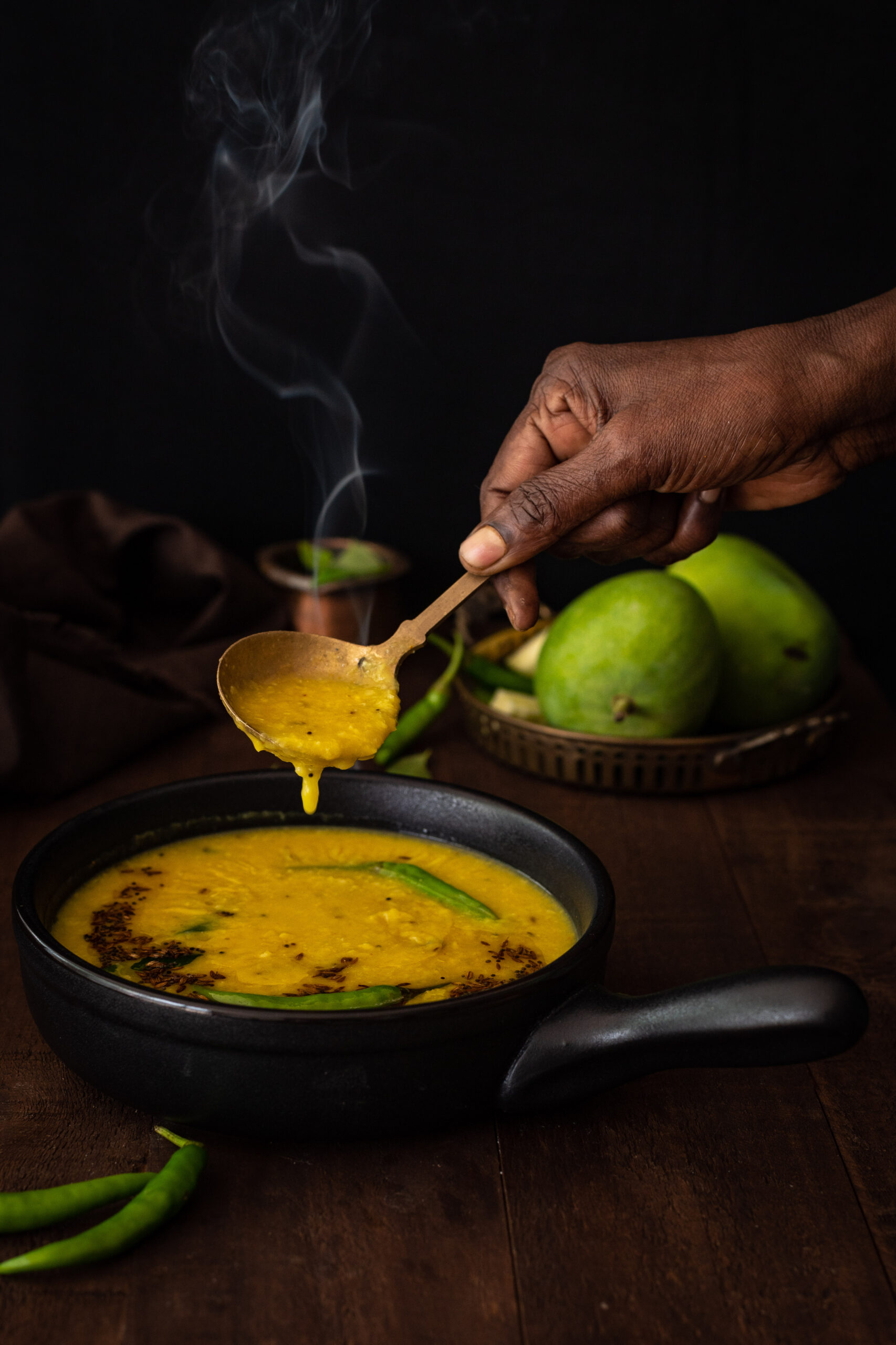
Dal is the daily staple in practically every Gujarati home, and it’s no different in mine. The classic style is slightly sweet and slight sour, and I shared the recipe for it a few months ago. I try to use a range of lentils, so that we get a good mix of nutritious elements as well as variety of tastes over the course of a week at home. Other dal recipes that I’ve shared earlier include this horsegram dal and this mixed dal. There are hundreds of varieties across India, and I’m happy to share one more recipe that I hope you’ll be able to add to your repertoire too.

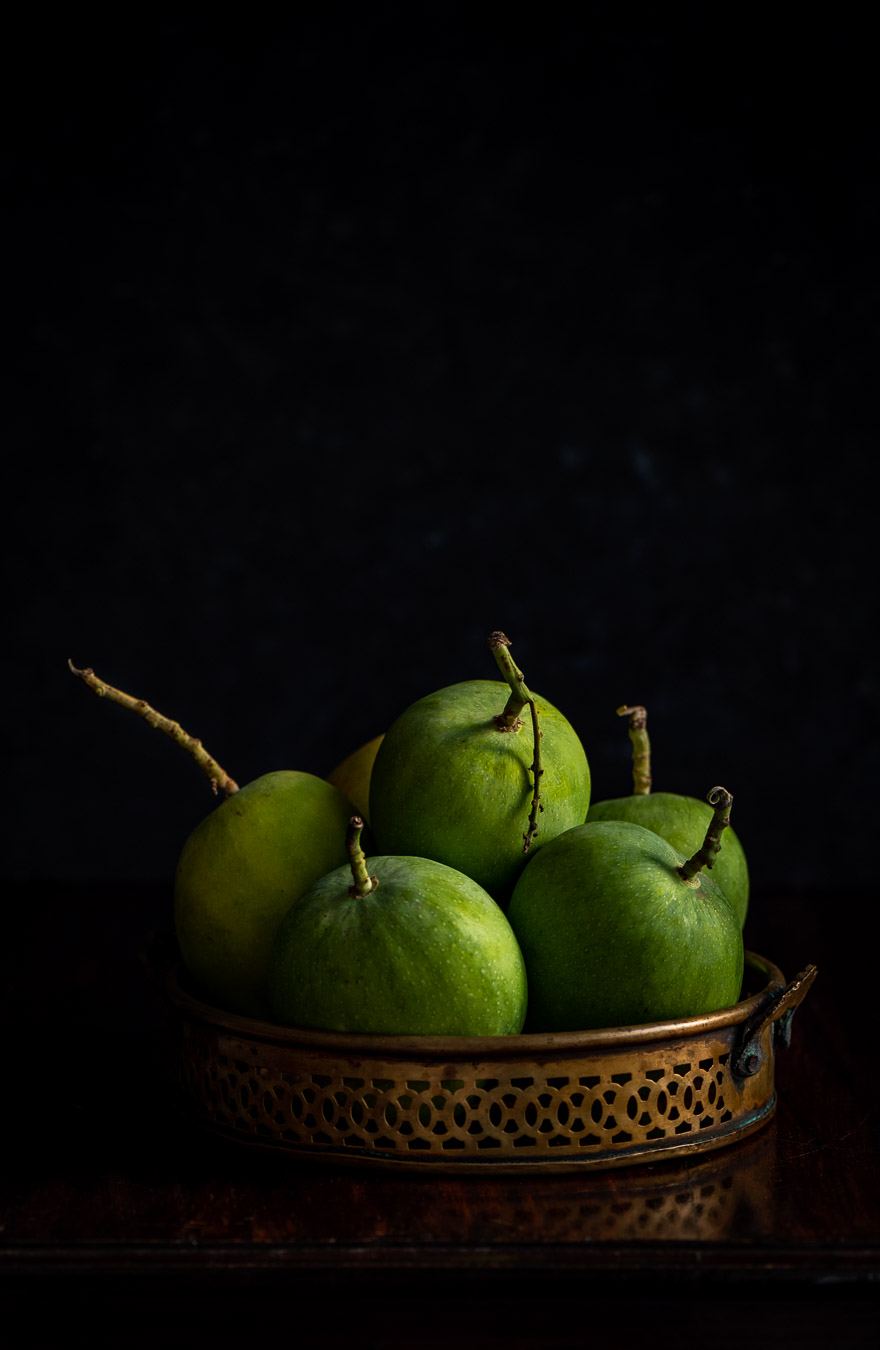
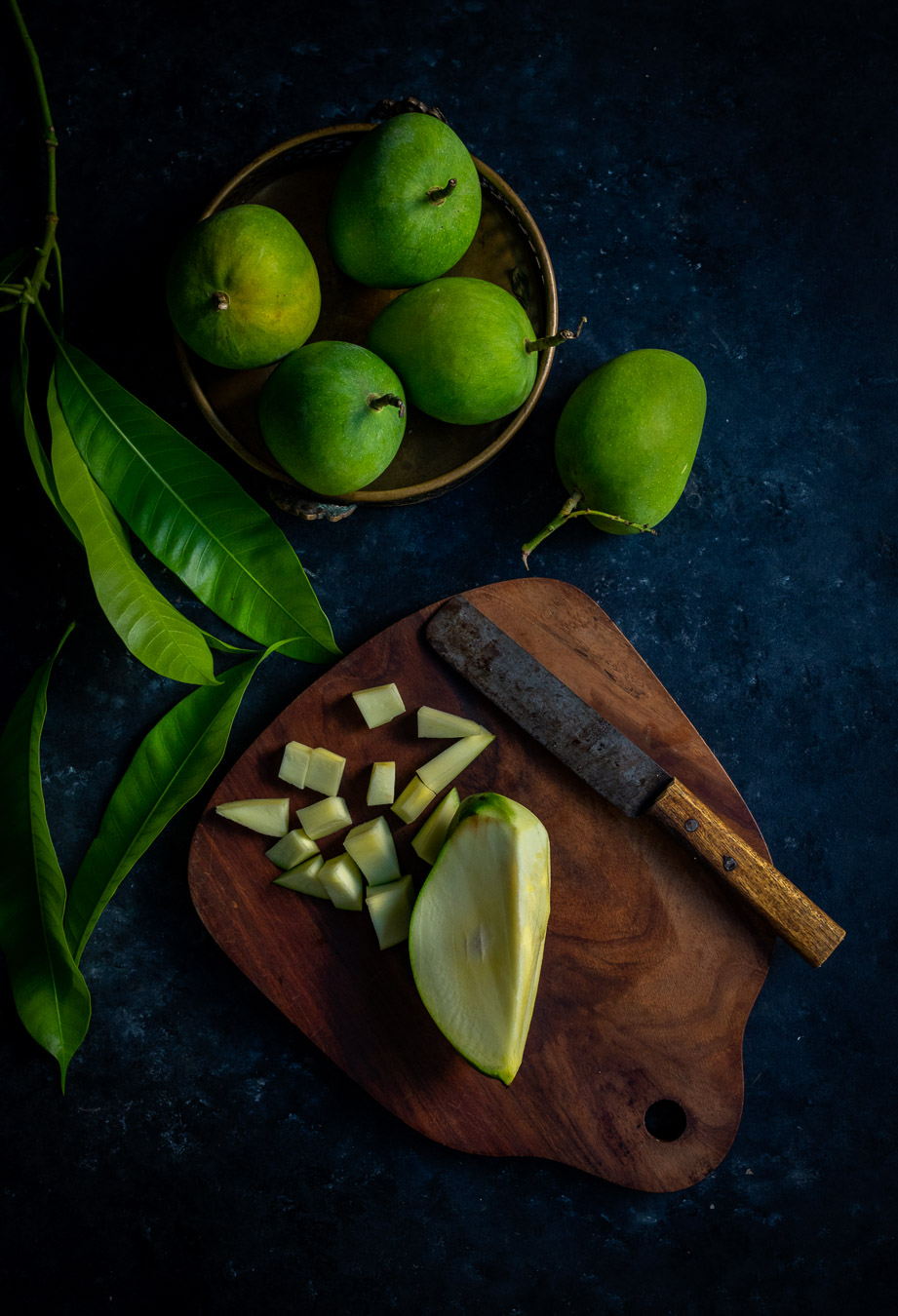
Just like there are hundreds of varieties of dal in India, there are also hundreds of varieties of mangoes. Other than the parrot-beaked, sweet-sour killimooku, I also have the not-sweet-at-all sindura growing in my garden. This won’t begin to fruit properly until May, however, and I had been eyeing it daily, wanting to make some amchur (dry mango powder), which requires a sour variant. Finally, I decided to put out an enquiry in a local resource group, asking if anyone had organic raw mangoes I could use for the same. Shefali, whom I had known through mutual friends, came to my rescue. She sent across a beautiful bounty from her own tree. Sour mangoes – and one very sweet gesture.

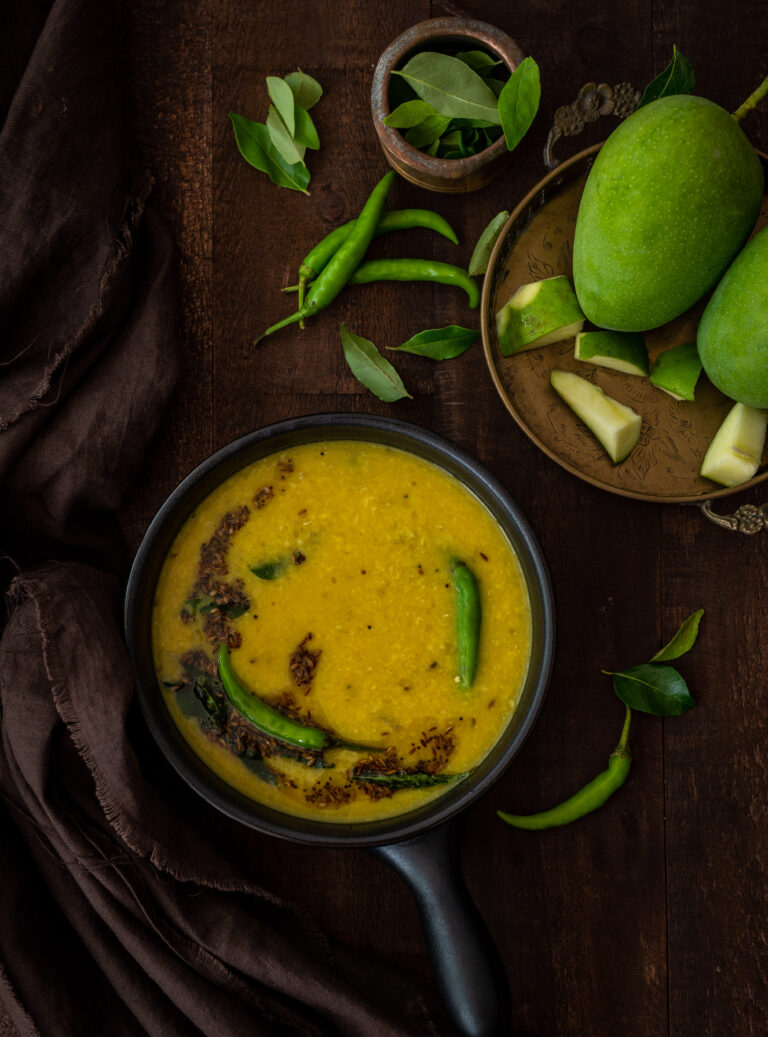
This vegan raw mango dal recipe came about because I had wondered whether raw mango would be a good substitute for the kokum or lime that I was using to add some tang to our daily dals. Since I had Shefali’s mangoes on hand for the amchur, I decided to give this a try. It worked out spectacularly – raw mango here isn’t just a condiment, but is in fact a vital component of this dal.

I know that many communities across the country make dals using either raw mangoes or ripe mangoes, and that this is especially common in Bengal and Kerala. The harvest in my home aside, I was already in ideation mode about what kinds of recipes to share with you through the season, and I knew I wanted to do something that would accompany rice or rotis. Having given you this ripe mango rasam a few summers ago, I was keen to offer a raw mango accompaniment this time. I had been thinking over how to, when this recipe grew organically from the kokum-substitution I’d mentioned earlier. Don’t you just love it when something simple clicks in a surprising way, and you realise that you’ve innovated something special? I’m all the more excited these days when I discover I can make something the vegan way, and this recipe is vegan too.
Raw mangoes are nutritious, as they are high in Vitamins A, B and C, as well as magnesium and calcium, thus offering health benefits ranging from the cardiac to the dental, with some heat-busting and hydrating properties to boot. They’re great for summers as they can prevent water loss, replenish the thirsty body, as well as help against stomach ailments arising from the heat. Digestive detoxification, lowering cholesterol levels and improving hormonal functions are some of the other qualities they are known to have.

As for the lentils I’ve chosen to use in this recipe, they are combination of split yellow mung dal and toor dal (pigeon pea). The former are lighter on the stomach than the latter, hence the mingling of the two to create a dish that’s easier to digest while still giving you the benefits and taste of both lentils. Since we mostly eat this dal at lunch time, I also avoid the use of garlic on weekdays as most of us have to get back to meetings and so on during the rest of the afternoon. If you make a thick preparation, this dal is ideal for rotis, whereas a thinner preparation is best enjoyed with rice.

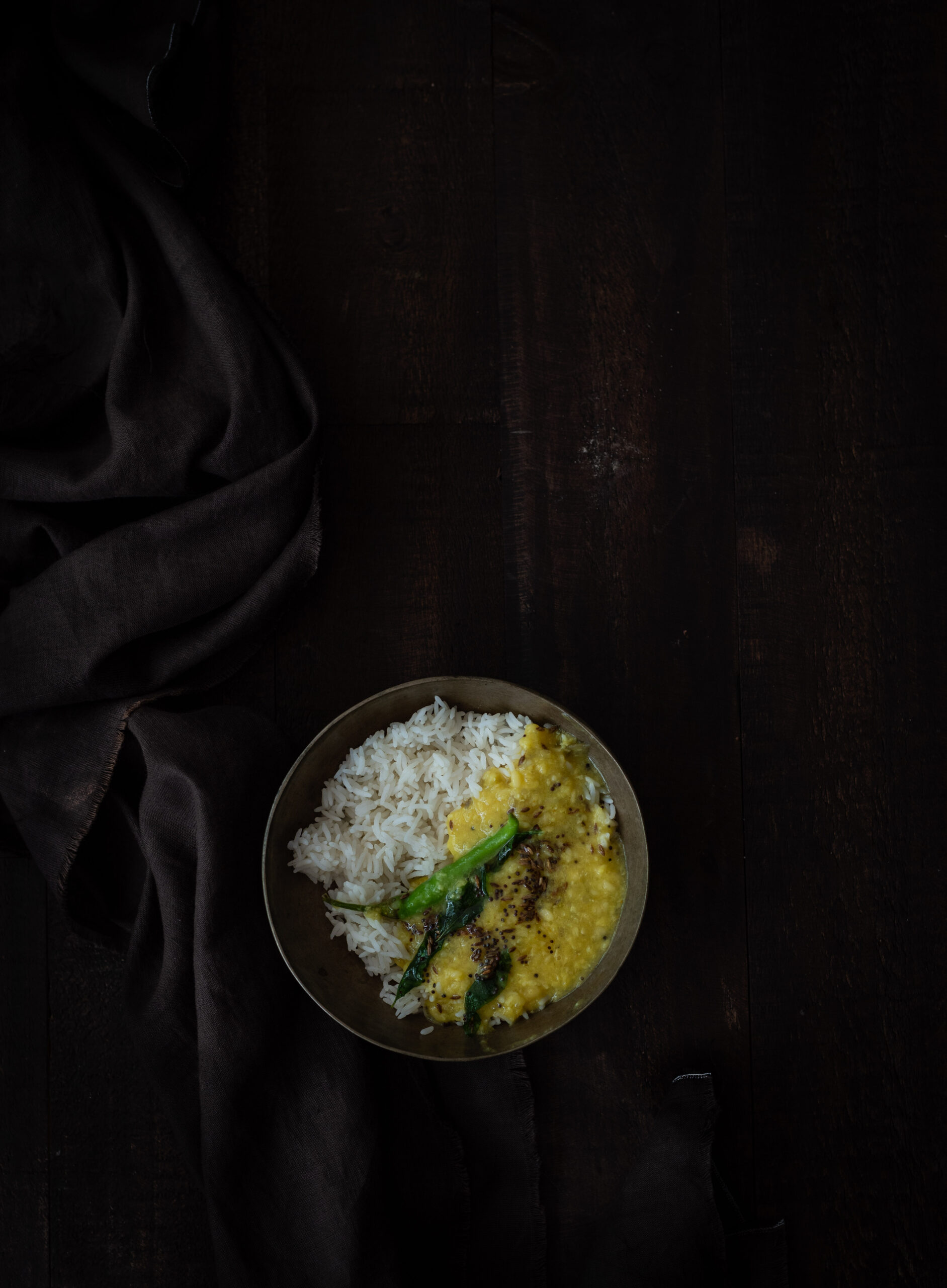
As for me, being a carb-observant eater, I often consume a bowlful of dal with just a tablespoon of rice, topped with a liberal tempering of ghee (not vegan, I know – but this is completely optional). This becomes such a healthy, delicious meal all by itself. I am still light on my feet afterwards, and that little extra kick that comes from the raw mangoes when I’ve made this particular recipe that day is so satisfying in itself.

Raw Mango Dal

(Yield: 4 cups)

¼ cup toor dal
¼ cup split mung dal
½ cup cut raw mango
1½ cups water to cook
Salt to taste
1 tablespoon oil
½ teaspoon mustard seeds
½ teaspoon cumin seeds
¼ teaspoon turmeric powder
1 teaspoon green chili/ginger paste
¼ teaspoon asafoetida
½ teaspoon coriander/cumin powder
4-6 curry leaves
2 tablespoons finely chopped coriander leaves

Rinse the dals together and place them into a pressure cooker, along with the cut raw mango and turmeric.

Let this cook until tender. Mash the dal with a masher and set aside.
In a kadai, add the oil, and once it has heated, add the mustard seeds. You may substitute the oil with ghee if you are not making a vegan preparation. Once they begin to splutter, add the cumin seeds, curry leaves, asafoetida and finally the chili/ginger paste. Sauté for 2 seconds and add the mashed dal. If you like the flavour of garlic, you can add some during the sautéeing.

Add salt and coriander/cumin powder. Mix well and serve hot with the garnish.

If the mango is not sour enough you can add more chunks of it or even squeeze in some lemon or lime.

If like me or any Gujarati you know, you have a sweet tooth, you could also add some jaggery to compete with the tang of the raw mango. This would make for a most delicious dal, with a medley of tastes.

As it is, this is a very simple and appetising dal, with the flavours of the mango and the lentils evident because it is not overloaded with spices or condiments. It’s not the kind of dal one makes when a burst of masala is preferred; instead it is the comforting, homemade kind, albeit with a little kick from the raw fruit.

I hope that this vegan dal made with sour mangoes adds nutrition to your diet, gives you energy and strength, and as strange as it may sound – sweetens your day during these challenging times with its sheer deliciousness.

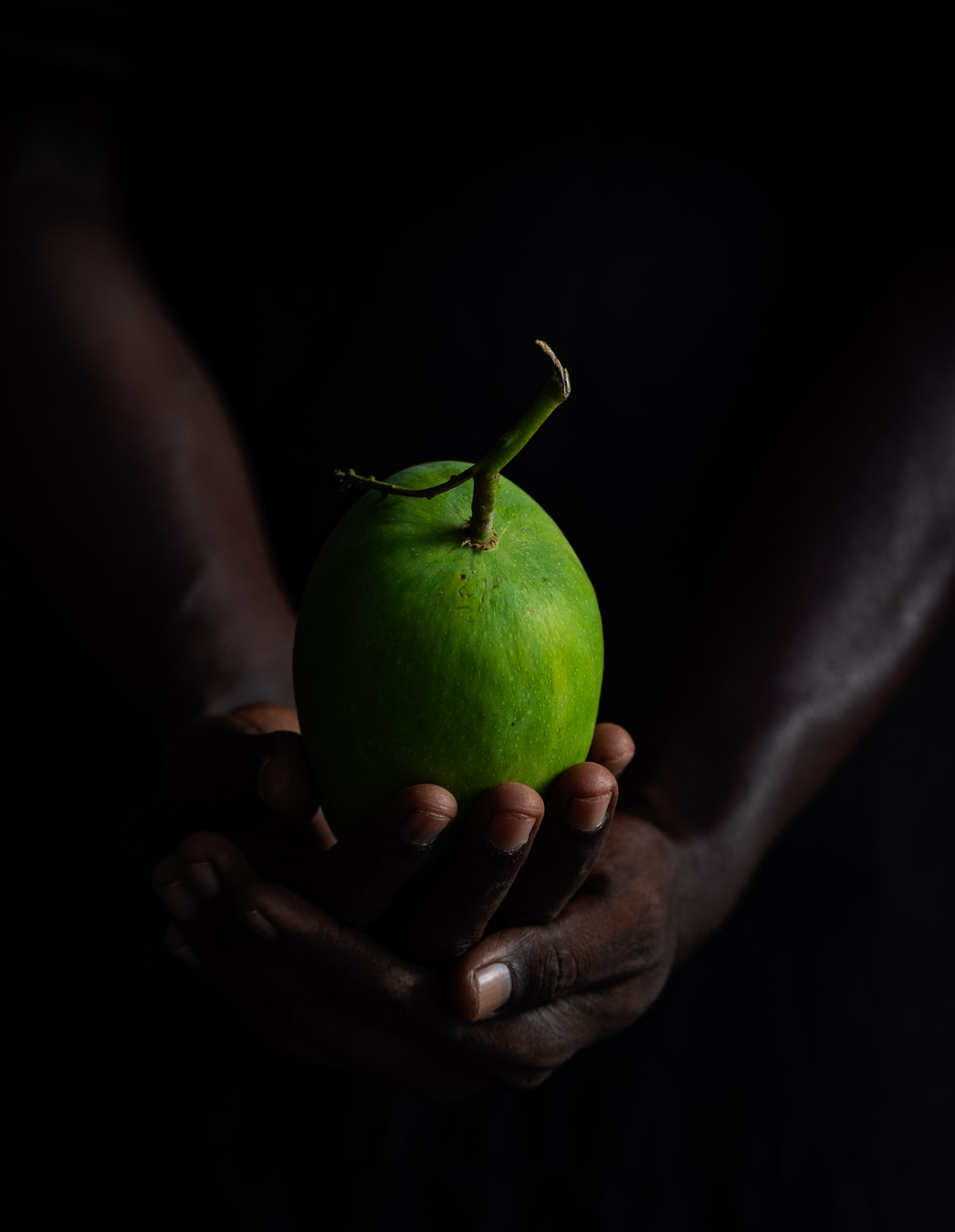
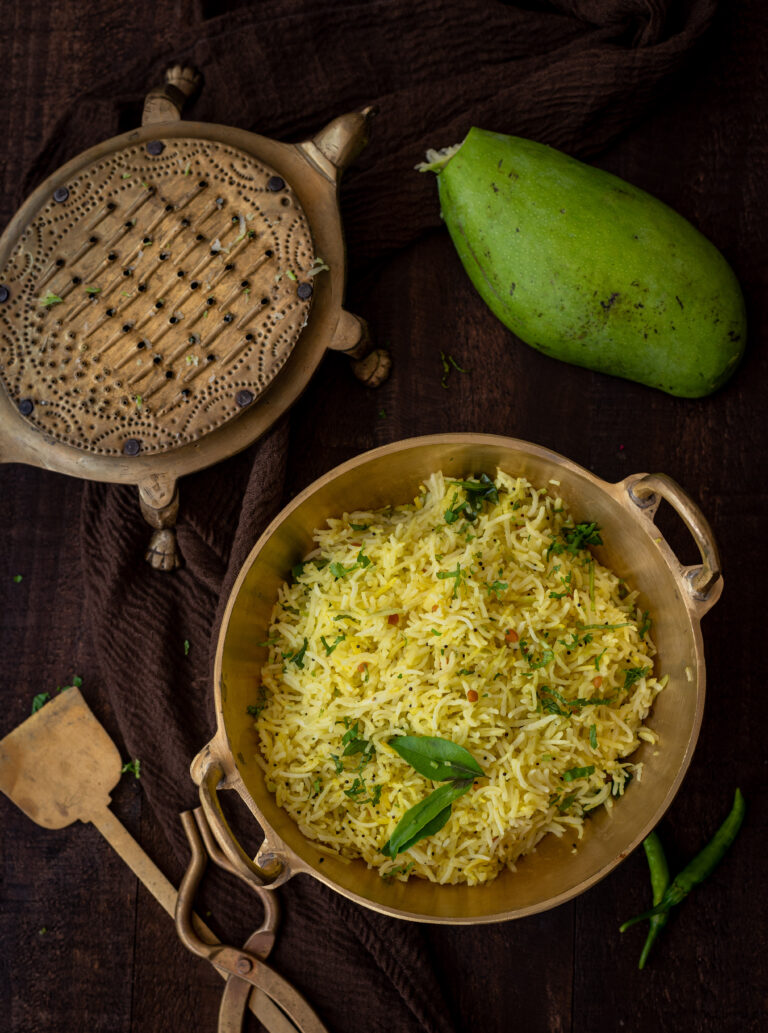
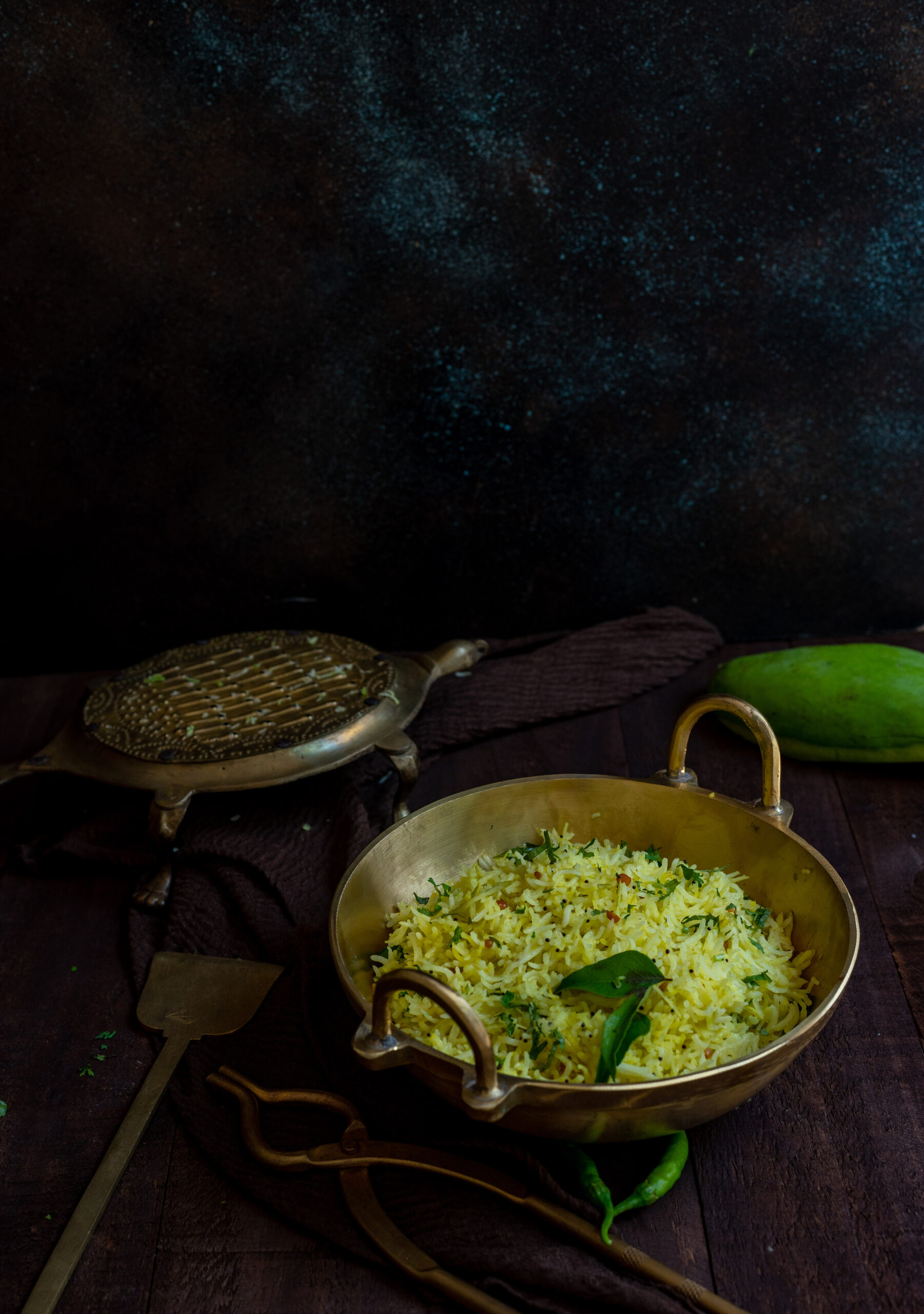
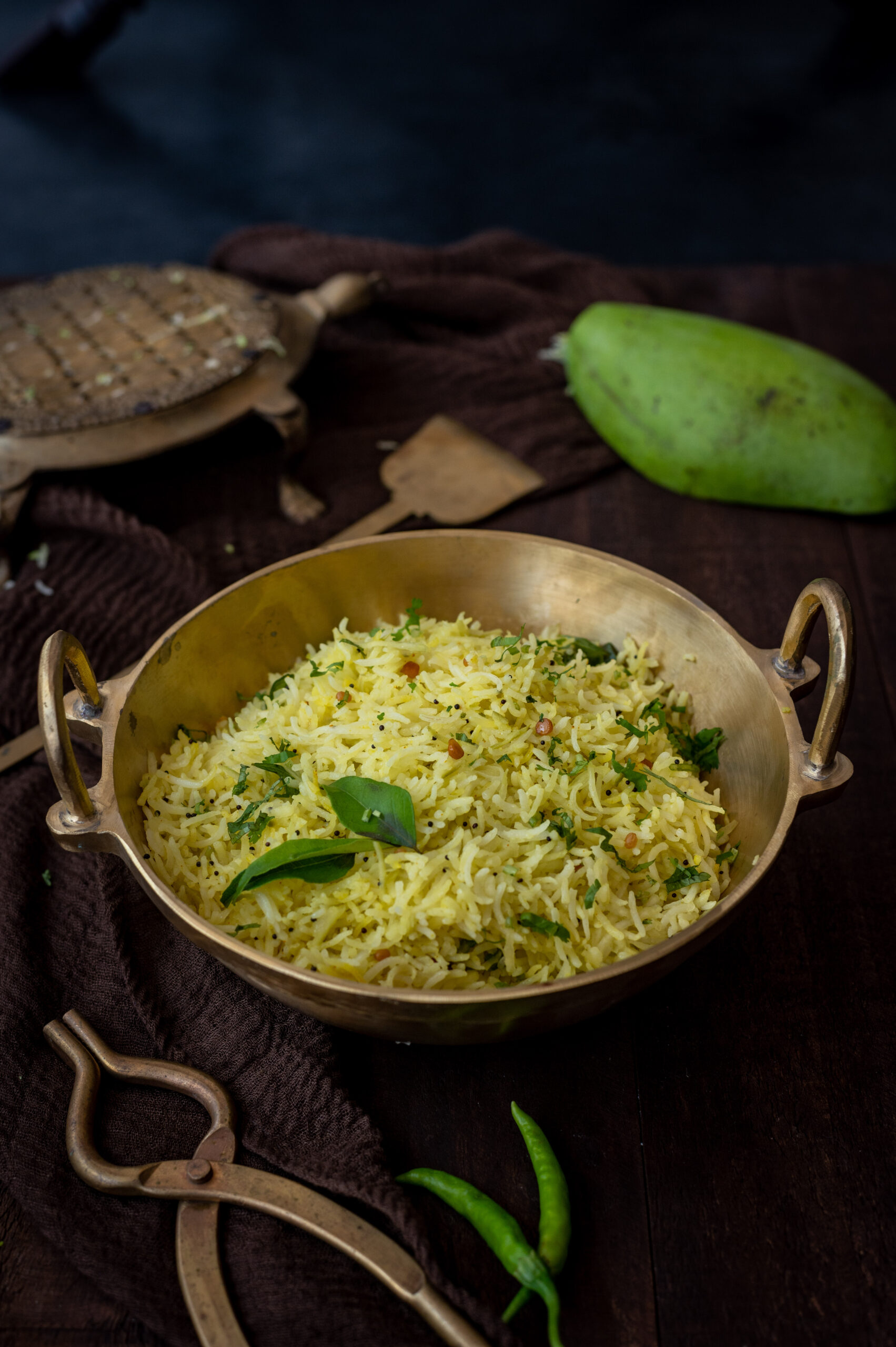
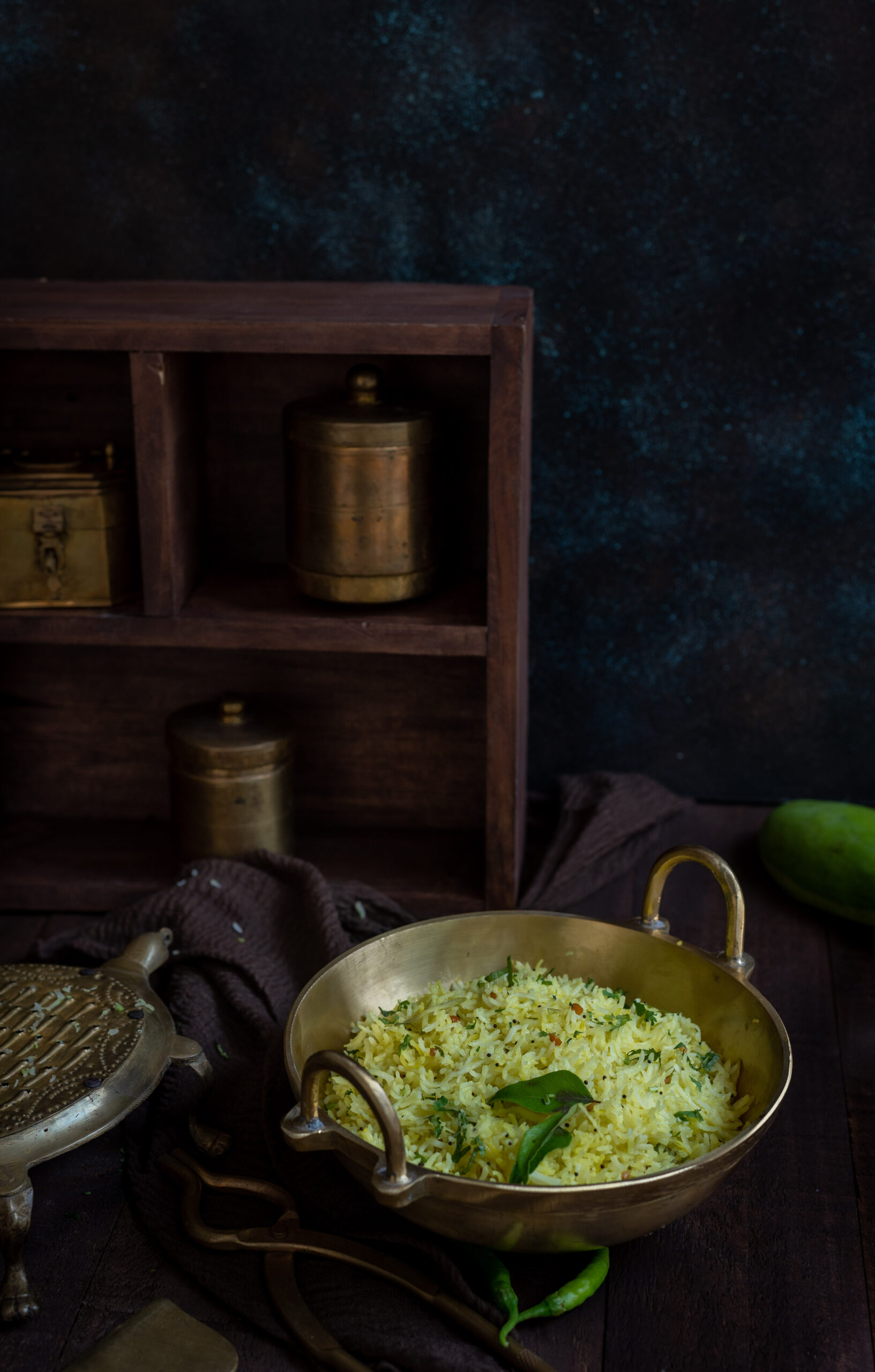
We have mango trees in the back garden, and every summer I seek out new ways and means to utilise their bounty. This season, I’ve made aamchur – dry mango powder prepared by washing the fruit slices, drying them, then powdering them. It works in cooking as a lime substitute, and is just as healthy and as rich in Vitamic C. I’ve made pickles, and if you’re keen to do the same, you can take your pick of either sweet or spicy kinds from the recipes I shared in this post. I’ve made desserts, like the easy and very satisfying mango twist that I shared last week. Then, I thought – why not make a rice dish with some mangoes, too?

Coconut rice was one of the components of the South Indian Buddha bowl recipe, and this raw mango rice has a similar concept. It’s also like spinach rice, curry leaf rice or any other rice preparation that infuses the flavours of a particular ingredient. It’s interesting how we efficiently and creatively play up staples like rice as well as rotis through simple ways to elevate the basics. Seasonal flavourings are especially popular, just as it is with the recipe I am sharing today.

What I have growing at home are killimooku mangoes, known for their distinctive parrot-beak shape, as described in this raw mango cooler recipe. To my friends and readers around the world – did you know that every single kind of mango has its own flavour? My mother taught me how to select mangoes when I was very young, so I’m adept at differentiating between many of the popular variants on the market at the moment (although India has so many types of mangoes that to tell them all apart would truly be a kind of expertise!). My personal favourites are sweet, juicy ones – specifically the Ratnagiri Alphonso grown in Maharashtra (the state shares a common border with Telangana, where the slightly different Andhra Alphonsos are grown) and the Banagapalli grown in Andhra Pradesh’s Kurnool district, which can come in such large sizes that a single mango can sometimes suffice as an entire meal. Today, however, I’m reaching for what is literally in my backyard. The killimooku is not very sour, but neither is it sweet. It carries a lovely tang that truly uplifts the taste of rice.

This raw mango rice is both easy to prepare and highly adaptable. It travels well, so it’s perfect to pack for a day trip. It can be eaten plain, so you won’t even have to worry about any spills from the accompaniments. It can also work quite well in a Buddha bowl. I presume, based on the flavour palate, that it can be matched exquisitely with a fish curry, and I’d love to hear from those of you who enjoy seafood about how this recipe works in such a meal.

I made a large pot of this over the weekend and it was consumed quite quickly at home, with my family eating it plain, with rasam, with a potato roast and so on. The idea came to me because I saw a few raw mango rice posts on Instagram recently, and realised that I hadn’t made this dish in years. I did recall that it was something we ate now and then while we were growing up, so I knew that my sister would almost certainly have our mother’s preparation in her repertoire. She lives in Bombay, whereas I am based in Chennai, and we often do recipe exchanges, wherein I share Tamil styles like kootu and poriyal with her and she pulls out authentic Gujarati dishes for me. Together, we create quite an eclectic menu. Then again, I’ve also eaten raw mango rice as part of the sumptuous banana leaf service at South Indian weddings too, so perhaps – just like the mango – we can consider this a quintessentially Indian dish!

Raw Mango Rice

(Yield: Serves 2)

½ tablespoon oil

½ teaspoon channa dal

½ teaspoon urad dal

½ teaspoon mustard seeds

1 green chilli (sliced)

A few curry leaves

½ teaspoon turmeric powder

2 cups cooked rice

1 cup raw mango (grated)

Salt to taste

A pinch of asafoetida

Coriander leaves (to garnish)


Heat a kadai and add the oil. Once it has heated, add the channa dal and the urad dal. Allow them to turn golden, and then add the mustard seeds. Once they begin to splutter, add the asafoetida, curry leaves and green chilli.

Next, add the rice and the turmeric, along with salt to taste. Mix gently. Once it has all come together, turn off the flame. Finally, add the grated mango and mix once again. If you only have access to sour mangoes, rather than the delicately sweet-sour killimooku variant that I have used, use a smaller quantity than listed above.

Garnish with coriander leaves and serve hot with the accompaniments of your choice, or plain and simple. As I said earlier, I’m very curious to know how you’ll pair this rice, and I would simply love to hear about it from you in the comments!

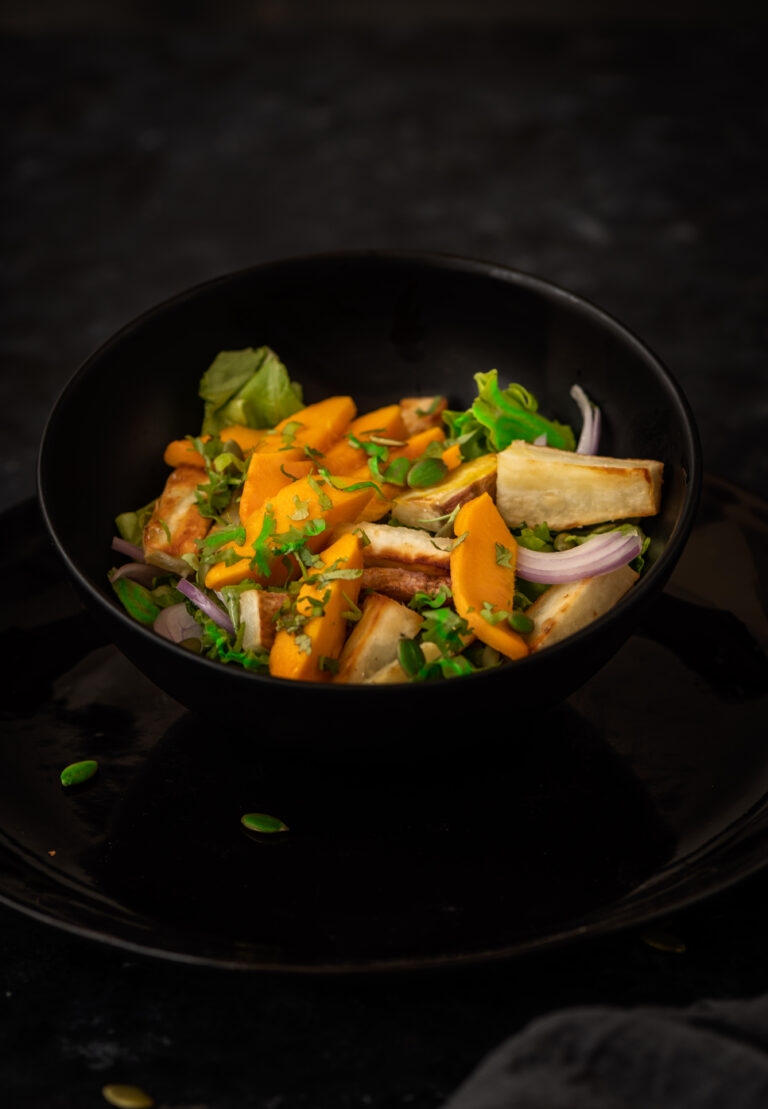
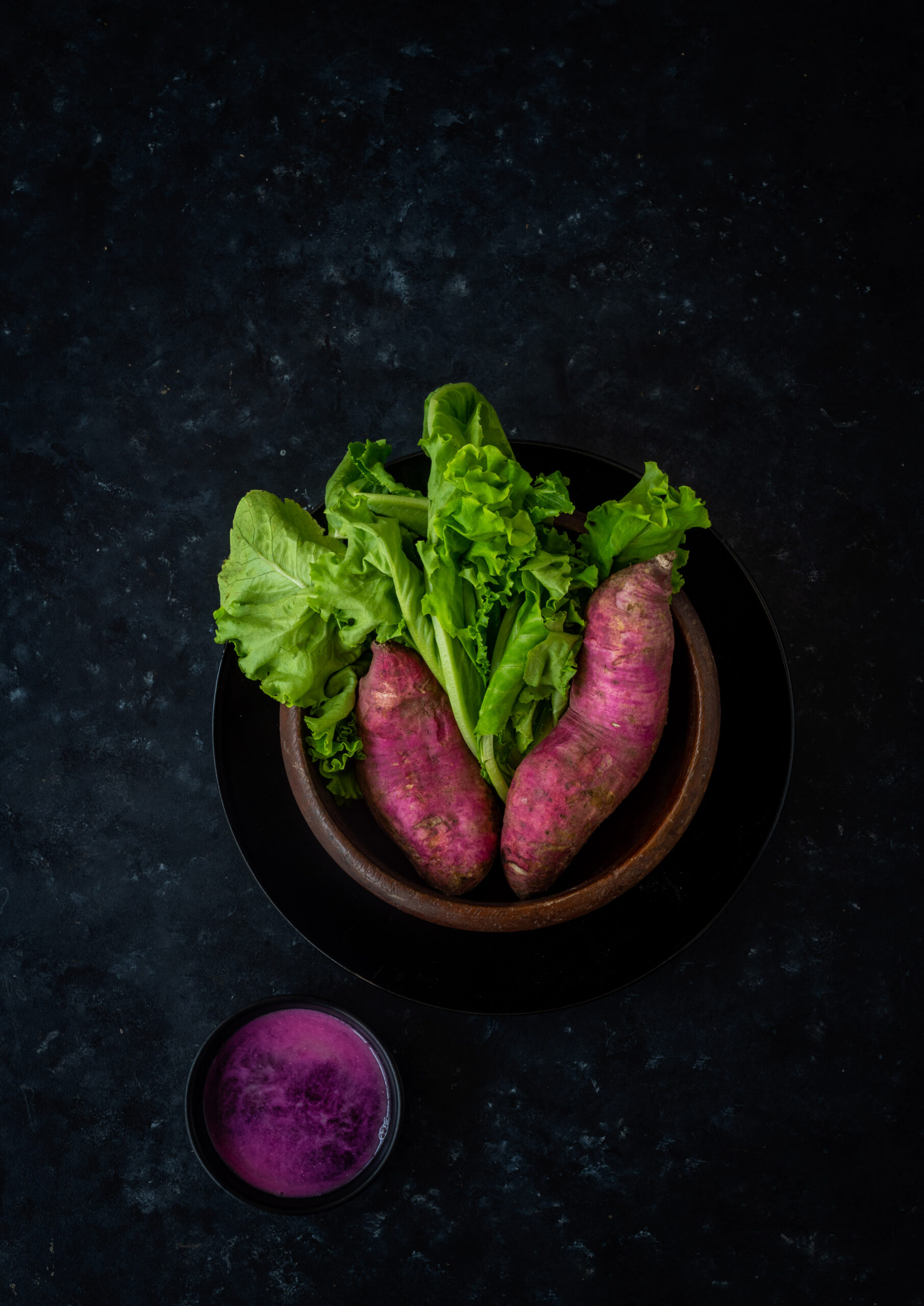
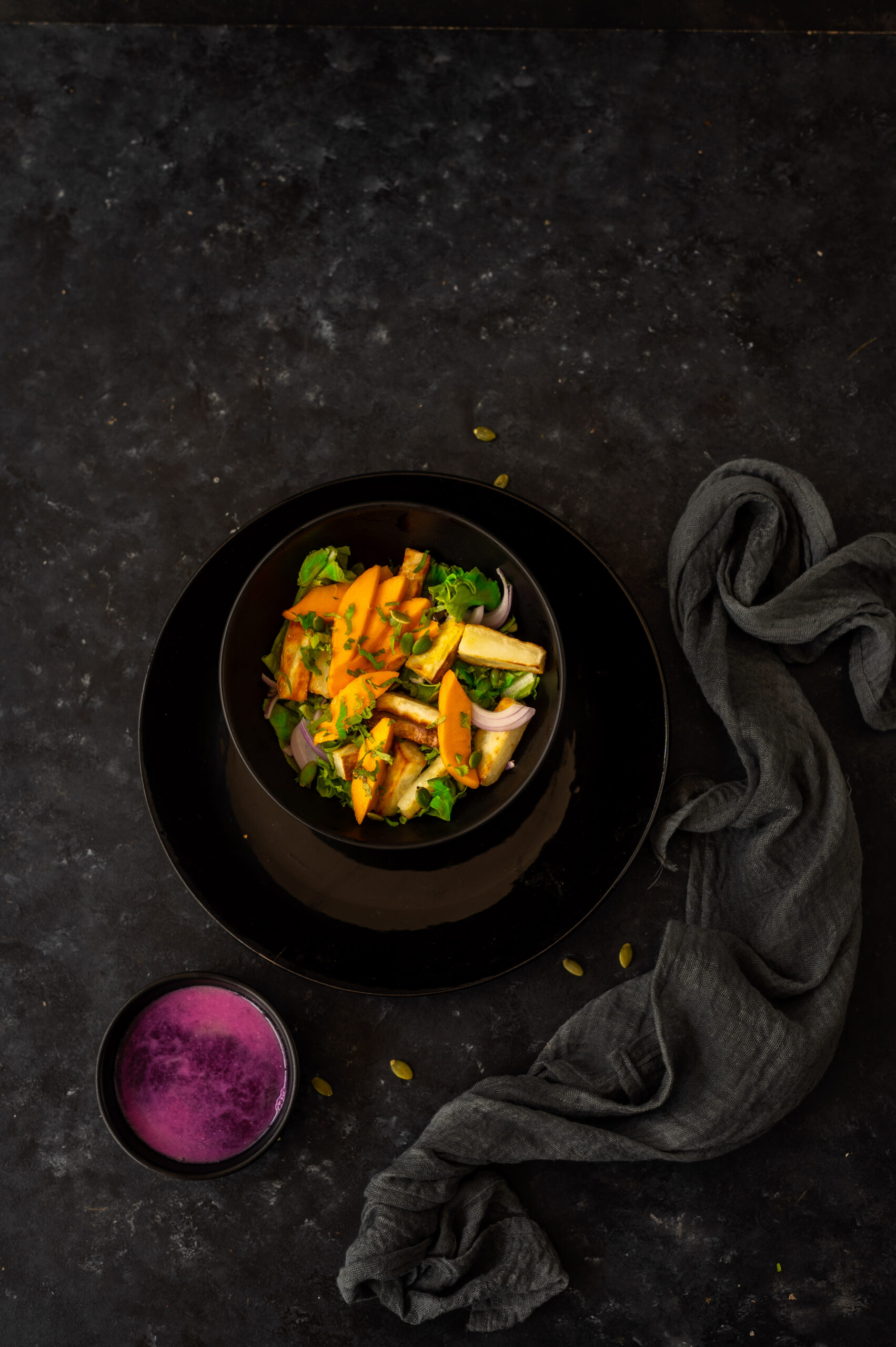
The summer is here, and so are the sweet potatoes – and the mangoes! I couldn’t resist slicing some of these wonderful seasonal harvests up and putting them to delicious use in my kitchen. As you may know, we eat a lot of salads at home, and I’m always on a quest to add more variety and novelty to mine. The secret is in hitting on the right balance of flavours or textures, and pairing the dish with a dressing that uplifts it. I think I have a star in this one, and it’s delightful to me that it features one of the vegetables I have always enjoyed, alongside a fruit you just can’t go wrong with during an Indian summer.

I’ve spoken about mangoes plenty of times on this blog, so let me share my love for sweet potatoes as well.

The first way in which I enjoyed sweet potatoes was in a thick kheer or payasam that I used to have as a child. When they were in season and therefore plentiful, my mother would boil them, mash them and add milk. This would make for a very healthy dessert that required no further sweetening. She was an expert at such exquisitely simple milk-based desserts, and inspired me to create some of my own.

Certain memories come up when one contemplates any kind of familiar food. For me, the other important personal and cultural association that sweet potatoes evoke is that they are one of the ingredients that are permissible during the Faraali fasting that takes place in the month of Shravan, observed by Vaishnav Gujaratis. My mother maintained these fasts while we were growing up, and during those times she ate sweet potatoes frequently, and so did we.

Faraali is a relatively lenient type of fasting: it is not that consumption is not allowed, but that certain types of harvest are not permissible. Grains are taboo during this time, whereas tubers like sweet potatoes and yams form the bulk of the fasting menu.

Years later, through my Macrobiotics studies and my constant inquisitiveness about culinary science, I am able to understand and admire the beautiful logic of all fasting traditions, from Lent to Ramadan to Paryushan. I realise that Faraali must originally have been all about honouring the cycles of nature, avoiding certain types of harvest so as to allow the soil and the plants to replenish themselves during the rainy month of Shravan. It would also be the right time for the human body to purify itself with vegetables and fruits, as the weather would mean that people stepped out less and would also not be able to work in the fields. Fewer carbohydrates would be required, as less energy was required, so grains need not to be a part of the diet during that time. This is my perspective on the reasons behind this religious practice, and I often feel that when we think deeply about rituals, many of them will have a practical function behind them. Our ancestors were far more in sync with nature than we are, and had the wisdom to develop daily and seasonal routines that respected and kept this balance.

So for us today, as modern human beings with eclectic palates, one way to stay in sync is to accept that heavy lunches in the summer time make us more lethargic, and can diminish our productivity over the rest of the day. Salads cut out the heavy carb load of rice and grains, while also being filling, delicious, nourishing – and visually vibrant, which improves the mood and whets the appetite. If you’re a fan of this food category, be sure to explore my archives, where I’ve shared many of the tried-and-true salads that are super hits at home: this one where the passion fruit dressing is the star, another season-suitable mango salad, a nutritious millet salad, and a few dishes you may not have thought of as salads but really are, like peach salsa, sundal and green moong bhel. Another health-boosting eating habit is to regard a salad not as an appetiser or an accompaniment, but as a meal-in-a-bowl. It’s really just about portions.

Coming specifically to this summery sweet potato and mango salad, I am often a bit suspicious of the unusual sweetness of the sweet potato chips that many restaurants serve, and I prefer making them myself. The technique is very easy, as you’ll see below. You can substitute the sweet potatoes for yams, and use the same thin-sliced technique to fry them. These crispy sweet potatoes are what I use in this salad. If you prefer not to fry them at all, you can have them steamed and sliced. It all depends on the textures you’re building the salad with, and any health or taste preferences that you may have.


Seasonal Sweet Potato And Mango Salad

(Yield: 1 bowl)


½ cup sliced sweet potato

½ cup sliced ripe sweet mango

2 cups lettuce

½ onion

2 tablespoons coriander leaves

1 teaspoon olive oil

1 tablespoon sunflower seeds


Dressing:

Salt to taste

1 tablespoon honey

2 tablespoons lemon juice

4 tablespoons pomegranate juice

A pinch of black pepper

1 tablespoon olive oil


In a bowl, add all the dressing ingredients together. Store this in the fridge.

Heat a pan and add the oil. Once the oil has heated, add the sliced sweet potato. Make sure the sweet potato is sliced thin so that it can cook faster. Cover with a lid and allow to cook for a few minutes on a low flame.

Then, remove the lid and increase the flame to medium. Allow the slices to turn crisp. Flip them to ensure that both sides are well done. Once they are fried, set them aside.

Prepare the salad by putting the sliced onion and torn lettuce into a bowl. Add the fried sweet potato crisps and the fresh mango slices on top. Add the dressing, garnish with coriander leaves, and mix gently. Allow to cool for some time, and serve.

I hope you’ll enjoy the mix of crispiness and sweetness in this simple yet satisfying sweet potato and mango salad. It’s just perfect for this hot weather, and keeps you light on your feet after the meal. Speaking of the summer, since we are in mango season here in South India, you can expect next weekend’s post to celebrate the fruit. In the meanwhile, maybe you’ll want to check out the many ways the mango has starred in my recipes over the years?

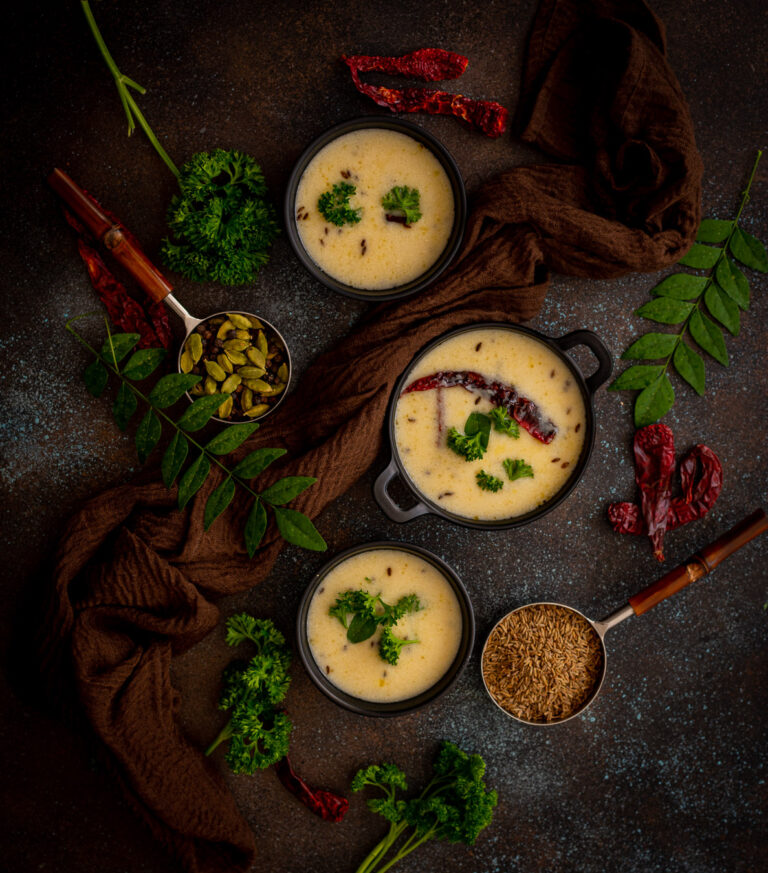
I dropped references to kadhi not once but twice on this blog recently, during the grains-based Gujarati recipe series I was sharing. I’m delighted to feature the recipe for this wonderful accompaniment today, and I hope it gives a superb flavouring to all your khichdis, khichdos and much more.

Kadhi was traditionally made from soured buttermilk. Here in South India, even today, many households make our dairy products at home. I still prepare my daily yoghurt and let it set overnight. While I was growing up, my mother and most of our neighbours also made butter, cream and ghee regularly. As long as milk and a fridge were available, these resourceful homemakers ensured that their families had a steady, homemade supply of these essential ingredients.

So my mother would often collect cream in a pot, store it in the fridge, and then make white butter from it. We absolutely loved this as kids, and ate it with everything, including rotis. There would always be quite a lot of white butter prepared, and from it she would also make ghee. The residue of that white butter would be soured buttermilk, and from this she would make kadhi. It’s truly amazing how far she could stretch a vessel of milk!

So on the days when she made butter, we would almost invariably have kadhi, because she would never let that soured buttermilk go to waste. My father loved this kadhi, and never ate that great Gujarati mainstay, dal (the rest of my family are ardent dal enthusiasts, and you can check out my recipes for horse gram dal, mixed dal and classic Gujarati dal). I prefer lentils and legumes myself, but always prepare some kadhi for my father when he visits.

As I’ve said before in the posts in the Second Helpings series, culinary innovations are truly the forte of ordinary people over so many generations, who would dream up ways and means to make every bit of food go an extra mile. I too have learned that another good way to make kadhi, rather than to prepare butter and use its residue, is with yoghurt that’s been in the fridge for a few days.

If you’ve never tried a kadhi before, I would describe it as being an equivalent to the South Indian mor-kulambu. A kadhi is thinner in consistency, but it has a similarly spicy, slightly sour flavour. There are also mango kadhis, in which chunks of the fruit are added to the mixture when they are in season. These may be similar to the Tamil manga pulissery. Dumpling kadhis are another interesting variant. The recipe I will be sharing with you today is the base on which these variations are built.

Gujarati kadhi is sweetened with sugar, as with many of our dishes. This is a culinary twist that’s a signature of the cuisine, and you may prefer to make yours without it. We also do not add turmeric, and prefer to keep the kadhi white in colour. It is always tempered with ghee and just a few spices, so that just a subtle hint of their flavours are infused.

There’s one way in which my kadhi differs from my mother’s, and that is in my addition of curry leaves, which she never used. I have a sense that curry leaves as an ingredient are a South Indian element, which is why they seem to be absent in Gujarati cuisine. I’ve never come across any dish that uses curry leaves in any form in Gujarat, whereas here in Tamil Nadu we prolifically use powders, chutneys and the fresh leaves too. I’ve noticed in my travels there, especially to agricultural areas, that curry leaf trees aren’t abundant either. But like I said, this is just a sense of things. I would absolutely love to hear any insights you may have into curry leaves and their role or lack thereof in Gujarati culture or cuisine. Please do shed some light if there’s anything you may know about this topic.

I’d love to hear those insights over a tummy-filling thaali, but in these socially-distanced times, here’s the next best thing: my recipe, and a request to share what you know in return!

Kadhi

(Serves: 2 people)

½ cup yoghurt

1¼ cups water

1 tablespoon chickpea flour

½ teaspoon green chilli/ginger paste

Salt to taste

1 teaspoon sugar (optional)

1 tablespoon ghee

½ teaspoon cumin seeds

¼ teaspoon methi seeds (fenugreek)

A pinch of asafoetida

2 dry red chillis

2 cloves

1 stick cinnamon

1 cardamom

1 sprig curry leaves

In a pot, add the yoghurt, water, chickpea flour, ginger and chili pastes as well as the salt. Beat well until the mixture is fully incorporated.

Allow this to cook for approximately 7-8 minutes on a medium flame. Stir constantly so as to prevent the yoghurt from splitting.

Add the fenugreek seeds. Boil some more. Once this has cooked, set aside.

Prepare the tempering. For this, use a small pan. Add ghee and then add the cumin seeds, cardamom, cloves and dry red chillis. Once the cumin seeds splutter, add the curry leaves and the asafoetida, and immediately pour the tempering into the kadhi.

Garnish with coriander leaves, stir then serve hot. As mentioned earlier, kadhi goes beautifully with several kinds of khichdis (or you could have it with white rice, in which case it becomes the meal known as “kadhi-bhat”). It’s wonderful as part of a simple, traditional meal. I’d love to know what you think of it!