
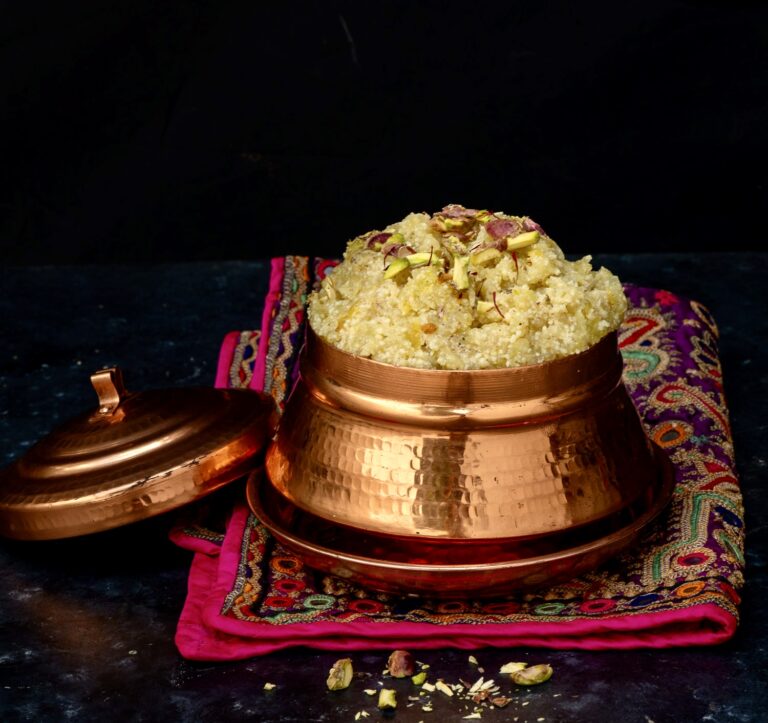
The festival of Navaratri has just ended, and now we look ahead to Diwali. We here in India are very much within that season of the year when we are consuming sweets, sweets and more sweets. Even as things get happily hectic with product orders at re:store, as dear customers reach out for their gifting and entertaining needs, I still make the time to prepare some traditional delicacies at home. This year, I have been thinking fondly of one that I’ve always considered an unusual sweet: doodhi halwa, the chief ingredient for which is bottle gourd.
If that made you pause for a second, let me tell you, so did I when I first heard of it! I encountered doodhi halwa only once I got married. It was one of my late mother-in-law’s go-to dishes, and to this day my husband has a great nostalgic attachment to it.
For me, however, the idea of putting a vegetable into a sweet was rather unappealing. It was also unfamiliar, which probably contributed to my bias. This was something my own mother had rarely done, with the exception of gajar halwa, which utilizes carrots. That too was a dish she would only make during red carrot or Dilli gajar season once a year. Doodhi halwa was something simply unprecedented in my notion of food. While I have always delighted in novelty when it comes to all things culinary, it took me a while to warm up to the idea, let alone to the taste. Quite recently, I came across an onion halwa, and despite my eventual acceptance of doodhi halwa, I think that one might be a bridge too far even for me!
Doodhi halwa was very popular at my in-laws’ home, which is why I had many opportunities to try and even to enjoy it. I observed that it was a dish that my mother-in-law was able to whip up very quickly when we had sudden guests, which put it into that special category of recipes that every homemaker keeps for that specific purpose in her repertoire. It was also something she prepared whenever there was an excess of khoya, a milk byproduct, in the kitchen. Between the speed of the preparation and the fact that everyone around me adored this sweet, it made sense for me to learn to make it too.
When I became a part of the family at the age of 23, I entered a kitchen in which two women – my mother-in-law and my sister-in-law – were already present and had established their own rhythms. In joint families, certainly of my generation and for centuries before, there can be a sense of competition between women when it comes to cooking. It can be healthy, if one is aware of it and treats it sportingly, and if it pushes you to do better. We were all intelligent women who put our brains to use beyond the kitchen too, and within that realm we had both collaboration and rivalry. I can happily admit that my sister-in-law has always made and continues to make a better doodhi halwa than I can, perhaps because she grew up watching her mom’s expertise in the dish and honed her own skills accordingly. When I look back, I feel that I am also lucky to have learned much from my mother-in-law, to add to the wealth of recipes my own mother taught me.
Over the years, it came to be that I too would prepare this doodhi halwa quite often. This was especially true during my mother-in-law’s last years, when she could no longer be an active presence in the kitchen. Since her passing, we have consumed it much less, but I wanted to bring it back to our table in her memory.
Over time, despite the fact that I still cannot entirely compute using a vegetable to prepare a sweet, one of the reasons that I began to appreciate doodhi halwa is because it mitigates some amount of dietary guilt during the festive season. This isn’t only because of its primary ingredient, but also because it doesn’t necessarily require a lot of sugar. I haven’t experimented with alternate sweeteners for this dish, but I do know that you can control the amount of white sugar that you use. The flavour profile can also be enhanced by roasting the halwa in ghee to achieve a nice caramel-like finish, and the amount of ghee used for this can also be minimal.
Doodhi halwa is a light dessert, which makes it equally good to serve both during these monsoon and winter festivities, as well as during the summer – when it pairs nicely with fresh, ripe mangoes.
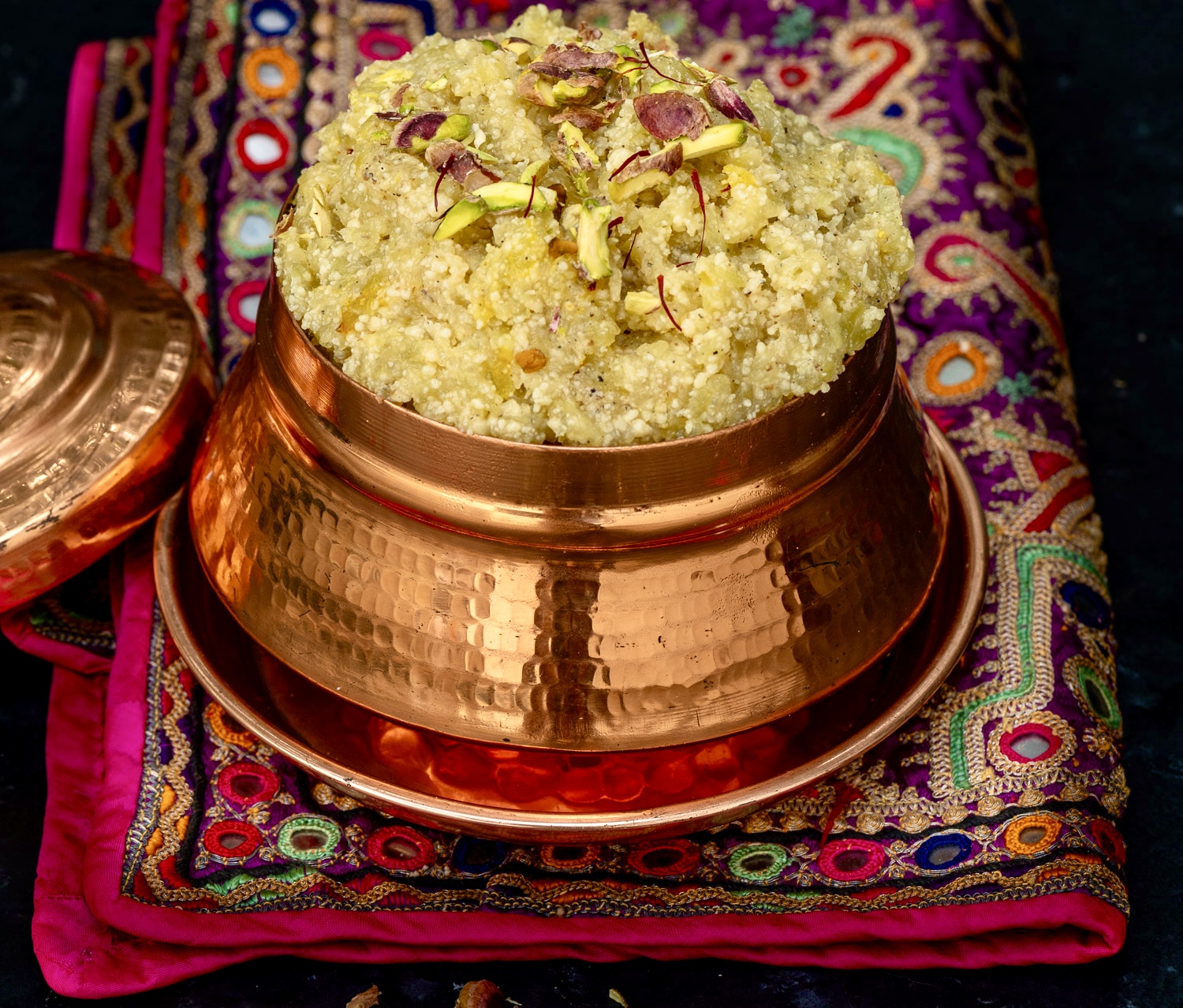
Doodhi Halwa
(Serves: 2-4)
3 tablespoons ghee
250 grams grated doodhi (bottle gourd)
400 ml milk
125 grams sugar
¼ cup milk malai
½ teaspoon cardamom powder
8–10 cashew nuts
A few strands of saffron
Heat 1 teaspoon of ghee and roast the cashews until golden. Set aside.
Boil the milk and keep it hot.
Heat the remaining ghee in a kadai. Add the grated doodhi and sauté for about 5 minutes, until the excess moisture evaporates.
Now, add the hot milk and cook until it is almost completely absorbed.
Then, add the sugar, milk malai and the saffron. Cook until the mixture thickens. Add the cardamom powder and mix well.
Allow to cool slightly and garnish with the roasted cashews.
You can serve this dessert warm, at room temperature, or even chilled. Leftovers can be refrigerated for a couple of days in an airtight container.
I wish you a wonderful Diwali, and I hope that as you plan your festive menu this year, you’ll explore the recipes for many other treats hat I’ve shared over the years too!