Tag

payasam

Browsing

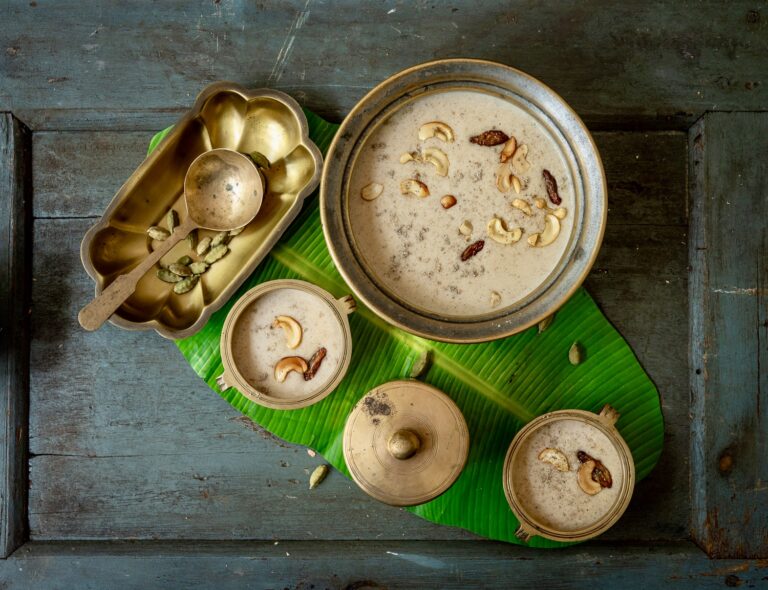
The coastal plains of India, which includes the state of Tamil Nadu, are a part of the country’s large rice belt. While North Indian cuisines are wheat-based, South Indian ones are rice-based. Historically, however, rice was not the only grain that was given importance in this part of the country. Millets played a huge role in traditional foods, and in recent years there has been a mass movement to revive them. I have shared numerous millet recipes on this blog as my contribution to this, and this barnyard millet payasam is one more to add to the list.

Barnyard millet, known as kuthuraivali in Tamil, is a finer grain. This makes it ideal for summer usage, as it is lighter on the tummy. Across the country, grains which are heavier to digest and thus keep the body warmer for longer are usually retained for the winter. Barnyard millet is also harvested now, so it is the perfect season to consume it in every way.

All millets are known for their nourishing qualities and in particular for having a having a lower glycemic index than white rice, and for being gluten-free. Barnyard millet’s benefits include being rich in protein, fibre, phosphorus, magnesium and antioxidants. A millet-forward diet is a health-conscious one, and I am of the view that a dish can and should be both nutritious and delicious in order for us to easily and frequently incorporate it into our meals.
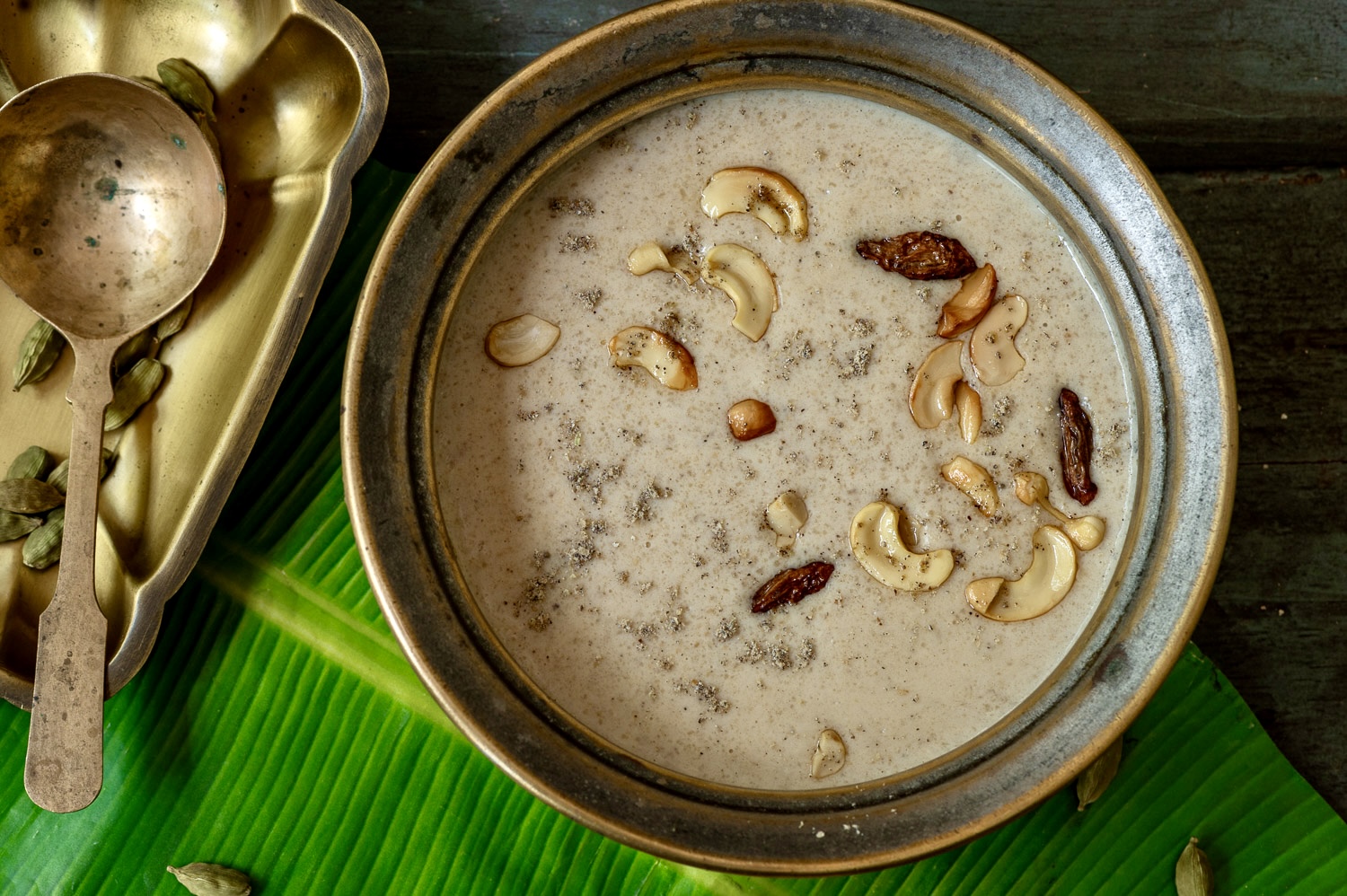
Deliciousness is a key part of why I chose to prepare a barnyard millet payasam for this month’s recipe. I have an incredible sweet tooth, and it has been a lifelong mission of mine to try and give it up. At this stage of my life, I feel I have really been able to cut down on my sugar consumption of the past. But I do not want to give up desserts entirely. When I speak to friends, it is clear that many of us are in the same boat.

What I can share confidently from my experience is that it’s really about conditioning the palate. I have grown accustomed over time to eating desserts that are less sweet, and hopefully my tastes will remain this way. Not only are they less sweet, but my choice of sweeteners has also become more diverse. Refined sugar is hardly the only way to go. During a recent visit to a wellness centre, I observed a nice range of desserts being served without the use of refined sugar at all. If more eateries leant in this direction, I have no doubt that we wouldn’t feel deprived of treats, or guilty for consuming them, when we are out and about. In the meanwhile, what we make and serve at home is entirely within our control.

In addition to being accustomed to a milder sweetness, portion control is also important. Nowadays, just a small cup of barnyard millet payasam or any dessert usually satisfies my cravings. I enjoy every bite all the more. It’s all about conditioning ourselves to eat healthier, while relishing more deeply.

On that note, I wanted to share that I have become increasingly intrigued by Ayurveda and Ayurvedic eating in particular. As I read more books about the system, I contemplate ancient Indian mindful consumption and have begun to wonder how I can change my habits accordingly. What’s interesting is that Ayurveda doesn’t really approve of dairy, with the exception of cooling buttermilk and very limited quantities of ghee. While the recipe I am sharing today would not qualify as Ayurvedic, I think you may see some here on this blog in future which are informed by those practices. I’d love to hear from you if you are on a similar journey, or if there are particular dishes you are curious about and want to learn about with me.

Coming back to this barnyard millet payasam, I have been really enjoying it during this year’s soaring temperatures because it is so light. Often, a meal of rice, millets or carbs mean that the appetite for dessert can vanish. Not so when dessert is as easily digestible, and as delicious, as this.
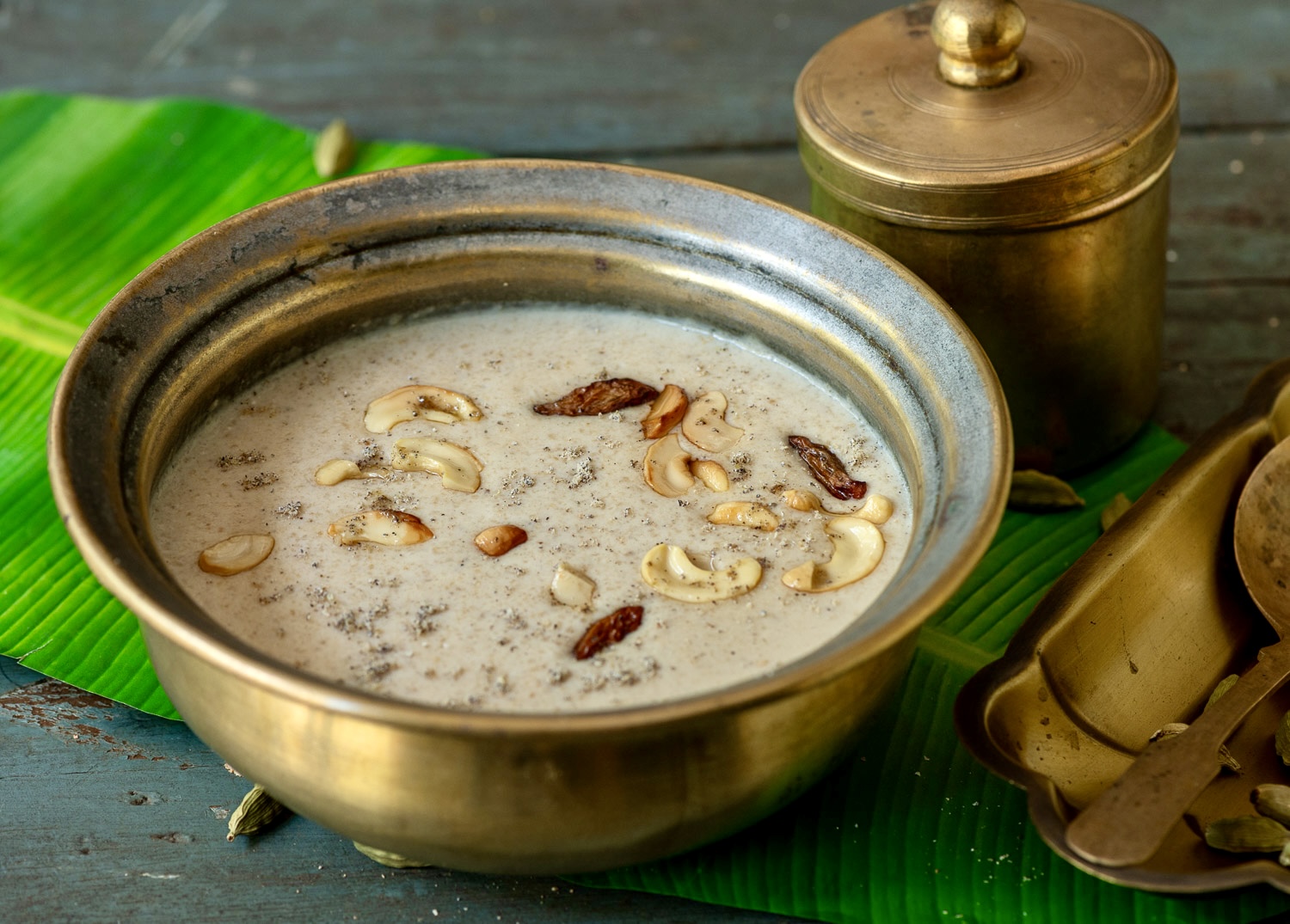
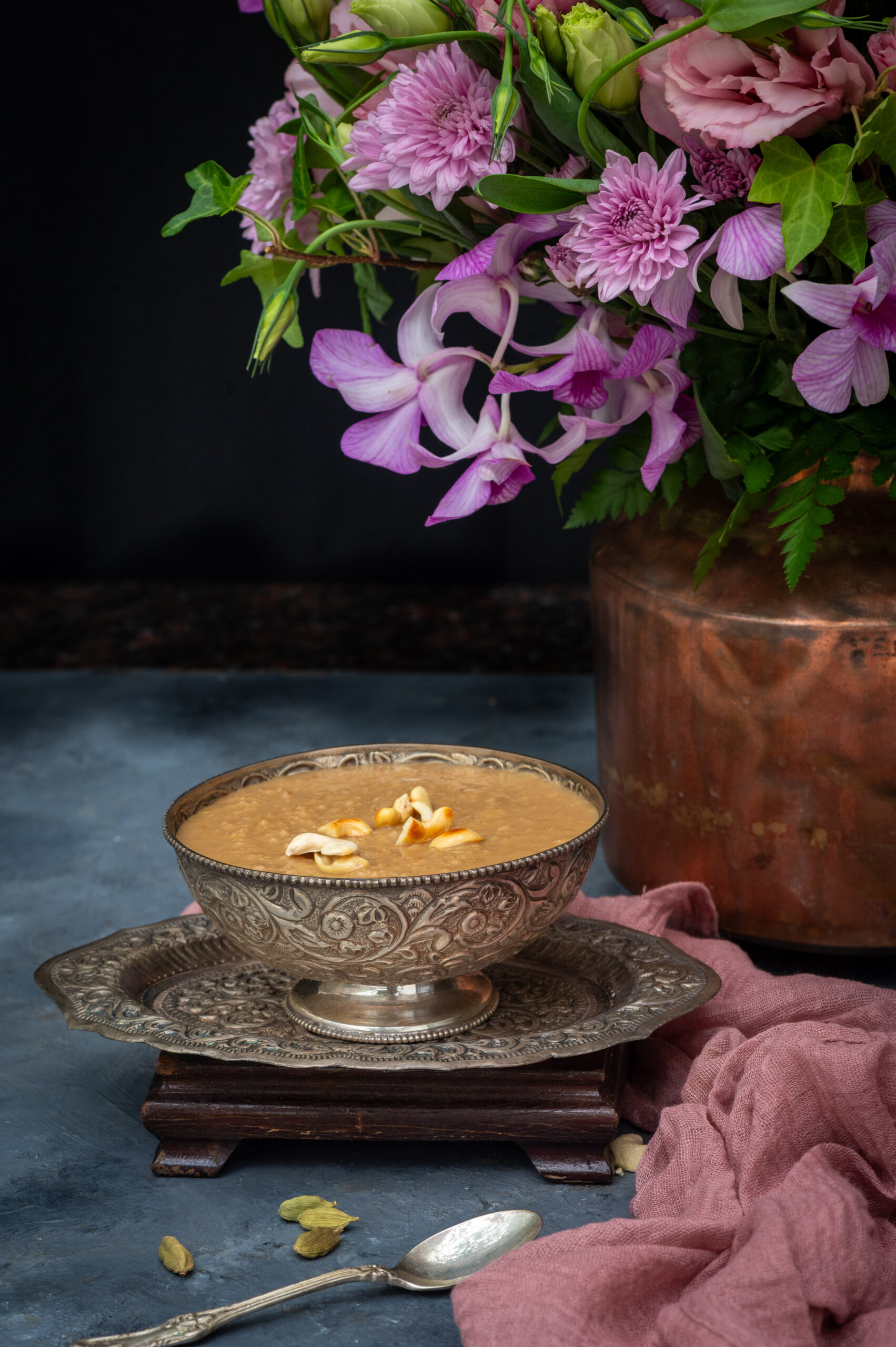
Barnyard Millet Payasam
(Serves: 4)

½ cup barnyard millet
1 cup water
3 cups milk (or 2 cups milk + 1 cup coconut milk)
½ teaspoon cardamom powder
¼ + 2 tablespoons jaggery powder
8-10 cashew nuts
¼ teaspoon ghee

Rinse the millet and add 1 cup water to it. Cook in a pressure cooker until tender. Set aside.

Roast the cashew nuts in ghee until golden. Set aside.

In a pot, boil the milk on a medium flame. I like to use only 2 cups of milk for the boiling, adding 1 cup of coconut milk later on for the flavour. Of course, if you’re vegan, you can use coconut milk throughout, and avoid the ghee while toasting the cashew nuts as well.

Add the cooked millets to the boiling milk. Stir well. Add jaggery powder and stir continuously, else the payasam will stick to the bottom. You may wish to replace the jaggery with a sweetener of your choice. Date syrup or the use of raisins are recommended.

The mixture will start thickening very fast, so keep your eye on the pot and keep stirring. If like me, you’d like to incorporate coconut milk, this is the point at which to do it.

Turn off the flame and add the cardamom powder. Mix well. Cover with a lid and allow to cool a little.

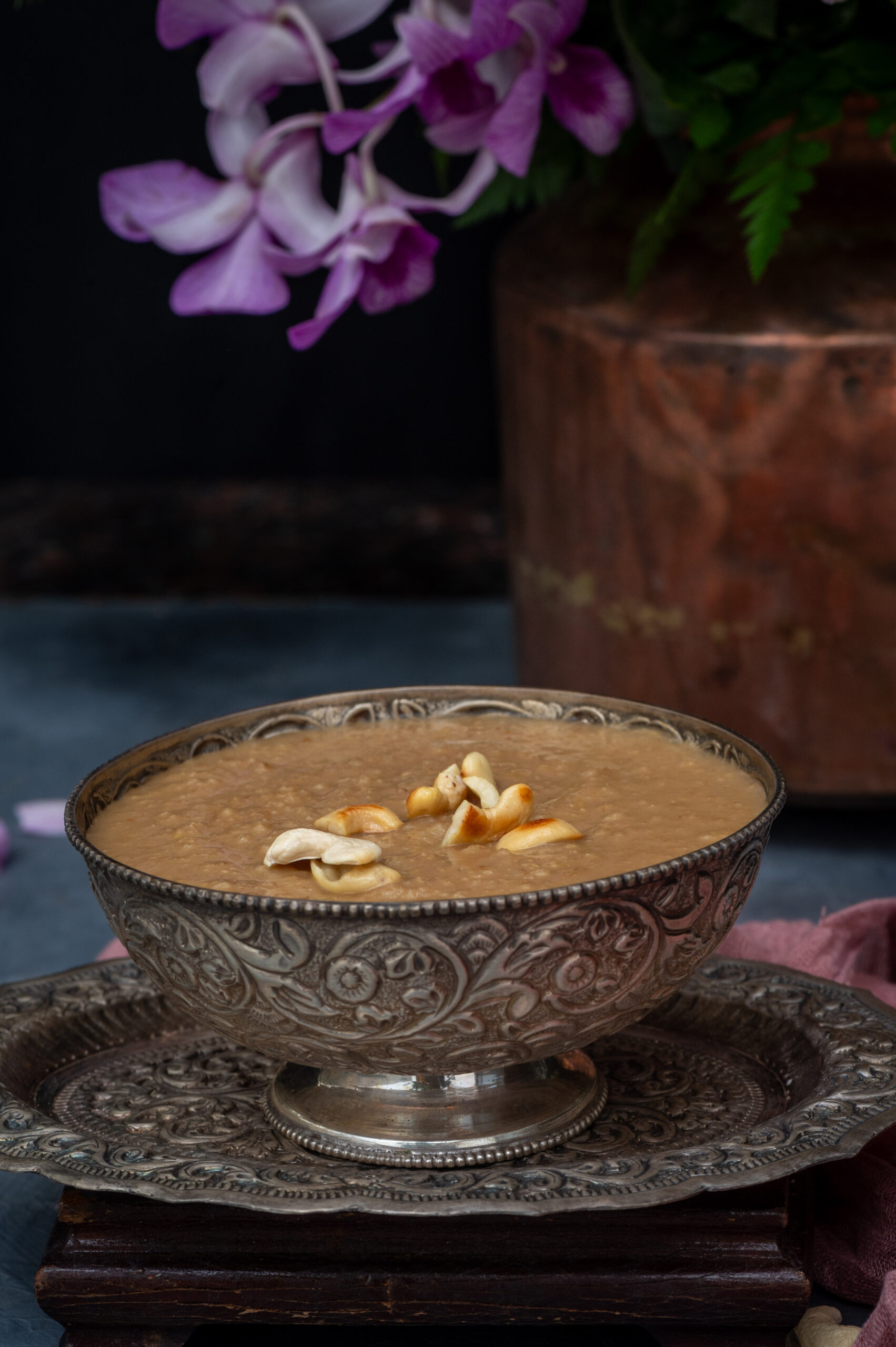
Pour the payasam into serving bowls and add the roasted cashew nuts on top as a garnishing. It is best served slightly warm.

I’ve shared myriad dessert and millet recipes over the years, and I hope you’ll enjoy exploring them all. The key with millets is choosing the right grain for the right season and the right dish. You’ll find many more – millets and dishes, both – in my archives!
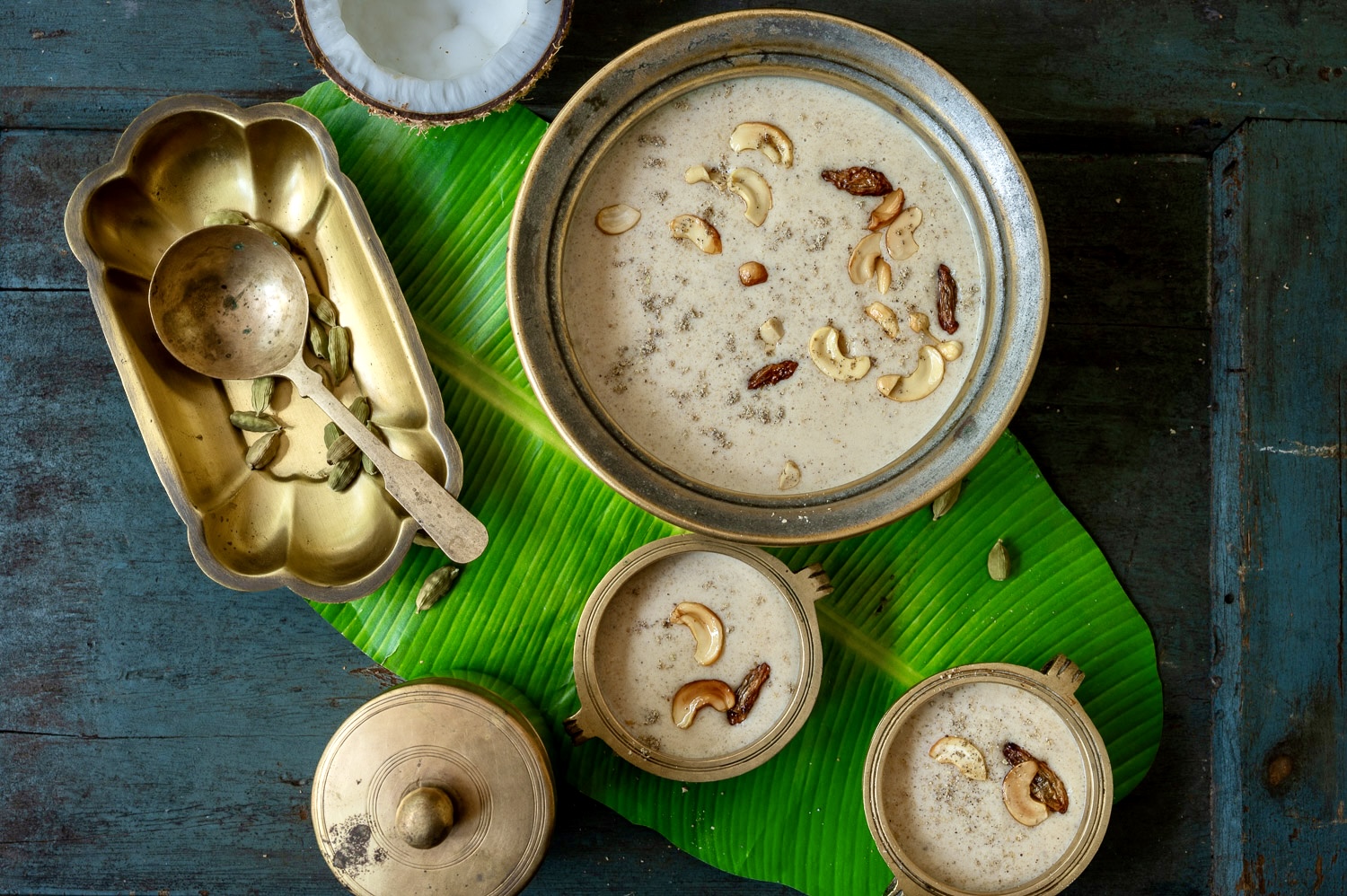
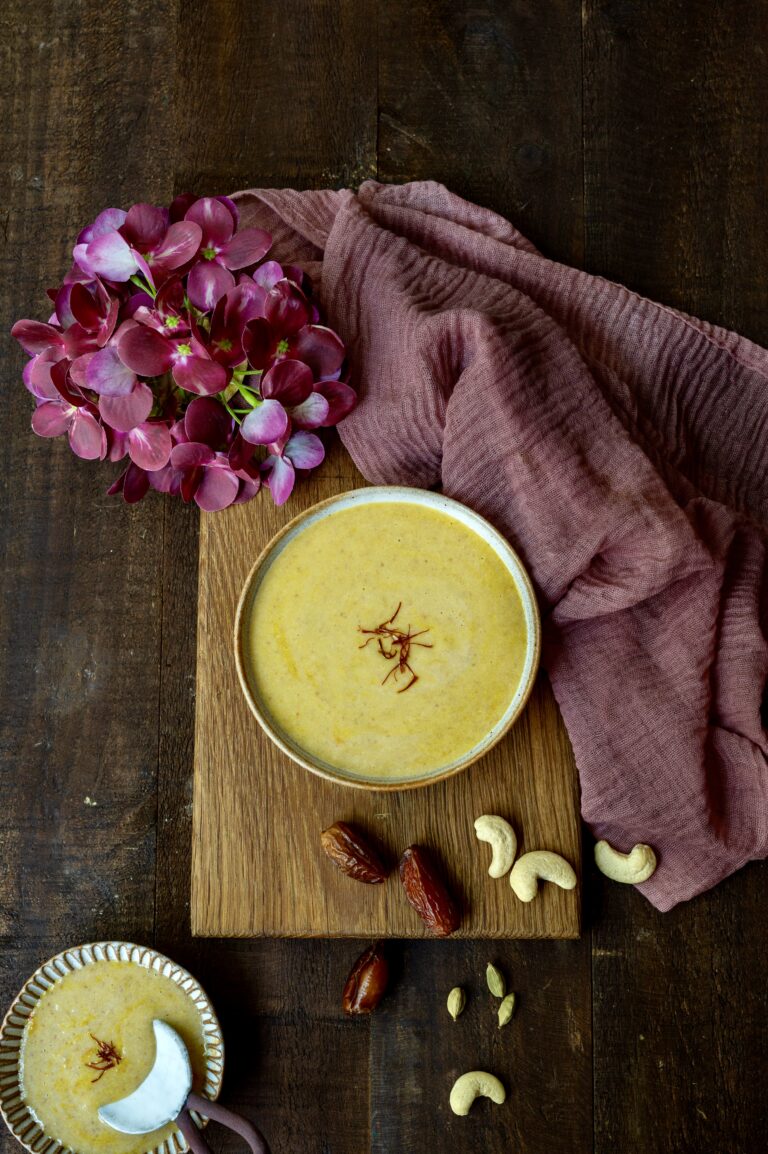
I have often been attracted to making sugarless desserts for two reasons. First and foremost, for myself, as I have an incredibly sweet tooth that I can’t seem to control, and I hope to satisfy it without making as steep a health compromise. I try to convince myself that when a dessert is sugarless or sugar-free I can also eat it guiltlessly, or guilt-free! I know this isn’t true, of course. Natural sweeteners and the sweetness that is intrinsic in certain ingredients like fruits do contain sugar, and anything sweet will spike your glucose levels even if you don’t add processed sugars to it. Still, I know that so many of you struggle with the same concern, which is why a treat like this sugarless date payasam can still make a difference in our dessert indulgences.

The other reason why I learned how to make more sugarless desserts was that my father-in-law used to put me up to the challenge of inventing ones for him. He was diabetic, and he would always say, “Just add Splenda or aspartame!” I would always refuse to, knowing that these have other side-effects. I would instead reach out for natural sweeteners like coconut sugar or dates, as their glycemic index is lower than that of refined white sugar. While my father-in-law is no longer around, the dishes I learned or came up with for him remain in my repertoire, and so does the habit of cutting down sugar content as far as I can.

Awareness of the dangers of too much sugar consumption is of extreme importance in India, which has one of the largest percentage of diabetics in the world. I often have diabetic visitors, which doesn’t surprise me at all given the prevalence of the disease in our country, and I ensure that I serve sugarfree desserts when they come over. There are also sugarless options on the re:store product menu. Whether or not my guests or family members are diabetic, I do keep an eye on balancing out our sweet consumption in multiple ways. Making dishes like these is one such way, and a necessary concession since giving desserts up completely is quite a big ask!

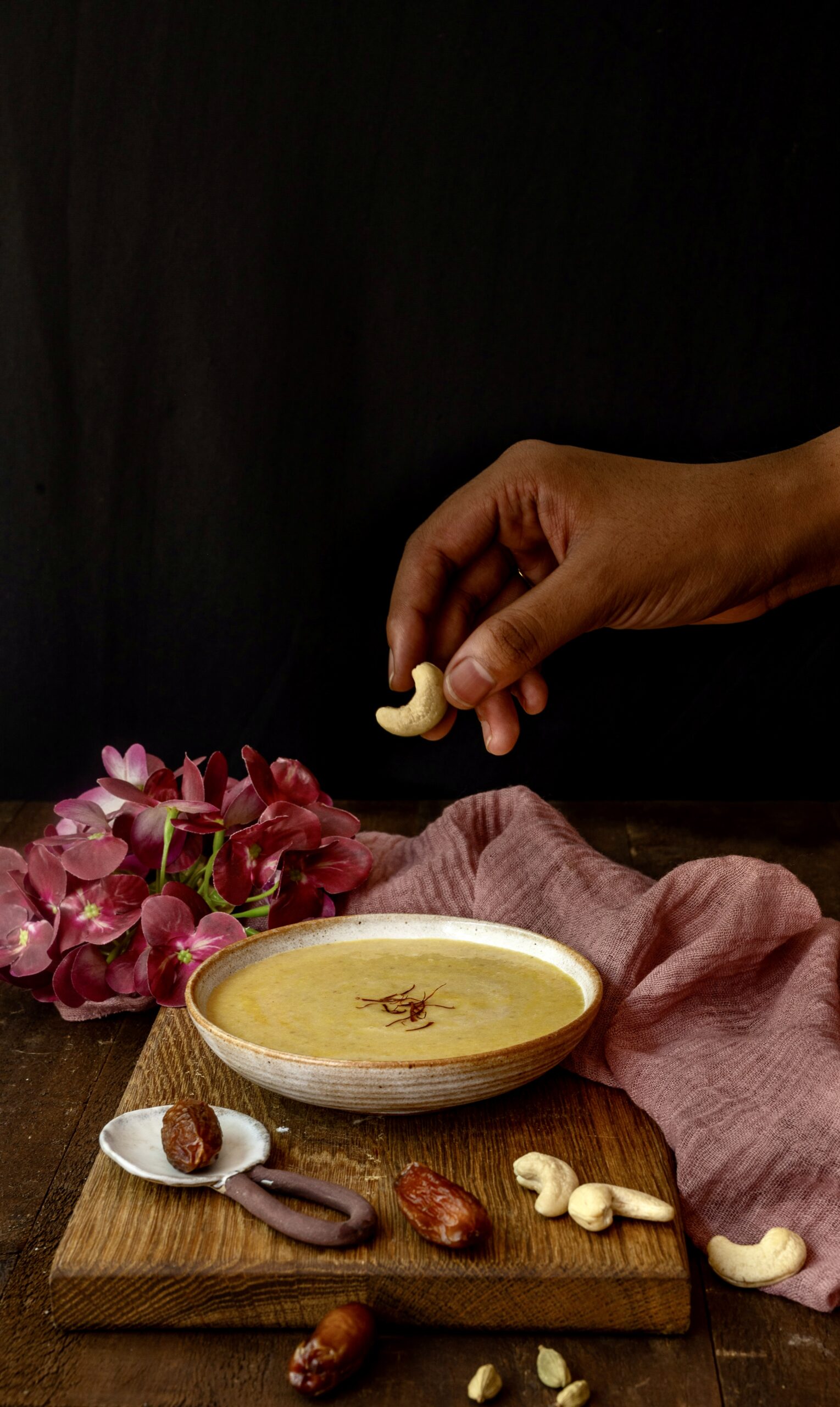
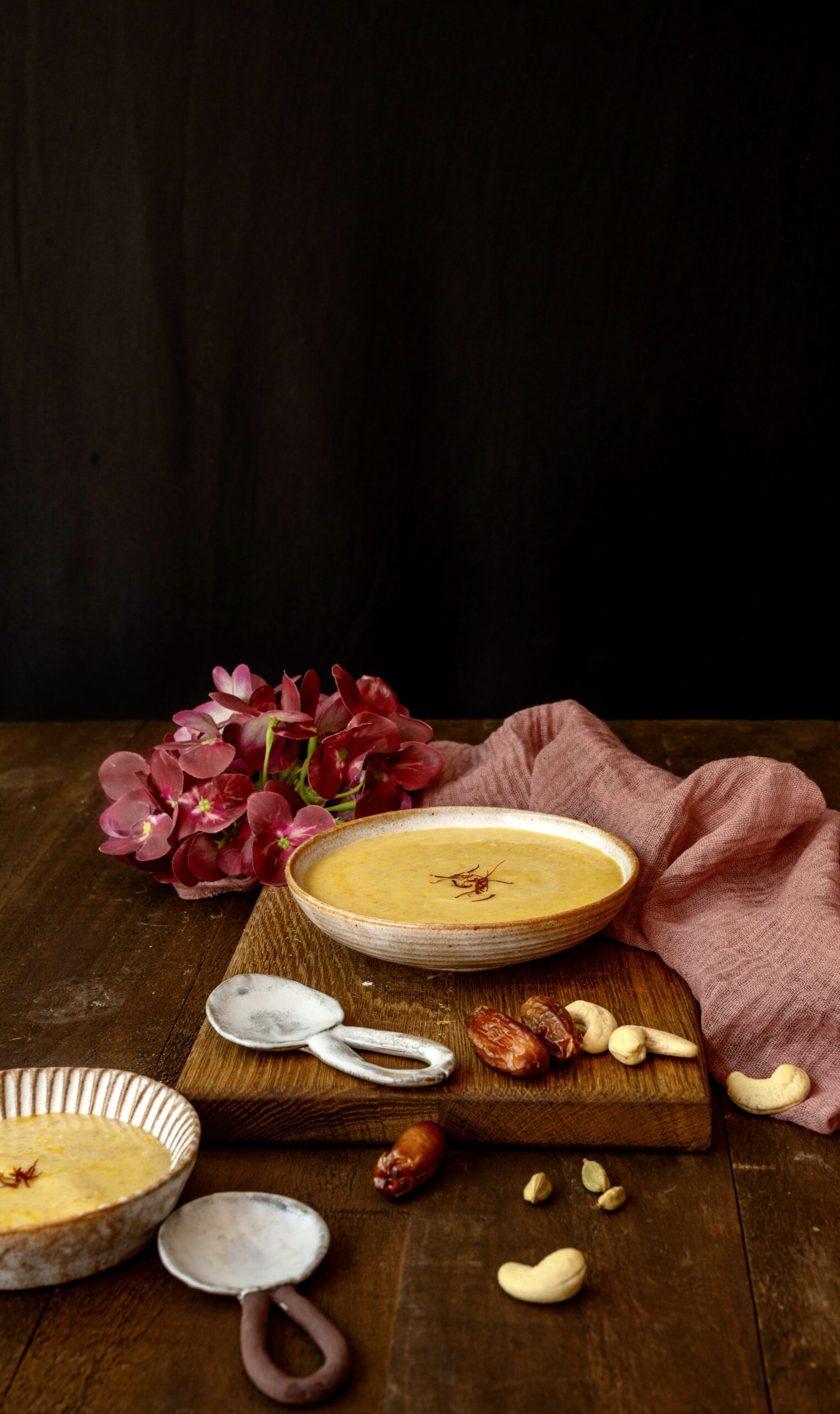
This particular sugarless date payasam is one that I learned from my dear friend Girija. I hadn’t heard of it before she served it to me, and I was wary of trying out the recipe, but I am very glad that I did. It is utterly delicious. For those who haven’t heard of it, a payasam is essentially a South Indian milk pudding, and I am thrilled to have a version of it that doesn’t require, let alone rely on, sugar or even jaggery. All it needs is the sheer sweetness of dates.

Sugarless Date Payasam

(Serves 6)

2 cups deseeded and chopped dates

1 cup cashew nuts

Water (for soaking)

2 cups milk

3-5 strands saffron

¼ teaspoon cardamom powder


Soak the dates and cashews separately in fresh drinking water for an hour.

Then, grind the cashews with the water that was used for soaking. Once the paste is smooth, add the dates. Grind once more until the paste is smooth again. Add the cardamom powder and saffron strands. Place the mixture in a pot and refrigerate until cool.

Once it has cooled, add the milk and stir well until it all comes together nicely. Adjust the milk quantity to your preference. I like it to be a little thick. Return to the refrigerator and let it cool again.

Serve very chilled. This is a perfect dessert for these hot summer months. As you can see, this delicious sugarless date payasam requires only grinding and mixing, which also makes it an easy dessert that even beginner cooks can prepare.

I have used cashews as I enjoy the rich flavour the nuts provide, but you can substitute them for another kind if you prefer. I also feel that the cashews sort of tone down the sweetness of the dates, which can be intense.

Ultimately, the payasam is both rich and sweet, which means that it is best in smaller portions.

Here is a suggested tweak to this recipe: add a handful of cooked rice to the milk, and then add then to the ground cashewnut-date paste and mix. This will give the dessert more substance, and more of a mouthful in each serving. The sweetness quotient will also further reduce. This preparation may technically turn it into a kheer rather than a payasam, but I have little doubt that anyone will complain! It will turn out delicious both ways, and while my father-in-law is not here to enjoy this dish in either variation, the rest of my family certainly does. As for me, my sweet tooth is sated, with a spoonful or two less of… guilt!

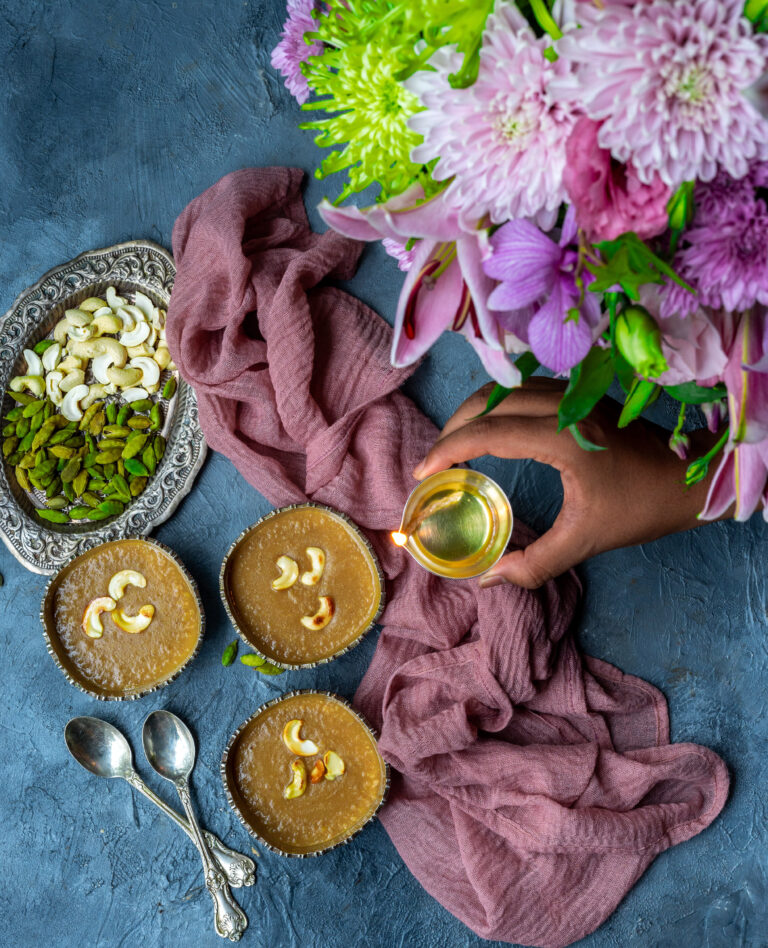
There are numerous milk-based sweets that are very popular in India, and several have made appearances on this blog over the years, as you can see here. While they are all fantastic, for this Deepavali I was thinking about making something that doesn’t require milk. This recipe is great for lactose-intolerant people, and can be tweaked and made vegan (all you have to do is to replace the ghee with your usual alternative). Additionally, the dessert I came up with is millet-based, so it is extra nourishing. Here it is: foxtail payasam.

Foxtail payasam, strictly speaking, is not quite my own recipe, even though I’ve substantially played with the basic ingredients. As a payasam, it can be said to be traditional in South India, where they are a well-known category of dessert, eaten often and not just on festive occasions. Here in Tamil Nadu, foxtail millet is known as thinai and is a widely-known native produce. Like all millets, it is nutritious and versatile.

Many of us have become conscious about our eating choices and have brought millets into our diets over the last few years as a white rice replacement. Even the Tamil Nadu state government has been promoting their use, and so has the United Nations. This is something that I’ve advocated for as well, across many recipes.

In terms of payasam, I think the paruppu payasam (made with dal) is probably the most common. I always reach out for it whenever I have a banana leaf meal at a South Indian restaurant. It uses dried coconut bits and also contains jaggery, which is healthier than sugar yet satisfies my sweet tooth. Drawing inspiration from it, but adding my own twist, I have opted to use coconut milk in my foxtail payasam. The coconut milk, along with a cashew garnishing, adds a richness to it. You may also wish to use raisins, and reduce the jaggery quantity accordingly. Or you may want to use coconut sugar instead of jaggery. You may even want to replace the millet itself, just as you can also replace the moong dal with toor dal.

If you are a young adult making festive goodies for the first time, this is an ideal recipe for you to try wherever you are. It is simple and utilizes easily available ingredients. The world has become a smaller place, and I have no doubt that you’ll be able to find them even if you’re spending Deepavali away from home.

I have a South Indian daughter-in-law now and I wanted to prepare something this year that is familiar to her and the region she comes from. Thus, this foxtail payasam serves as a welcoming sweet for her as she enters our family. It is her first Deepavali with us, so it is really special. This recipe is for her, most of all. It is also for my sister, who always asks me to show her something new from South Indian cuisine whenever she visits me, and is very curious about what I am making at this time of year. It goes without saying that it is also for you: I wish you and your loved ones a blessed festive season, and much joy ahead!

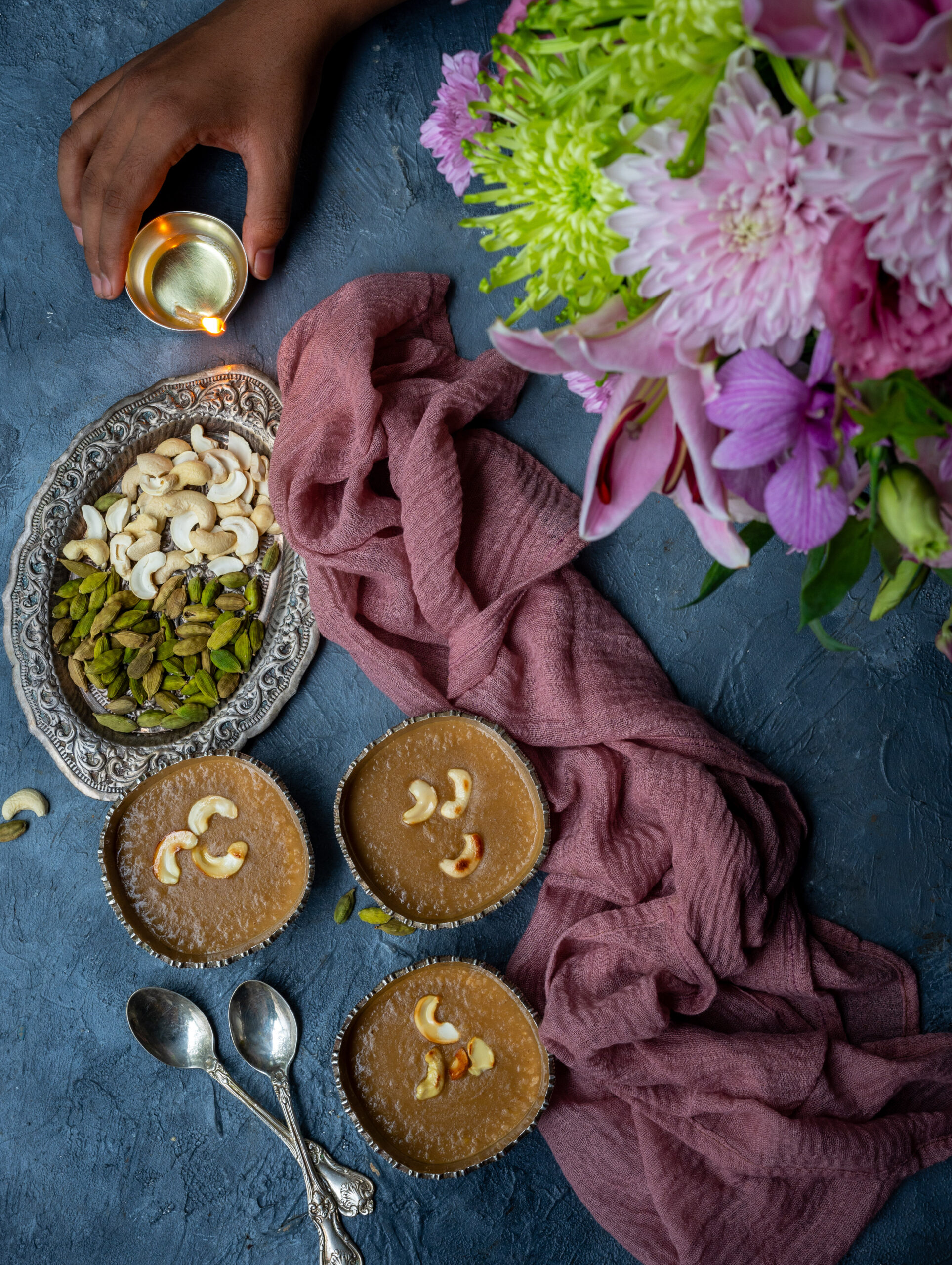
Foxtail Payasam

(Serves 4-5)

25 grams moong dal (green gram)

60 grams thinai millet (foxtail)

¾ cup jaggery

2 + 1 cups water

1 cup coconut milk

1 teaspoon ghee

A handful of cashews

Rinse and soak the moong dal in water for at least an hour. Strain the water and set aside.

Roast the thinai in a pan for a few minutes or until it releases an aroma.

Next, add the thinai to the strained dal and add two cups of water. Place these in a pressure cooker and cook until tender. Remove the pot once cooled.

In another bowl, add jaggery and to it add one cup of water. Boil this mixture until the jaggery has melted. Strain this liquid and add it to the dal-thinai mixture.

Allow to cook until it all comes together. Finally, add the coconut milk, mix well and turn off the flame.

To garnish: heat the ghee and add the roasted cashew nuts. Toast until golden. Sprinkle over the payasam. Serve hot.

I hope you’ll enjoy this delicious, nourishing sweet this Deepavali and for many years to come!

When I was a girl, the full moon known as Sharad Purnima, marking the end of the monsoon, was a special occasion among a group of close family friends, who would enjoy the evening by the beach. The parents would chat as the kids played in the sand on Marina Beach, which was then pristine and beautiful! These outings were special as they created a special bond within the Gujarati community in Chennai.

So my earliest memories of kheer are to do with these nights, when my mother always carried her dudh-poha (beaten rice) variation, soaked soft in milk. Dudh-poha kheer is a customary Sharad Purnima dessert. There was such simplicity in that dish, yet how fantastic it tasted! Even now, it takes me back to those nights. I distinctly remember the almost silver sands and the beautiful moon reflecting upon the sea, and how we kids ran about and were warned not to go into the sea to wet our feet, for the waters were choppy and full moons always cause higher tides. We marvelled at the waves from a distance, all the while waiting to be called to have our cup of kheer. I remember the excitement of waiting the entire week for this outing as my mother called the other aunties to make the plan.

Kheer is basically an Indian rice pudding, with variations across the subcontinent. In South India, it is known as payasam, and is made using a number of different recipes with ingredients as wide-ranging as jaggery, vermicelli, sago, coconut, carrot, ghee and jackfruit. A Hyderabadi version even uses bottle gourd. A sweetened, spiced North Indian version rich with nuts, enhanced with rose water, is known as rabri.

Significantly, the old and infallible combination of milk and rice has traditionally been used as a ritual offering in Hindu customs. The practice is that food both cooked and uncooked is served to the Gods, thereby rendering it holy. It is then distributed to all present as blessed food, and is known as prasad or prasadam.

Kheer is so simple, yet profound, which is why it is so popular both as a prasad and as a regular treat: rice contains life within itself, while cow milk is considered sacred. Sugar, of course, is what turns many a dish into a dessert.

My mother’s kheer was sheer simplicity, but also sheer perfection: poha, milk and sugar with a pinch of cardamom. The one I will pass on to my children, and which I am so delighted to share with you, is almost as simple – but with that signature re:store touch.

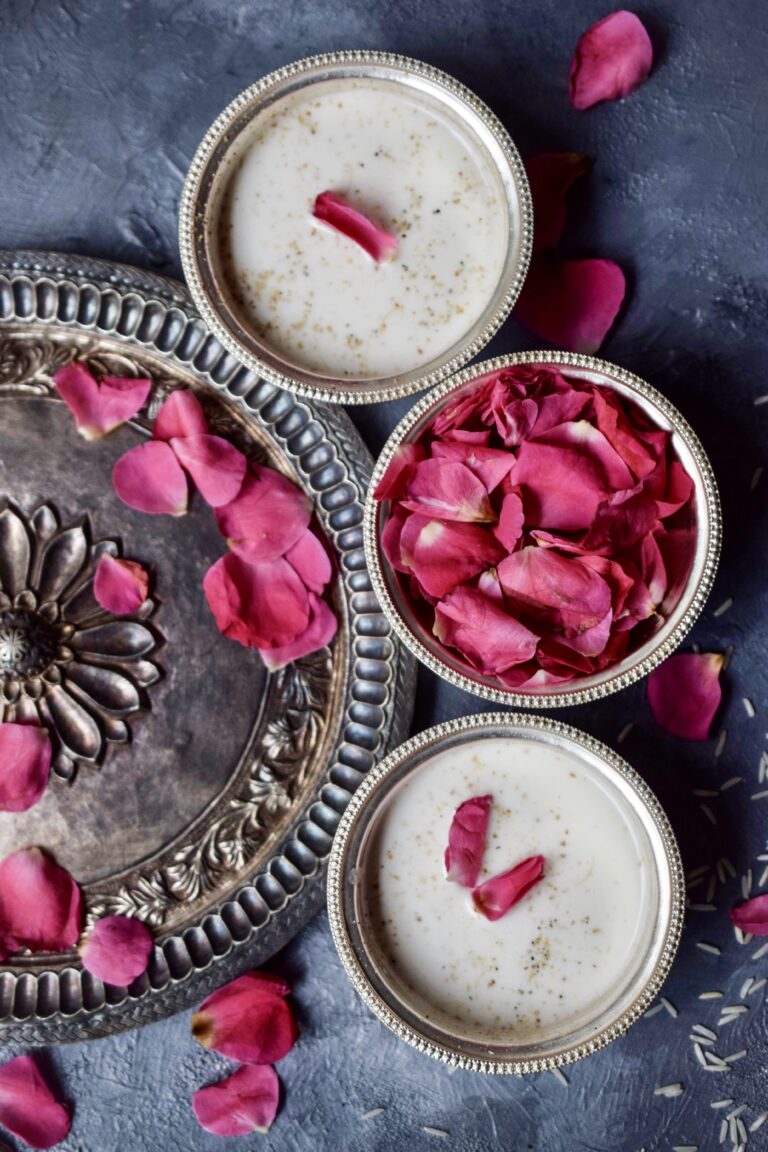
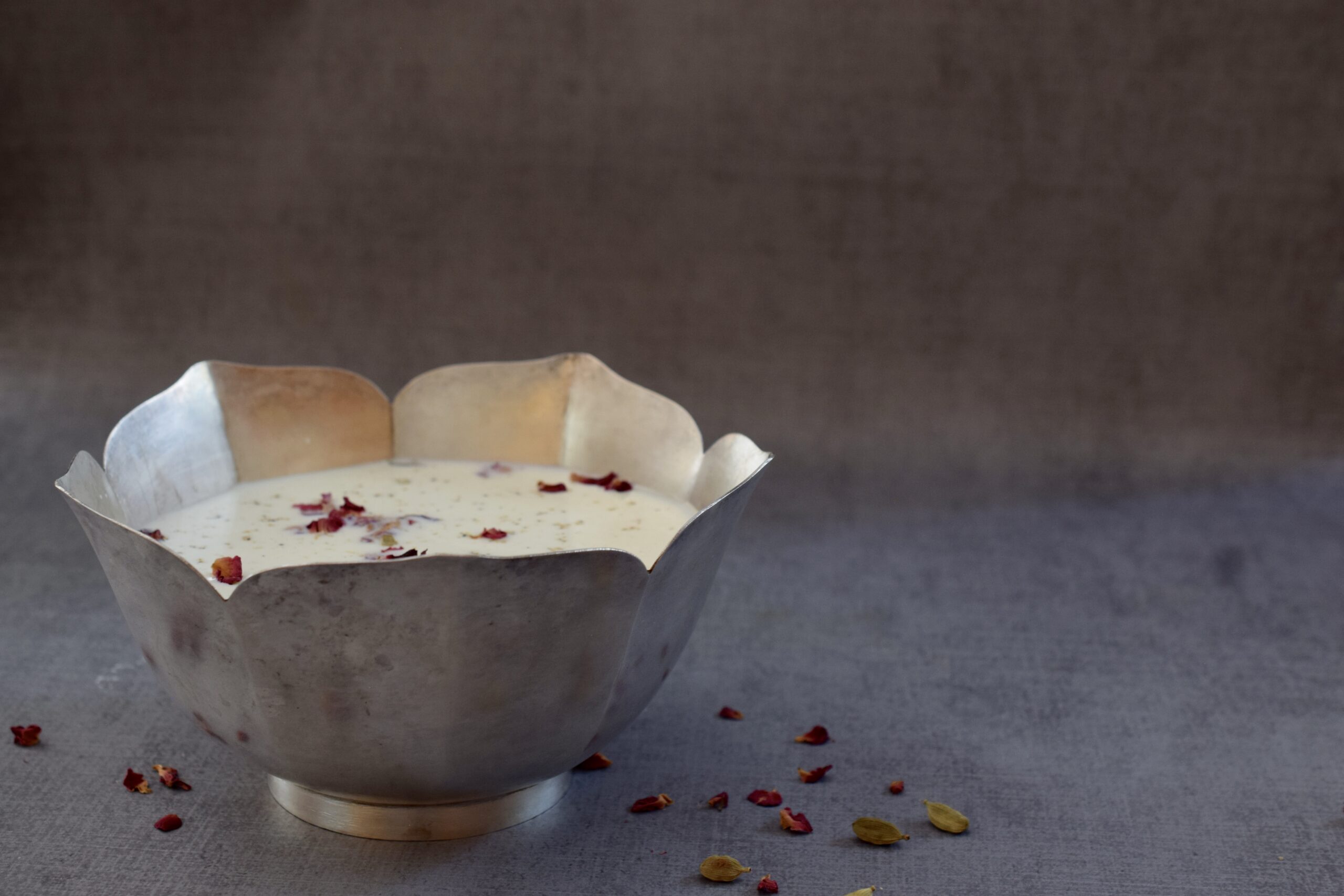
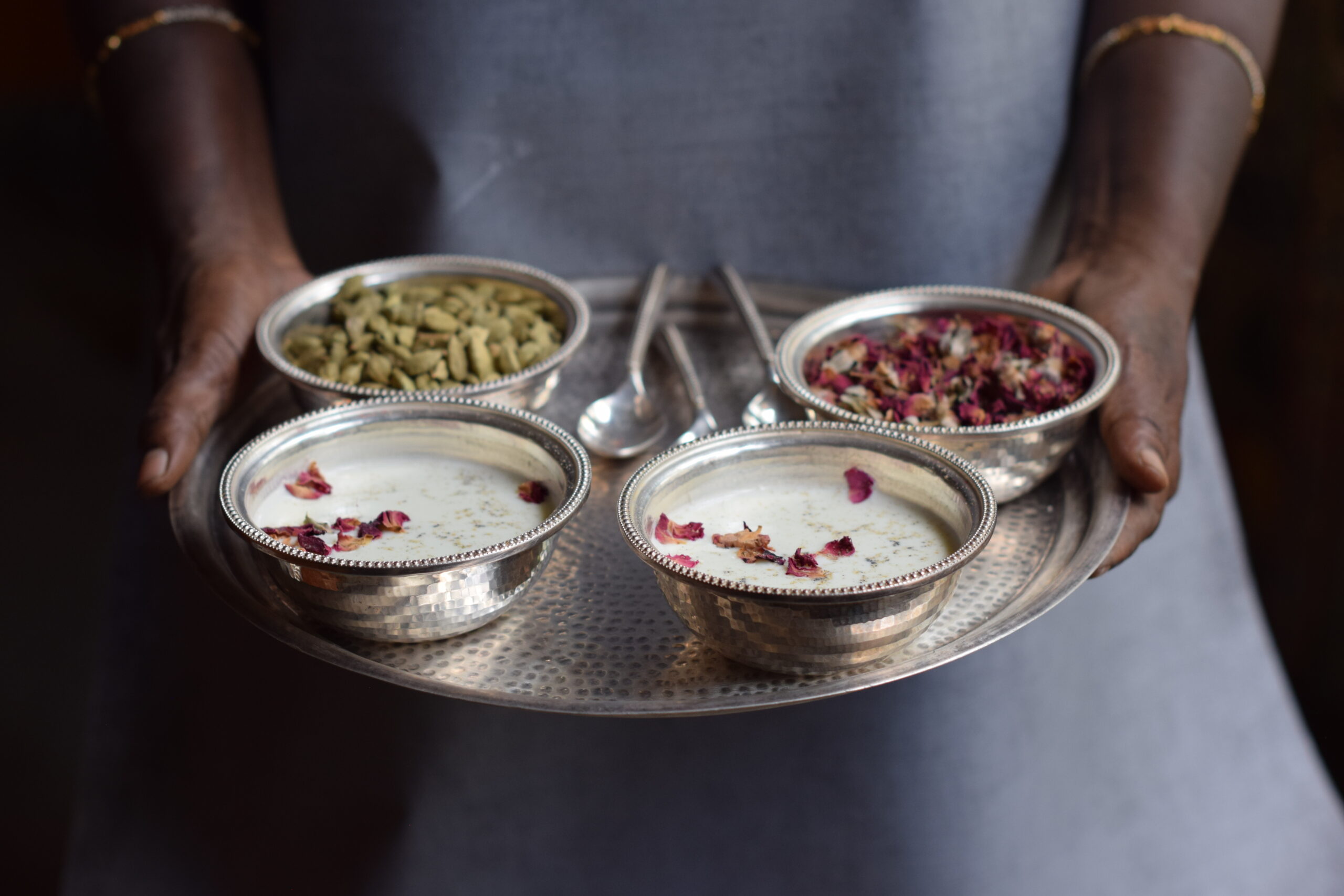
Rose-Coconut Kheer

(Yield: 8-10 cups)

½ cup basmati

4 cups whole milk

¾ cups sugar

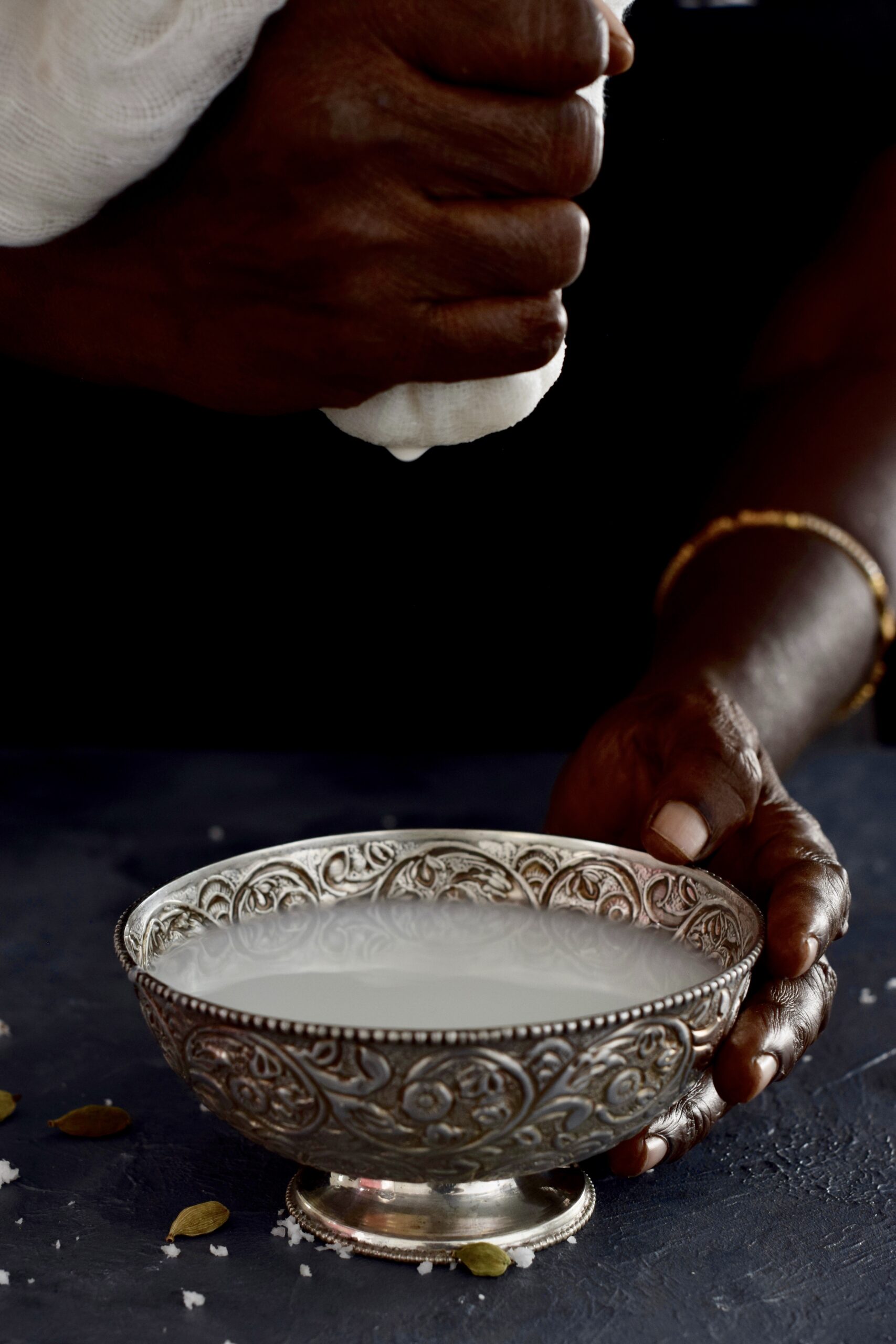
1 cup freshly squeezed coconut milk

2 tablespoon coconut shavings

½ teaspoon cardamom powder

2 tablespoons rose water


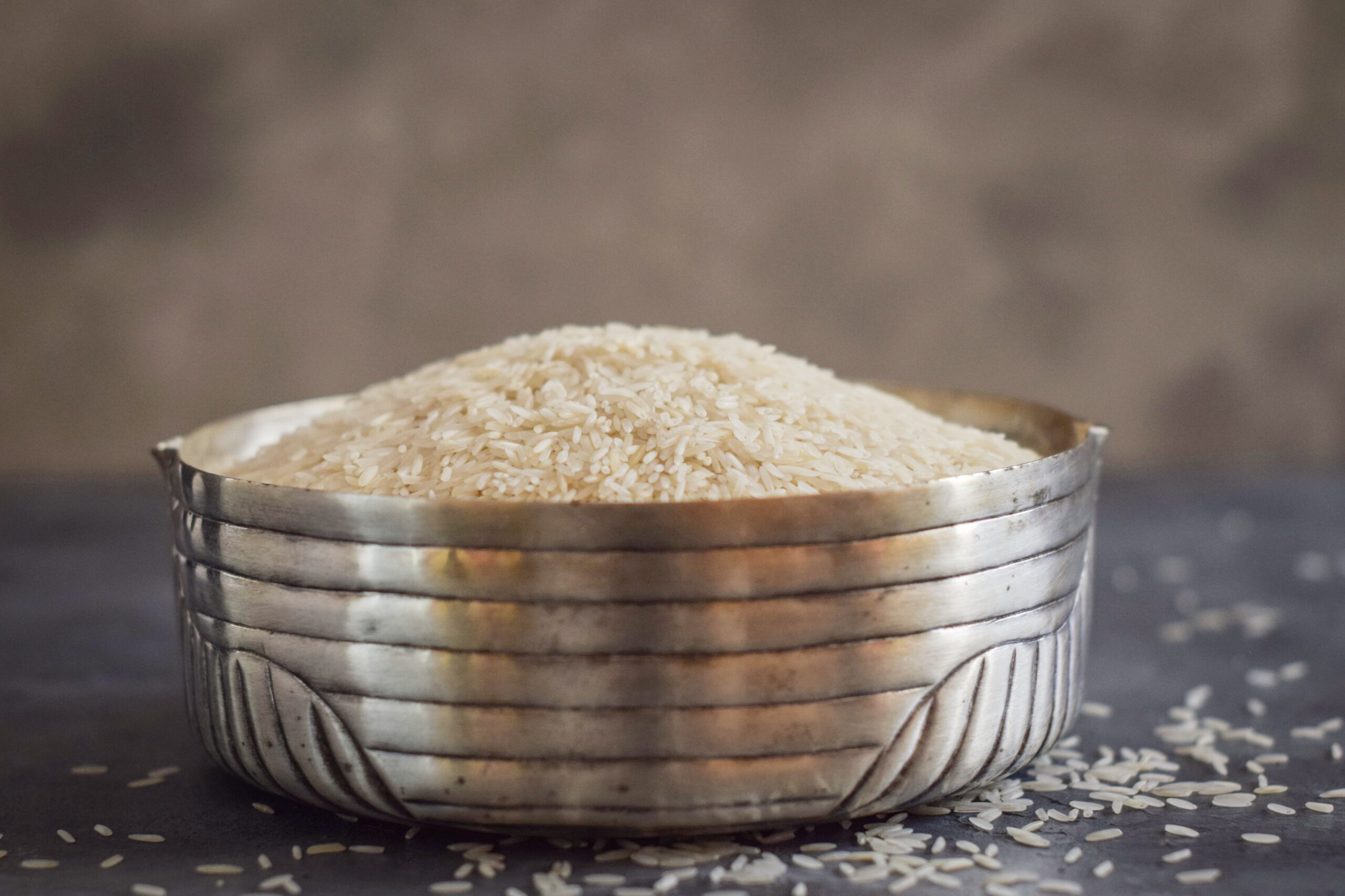
Basmati rice is the long-grained aromatic variety commonly used in biryanis and pulaos. Soak the basmati in water for half an hour. This will help the grain cook faster.

In a heavy-bottomed pan, add the milk. Once it is warm, add the soaked rice. On a low flame, allow the rice to cook thoroughly, stirring frequently to ensure it doesn’t stick to the bottom of the pan. This will take approximately 45 minutes.

Now add the sugar, then allow it to cook a little more. Let the rice mixture cool slightly, then very gently hand blend it. Cover the saucepan and allow the mixture to cool to room temperature, then refrigerate.

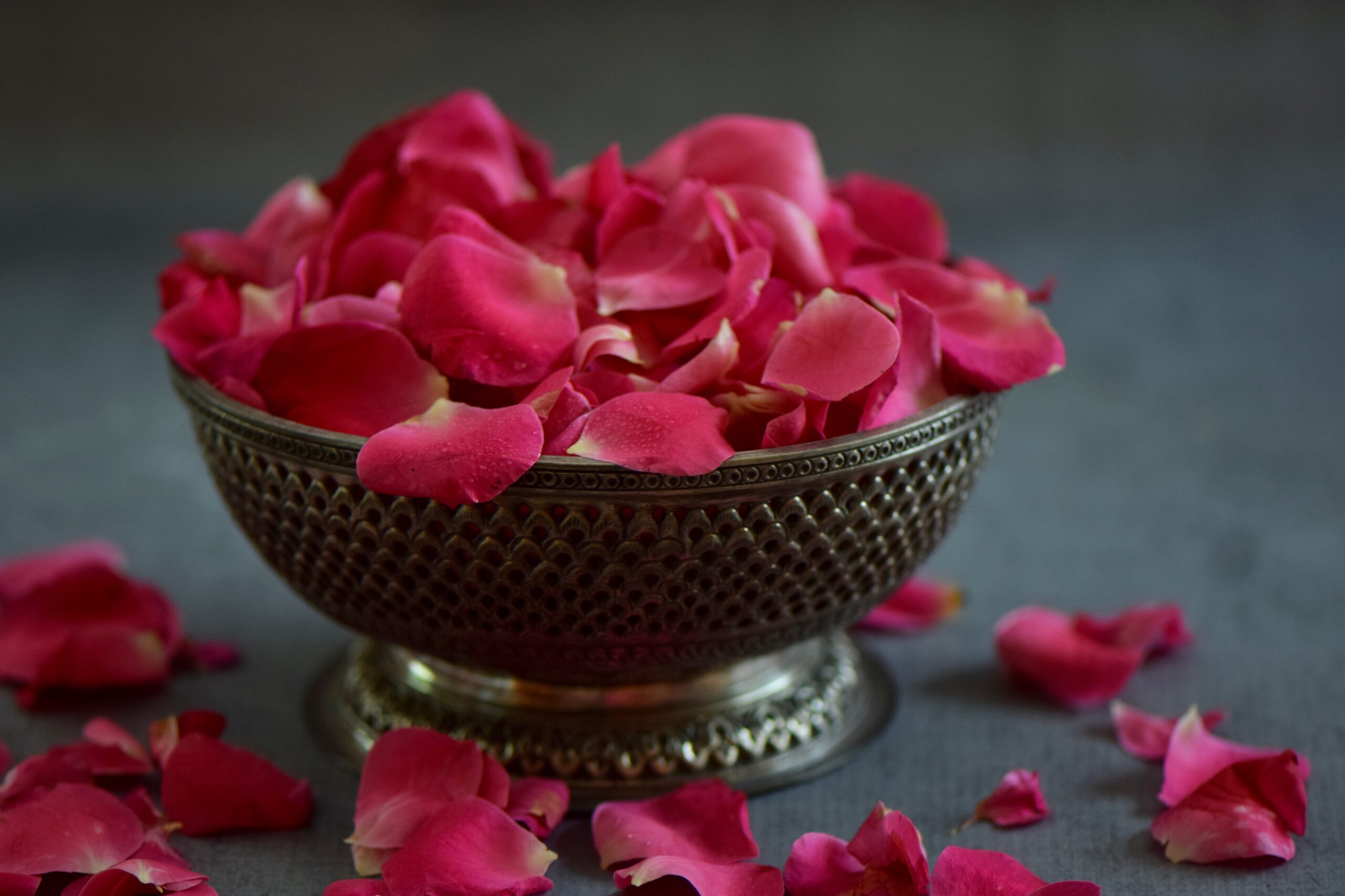
When the kheer has cooled and thickened, add the coconut milk to your desired consistency. Add the shaven coconut, rose water and half the cardamom powder and stir so that the flavours are well-blended. Rose water is a signature ingredient in many of my cakes at re:store, because the scent reminds me of one of my favourite flowers. Known in South India as the paneer roja, the damask rose inspires many of my innovations in the kitchen. The Mughals brought roses to India, as seen in the Shalimar gardens. They were distilled as much for their fragrance as for their usage in culinary delights like syrups and sweetmeats.

Cover and refrigerate until serving. When you are ready to serve this dessert, you may wish to add more coconut milk. Don’t forget to sprinkle the remaining cardamom powder to decorate.

Nostalgia is what makes our food special. Each family recipe is special only to them because it is intertwined with memories. Memories and love: the two main ingredients of any recipe. Today, my best dishes are those that my mother taught me and some that I learnt from my mother-in-law. Some day I will pass these on, too – along with my own innovations. I have made several promises to visit my children when they have their own families to go cook for them. It’s funny how when I cook, my children relish the dishes and claim they are “finger-licking good”. But when our cook makes the same dishes, they are simply edible or enjoyable. So much of taste is through what is evoked emotionally. So whenever you try a new recipe in your kitchen, remember that it is going to become a mnemonic too. Fill it with love.

As I write this, the month of Ramadan is coming to a close. All over the world, sweets are an integral part of the iftar customs when the day’s fast is broken at dusk. In India, iftar meals are almost always accompanied by kheer. At sundown, after the fast-breaking prayers, people step out to enjoy the breeze and socialise, visiting sweetmeat shops to enjoy their favourite Ramadan delights. Street food also becomes very exciting at this time, and the air is thick with the smells of delicious treats and an ambience of love and celebration. I love the idea that kheer is being enjoyed all over the country today – and perhaps in your home too, wherever you are in the world. Don’t forget to drop a line if you enjoy this recipe!