Tag

healthy

Browsing

I’ve spoken often about how I love growing many of my own ingredients, whether at home or on our farm. I’m excited about sharing this new series about one that is a staple in so many dishes here, and which I’m fortunate to have a lovely homegrown supply of. That hero ingredient is the coconut, and over the next few weeks I’ll be sharing several recipes that star it. We have our own coconut trees in the backyard, and I am always looking for ways to put the yield to use. The coconut climber came by recently, to harvest the trees, and from this abundance of crop I’m making as many things as I can. For any recipe at all that calls for coconut, I use a fresh one. Even coconut milk is squeezed at home.

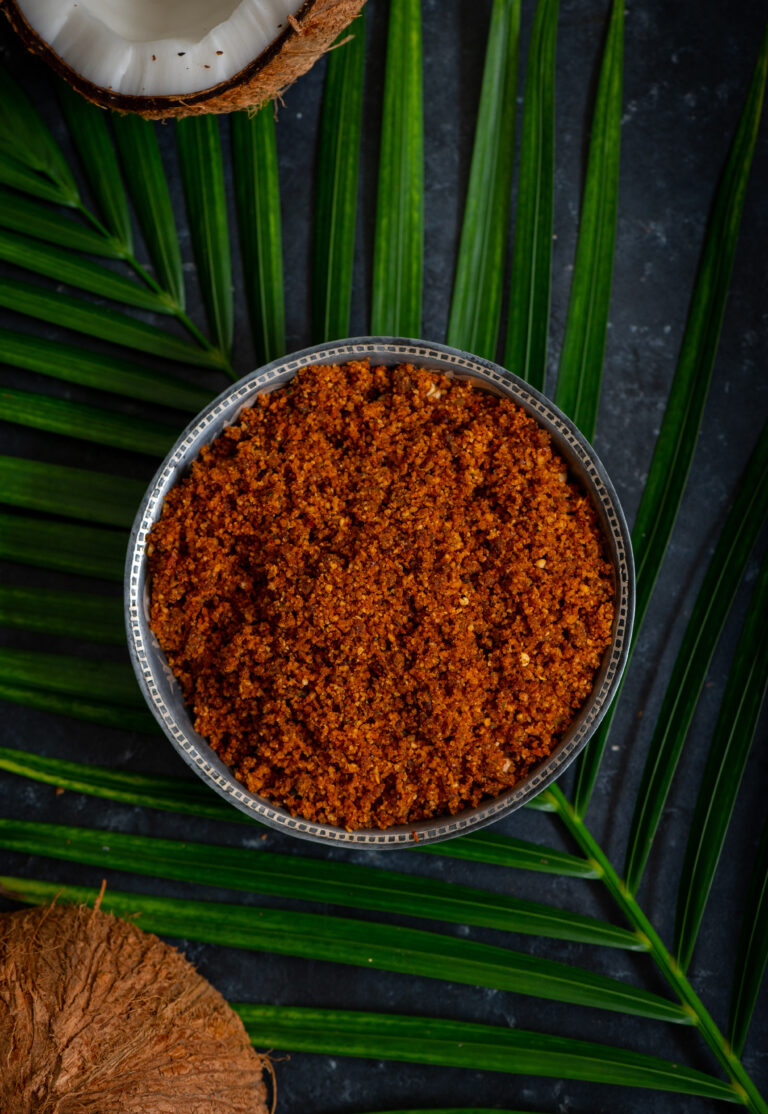
Kicking off this series is a condiment, coconut podi. Condiments are popular across Indian cuisines, and South India has a fair share. Dry podis (“podi” means “powder” in Tamil) and wet chutneys, as well as semi-wet, semi-dry variations are made using a variety of spices, dals and ingredients like curry leaves, raw mangoes and more. The idli podi, for instance, is made to last long. Coconut is not an ingredient that can be be kept for that long, so this one has a shorter shelf life. But I can almost guarantee that you’ll reach out so often for it that your stock won’t expire. If made correctly, this coconut podi remains fresh for around 3-4 weeks, stored at room temperature.
One of the reasons why I was especially keen to make a coconut condiment is that I personally love the Sri Lankan sambol, and wanted to see if I could make a vegetarian version of sorts. While sambol uses seafood, I feel this recipe is similar. Like sambol, this podi is not a finely-ground one, and has many tiny coconut pieces. My friend Akila also encouraged me to try this experiment out, and she was happy to share her own basic coconut podi recipe. I’m always aware that different communities and families have their own ways of making the same recipe.

With Akila’s recipe as a base, layered with things I learnt from other recipes I’ve tastes over the years, and finally through speaking with various families to retain some kind of local authenticity, I added my own touches: tamarind and curry leaves.
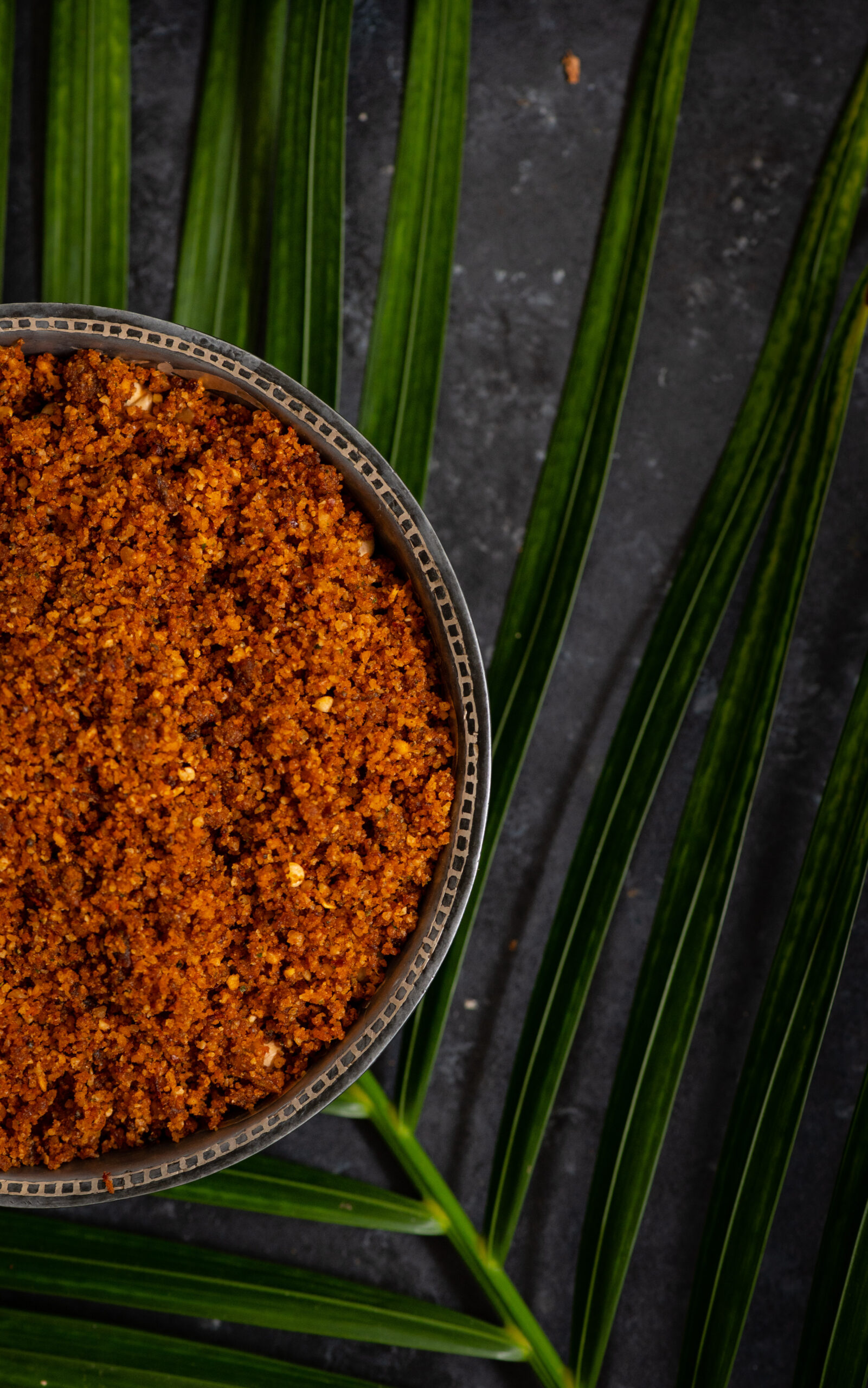
While I was growing up, we often ate some kind of podi mixed with ghee and rice. It was the perfect impromptu go-to in case the day was too busy to prepare a curry or a dal, and I still reach out for this for the same reason. This podi is also delicious with a bit of ghee and a dosa, or to add flavour to yoghurt. One of the great things about any podi is that it tends to be easy to carry to work, since it won’t cause a mess or have a strong smell in one’s lunch carrier, whereas a curry might.

It smells divine as it roasts, however. The morning that I made this coconut podi, using those freshly-harvested coconuts, my whole home was filled with the most beautiful aroma as it was being prepared. Everyone wanted to have it for breakfast, immediately, lured by that fragrance. I wonder if the same thing will happen in your home!
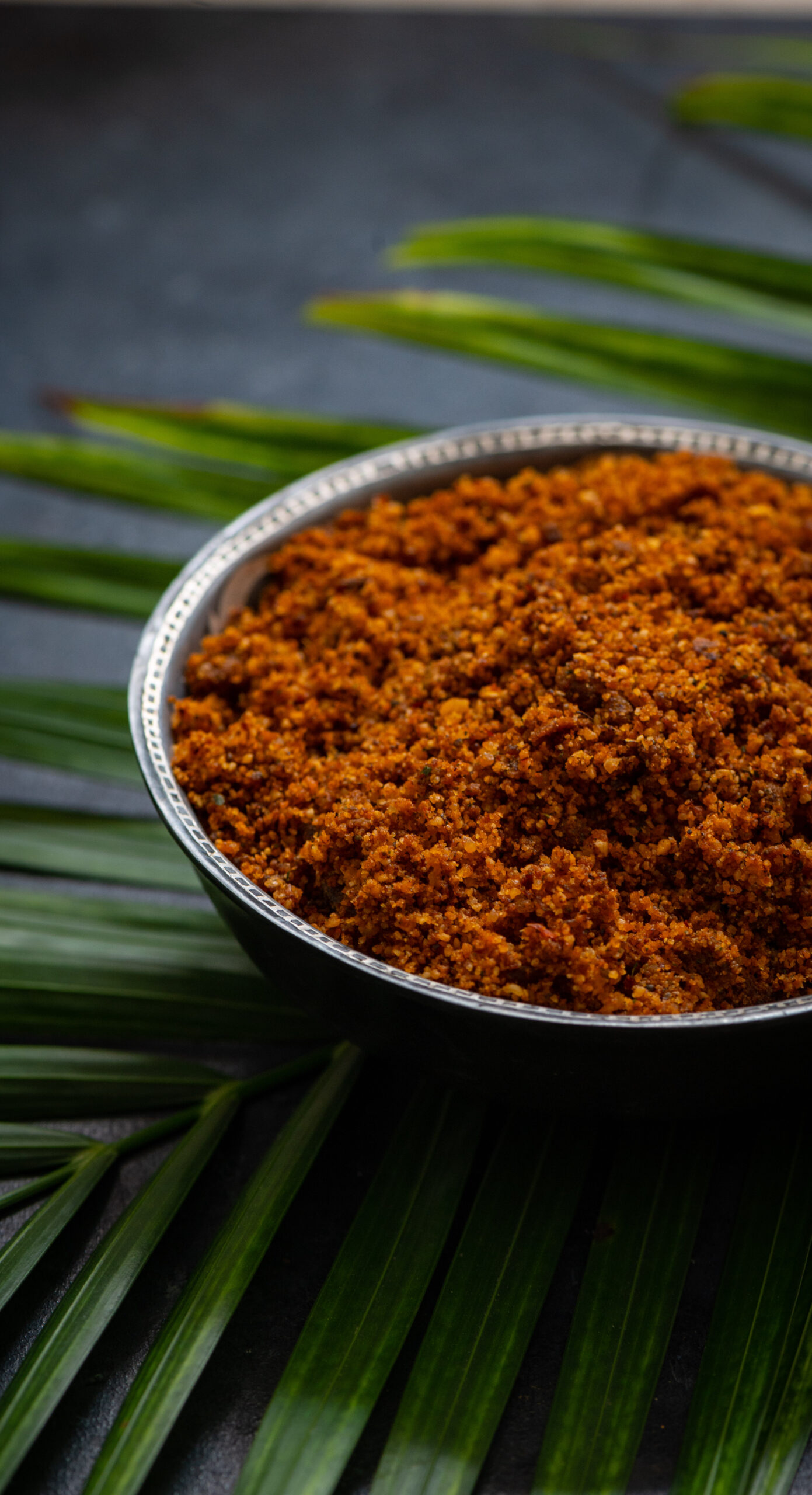
Coconut Podi

(Yield: 2 cups)

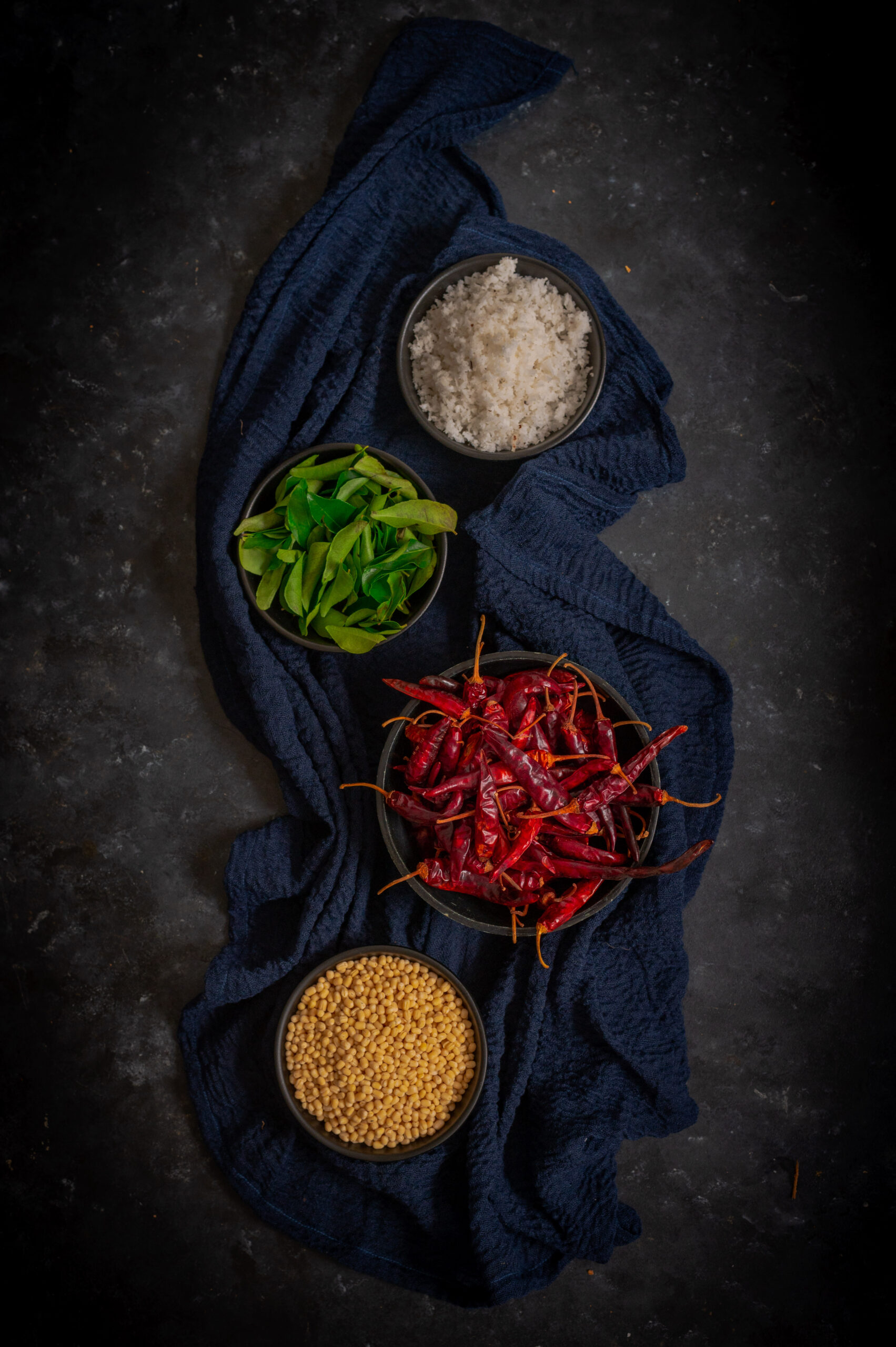
1 cup fresh coconut (shredded)

2 tablespoons urad dal

2 teaspoons sesame oil

¼ teaspoon asafoetida

2 -3 dry red chillies

¼ teaspoon mustard seeds

Salt to taste

6-8 curry leaves

1 marble-sized ball of tamarind


Add oil to a pan. Once it has heated, add the asafoetida, urad dal, mustard seeds, tamarind, red chillies and curry leaves.  Roast until the urad dal turns golden. Set aside.

In the same pan, dry-roast the coconut on a low flame, using just a few drops of oil, until it turns reddish in colour. Set aside.

Use a spoon to remove only the urad dal from the earlier mixture. Coarsely blend the remaining ingredients together, adding salt. Use a blender, and keep it at room temperature. Once a coarse blend is achieved, add the urad dal and blend everything again. The reason for adding the dal only at the end is so that there is a bit of crunch in the podi. You’ll see what I mean when you taste it!

You may also want to add just a pinch of jaggery to this recipe, if you’d like to enhance the flavour with some sweetness. That was an element I used in some trials of mine, and ultimately eliminated from my final version. If you’d like to, you can eliminate the curry leaves too. It all depends on what combination of spice, sweetness and tang (which comes in this case from tamarind) you most enjoy.

Store at room temperature, and enjoy with dosa, idly, rice, roti or any combination you prefer.

Over the next few weeks, I’ll be sharing more coconut-ty goodies, from anytime staples to festive specials. Please do subscribe to this blog, so that you’ll know as soon as a new post goes up! Don’t forget to let me know in the comments what you think of the recipes, too. As always, I love hearing from you about how you’ve translated my recipes to suit your own tastes!
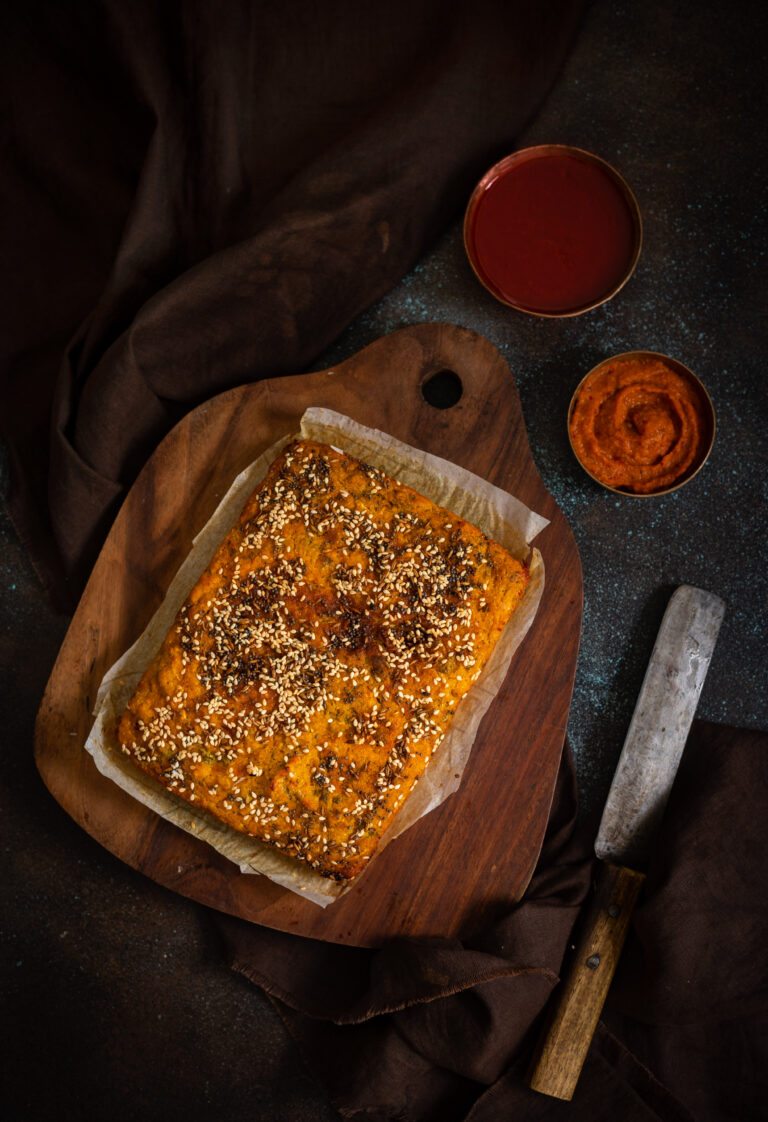
 

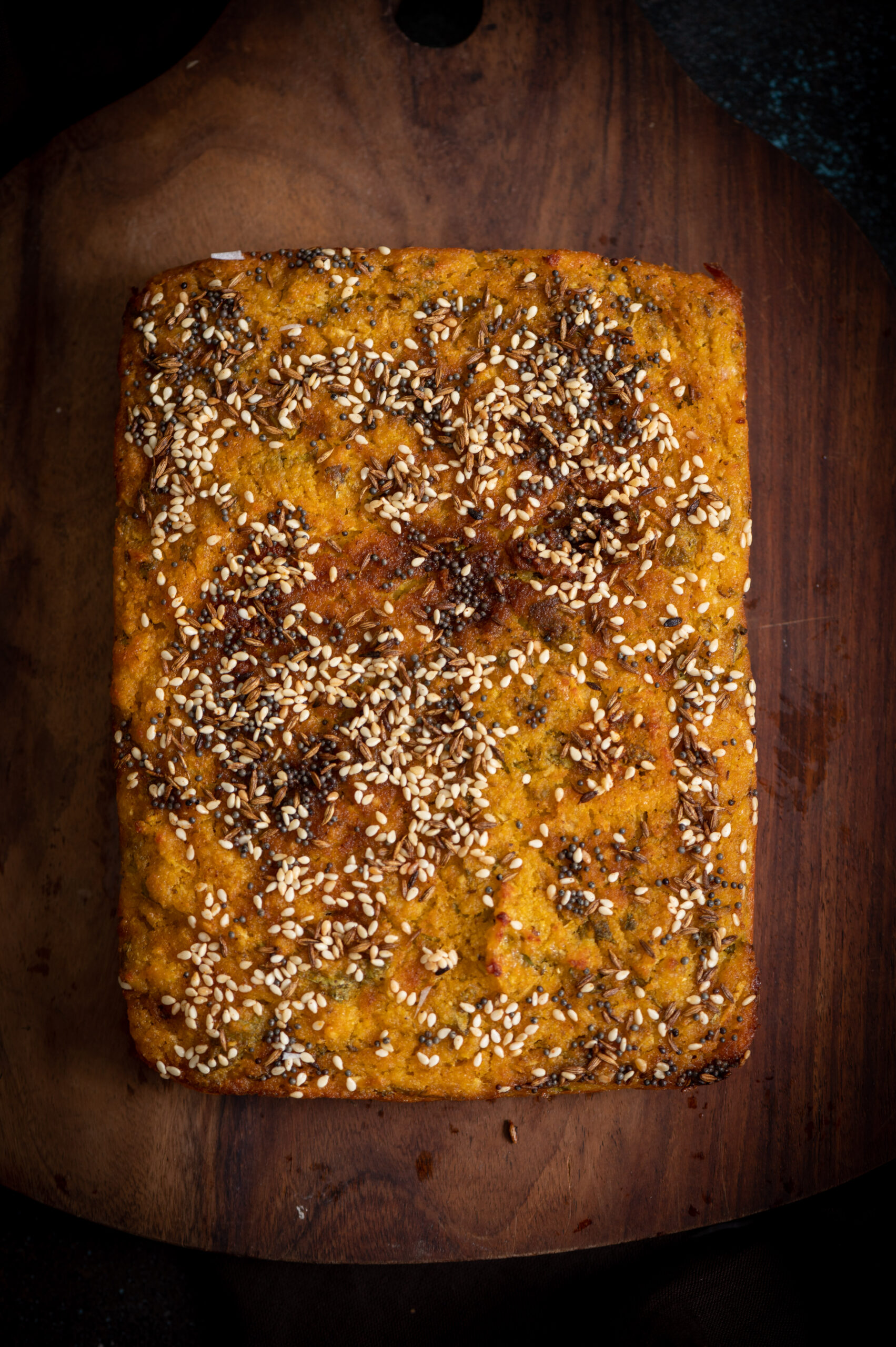
Handvo is a savoury cake made with lentils, from the Gujarati repertoire. Growing up, I would see it being made by my mother in the traditional way: in the backyard, she would prepare it in a heavy-bottomed brass pot placed on charcoal. She would pour the batter – containing lentils, rice and vegetables – into the vessel, then cover it with a heavy iron lid and let it cook. This was how it was made in most Gujarati homes back then. The funny thing is that although I enjoyed watching the elaborate process outside the kitchen, I found the dish itself quite boring. My mother had given herself a culinary education, learning baking and international cooking styles at a time when such classes were considered unusual, and as a child, I much preferred the foreign dishes she was learning to whip up. Over time, my appreciation for traditional cuisine blossomed, and this is why I am sharing the recipe for this handvo today, during the auspicious period of Navaratri.

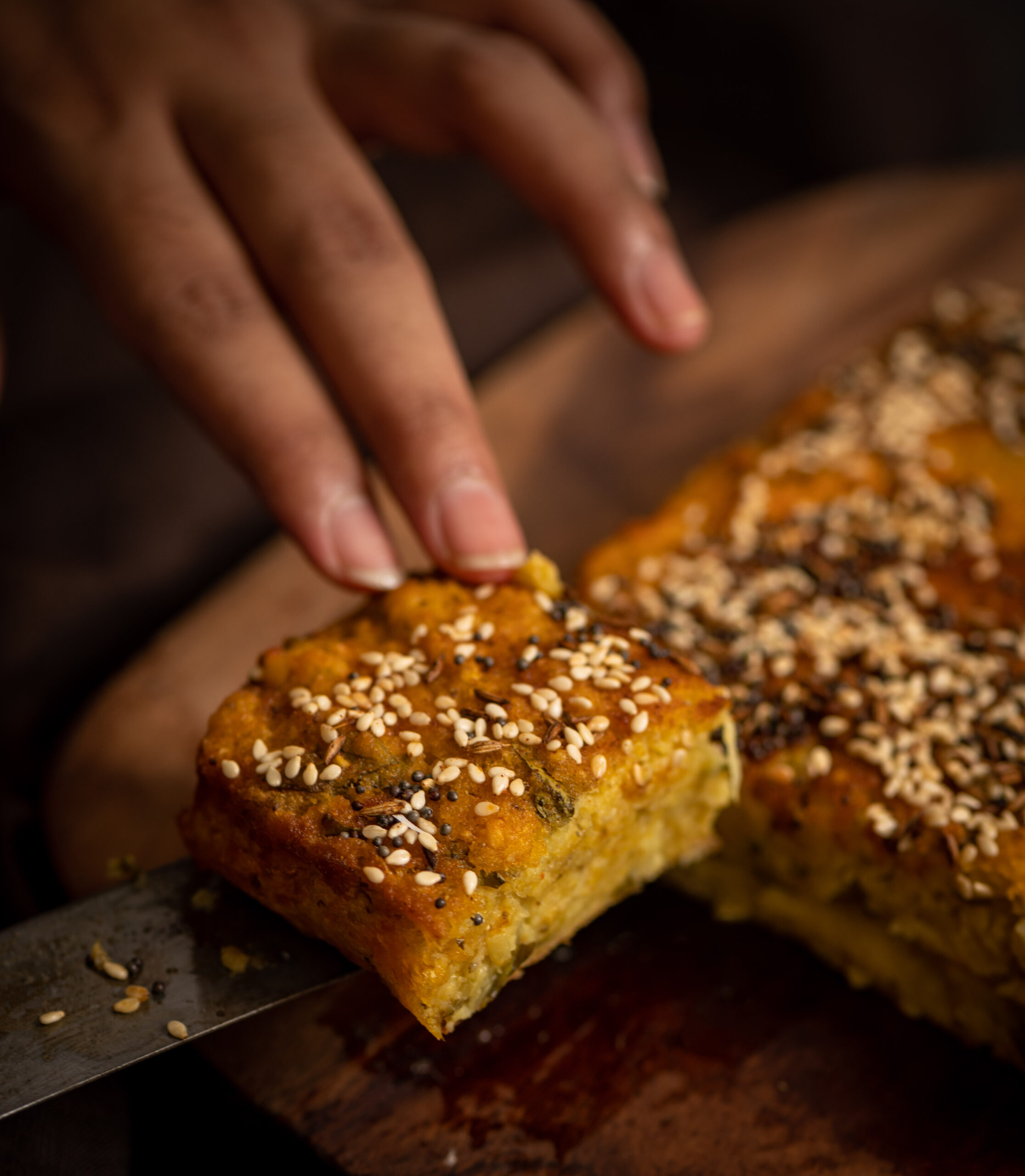
I recall that my mother would make a large pot of handvo only about once a month or so. She would bake it in the evening and we would have it fresh for dinner, with the leftovers becoming our breakfast. The baked handvo comes out looking like a cake in height and shape, with a beautiful crust on top, which as kids we prized and fought over (for a dish I had thought dull, that was my favourite part!). So our mother had to divide it equally amongst us all. During Navaratri, however, handvo became our nightly staple. There’s no real link to the festival itself, except that this was my mother’s go-to during that very busy time of year. Even though the process seemed complicated to a watching child, it is actually a simple one-pot meal. It’s also lovely to have during the monsoon season, which usually coincides with the festival.

For us, Navaratri meant having a quick dinner and then heading out for the garba, a wonderful celebration that my siblings and I looked forward to with great anticipation. In those days, those nine nights of dancing, feasting and prayer were one of the major highlights of the calendar for us Gujaratis in Chennai. No more than 50 to 70 families would get together over the nine nights, and some of these families we’d only get to meet annually, so it was a very special occasion for the whole community. I remember how the fathers would be responsible for blocking the hall and all the event logistics, while the mothers would make the prasad  for the Goddess. Each evening would begin with a prayer, followed by the distribution of prasad, and then… the moment most of us would be waiting for: the dancing would begin. First, the women would begin dancing in a circle. Then, the children would come in, and finally everyone else would join. There would be competitions too, and I would always win a prize.

Garbas and dandiya these days don’t bear much resemblance to how they used to be while I was growing up. Now, they are just another party. The ones in my memory were very graceful and traditional, with a sense of propriety. The whole family used to be involved in those days, and the occasion was about keeping our culture alive. Even the little love affairs and marriages that used to come out of these events all happened under the watch of the parents, and with their blessings. Everything was about a sense of family and community back then, and I cherish those memories. Something about the handvo, which always preceded those evenings of fun, invokes them for me.

There are many varieties of handvo, which use different kinds of grains and dals based on what is in season; warmer grains like bajra are used in winters, while lighter rice and millets are used in summers. Rice leftover from lunch is also used, as are seasonal vegetables, the most common of which is the bottle gourd.

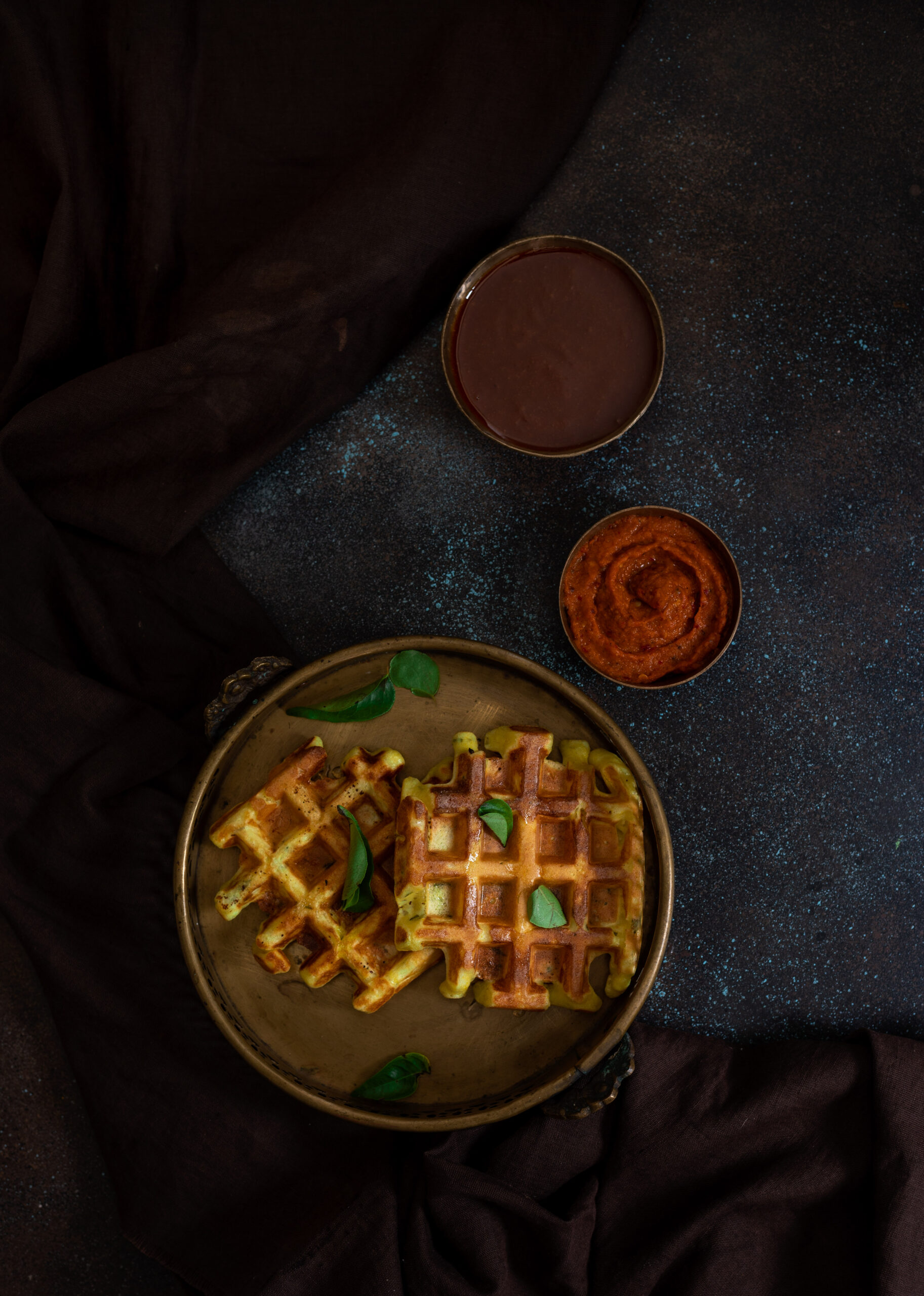
Over the years, the brass pot in the backyard kind of disappeared, and nowadays we see handvos being made in casseroles and glass containers that can be stuck in the oven. This year, I’m making my handvo the same way too, especially as I know that this is how most of you will try out this recipe. In fact, I felt tempted to modernise the method a step further and try out a batch in my waffle pan, as well! (If you’re one of those cooks who uses such tricks-of-the-eye to convince your fussy eaters at home to eat simply and well, this may be something to try out too!)

There are a few other keynotes that make my re:store style handvo distinct from the traditional kind. Firstly, I’ve eliminated the usage of rice, so as to ensure that the dish is carb-free. Most importantly, rather than bake a single large cake-like handvo and cut it into pieces, I’ve experimented with preparing individual portions, similar to dosas or crepes. I find that making the handvo in this method makes the cooking process easier and faster. The fermenting and soaking still require a day’s advance planning (unless you use readymade dal powders), but the actually frying up happens much faster than baking.

Handvo

(Yield: For 3-4 people)

1 cup toor dal

¼ cup urad dal

¼ cup moong dal

½ cup channa dal

¼ cup dahi + 2 teaspoons lemon juice

¾ cup grated bottle gourd (+ optional methi leaves)

¼ cup coriander leaves

2 teaspoons oil

¼ teaspoon turmeric

½ teaspoon green chili paste

½ teaspoon ginger paste

1 teaspoon sugar

Salt to taste


Tempering:

2 teaspoons oil

½ teaspoon mustard seeds

½ teaspoon sesame seeds

¼ teaspoon cumin seeds

½ teaspoon carom seeds

A few curry leaves


Clean the dals and soak them in sufficient water for 5-6 hours.

After this, remove the water and blend the dals coarsely. Add the dahi and lemon juice. Allow to rest for 3-5 hours.

Once the soaking and fermentation processes are completed, add the vegetable of your choice and the remaining spices to the batter. While I’ve made the batter from scratch, you may wish to use readymade dal powders instead.

Heat the oil in a flat pan. Add all the different seeds. Wait till they splutter and then add some curry leaves. Immediately, add 2 cups of the batter. Spread it a little, as you would a thick dosa or uthappam, then lower the flame. Cover the pan with a lid. Allow to cook for about 5-7 minutes. Now open the lid, and be careful as it would have trapped a lot of steam. Flip the handvo. Repeat the same process on this side.

After the handvo cooks and turns golden on both sides, remove it from the pan and make the next one. Cut into pieces and serve with green chutney or sweet mango pickle.

Over a few trials, this was the easiest method of preparing handvo that I discovered. You may of course choose to bake it instead. In that case, put all the batter in a bake-proof bowl. In a small pan, sauté the oil and seeds. Once they splutter, use a spoon to gently drizzle the tempering evenly on top of the batter. Bake at 160°C for half an hour, then slice and serve with the condiments.

The days of brass pots in the backyard and wholesome garba gatherings may have gone by, but the great thing about food is that it lets you keep making new memories. I wish you and your loved ones an auspicious Navaratri. I’d love to know if my easy, uthappam-inspired handvo finds a place in your festivities!

I hope you enjoyed my previous post, in which I gave away the recipe for one of re:store’s bestsellers. As mentioned then, I was on a stop motion video kick and was determined to produce at least a couple of those cute videos, with Anushka’s help to bring everything all together, of course. The chocolate cupcakes were the first star, and I must admit they were the more difficult to shoot of the two dishes I had zeroed in on for this experiment. The second one (the recipe for which I am sharing today) was much easier to shoot, perhaps because the composition was within a single bowl and the overall motion was more stable, and I love the result.

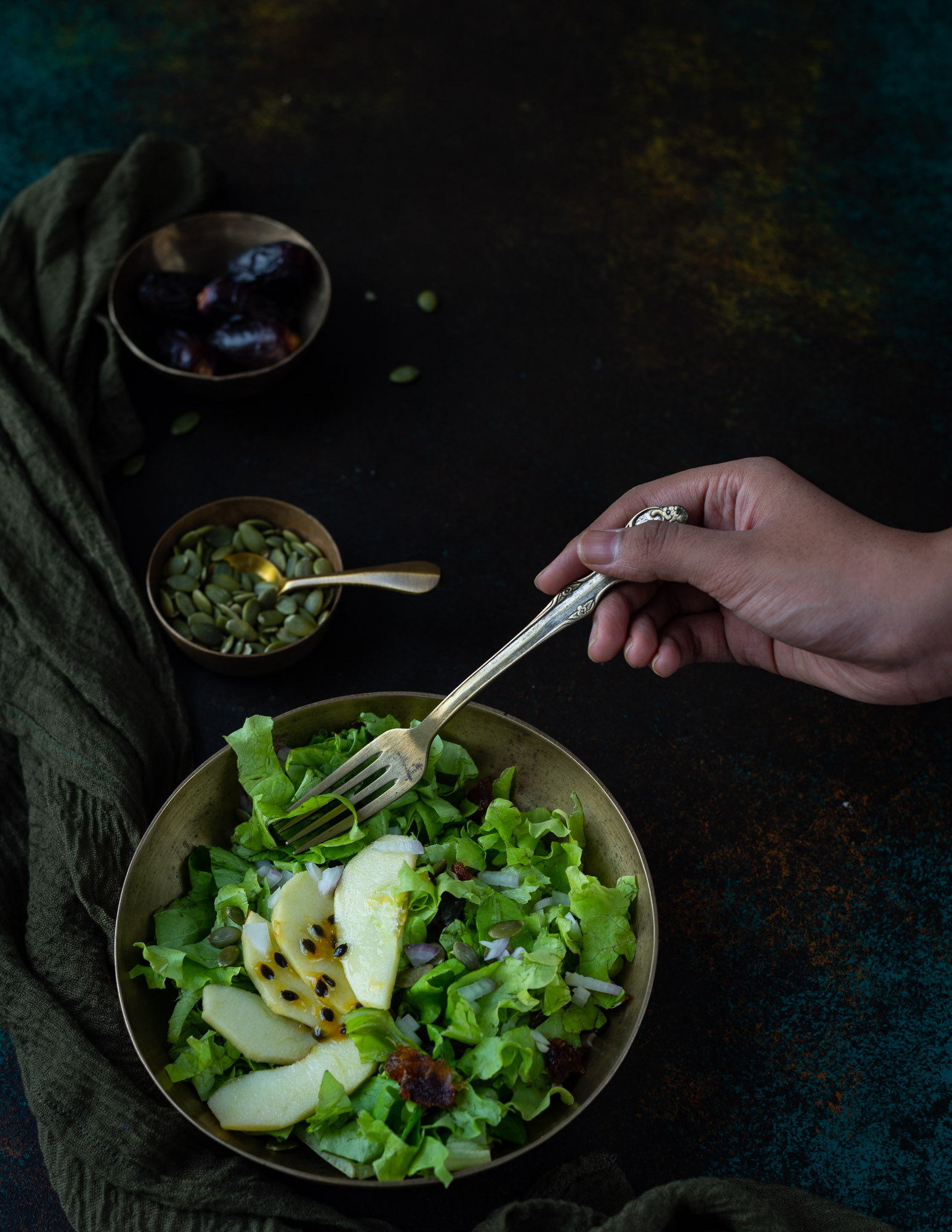
Before we go any further, here it is: the stop motion video for this recipe, a delicious salad with passion fruit dressing.

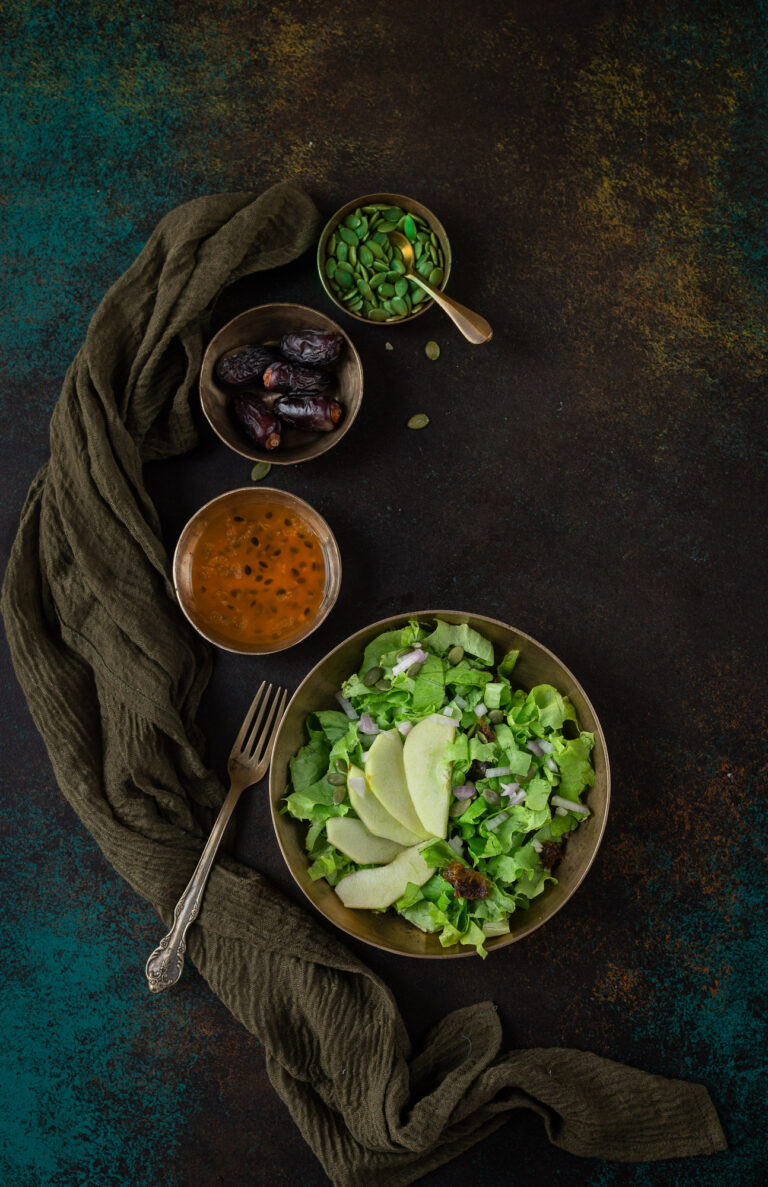
As you can see, with the shoot for this video, I wanted the dark and moody theme that I usually use in my photography to be reflected too. I also wanted to showcase what a stop motion video looks like when the recipe is simpler, as opposed to the more complex chocolate cupcakes one. As for whether or not I was looking for a contrast between tastes, health quotient and so on – honestly, not really. In this experiment, it was my aesthetic side that took over and determined my choices more than my culinary side.

At the moment, we are enjoying a bounty of hydroponically-grown varieties of greens in Chennai. This form of small-scale agriculture seems to be all the rage in the city, and as we grow some of our own produce ourselves, and as I personally always have an eye on natural and nourishing ingredients, we couldn’t be more pleased by this trend. These organic vegetables grow without soil, and so suffer less from worms and other issues. We have so much at home at the moment that I’ve been making lots of green smoothies and salads. For this recipe, you can use any kind of lettuce that you have available.

When it comes to salad dressings, those of us who opt for healthier dressings tend to stay with the simple staples like lemon, salt or pepper, but I’ve found a way to retain the health aspect while increasing the flavour of the dressing. This is where the passion fruit comes in.

Whenever a fruit or vegetable retains its foreign name on the market, and doesn’t have a commonly used local Tamil or other Indian name, I know that it’s something that has only in the recent past been cultivated here. So it is with passion fruit, and this post by a fellow food blogger has lots of information about the supply we get here in India, which is grown in the hilly regions.

Long before I began to enjoy this taste, there used to be a passion fruit shrub at our house in Kotagiri. Not having learned yet how much I love it, I would simply give away its yield to our neighbours. The plant is long gone now, but how I wish I had eaten that bounty while I could! I feel this now all the more because passion fruit has a very short growing season here in India. Just in case you happen to try this recipe at a time when it’s scarce on the market, rest assured that you can use a store-bought syrup instead of fresh pulp too. While it may contain added sugars or other ingredients I prefer to avoid, the taste will be the same. It’s the fruit’s unique flavour that really elevates this salad. Passion fruit has a slightly sour flavour and a high citric content, and it goes very well with crunchy apples. The two fruits complement each other, with their mix of textures and tastes. They have a beautiful contrast when put together here.

Passion fruit is a hardy fruit, not very pretty in appearance, but slice it open and you’ll find just the opposite. Its soft pulp looks just lovely speckled with black seeds. My husband loves having some for breakfast whenever it’s in season, slicing it in half, sprinkling some sugar on top, and scooping the flesh out with a spoon. As for me, I enjoy the juice very much and even make it daily when I can. It’s a healthy ingredient, one that’s great to start the day with, and we make ample use of it whenever we get our hands on some. Luckily, I had enough left over during the last passion fruit spree to make it the star of this salad…


Salad With Passion Fruit Dressing

(Yield: 1 bowl)


Dressing

½ cup passion fruit pulp

2 tablespoons olive oil

1 tablespoon honey

1 tablespoon lemon juice

Salt to taste


Salad

2 cups lettuce

¼ cup finely cut spring onions

½ apple (core and sliced)

2 tablespoons chopped dates

2 tablespoons toasted pumpkin seeds


Simply put the salad ingredients together in a bowl and set them aside. Then, whisk the ingredients of the dressing until they are blended well. Pour this over the salad before you serve it. Enjoy!

Sometimes, there really is nothing else easier to prepare than a salad. I’m a huge fan of the food format itself, as you may know, and here are several you may also enjoy: mango salad, millet salad and sundal.

Salads are a great way to increase your vegetable intake, and they give you a boost especially as a mid-day meal that keeps you light on your feet but sated. Do try this one out and let me know what you think? Before I forget, here’s another look at the stop motion video that started off the idea for this post! In case you missed it, do check out my cupcakes recipe too, and the stop motion video that accompanied it. If you use the app, I’m looking forward to connecting on Instagram too.

Having travelled through the tastebuds from right here in South India to Mexico and the Middle East and North Africa, the internationally-inspired Buddha bowl series on this blog arrives at its final destination: back on this continent. As I’ve said earlier, every one of these dishes qualifies as fusion cuisine, a tribute influenced by foreign flavours but by no means authentic. The same goes for this delicious, garlic-infused bowl of goodness, reminiscent of cooking from East Asia.

Indians have been very fond of Asian cuisines for the longest time, and what we eat here is really its own sub-cuisine, commonly known as Indo-Chinese food. While I’ve loved ordering these dishes while dining out, I had always been under the impression that Asian cooking involved too many ingredients or prep and that it somehow wouldn’t work for me. All this changed with the lockdown, which has had my daughter living here with us for the past few months. It’s a joy to have her safely here, rather than alone in Mumbai during the pandemic, and what she’s brought along with her is her love for Asian-inspired recipes. They are her own cooking go-to. Somehow, these dishes seem to come together rather naturally for her, and they taste fabulous. Due to her influence, I’ve been leaning towards (and learning how to make) this cuisine more and more, and enjoying the homemade versions, which tend to be healthier.

Fortunately for us, the ingredients are easily available and fresh. The recipes my daughter and I make together are all vegetarian or vegan, which suits us both. We have lunch together daily, and it’s wonderful to share dishes that I’d always only associated with the restaurant experience. I belong to a generation for whom Indo-Chinese food usually had something to do with a social or celebratory occasion, as I described here, so some of those special memories are also evoked at home now too. Nowadays, due to the large expat population in Chennai, we are lucky to also have a proliferation of Korean and Japanese restaurants, giving diners lots more wonderful variety when it comes to international food. My Asian-influenced and daughter-inspired Buddha bowl below, however, takes its cues from the Indo-Chinese restaurants that I was first exposed to. As a relative newbie to recipes like this one, I can assure you that this one is so easy and so tasty to make that you’ll be whipping it up in no time too!

Asian-Style Buddha Bowl

(Serves 2)

Garlic Rice

2 cups cooked rice

2 tablespoons finely sliced spring onions

2 tablespoons finely chopped garlic

1 tablespoon sesame oil

½ tablespoon light soy sauce

Salt to taste

Garlic Bok Choy

1 tablespoon crushed peanuts

½ tablespoon sesame oil

1 bunch cleaned and dried bok choy

½ tablespoon sliced garlic

½ teaspoon grated ginger

2-3 finely cut shallots

¼ teaspoon honey

Salt to taste

A pinch of chili flakes

A dash of lemon

Tofu

6 – 8 slices tofu

1½ tablespoons light soy sauce

1 tablespoon hot water

A pinch of sesame seeds

¼ teaspoon honey

¼ teaspoon sesame oil

Broccoli

1 cup sliced broccoli

Salt to taste

Garnish

Cilantro (finely chopped)

Spring onions (finely chopped)

Chili flakes


As with all Buddha bowls, each component must be made separately and brought together only when you are ready to serve the meal. Begin by preparing the garlic rice. In a pan, heat the oil. Add the garlic and allow it to sauté until it is golden and aromatic. Now, add the rice. Stir. Add the salt, soy sauce and spring onions. Mix well and set aside.

Then, prepare the garlic bok choy. Heat the oil in a pan. Once it is hot, add the garlic, ginger and peanuts. Stir them together. Now, add the bok choy and the honey, allowing the flavours in the pan to coat the leaves well. Sprinkle salt, add the dash of lemon and stir. Set aside.

I prefer the leaves to be a bit raw and crunchy. However, if you like them cooked well and wilted you may make them this way. You may also replace the peanuts with cashew nuts. If you have a nut intolerance, you can avoid the nuts altogether.

To prepare the tofu, first stir all the ingredients except the tofu together in a cup to make a sauce. Set this aside. Now, sauté the tofu lightly in oil.

To prepare the broccoli, drop the sliced vegetable in hot water for a few minutes. If you prefer to, you may sauté it next, or leave it as is. Remove and sprinkle with some salt.

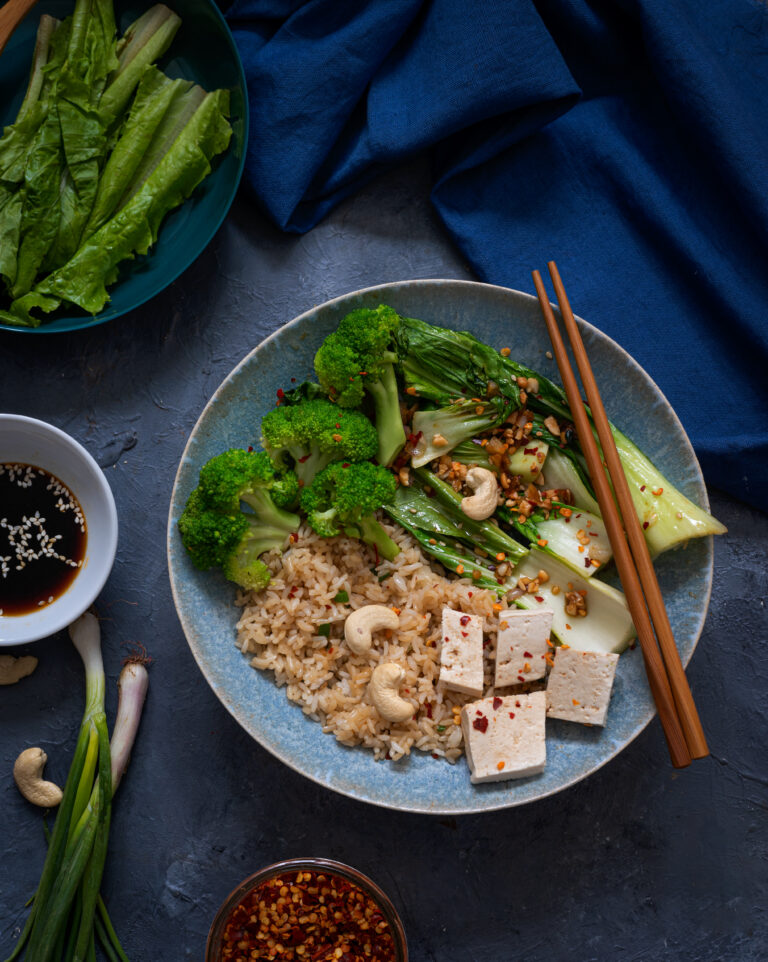
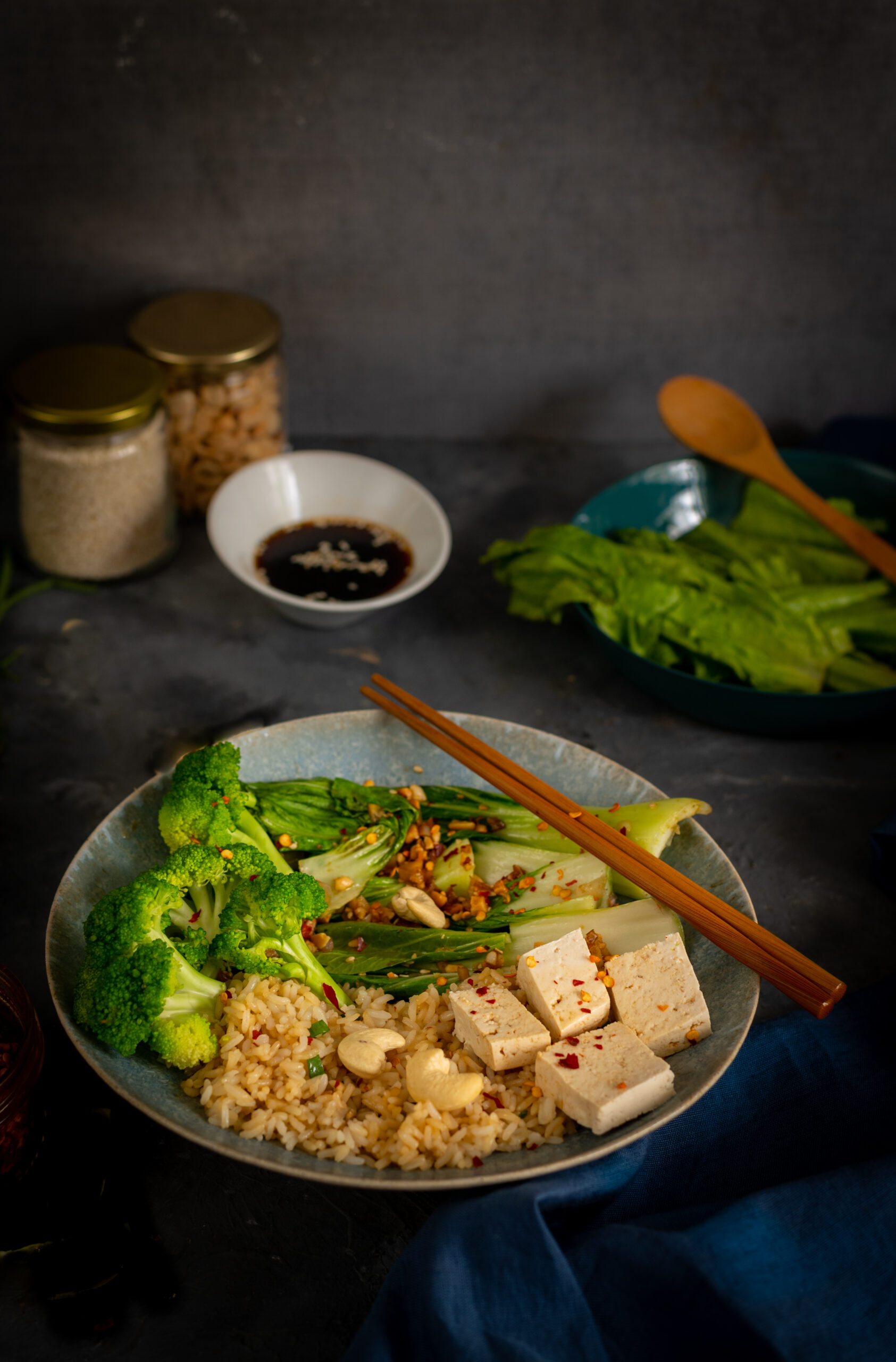
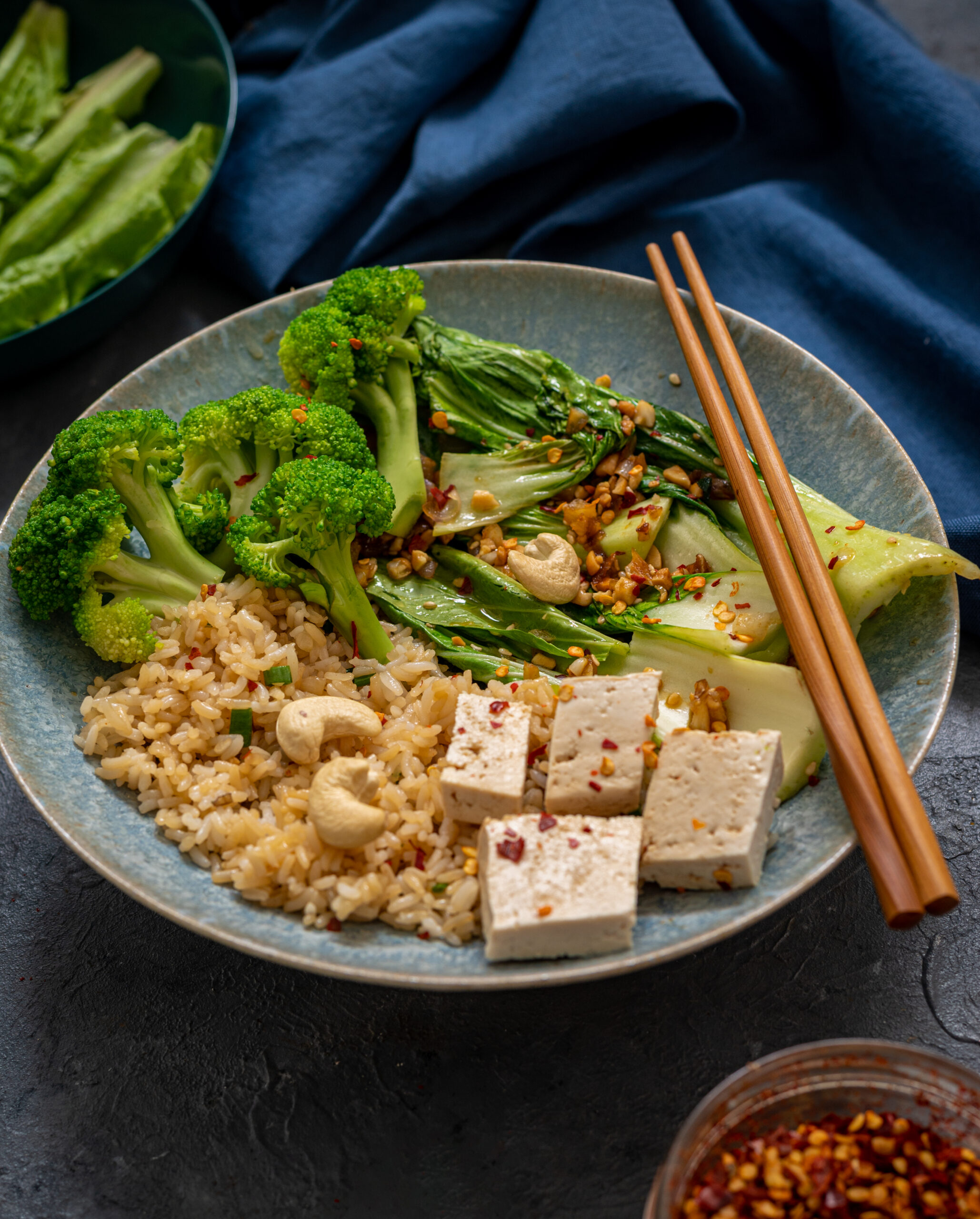
Start assembling the bowl by plating the rice, followed by the boy choy and the broccoli. Finish these off by adding the tofu, which you can top with a teaspoon of the prepared sauce. Place the remaining sauce near the bowl to use as a dip for the tofu and even for the vegetables, if you like them crunchy like I do.

Before serving, garnish the bowl with the cilantro, spring onions and red chilli flakes. As I said right at the start of this series, a beautiful bowl allows the eyes to feast first, and I encourage you to pick one out that elevates your experience of the meal.

I hope you’ve enjoyed these Buddha bowl recipes, which pay tribute to different cuisines that I have loved. For other meal-in-a-bowl dishes, do click on the link and see some of the recipes I’ve shared over the years that fit the bill. Some of my favourites include two Indian classics, the dal dhokli and khatta mung, as well as another Asian-style dish, a stir-fry. I hope you’ll check them out!

There are one-pot meals and meal-in-a-bowls to be found in cuisines all over the world, even though distinguishing them as a category is a relatively new idea. They’ve gained popularity among diners everywhere thanks to the Buddha bowl trend, which are comprised of a medley of attractively arranged (and usually nutritious) food items in a single bowl. I’ve had quite a few versions of these on my travels, and they’ve always motivated me to make them a regular part of my lifestyle. Now that we’ve all been at home for months, I’ve been bringing as many of these inspirations into my day-to-day cooking as possible. The Buddha bowl is among my favourites for its aesthetic appeal, health quotient and convenience. I’ve been making variants focused on different cuisines, and will share a few of them in the coming weeks. Let’s begin today with my South Indian-style Buddha bowl.

The Buddha bowl concept itself is a great one, and is based on putting together a compact and even portable meal which packs in lots of flavours and textures. You may be wondering what makes a Buddha bowl different from the thaalis we enjoy in India, in which a wide variety of dishes are served in their own separate containers, arranged around the central eating space of the plate. The answer is in the portion sizes. With thaalis, there’s a lot more space, and you tend to fill up that space and thus consume what you’ve filled it with too. A Buddha bowl is just one vessel, usually a bowl as per the name, but a plate will do as well. Thaalis are indulgent, whereas Buddha bowls take a minimalistic approach. The latter are closely tied to fitness for this reason. These days, with the necessity of watching what I eat in a smarter way as I grow older, I reach for them very often in the interest of health. I can attest that eating a Buddha bowl keeps you light on your feet. Whenever I have one for lunch, I feel active for the rest of the day. There is a bounce in my step and I feel revitalised, and find myself doing my photoshoots with more energy.

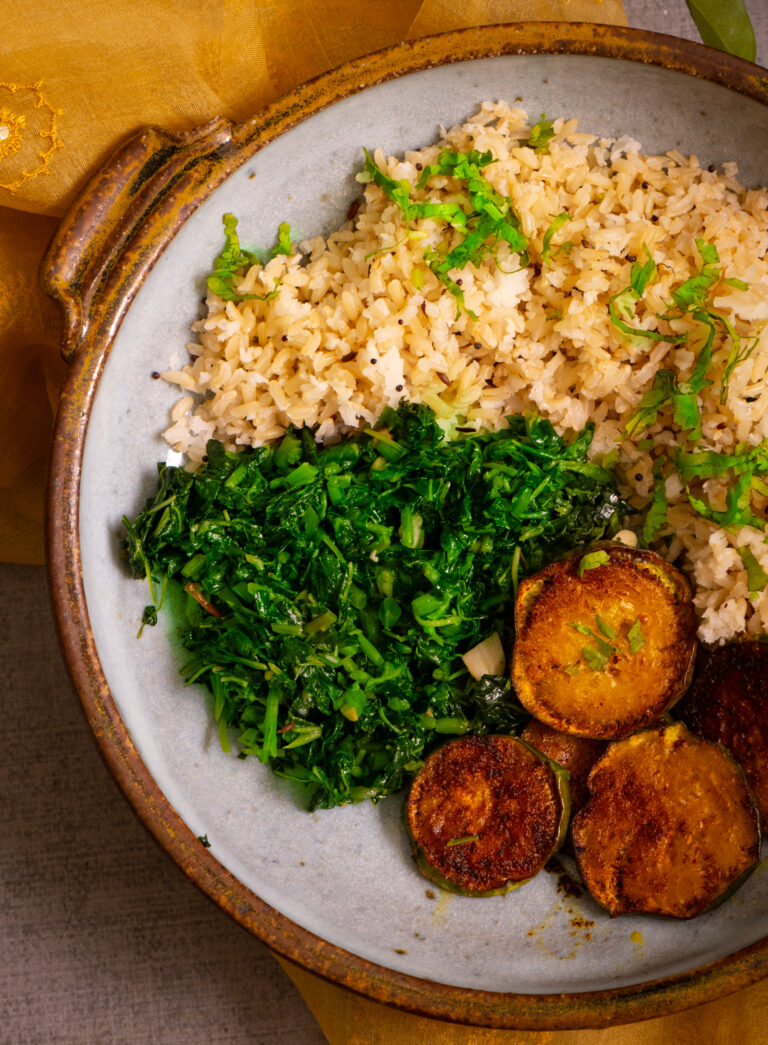
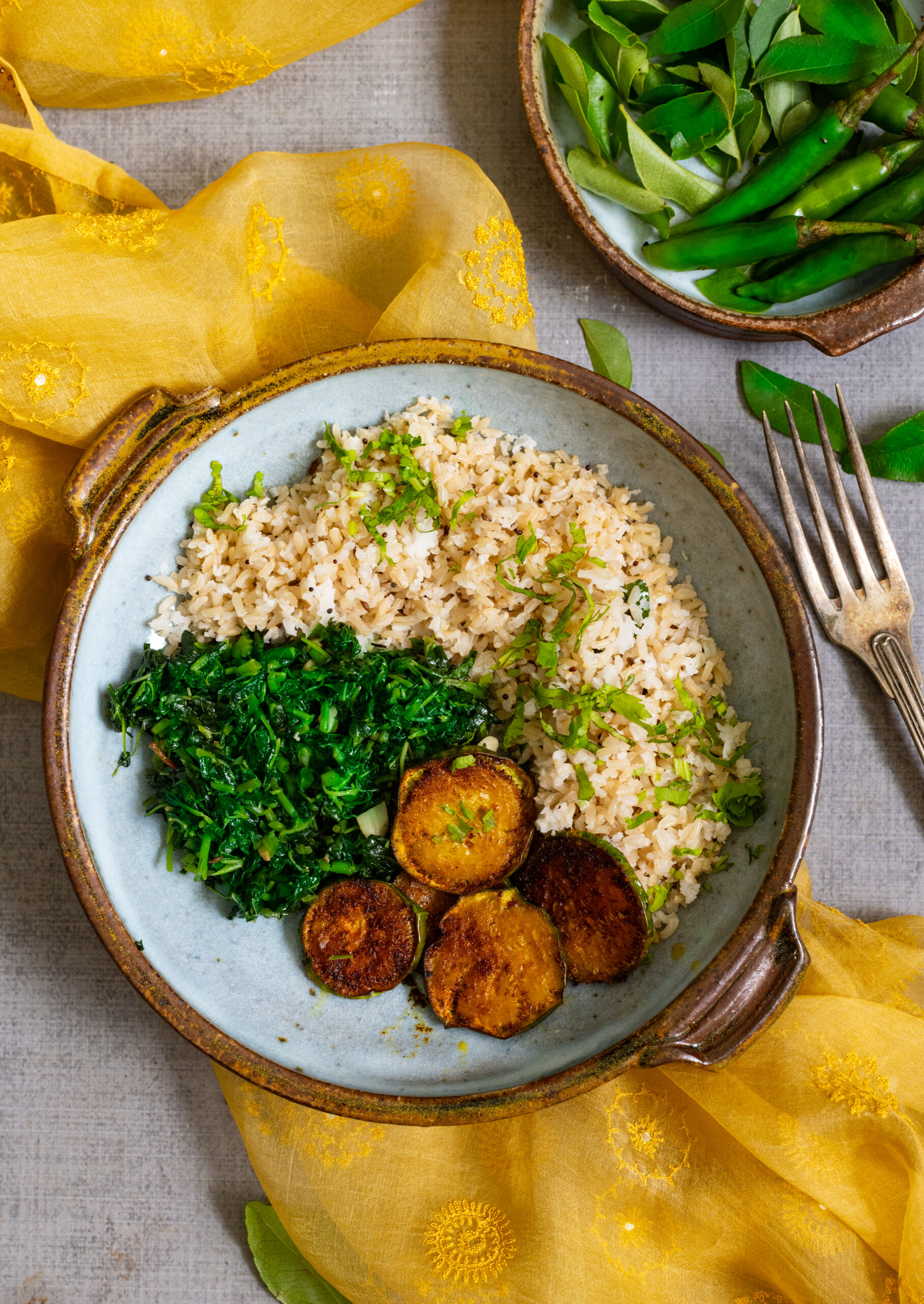
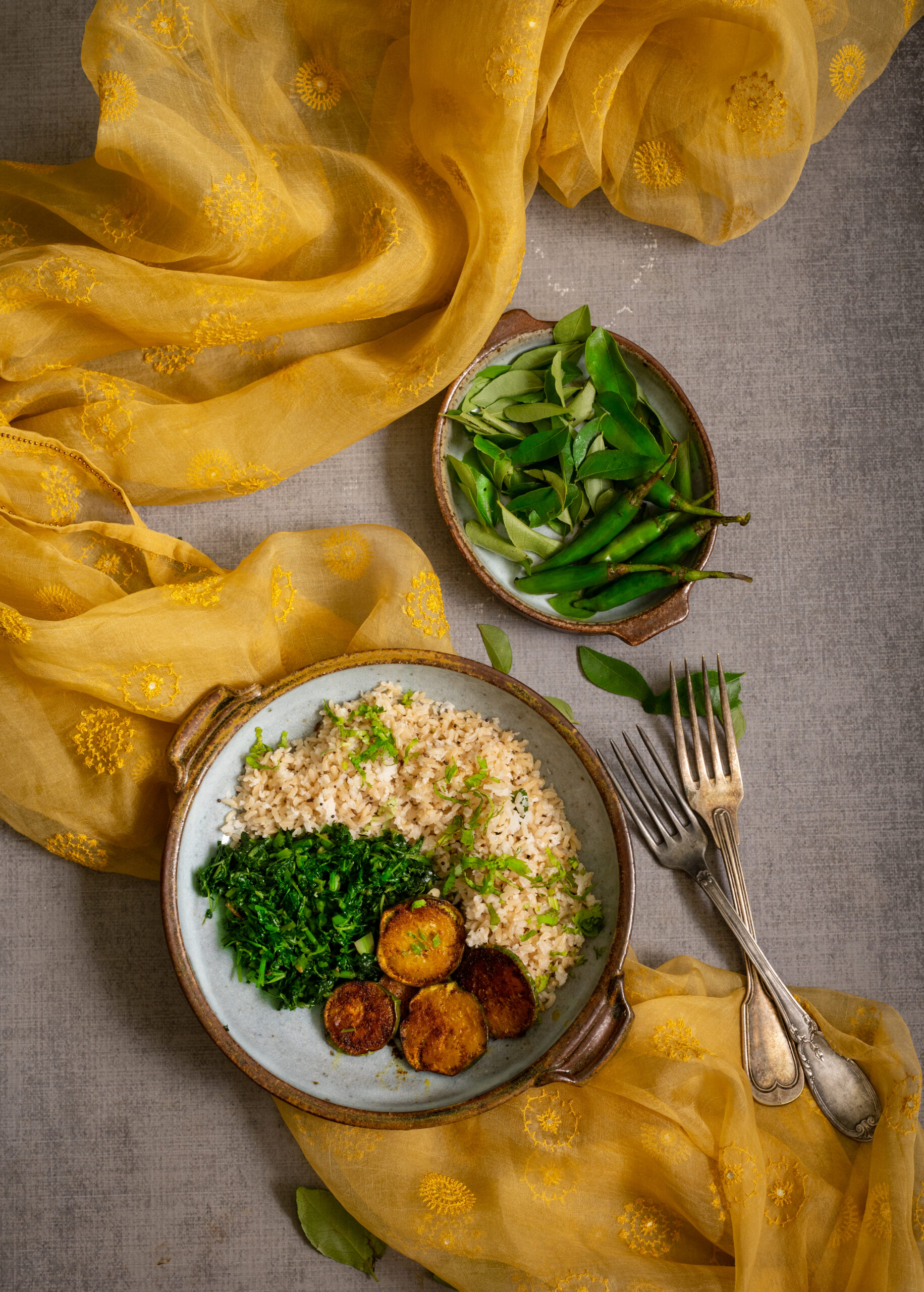
You can make carb-free variants if you like, but for me it’s simply about cutting down on the quantity of them while still getting the boost they give to my energy. Offsetting the carbs with a delicious load of greens is also key. This South Indian Buddha bowl contains the perfect combination of crispy eggplant, flavourful rice and nourishing, lightly-spiced greens. Every single dish-within-the-dish tastes wonderful, and they come together beautifully with their richness of textures and flavours.

I am a fan of healthy grains options, so I’ve used brown rice in this recipe. You can substitute this with white rice, if you prefer. As for the greens, here in South India we enjoy an incredible variety of spinach, including vendaya keerai, moringa, mollaraikeerai, sirikeerai and more. I have some kind or another every single day, and just happened to use mullakeerai in this recipe. It’s just very lightly seasoned with garlic, salt and dry red chilli and is very flavourful when eaten almost plain this way. We also get a variety of eggplants, from thin and long green ones to fat and purple ones, and while I don’t know all their names, you can use any that are available too. One of the beautiful things about this recipe is that it requires just the staples.

I always say that you eat with your eyes first, and the aesthetics of serving are very important to me not only as a photographer but equally as a culinary enthusiast. When you serve these diverse portions in a beautiful and well-proportioned bowl, the vessel looks full and the moment you see it, you get a sense of “Wow, I’m going to have a big meal.” You truly do feel satiated at the end of it, because your eyes have convinced your brain before your belly begins its work! Making a Buddha bowl as colourfully as possible also has health advantages, as you may remember from my post on eating the rainbow.

Speaking of what the eyes take in, initially, I had planned a photoshoot using South Indian brass crockery and props. I ultimately decided to go with an international look instead, to celebrate the global popularity of the Buddha bowl. As I discovered, there’s also another trick of the eye in this. You see, my daughter doesn’t always enjoy South Indian cuisine, but if I present it this way, she tucks in enthusiastically. It’s all about presentation, and how good you can make a dish look so that it will please the person who is going to eat it even before they’ve had a bite. Personally, I would also love eating this very same meal off of a banana leaf (yela saapad), as is tradition. That would change the experience of having it totally as well. But for now, I need the shot of energy that a Buddha bowl puts into my day, and I’ll carry on having it this way for a while!

South Indian Buddha Bowl

(Yield: 1 bowl)


Coconut rice

200 grams (approximately 2 cups) cooked brown or white rice

30 grams (2 tablespoons) grated coconut

4 curry leaves

1 tablespoon coconut oil

¼ teaspoon cumin seeds

¼ teaspoon mustard seeds

1 green chilli

Salt to taste


Greens

2 cups chopped and cleaned greens

1 teaspoon oil

2-3 garlic cloves

1 dry red chilli (optional, can be replaced with green chilli)

Salt to taste


Eggplant

10-12 slices of small eggplants

Salt to taste

¼ teaspoon turmeric

1 teaspoon coriander powder

¼ teaspoon cumin powder

1 tablespoon chickpea flour

2-3 tablespoons oil


Prepare each of the components separately. I’ll begin by sharing the method for the coconut rice. In a pan, add the coconut oil. Once it’s heated, add the cumin and mustard seeds. When the seeds splutter, add the curry leaves and green chilli. Next, add the freshly grated coconut. Sauté them all together for a few minutes and finally add the rice and salt. Stir until combined.

The following is the method for the pan-fried eggplant. On a plate, place the eggplant slices and sprinkle all the masala (including the chickpea flour) onto them, and gently massage them in by using your fingers. Allow the coated slices to sit for ½ an hour or more. If letting the tray sit for longer, then refrigerate it so that the eggplant doesn’t begin to give out water.

When you are ready to fry the eggplant, add the oil in a pan. Allow it to heat up, then gently place the round eggplant slices onto the hot oil. Allow them to turn golden on both sides on a medium flame, then cool.

Finally, here is the method to prepare the greens. Heat a kadai and add the oil to it. Once it’s hot, add the garlic and stir fry until the cloves change colour slightly. Now, add the chilli and then finally add the greens. Keep the flame at a medium level and sauté for a few minutes or until the greens turn a little tender. Do not overcook, as they release water and will change colour. Add the salt and stir well.

My daughter felt that this bowl was a little dry, and if you think so too, you can either add some yoghurt to it as a fourth component or make the spinach in a more gravy-like style if you prefer.

With all the components of the dish prepared, it now comes down to the assembly. Pick out a beautiful bowl and arrange the coconut rice, sautéed greens and pan-fried eggplant on it. Let your eyes feast first. Enjoy!

You may have noticed that my blog is also a kind of Buddha bowl, a mix-and-match that I put together from across categories. This is deliberate, because I want people from across age groups and from all over the world to enjoy my recipes. I always try to balance the traditional and the modern, and bring in all my varied experiences and learning – be they through travel, my training such as in Macrobiotics, my memories, or my experiments. I strive to keep up with the times, and I also strive to keep challenging myself. Thank you for coming along with me on my journey! There are a few more Buddha bowls in the next couple of stops. Any guesses where they might be inspired from?

The lovely thing about India is that on the levels of states, communities and right down to homes, the very same dish or category of dishes will be prepared with a unique twist. Whether they are delectable main courses or fun snacks or refreshing beverages, we have so much variety across our cuisines here, even when it comes to staples. They are also eaten in different ways, at different times of day. So it was a pleasant surprise when I encountered this tasty green peas dish, known as chura matar (literally – “poha and peas”), at the home of my very dear friend Vrinda in Jaipur one morning. Poha in and of itself is often a breakfast item, and the inclusion of peas (something I was not used to encountering in the morning meal) elevated it to a new high. What a great start to the day it was!

All breakfasts across India are healthy. I know some of you will disagree by bringing up something like the aloo parathas of Punjab, but there’s a simple reason why a heavy meal is eaten in the mornings. Days tend to be busy, and getting a proper boost of nutrition to tide a person through many hours is important. When you think about how this is especially true for those engaged in labour work, who may not be able to sit down for three square meals, the logic is evident. So whether that’s fried pooris or idlis made of rice flour, that first meal of the day is designed to go a long way. In Maharashtra and Gujarat, people often begin the day with poha, or flattened rice. It’s also an ingredient in special dishes like Diwali chevdo or the sweet dudh-poha made on Sharad Purnima. It’s eaten across the subcontinent, and is known here in Tamil Nadu as aval. I recall also having it steamed and topped with jaggery, as served by a friend I was visiting in Assam once.

Chura matar is a traditional dish from Uttar Pradesh, where the poha is deep-fried. Our version here is a healthier one, sautéing and steaming the poha rather than frying it. People from Uttar Pradesh may find this strange, but as a Gujarati raised in Tamil Nadu, my cultural influences are diverse and have an effect on my culinary choices too. Gujaratis also have a version of this dish, mixing the peas and poha – but when the vegetable is in season, you get so much of it that you may as well make it the star of its own dish and serve it separately too.  Green pea season in India usually takes place in November, and the markets are simply abundant with the vegetable then. However, they grow year-round, as you may remember from one of my recipes that fondly recalled the Ooty summers of my childhood, where peas were known as “English vegetable”. My memories of the Nilgiris aren’t the only ones that this ingredient rekindles. In fact, especially in this time of no travel, they make me miss the north of India in a big way. All my trips to Gujarat while I was growing up, and my later journeys to Rajasthan (such as when I visited the friend who shared this recipe with me) come back to me vividly when I eat this dish. I miss the exposure to a wide range of delicacies, and discovering so many new treats. It’s a pleasure to be able to evoke those experiences in my own kitchen.

Even though we are technically off-season at the moment, I am writing this now because I am missing Vrinda and craving her chura matar. It’s funny how food is sometimes connected to a person. A roti or puran poli always reminds me of my mother, who taught me how to make those dishes and enjoyed them too. A stir-fry always makes me think of my daughter, who loves them. We absolutely connect recipes to people.

I learned through Vrinda that the younger the pod, the more beautiful the flavour of the peas within it. There in Jaipur, these are called colloquially as “zero number” in the local markets, to indicate the smallness of their size. The best peas are harvested right at the beginning of the season, before they are fully grown.

We are fortunate in India to have easy access to fresh and affordable green peas, and in years past I’ve often frozen batches while the season is in full swing to use later. Even before peas became widely cultivated in India during the colonial era, we have always had our own lentils and legumes. You could think of them as being native versions of peas. Green toor dal or split pigeon peas, red rajma or kidney beans, green channa or chickpeas, and so many more make up this list. Steamed, salted, eaten plain or dressed up with different flavours, they make great pea substitutes too and work especially well in salads. The South Indian sundal is a favourite of mine.

Another food item that I freeze often are chutneys. I make large batches, then freeze them in small single use portions. I do this with my sweet, tangy date chutney and my green chutney, among other variants.  This chura matar is chutney-free, because it doesn’t need it, since the green peas add a soft texture to the medley of basic elements. But you may enjoy using it, so feel free to add some if you would like to.

Without further ado, here is the chura matar recipe that I’m sharing today. I would love to know what your own take on it is too. I keep saying the same thing over and over on this blog, but it’s true: every cook makes their own version. My kitchen has its flavours, as do yours. My hands have their own type of love, as do yours. There’s what I’ve been taught, and what I’ve been exposed to, and the same goes for you and your own experiences. But the one thing we all have in common? A passion for all things delicious!


Chura Matar

(Serves 2-3)


For the poha

70 grams / 1 cup raw poha (it will become 170 grams or 1½ cups after soaking)

50 grams / ½ cup finely chopped onions

¼ teaspoon mustard seeds

2 tablespoons oil

A few curry leaves

1 green chilli

Salt to taste

Juice of ½ lemon

1 teaspoon sugar (optional)


Peas

1 cup frozen peas

1 teaspoon oil

¼ teaspoon cumin seeds

½ teaspoon ginger paste

Salt to taste


Topping

Onions (finely chopped)

Tomatoes (finely chopped)

Coriander leaves (finely chopped)

A squeeze of lemon


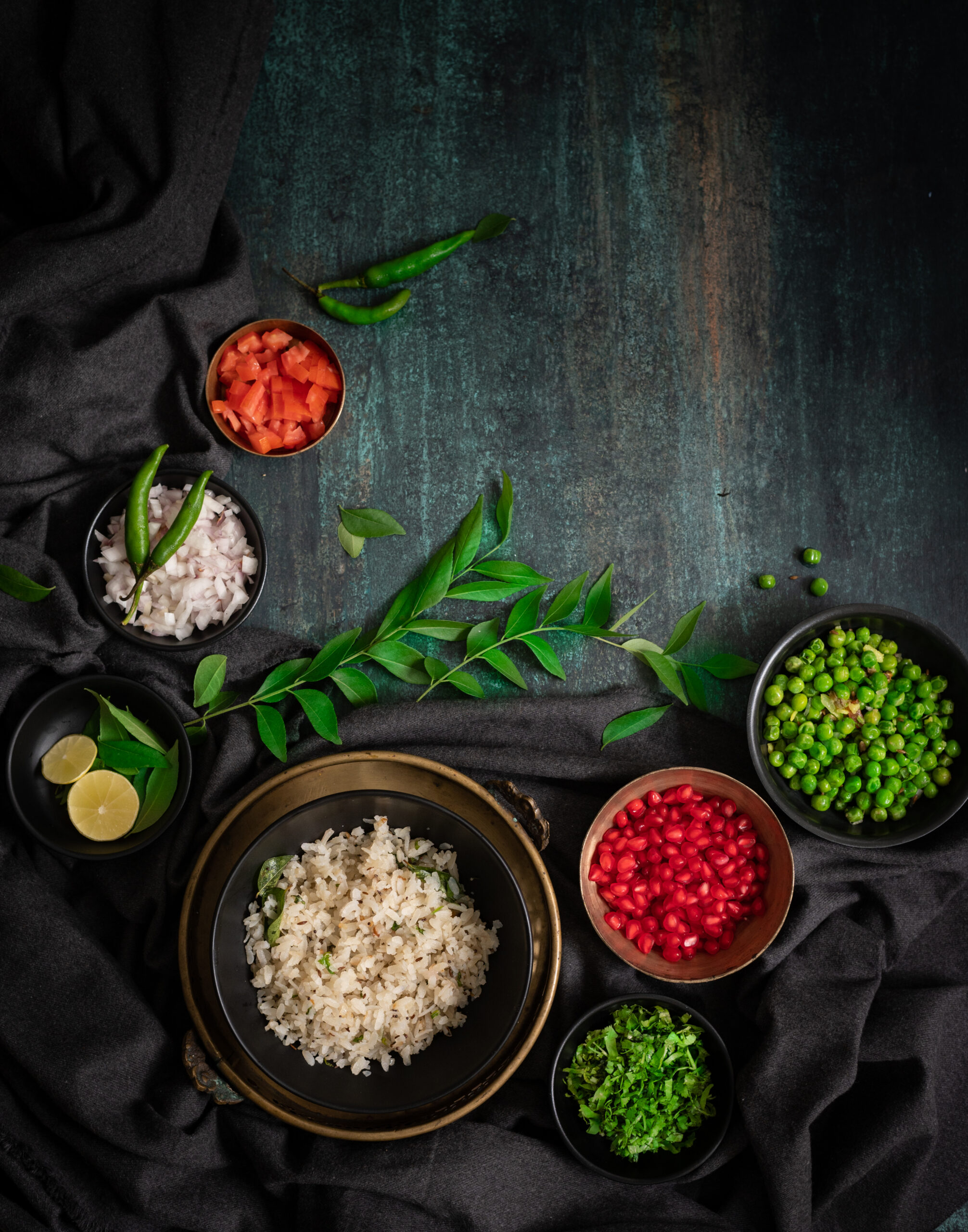
First, rinse the poha under water and allow it to drain. If the poha is of the thin variety, draining alone will do. Otherwise, soak it for half an hour.

In a pan, add the oil. Once it has heated, add the mustard seeds and wait until they splutter.

Then, add the green chili and onions. Once they are golden, add the soft, soaked poha. Next, add the salt and sugar (if you are using it). Stir well on a slow flame, gently. Set aside.

Now, prepare the peas. Add the oil in a pan and add the cumin seeds. Wait until they turn aromatic. Now add the ginger paste. Stir, and finally add the peas. If you are using frozen peas, make sure you allow them to cook long enough to turn soft. Set aside.

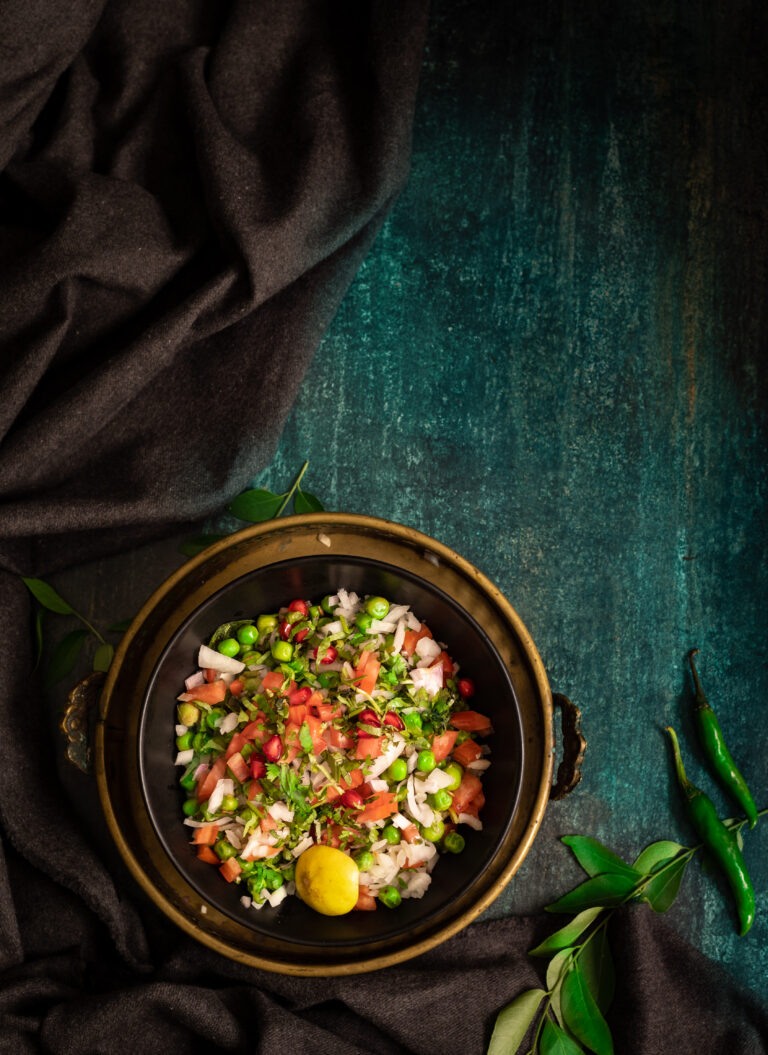
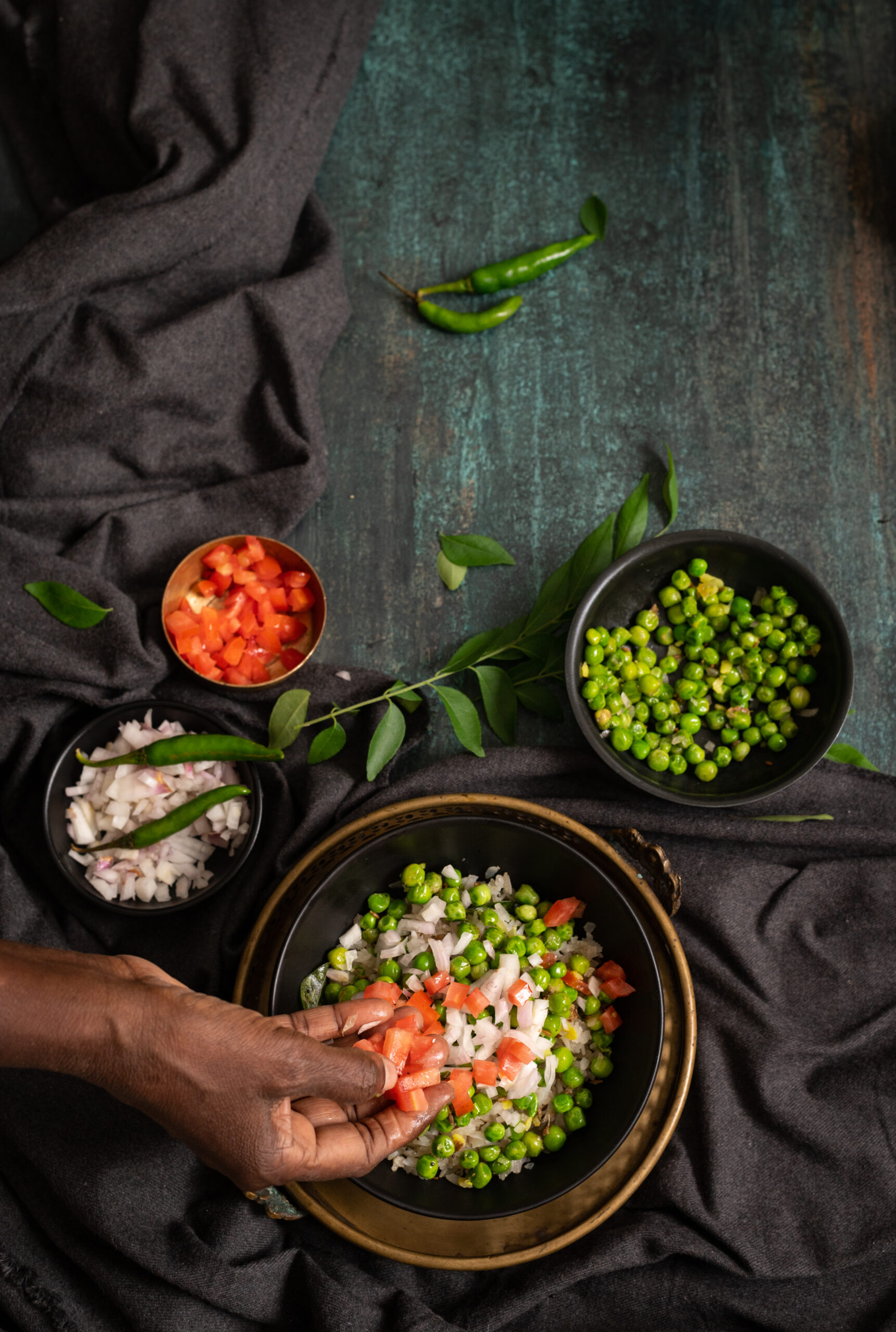
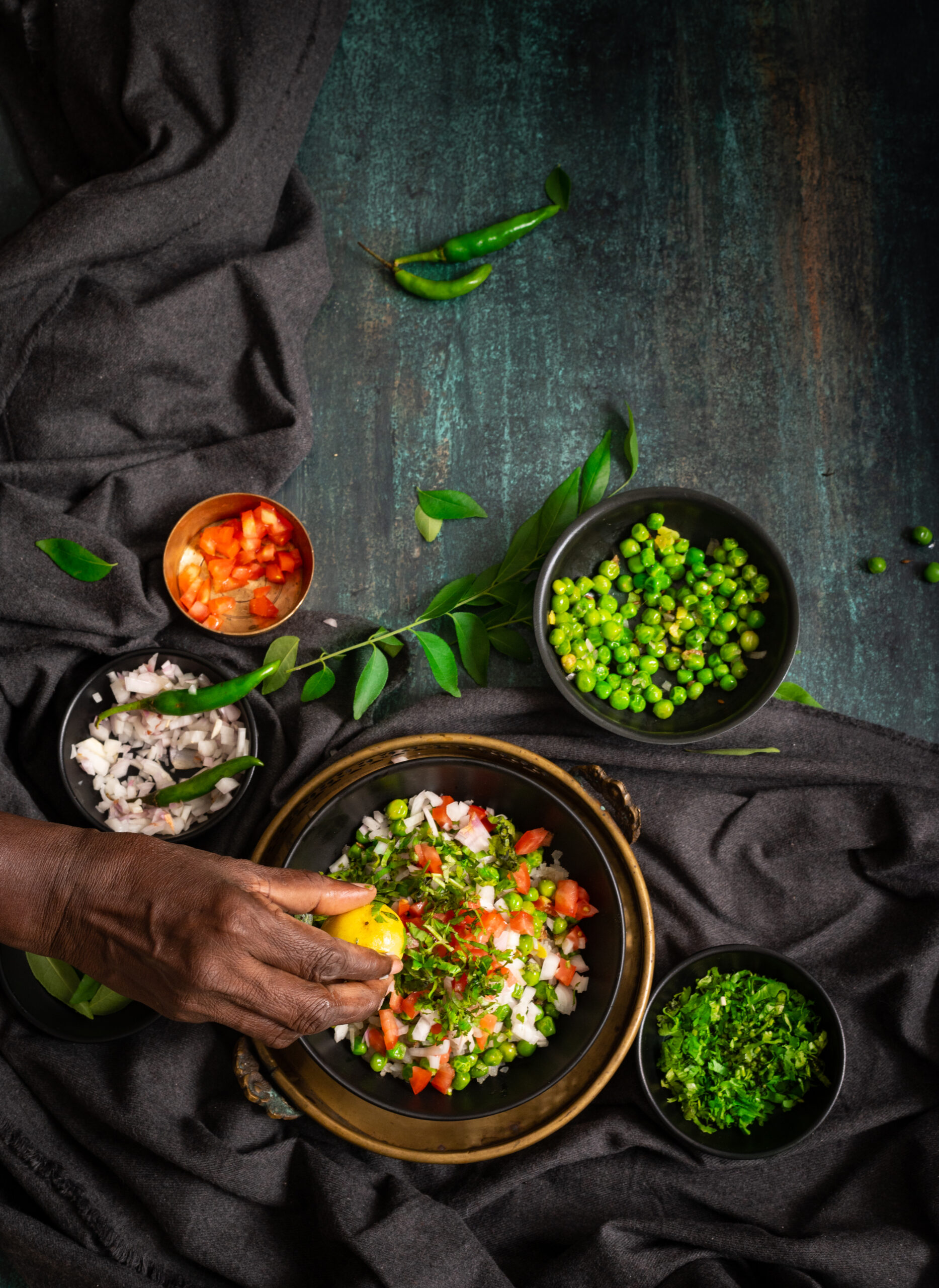
Use a shallow serving platter to assemble the dish. First, place the cooked poha as a layer. Over this, add the peas as a layer. Top this with the healthy garnish of freshly chopped onions, tomatoes and coriander leaves. Finish with a dash of lemon juice. Serve.

Now that remembering this fabulous chura matar has brought it into my repertoire, I envision making it for evening treats, as a filler between meals, and even as full meals (such as breakfast!). Do try this one out, and let me know what you think in the comments.

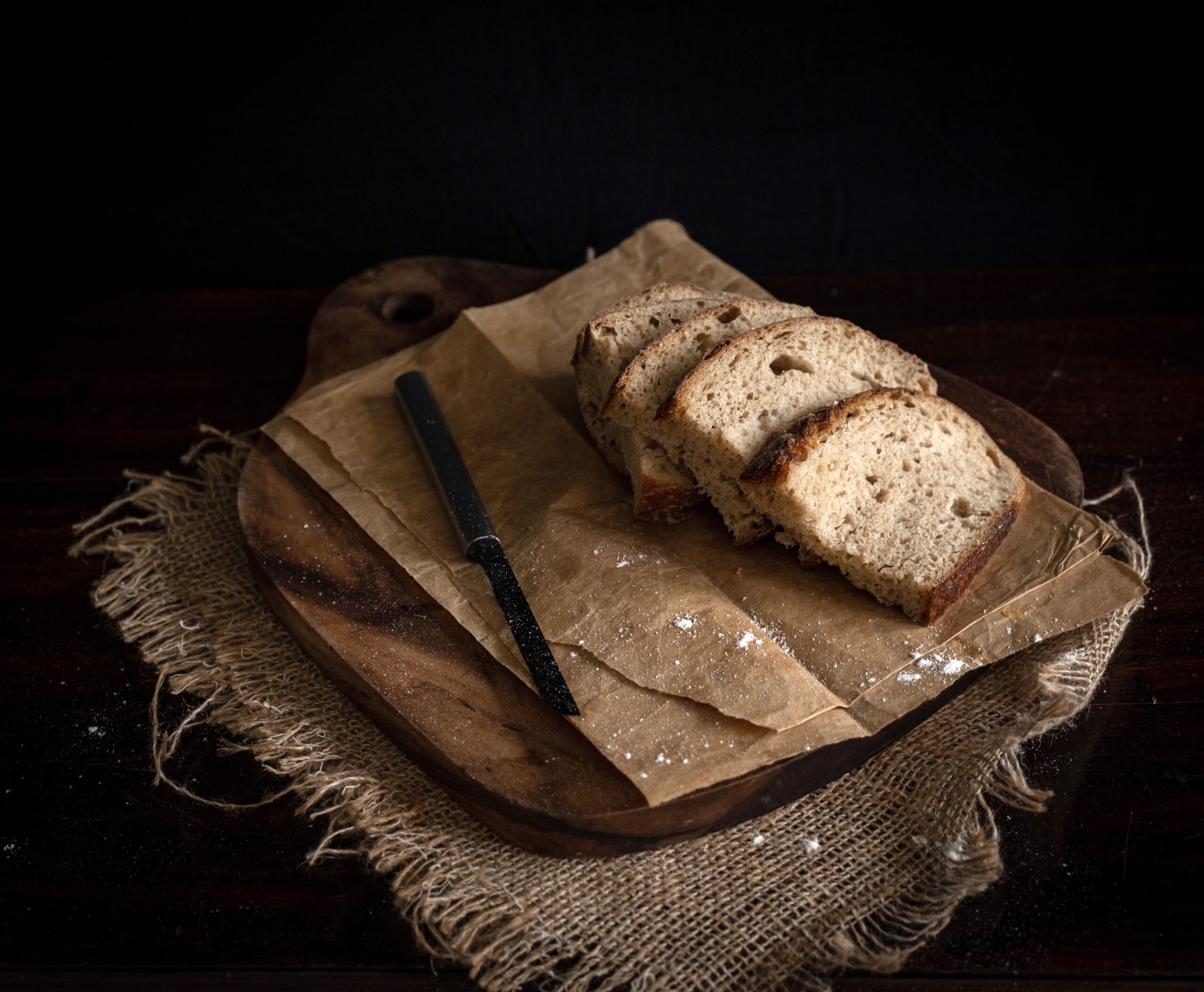
When it comes to any dish that I’m a novice at, I love making it as often as possible so that I can learn from each attempt. Novelty is part of the motivation, but improving my success rate is the real goal. The more you use your hands, the better you get at anything. For you, this may be true for one of your own creative passions, and for me this is all about baking and photography. This was certainly the case for me with sourdough. Those of you who’ve followed my sourdough journey through my Instagram Stories over the past couple of years will know how enthusiastically I’ve pursued working on it. Sourdough is all the rage everywhere at the moment, since the pandemic has made so many people  explorers in the kitchen, so it’s especially exciting for me to share this sourdough toast recipe today.

I bake sourdough every other day, and ever since I began doing this, my family doesn’t eat any other kind of bread. They prefer this natural variety to yeast-filled commercially-produced bread, and we use it in many ways. I make pizza bases, loaves and more all the time, and use them in main courses, sides (such as with a lovely minestrone soup, the recipe for which I promised you recently and will share soon) and snacks. At home, we are all very into daily exercise and healthy eating, so we have lots of one pot meals, and a slice of sourdough on the side is always nice. I find that this sourdough toast especially makes for a filling lunch, and that helps us reduce the number of heavy meals we have at supper time.

The idea of making a simple, yet fabulously delicious, sourdough toast came up during our planning for my husband’s birthday recently. This is not an innovative recipe as such, yet it’s one that suits the occasion of a celebration during lockdown. It’s a lovely appetizer using wholesome and easily available ingredients for a small celebration. We decided to have a picnic in our own garden, and I was thinking about which healthy dishes I could make to balance out the indulgence of the white cake I’d be baking when I came up with this idea.

Now, the white cake itself has a funny story behind it. You see, my husband adores the tea cake from the McRennett bakery, which many of us who grew up in Chennai will associate with childhood memories. As it happens, I can’t stand that cake, as it has a very strong vanilla essence smell. We have a running joke in the house that no matter what fabulous thing I have baking in the oven, my husband will say, “I’m going to get a McRennett cake!”, knowing it will tick me off. This year, I turned the joke on him by saying that I’d order him that tea cake for his birthday and not bake any of my own specialties. Secretly, I had a plan to prepare a cake that was inspired by his lifelong favourite, but which I would elevate with my own twists to a level that would make him forget the original. He must have gotten a whiff of my plan, because he said to me that if I could achieve the softness of the original, he wouldn’t mind trying mine. Well, I baked a lovely tea cake with real vanilla and pretty white icing (I rarely ice my cakes at re:store, so you know this was a special treat!) which he enjoyed very much… but it didn’t quite unseat the McRennett as his favourite!

Oh well! At least I can safely say that this cheesy, spicy, garlicky sourdough toast was the hit of the picnic! I’ll always associate it with the memories of the fun we had that day, spending time together as a family in our garden. That’s the thing about food prep: when something is made to suit a particular need or occasion, the dish also gains meaning. Is it for a daily meal, is it for a special person, is it for an event? By thoughtfully planning the lockdown birthday picnic menu to feature a healthy but delicious snack like this, and making sure I prepared it in a way that was also special, the dish became impressed upon my memory and in my culinary repertoire.

Before I share the recipe, here’s a quick note on sourdough itself, just in case you’re curious about what it is. It’s the traditional, ancient way of making bread, which people around the world used for millennia before baker’s yeast was invented. It’s based on natural fermentation, with air pockets created by the same, and it rises beautifully. You can keep the starter going for ages, just like yoghurt. For me, it took a few miserable failures before I managed to get mine going. Before that, friends generously shared their own starters with me, which I fed and nurtured, but there’s a different kind of challenge and a sense of achievement when you’ve made your own. The learning is continuous, especially when you have to take into account variables like weather conditions. Sourdough maintenance is like plant maintenance.  Making sourdough in Chennai weather is a struggle, as the natural temperature is not really conducive, while air-conditioning dries out the starter. I’ve managed to make a few chips and freeze them just in case my sourdough dies on me, and I’ll need to start it all over again. In the meanwhile, we are truly enjoying the bounty of the current batch.

I am almost sure that foodies following this blog have either been making their own sourdough, or have access to a store-bought loaf, so I’ll jump right ahead to what you can do with it, rather than spend time on how to grow it. In case you don’t have it on hand, you can use white bread or any bread you like.

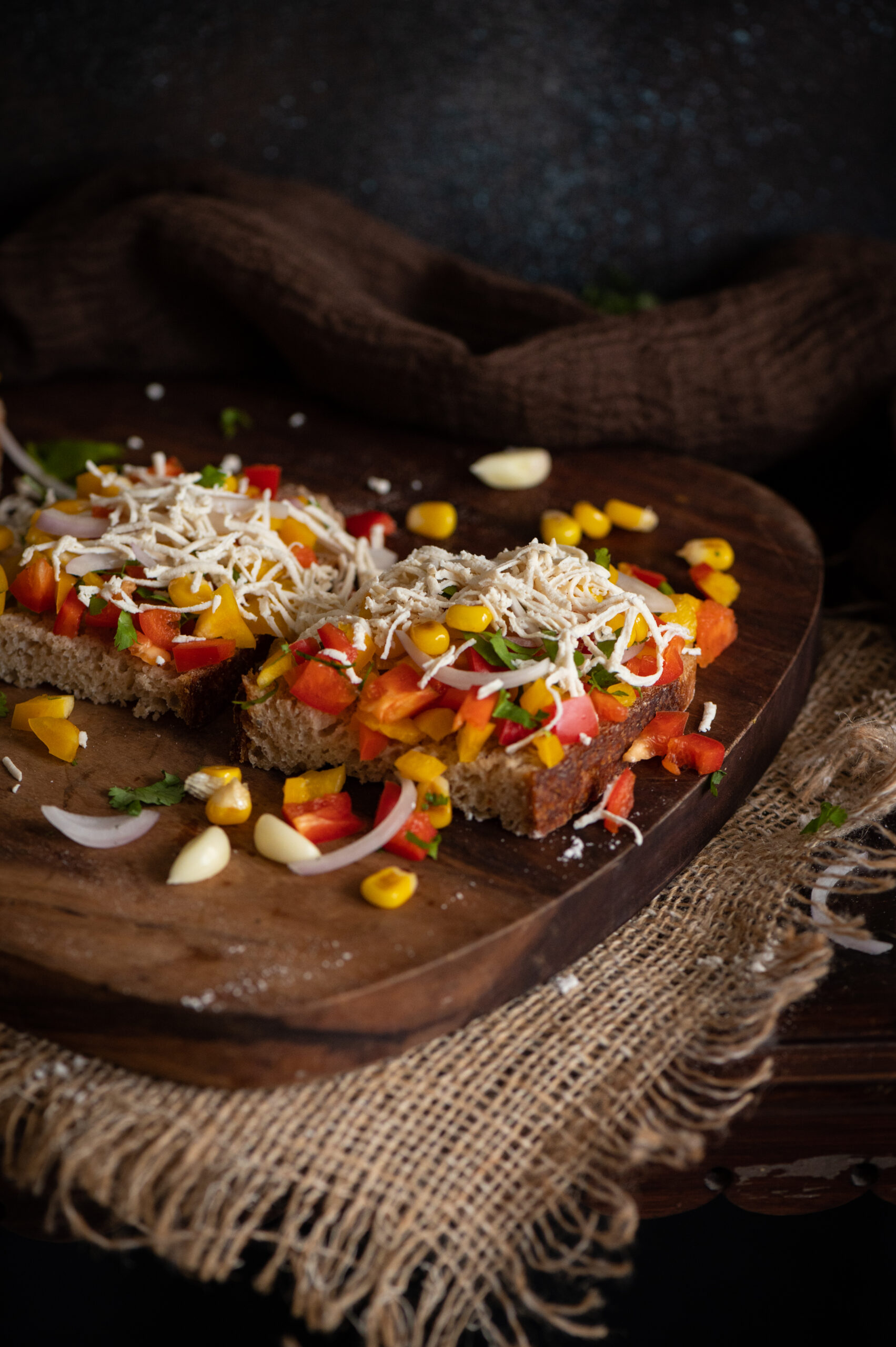
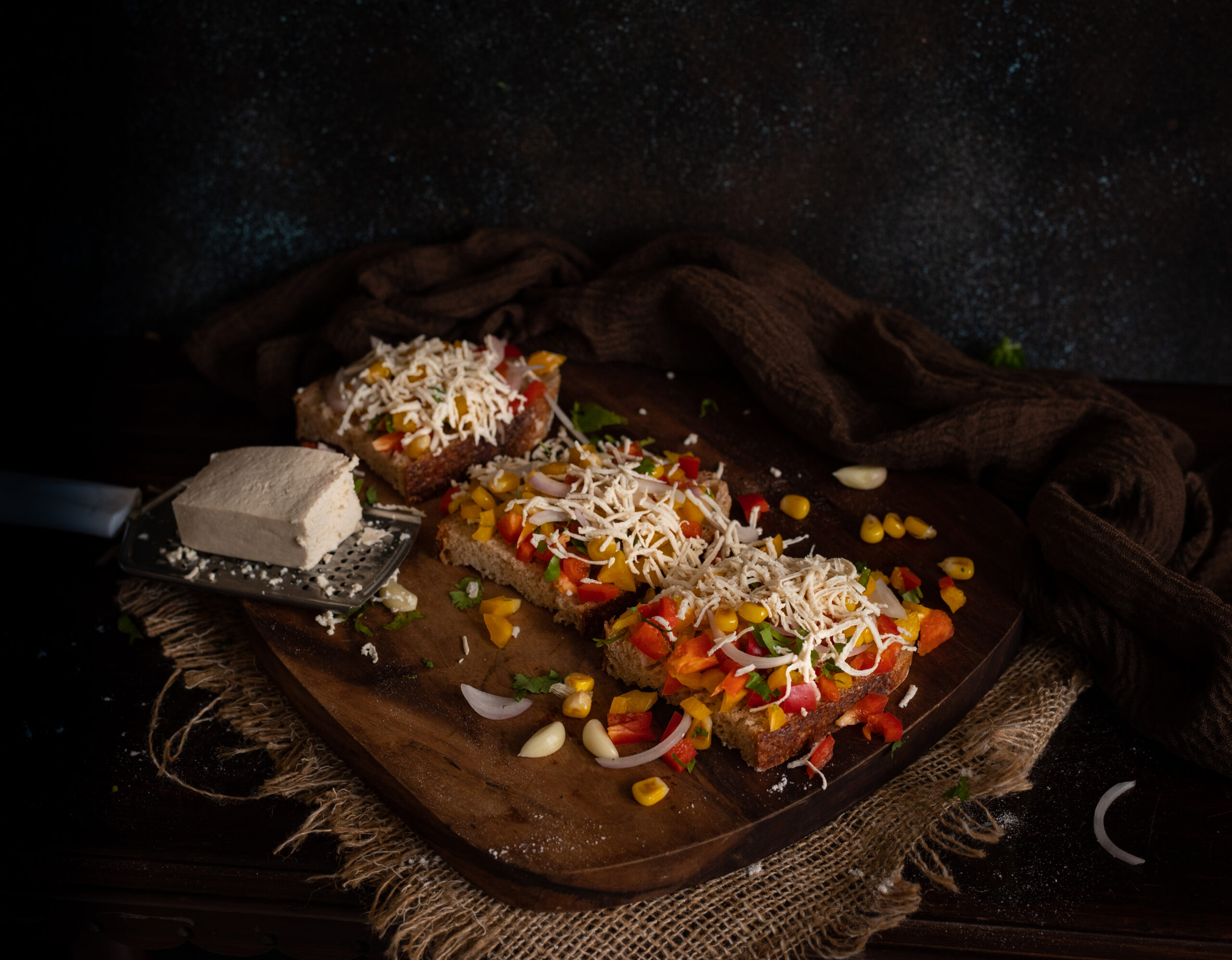
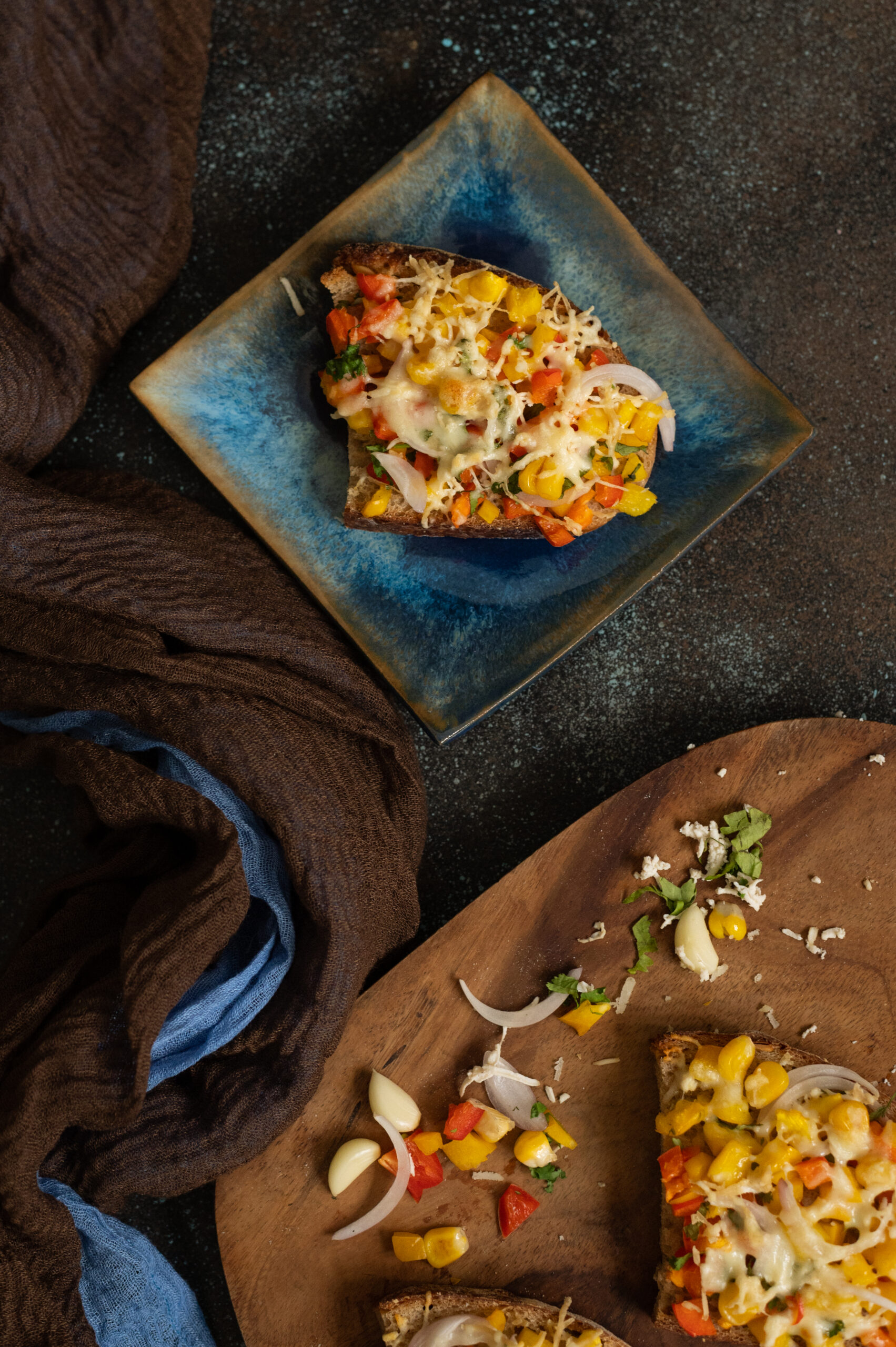
Cheesy, Spicy, Garlicky Sourdough Toast

(Yield: 4 slices)


4 slices toast

1 teaspoon oil

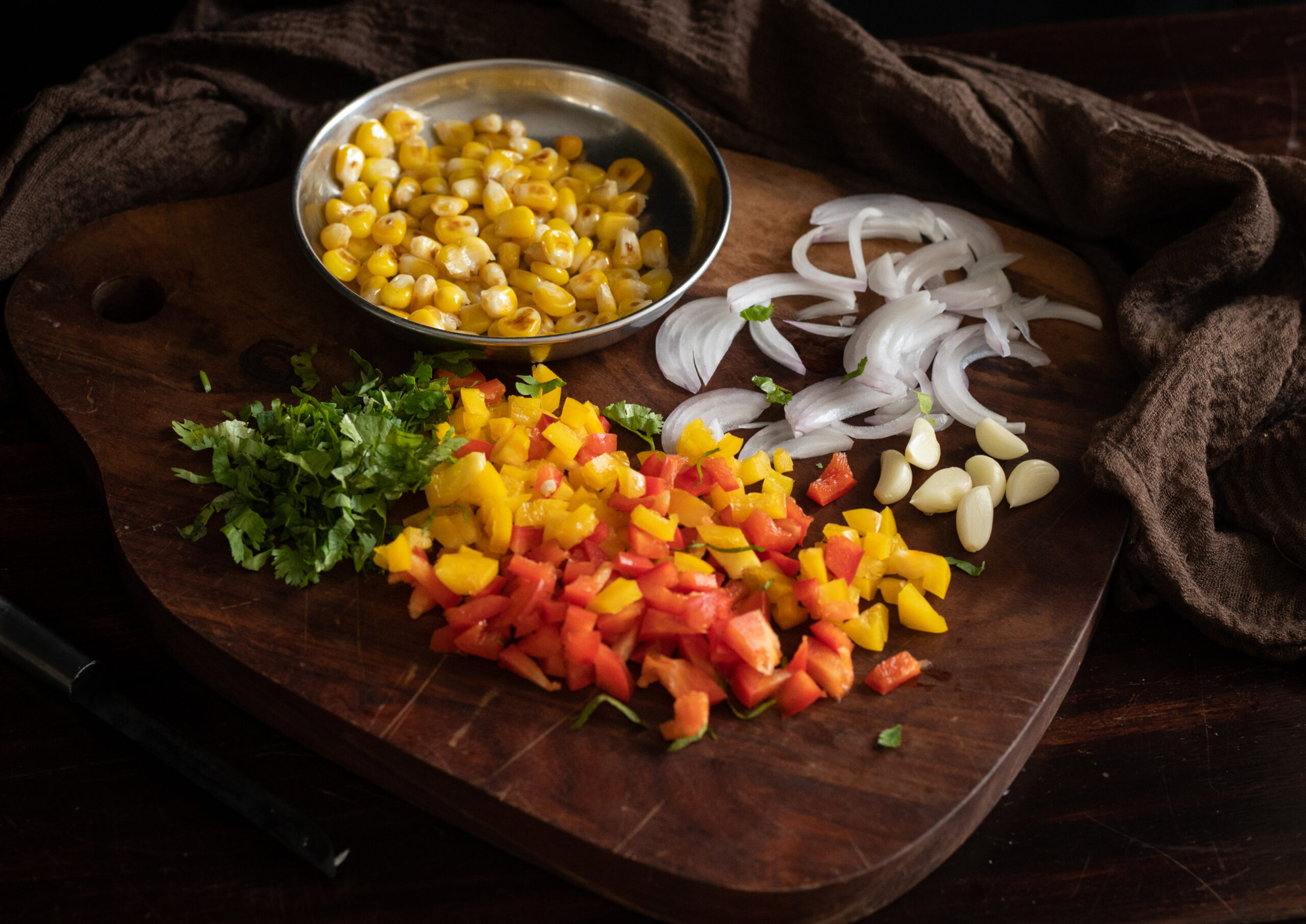
2 cups chopped vegetables (bell peppers, onions, garlic, coriander or parsley, cooked corn)

1 tablespoon chopped jalapeño peppers

¼ teaspoon grated ginger

Coriander chutney (alternative: pesto)

Salt to taste

Chili flakes

Butter as required

1 cup grated cheese (alternative: tofu/paneer)

Heat a pan and add the oil. Add the garlic and ginger, and then add the chopped vegetables. Stir-fry on a high flame. This mixture doesn’t take more than 5 minutes to sauté. Add the salt. Set aside. Allow to cool.

Prepare the slices of sourdough by buttering them lightly. Next, spread the coriander chutney (or pesto, if you prefer) over the butter.

Now, add a heaped spoonful of vegetables over the chutney/pesto. Top this with grated cheese or tofu.

Place the bread in the oven and allow to toast/bake for about 10 minutes or until the cheese melts and the slice of sourdough turns golden underneath.

Remove the slices from the oven and sprinkle with the chili flakes. Serve warm.

This cheesy, spicy, garlicky sourdough toast called to mind a variety of toasts my family has enjoyed over the years. When I was growing up, my mum used to make a version of masala and mashed potatoes with toasted bread. My husband is an ardent fan of  Bombay toast, as you may remember. In lieu of either, my sourdough toast – rich in fresh vegetables – is healthier, without skimping on taste.

Feel free to substitute the vegetables or even the spices as per availability and preference. You may want to increase the quantity of some based on your taste as well (I’m personally a big fan of corn and bell peppers too). If you prefer to go vegan, just replace the butter with olive oil, and either tofu or paneer are tasty and healthy alternatives to cheese.

This version has become my go-to every time I feel like having a snack. When I’m done with my workout and feel peckish, I whip up a slice or two. I sometimes also have it drizzled with olive oil and a sprinkling of salt without adding the spices. Given the lockdown and the limited vegetables that are on hand on some days, I improvise the ingredients. No matter how I make it, it’s unbelievably tasty!

The first time that I tasted this sublime soup was when I was visiting a dear friend who was unwell at home. Valli Subbiah is an amazing person with an exceptional gift with kids, and even though she was feeling poorly, her hospitality was as gracious as ever. She offered us this simple, flavourful zucchini soup in mugs. At her place, what was served was more of a hot beverage than a soup, but I made it in a thicker consistency when I tried replicating it at home. Valli was sweet enough to share the recipe with me, and we are both happy to share it with you today.

I’m not a great fan of zucchini, so the fact that this dish captured my heart says a lot about how tasty it is. Since having this soup, I’ve been reading up about the vegetable (well, technically it’s a fruit – did you know?) and am delighted to have found a way to consume something that’s so good for us. It is excellent in supporting or easing menopause and post-menopausal health concerns, and is rich in fibre, folate, Vitamin C and a host of other nutrients.

Zucchini is native to South America, which naturally meant that European colonials began to export and cultivate it too. It’s a late addition to Indian markets, but it’s well-suited to our climes and has a fast growing period, which has made it become popular on our menus over the last decade. I certainly never had it while growing up, and am glad it’s so easily available now. Its novelty to us is revealed in the fact that we don’t have names for it in our own languages. If we are non-English speakers, we just call it “jukini” or “jugni”, in our Indian accents!

Despite the main ingredient being of foreign origin, the most interesting part of this recipe is the distinctly South Indian twist. I love the kick that curry masala gives this soup. It seasons the dish without overpowering the taste of the zucchini. I like dishes which can be subtly enhanced in this way, while retaining the basic flavours of ingredients. If you’re a fan of fusion cuisine, some of my other recipes in this category are here.

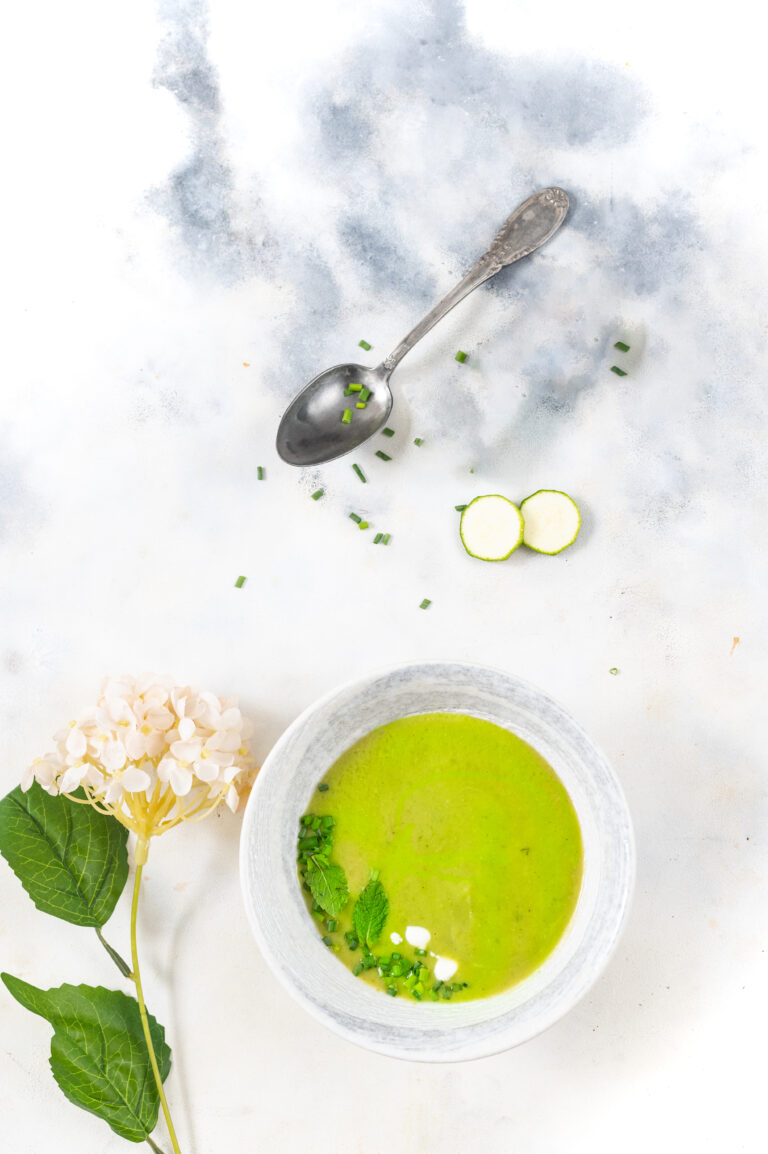
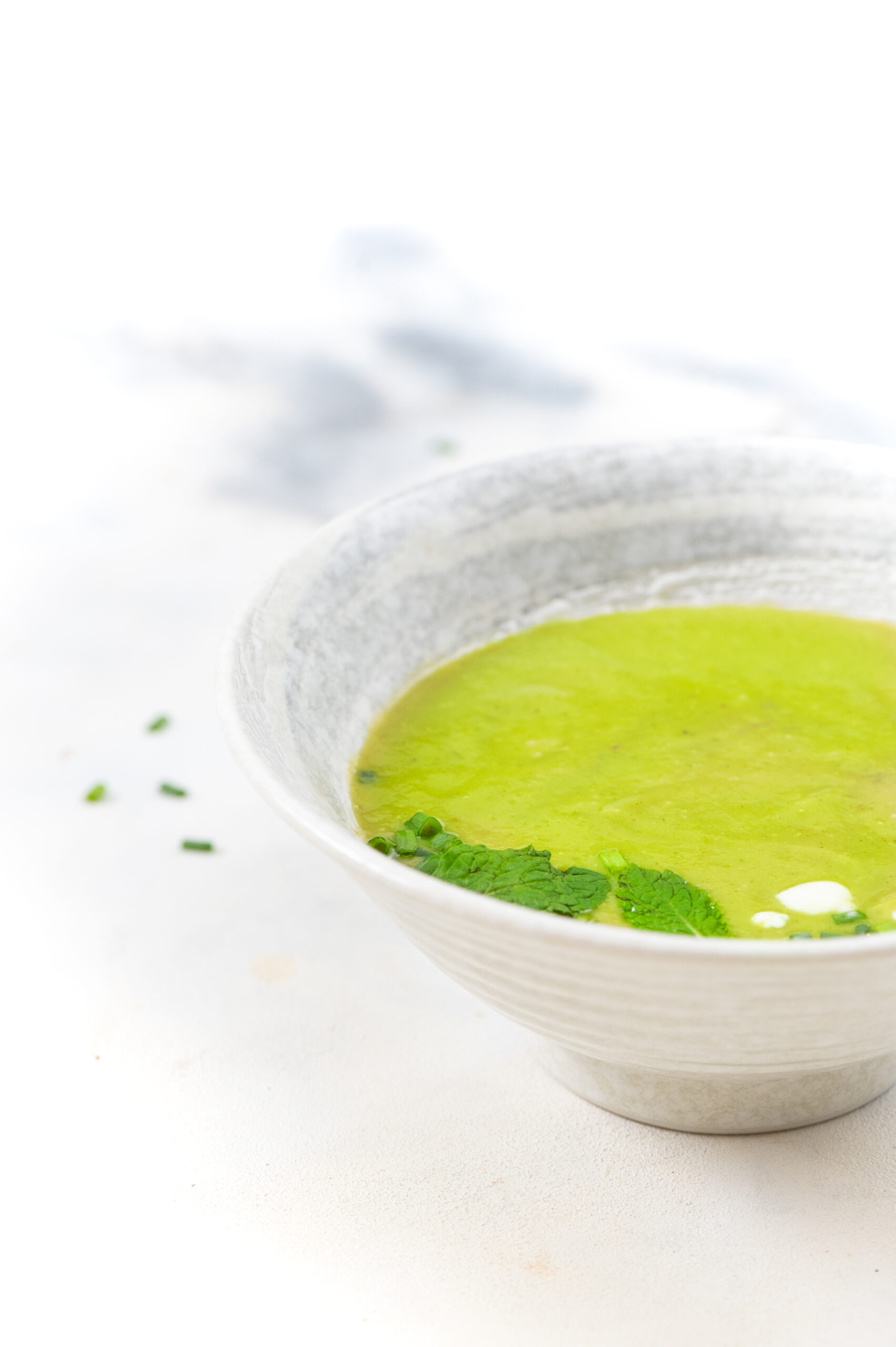
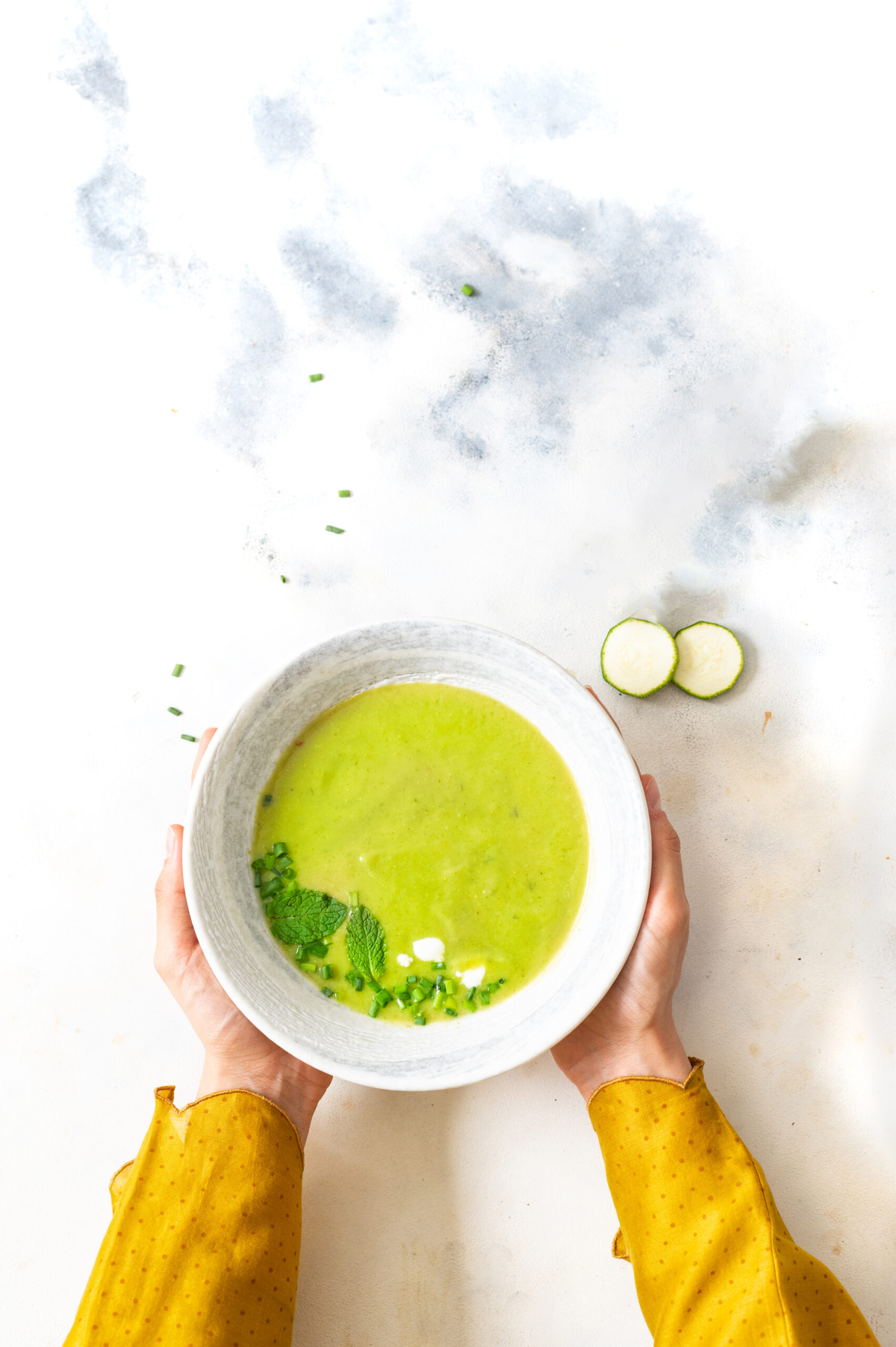
There are a few types of zucchinis available in Indian markets, and certainly even more abroad. I used the green one and decided to leave the skin on as it was very thin, and I wouldn’t be surprised to learn that it’s also good for you. The bitterness of vegetable skins is why people usually discard them, but it’s often the case that nutrients may be packed within. Besides which, leaving the skin on meant that the colour of my soup really popped. You know how I always say that food must please the eye first, which is why attractive plating is so important when you serve a meal.

The aesthetics are also important to me as a photographer. Most of you know that the dark and moody tones of the Dutch masters are my inspiration, and I try to replicate the visual effect of their paintings through my own Indian still life and culinary images. However, while doing the photoshoots for this recipe (yup, I did a few – I have fun playing with different looks and pursuing the perfect one), I decided to step out of my comfort zone and challenge myself by making white the key note. I was aiming to capture summer’s brightness in these images, and I enjoyed the result, even though deep, sombre tones will always be my big love. I’m curious to know what you think of this style. I’m always excited about new discoveries both in the kitchen at re:store and behind the camera at Nandi Shah Photography.

It’s birthday month right now at our household, with both my husband and I being June-born. But I’m off sugar for three weeks, and after the cake binge we had on this blog (therefore, at home as well!) recently, I wanted to think up something fun but healthy to share to celebrate. I’d never have imagined that zucchinis would be a part of it, but here we are. This surprisingly simply and surprisingly mood-uplifting zucchini soup really does make me feel like raising a mug or a bowl in a toast!


Zucchini Soup

(Yield: 2 servings)


200 grams chopped zucchini

30 grams shallots

2 – 3 cups hot water

Salt to taste

1 tablespoon olive oil

¼ teaspoon curry masala


Sauté the shallots in olive oil. Then, add the chopped zucchini and stir for a bit.

Next, add two cups of hot water and cover the pan with a lid. If you want the soup to be a little thin, or want to serve it as a beverage, use the third cup of water as well. As you can see from the photos, I personally prefer it thicker. Allow the vegetables to cook until they are tender.

Finally, add the curry masala and turn off the flame. Allow to cool just a little and blend. Serve the soup while it’s still warm.

Now that I’ve been swayed by the charms of the zucchini, I’m curious about other ways in which I might enjoy preparing it. I’ve heard that zucchini flower fritters are a fun snack, and that the flowers themselves are quite pretty, with yellow petals that brighten the plate. I haven’t seen them outside of photographs, but I’m certainly intrigued about getting my hands on some – both for the taste, and for the look! Another simple way to use the vegetable/fruit is to slice it up, roast it with a drizzle of olive oil, and serve it with a dip. A slightly more adventurous idea, but which is actually quite easy in preparation, would be zoodles. Made with a spiraliser and eaten either raw or cooked, zoodles are an ideal alternative to pasta for those who are on gluten-free diets. Do you have more ways to incorporate zucchini into your meals? Let’s chat in the comments.

I hope you’ll enjoy this simple and wonderfully spiced zucchini soup, and that it will taste just as extraordinary to you as it did to me the first time I had it at my friend Valli’s house. That day, as we sat around exchanging stories and sipping at this deliciousness, we all felt a little better about everything. Some food items and some friends just have that effect, don’t they? I know how important it is to bring comforting things into our lives at this time, and I hope that this recipe will be one of them. May good health return to us all on the planet, and with it, may we cherish our diversity and honour our oneness.

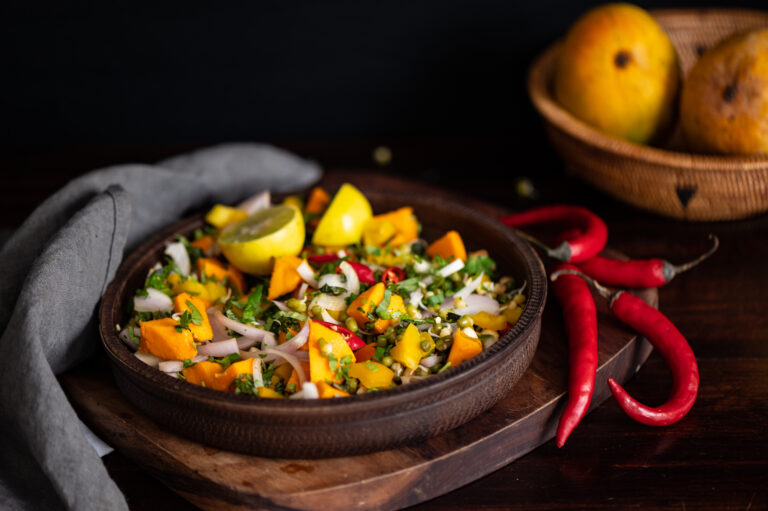
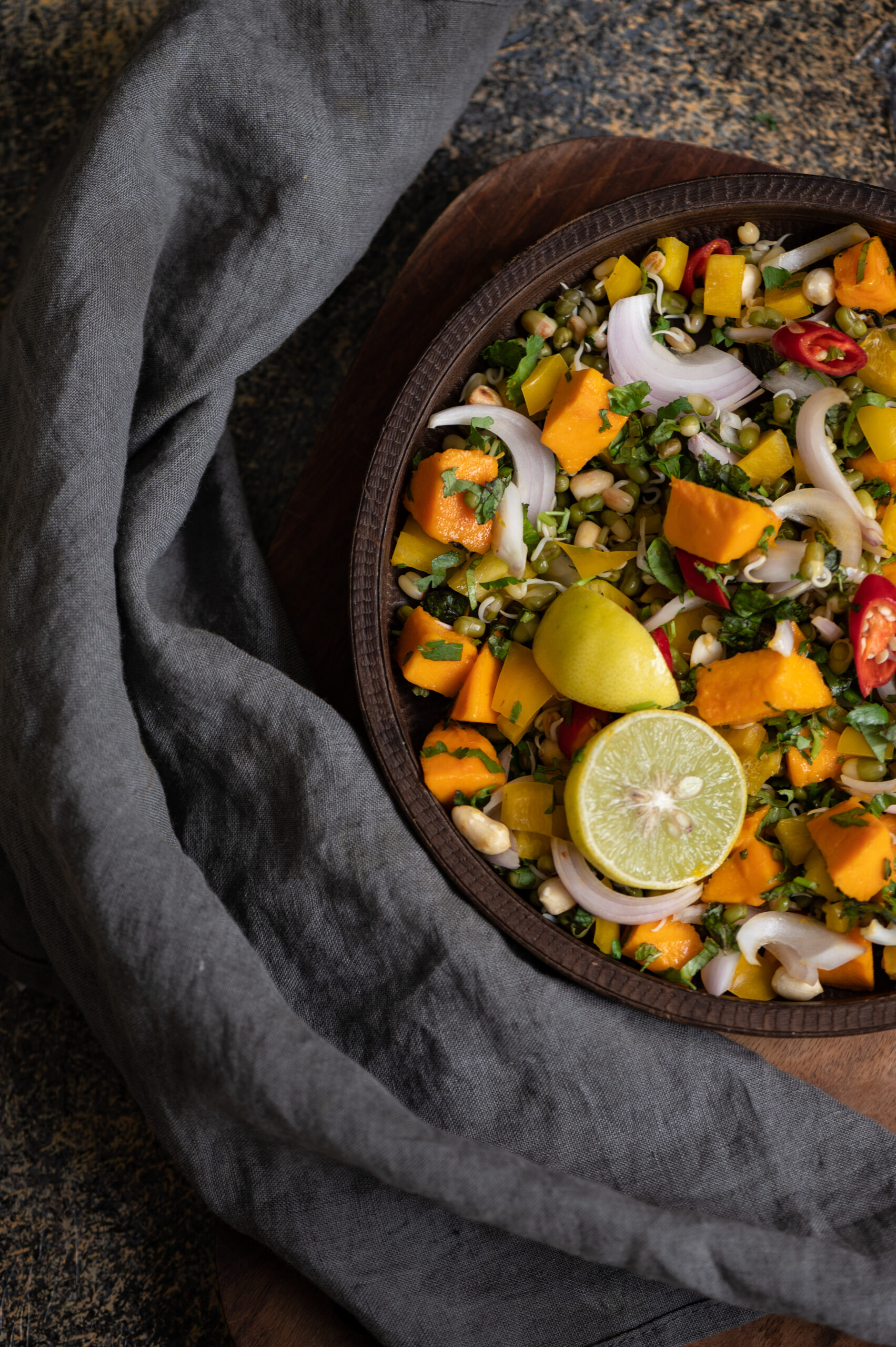
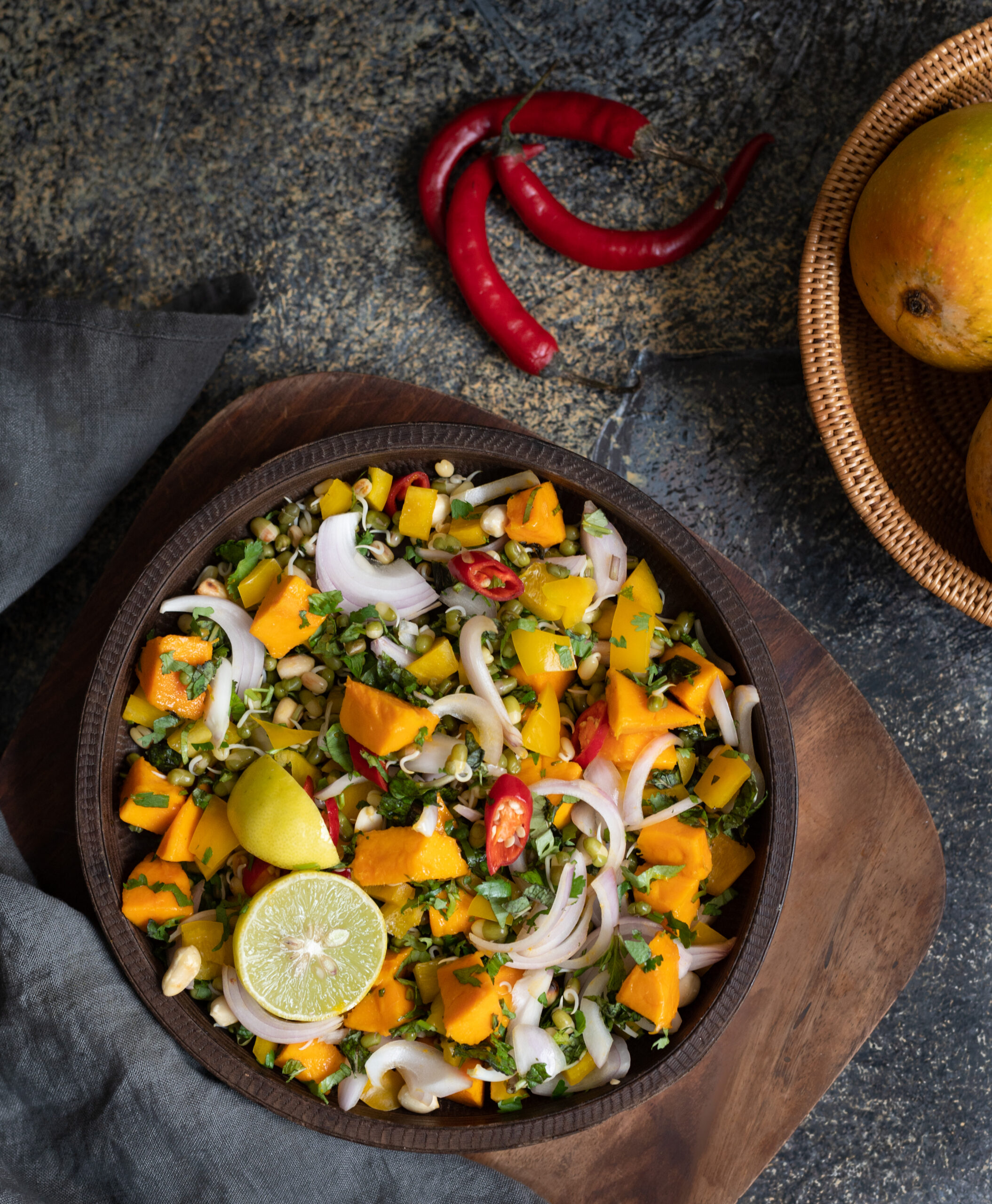
I was very fortunate to receive a batch of delicious Alphonso mangoes from Nashik, procured by a friend. Nashik is most famous for this variant, one of hundreds grown throughout the country, as it enjoys the ideal clime for its cultivation. I believe they are also grown in Andhra Pradesh and other places, but the Maharashtra Alphonso is the one with the beautiful orange flesh. The colour caught my eye as I cut the fruit open, and inspired me to do a mango series here. To kick things off, here is this filling and vibrant mango salad. This lovely dish is a way to bring a bright spark of healthiness into your diet, without compromising even the slightest bit on taste and flavour.

You may be wondering why I’m talking about good health again after posting three decadent cake recipes back to back. This is why: I believe we are at a point during this COVID-19 crisis when we are ready to empower ourselves to return to normalcy. There was a time and a place for mood-uplifting solutions, but now is the moment when we must accept that the pandemic is here to stay for a while. This means that we need to be more responsible in all aspects of life, pay closer attention to our health, and bring our diets back into balance as well.

The cake recipes were expressions of joy at a time when we all felt confused, terrified and hopeless, and this mango series retains the delectability factor but with a more nutritious angle. I’ve always been very health-conscious, as long time readers will most likely know. I’m not getting any younger, and cutting down on carbs, increasing protein intake and prioritising general well-being and mindful caution are important to me. Honestly, I feel excited about this. I believe we will be able to rise to this challenge. I think this is probably the reason why the human race is at the top of the pyramid of Earth’s many species. No matter what happens, we slowly achieve a sense of normalcy and practicality. We believe in and foster hope.

Of course, it being mango season makes this turn towards pragmatism all the sweeter. Mangoes are lower in calories relative to other fruits, and are a source of Vitamins A and C and beautifying beta-carotene (which is good for the skin). They’re so tasty that it’s hard to believe they could be beneficial, but like all fruits, they are.

This mango salad that I’ve been making lately is such a super hit at home that my family has begun asking for it daily. Considering that the season is limited, usually lasting till the end of June but subject to climactic changes, I’m happy to indulge everyone.

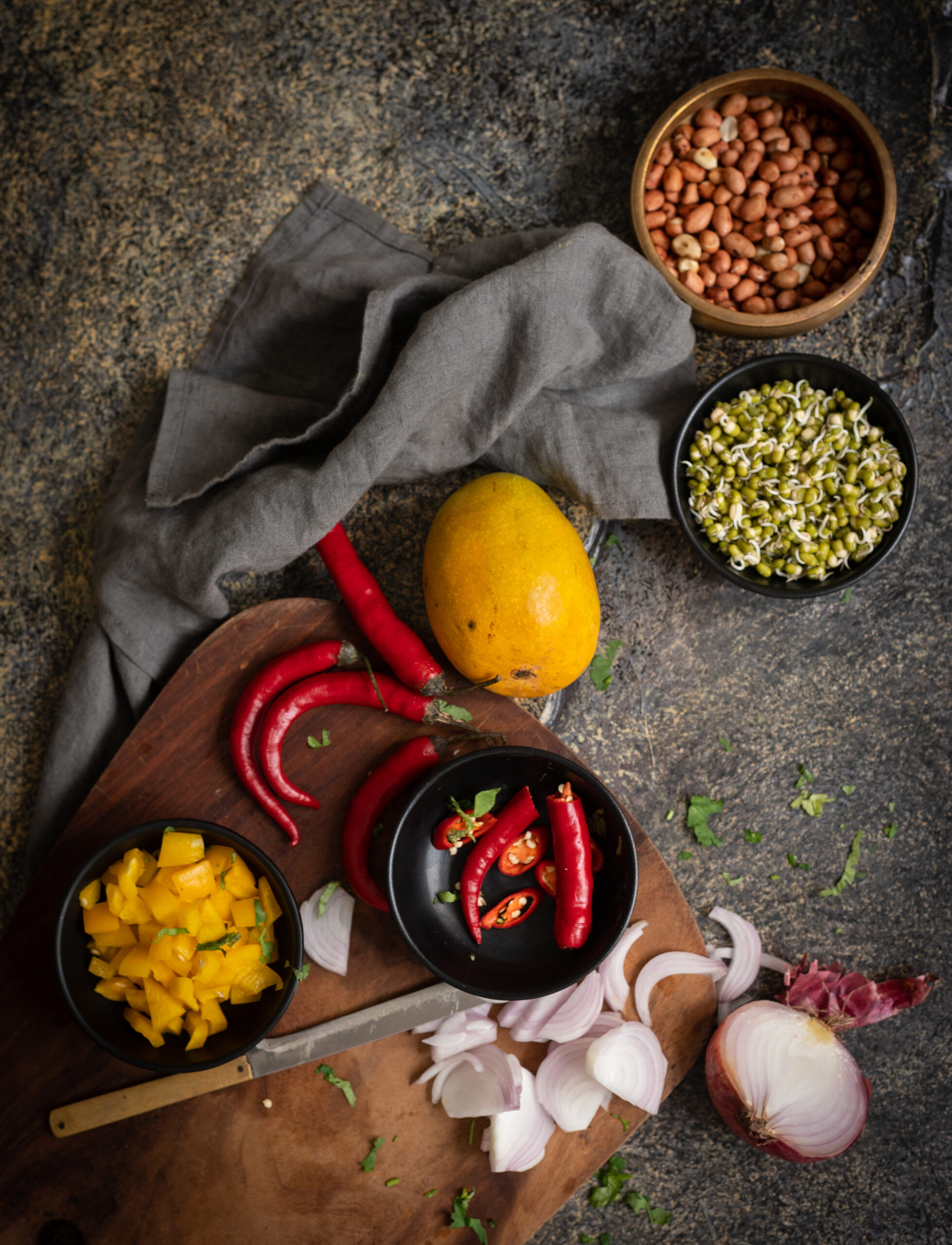
This is a recipe that I came up with, and it layers the sweet fruit with some Asian flavours, courtesy of soy sauce, lemongrass and a sprinkling of peanuts. I add mung bean sprouts for protein, and you may also wish to sauté long strips of tofu or chicken and mix them in if you prefer. Both work well with the Asian flavours, and boost the protein quotient. I sometimes add a grain like quinoa or wild rice to make it an even more textured and filling meal. Other vegetables I’ve used also add a nice crunch, contrasting the soft fleshiness of the mangoes.

It looks and tastes absolutely fantastic – I enjoyed this whole bowl for lunch right after my photoshoot!

I’ve been loving thinking up different ways to make mangoes an ingredient in different dishes, some of which you’ll see on this blog soon. I’ve also been trying to make mango pickle with raw mangoes, growing on one of my trees at home. Gujarati pickles need to be sun-dried in the initial stages, so I am making the most of this hot weather. You could say I’ve been making the most of mangoes, as well as making the most of the summer sun.


Mango Salad

(Yield: 1 bowl)

1 cup freshly cut ripe, firm mango

½ cup bell peppers

½ cup sliced onions

½ cup sprouted mung beans

1 tablespoon chopped mint leaves

1 tablespoon chopped coriander leaves

½ teaspoon finely cut lemongrass

2 cloves garlic

1 teaspoon finely cut jalapeños

½ chopped red chilli

2 tablespoons roasted peanuts


Dressing:

Salt to taste

1 teaspoon soy sauce

A drizzle of honey

1 tablespoon lemon juice

1 pinch pepper

Mix the salad ingredients together. It’s always best if they’ve been chilled.

Stir the dressing ingredients together well, separately.

Now, pour the mixed dressing over the salad ingredients. Stir gently to assemble the dish, making sure that the dressing coats all of the salad. Voila! The simplicity of preparing this dish is an extra plus in these sweltering months, cutting down on your time in the kitchen.

Refrigerate for a short while, so that you’ll get a fresh and chilled salad at serving time.

Then, all that’s left to do is to enjoy it! You’ll find that the sweetness of the soft ripe mangoes is enhanced by the tanginess of the dressing, and marvellously contrasted by the crunchiness of the nuts and vegetables. What you have is an interestingly textured, and exceedingly tasty salad that can be a starter, a full meal, or a snack – depending entirely on your mood.

I’m in the mood for mangoes any day of this season – are you? Let me take this opportunity to wish all who are celebrating the occasion a very happy Eid. I’d love to hear if my mango salad becomes a part of your celebrations!

Here in lockdown mode, due to the global pandemic, I feel now more than ever that memories, bonding, love and food are what keep us going and make it possible to manage this difficult time. I sincerely hope that you and your families are keeping well, and that my recipes will offer you some comfort.

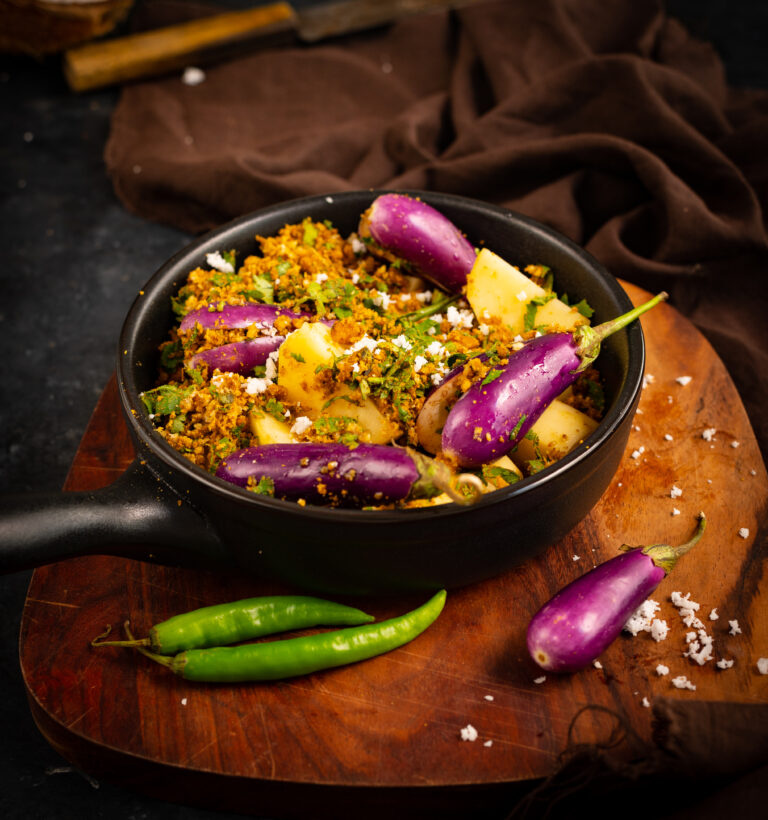
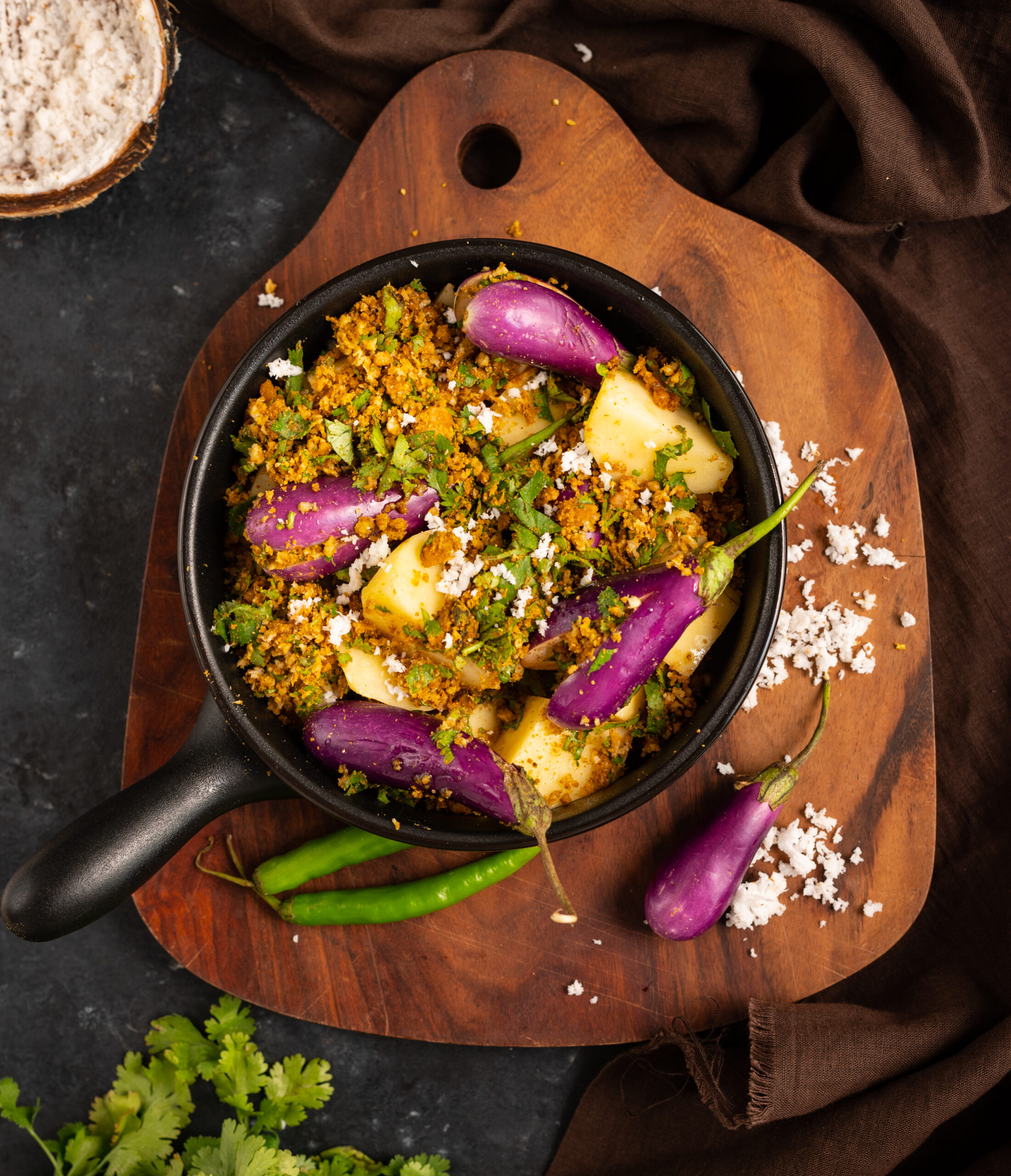
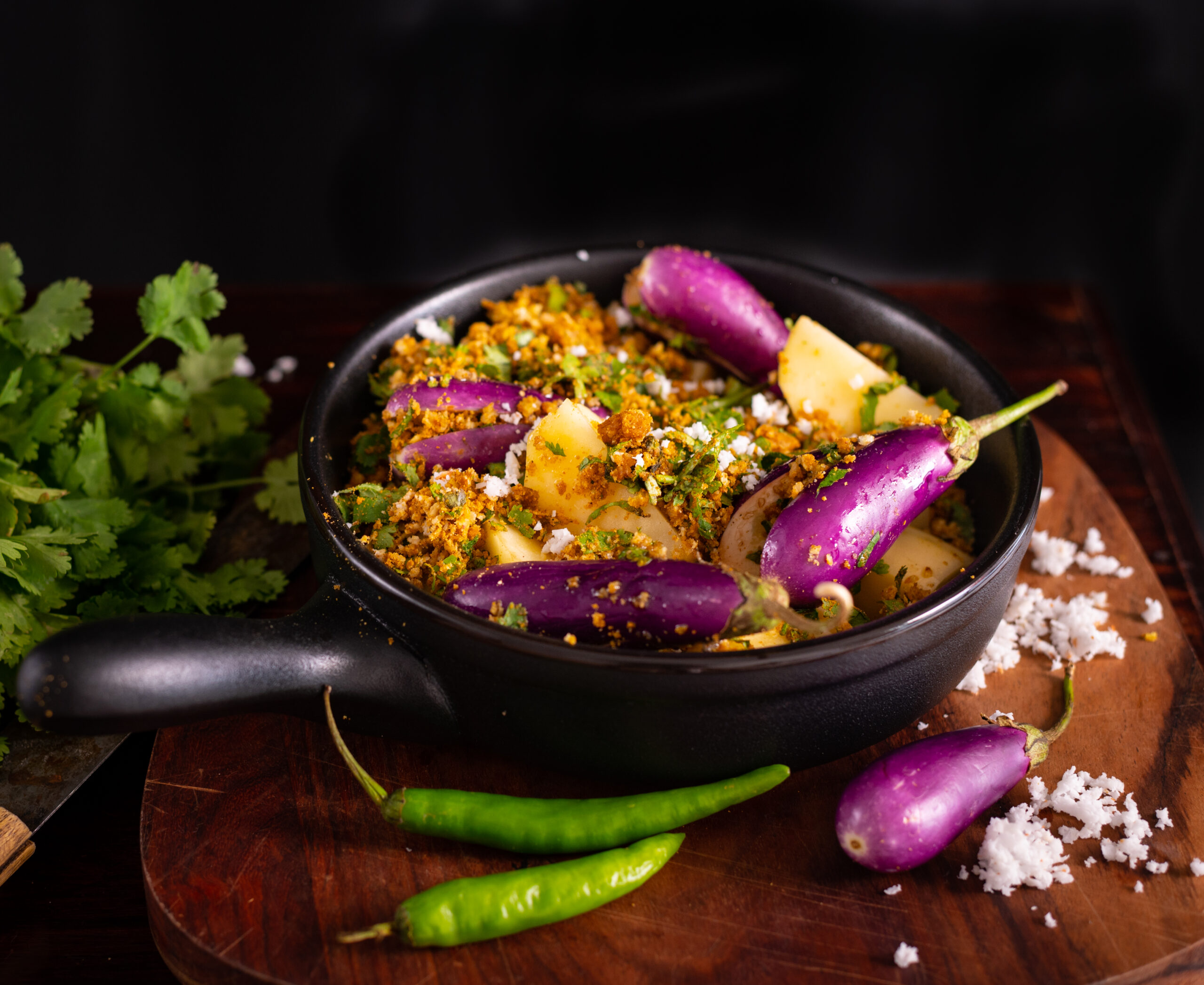
Ever since I can remember, this traditional stuffed vegetable dish has been a part of my life. It’s typically Gujarati, in the sense that every Gujarati household makes it. Some use onions and garlic, while for others these ingredients are not permitted religiously. Some use peanuts to add more texture. This dish is true to its region, so the taste and style you experience will also vary depending on where in the state the family originated from. No matter the variant, the base recipe for this Gujarati Potato & Brinjal Curry, which can be made either as a gravy or dry, is the same.

Needless to say, it’s a favourite and frequent dish in my home today, just as it was when I was growing up. It was a trademark preparation of my mother’s. When I first got married, she would speak to me often on the phone and if she sensed that I was feeling down, she would always say, “Come home for a meal. I made your favourite vegetable dish today.” Till she was 84 years old, she cooked this sabzi regularly for me. In that last year when she was unwell, it became my turn to. I would cook it and send it to her, made with all the love I have for her and the memories she had given me, and she would enjoy it just as much as I did.

And how many memories I have of this dish! Memories of eating it at home as a child, memories of making it for my own family once my kids were born, memories of visiting Gujarati relatives and friends for a meal and almost invariably being offered their own personal rendition of it. Perhaps there was something extra special about it to me always, and maybe this was the reason why my mother recognised that it was my favourite. That was because it was always served during our Sunday lunches when we were growing up. We would all be glad for the weekend, enjoying our leisure, and this delicious concoction of potato and stuffed brinjal would fill our tummies and become associated with the joy of a day of rest itself. Funnily, for such a quintessential and ubiquitious dish, Gujaratis don’t have a special name for it. We just call it “potato-brinjal curry” in our language too!

There are certain dishes which, even if one usually dislikes the main ingredient, the magic of the preparation always sways the eater to relish it. I’ve heard quite often that people who don’t enjoy eggplant in other ways do so when they have a bite of this. (People not liking potatoes is much rarer, of course!). Whether you call it brinjal, baingan, aubergine or eggplant, it’s a vegetable that has a host of benefits, and which can be made in delicious ways so that your family receives these. This Gujarati curry, for which I will provide both the gravy and the dry options in the method below, is the perfect way to bring the antioxidant-rich, fibre-rich, nutrient-rich vegetable into your regular diet.

Gujarati Potato & Brinjal Curry (Gravy/Dry)

(Yield: 1 bowl)

½ cup grated coconut

¼ teaspoon turmeric powder

2 tablespoons cumin/dhania (coriander) powder

1 teaspoon amchur (mango powder)

1 teaspoon garam masala

2 tablespoons jaggery

1 teaspoon chilli powder

Salt to taste

½ teaspoon grated ginger/green chili

½ cup finely chopped coriander leaves

2 tablespoons oil

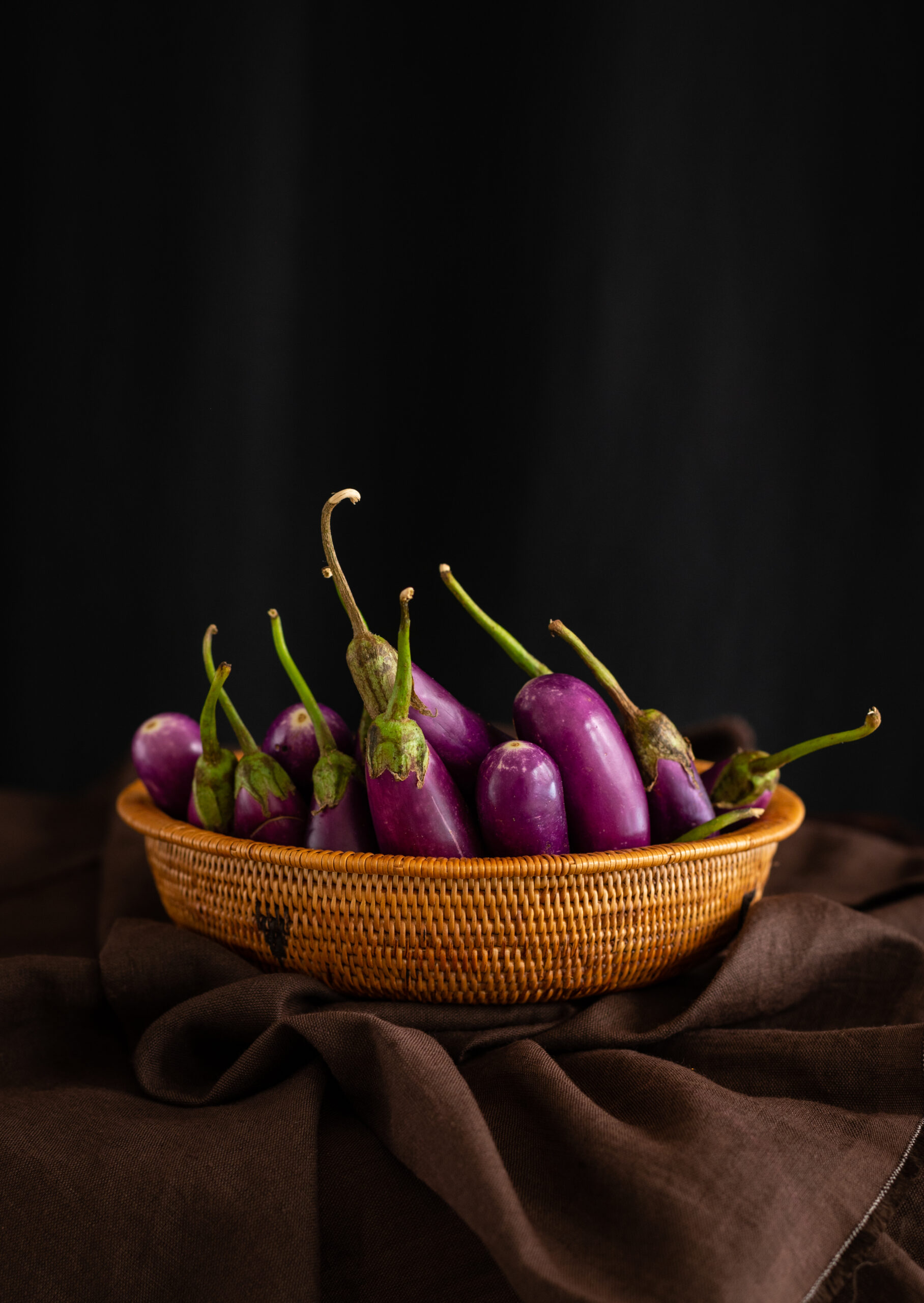
6 baby eggplants

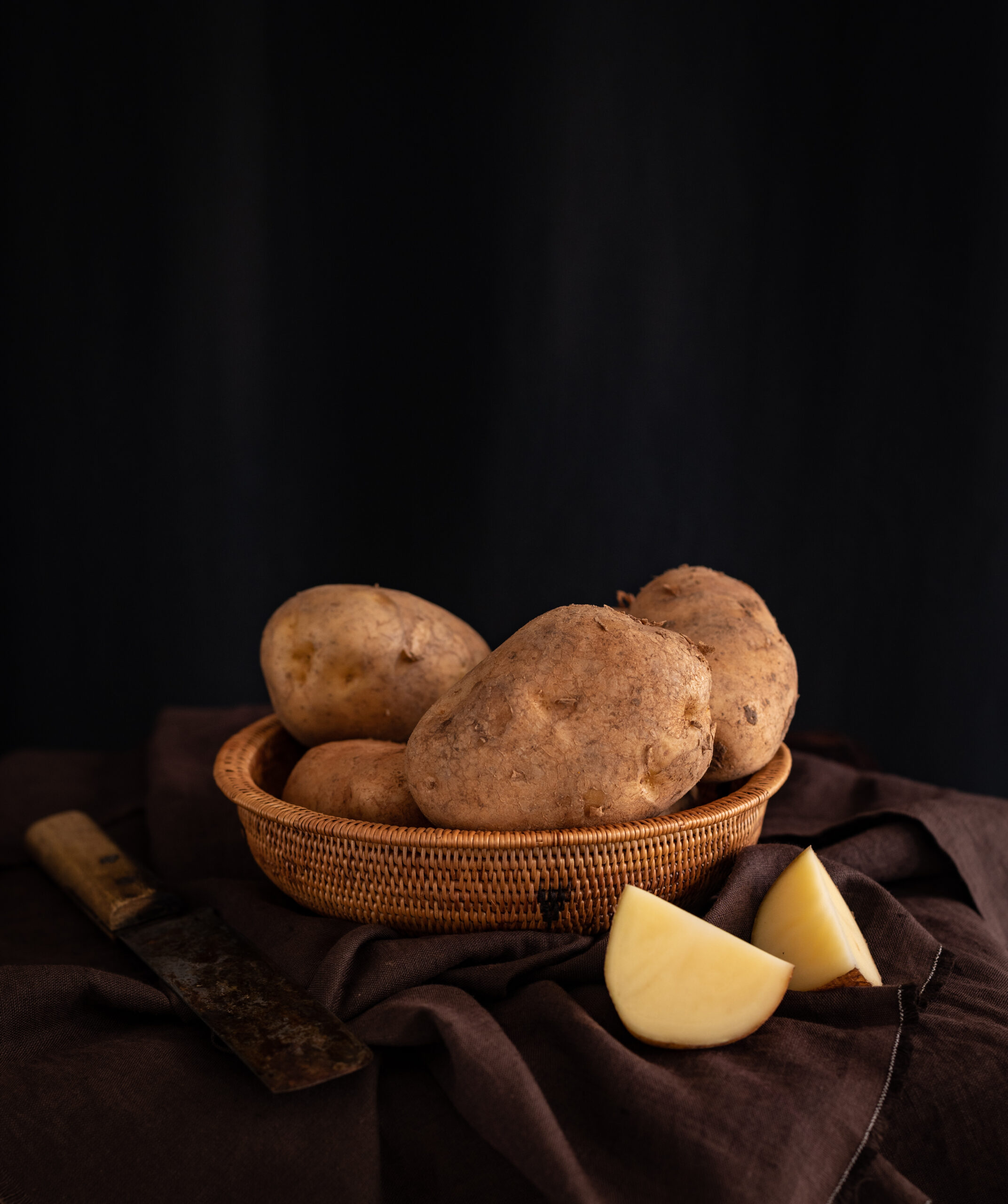
3 large potatoes

3-4 cups water

First, let me share the gravy version of this dish. The dry version is provided further below.

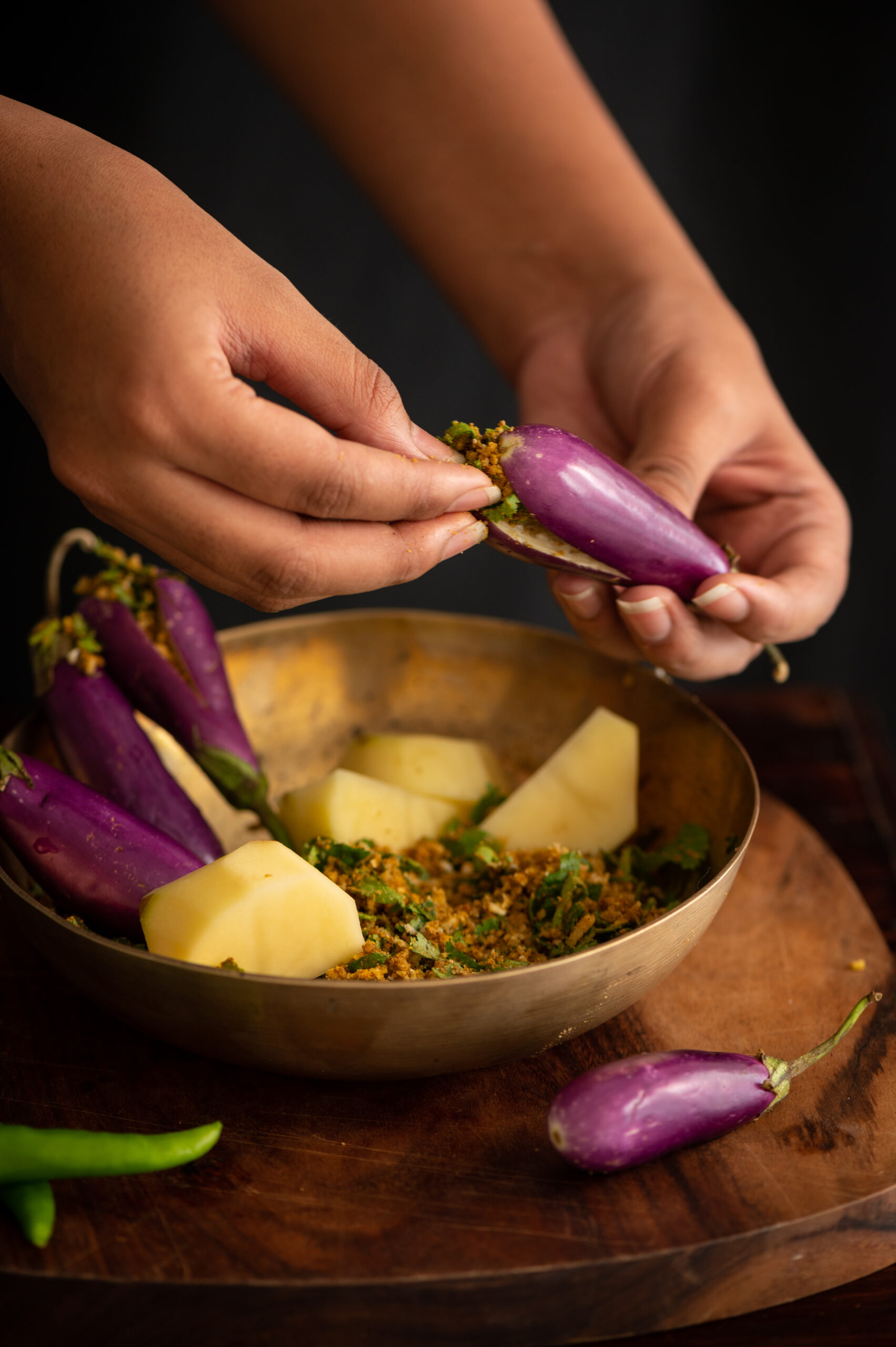
Wash the baby eggplants. Slit them lengthwise (so that they can be stuffed; be careful not to cut completely) and keep the slices in water.

Peel the potatoes and cut them into big pieces. Set aside.

In a plate, prepare the stuffing by adding together the coconut, salt, spices, coriander leaves, ginger chili paste, and jaggery. Mix it well with your fingertips and set aside. Now, take each eggplant and stuff it with this prepared masala. Keep aside.

Heat the oil in a pressure cooker and gently add potatoes, making sure the oil doesn’t splutter. Next, gently add the stuffed eggplants over the potatoes. You will find that there is a lot of masala left over. Sprinkle this over the vegetables, leaving just a little on the plate for later. Again, gentleness is key so that the stuffed eggplants don’t break.

Now, add the water and mix the concoction – again, gently! Cover the cooker and wait for three whistles. Allow to cool, then open the lid and add the remaining masala. Stir once again. Your gravy Gujarati Potato-Brinjal Curry is ready to serve.

If you prefer a dry version of the same, follow the first three steps as above: cleaning and preparing the eggplants for stuffing, cutting the potatoes, and preparing the masala.

Then, add the oil in a kadai. Once it has heated, add the potatoes. Stir them, then cover with a lid on a slow flame. Stir occasionally, making sure they do not stick to the bottom. Once the potatoes are slightly tender to the touch and not overcooked, open the lid and add the stuffed eggplants. Remember that potatoes take longer to cook than eggplants so gauge the time well.  Cover again.

If required, especially if the vegetables are sticking to the bottom of the pan, sprinkle some water and cover. Continue to allow the dish to cook until all the vegetables are well-done. Finally, add the masala and stir gently. Cover again and allow it to sit. The dry version of this dish is now ready to serve.

As you prepare the dish, adjust the spices as per your preference. If you don’t like the standard Gujarati-style touch of sweetness, don’t include jaggery. If you want to spice it up while maintaining colour, chopped green chillies will do the trick. Don’t forget the versions mentioned at the beginning, which incorporate peanuts, garlic or onions.

No matter which way you choose to make it, I hope this Gujarati Potato-Brinjal Curry brings as much comfort and deliciousness to your home as it does to mine. As with all Indian curries, it’s perfect with rice and a range of breads. It’s got the spiciness of our masala, is tummy-filling thanks to the potatoes, and just has such a feel-good effect on the heart. Trust me: generations of Gujaratis have been turning to this dish as nutritious comfort food!