Tag

dhokla

Browsing

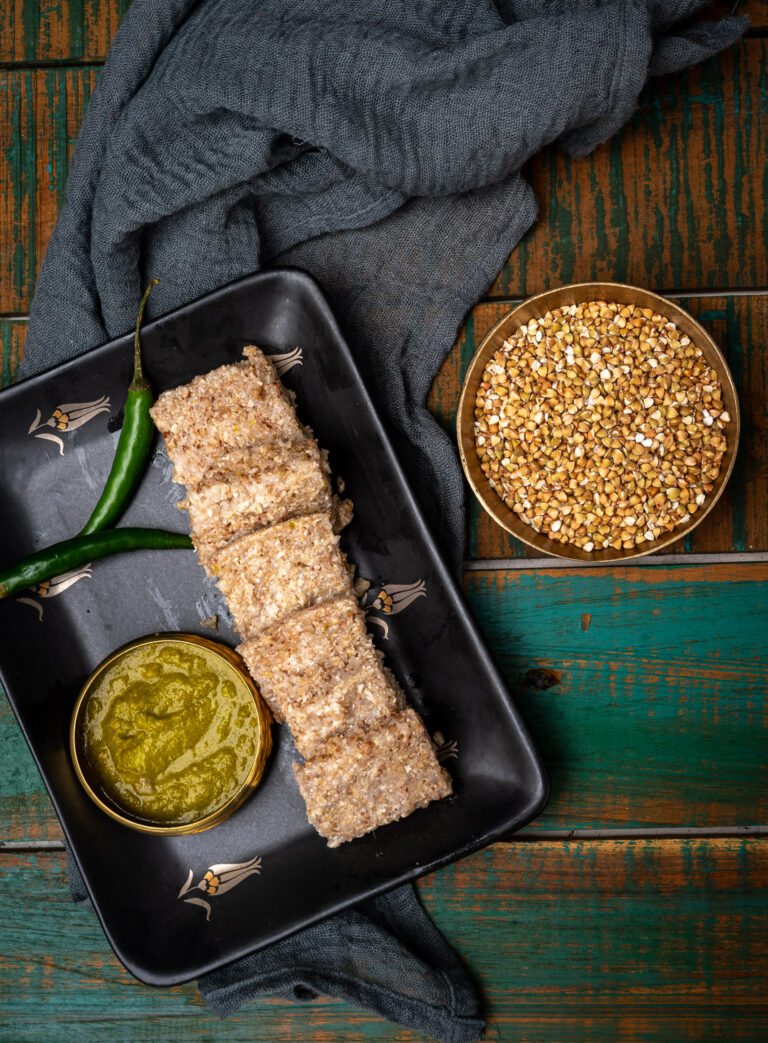
Within Gujarati cuisine, there is a special category of food called “farali”, which comprises of dishes that can be consumed during fasting days. My mother observed such days at various points in each month, which meant that we saw a lot of farali food at our dining table in rotation when I was growing up. During fasts, grains are usually forbidden, so core staples like rice, millets and wheat are not permitted. As a seed and a pseudocereal, buckwheat is exempt from this rule. Known in Gujarati as “kuttu”, this nutritious ingredient would be what my mother would use to prepare a delicious dhokla when she was fasting.

Dhokla, being one of Gujarat’s most famous culinary contributions, has of course made appearances on this blog in the past. It is a steamed, fluffy dish made of fermented batter.  It’s very simple to make, and is eaten in Gujarati homes as often as idlis may be eaten in a South Indian home. I’m speaking of the standard dhokla that is made of rice and pulses. But the buckwheat dhokla, as far as I know, is special. It is regarded primarily as fasting food, and not a part of regular meals. Other farali ingredients include tapioca pearls, sweet potatoes and amaranth leaves (but no green vegetables). So many unique dishes must have emerged because of these time-honoured rules, and there would have been a certain logic to them too. For example, when I apply modern knowledge to the restriction on grains, I realise that it must have been about bringing gluten-free days into one’s consumption cycle.
As a child, I enjoyed the taste of buckwheat dhokla and would request to have it on non-fasting days, but my mother was quite firm about not serving it except as farali. She would say that certain things had to be eaten only on the right days or at the right time. Similar to how laapsi is prepared traditionally on only one day of the year, kuttu na dhokla was inextricably linked to spiritual customs and had a place only within them in her view. It was served during festivals like Navaratri and Shivaratri, as well as more frequently on Ekadashi, which occurs twice a month.

Back then, this disappointed me of course. I was not very interested in my mom’s farali dishes other than buckwheat dhokla. She also refrained from making us consume these meals alongside her, and prepared other food for us on those days. Perhaps due to the fact that her customs were not forced on us, I was always curious about them. There are many rules followed by various communities. Sometimes you understand the reasoning behind them. At other times, even those who follow them can’t explain why. Either way, you often hold on to them or circle back to them because they are connected to a beloved relative. Some traditions persist in remembrance of an individual.

This is why while I myself don’t observe the fasting customs that my mother did, I do continue to make buckwheat dhoklas because they are connected to her. Nostalgia was my original reason, but nutrition quickly became another compelling one. Buckwheat has a low glycemic index, is excellent for the control of cholesterol and blood pressure levels as well as heart health management, is packed with protein, fibre and antioxidants, and is of course gluten-free. I would say it has millet-like qualities as a rice and wheat alternative.

I also enjoy making a buckwheat loaf. I fill the dough with enriching seeds and nuts, making the bread both healthy and delicious. I occasionally take orders for this alongside my various other baked delights, but I mostly prepare it for my family. Just one slice is filling, and makes for an easy snack or small meal.

Coming back to the buckwheat dhokla, you’ll find that it has its own unique flavour as compared to regular dhoklas. If you are someone who observes certain fasts, this may be the perfect dish to incorporate into the routine of those days. Otherwise, the fact that it’s good for you, and tastes quite good too, should do!
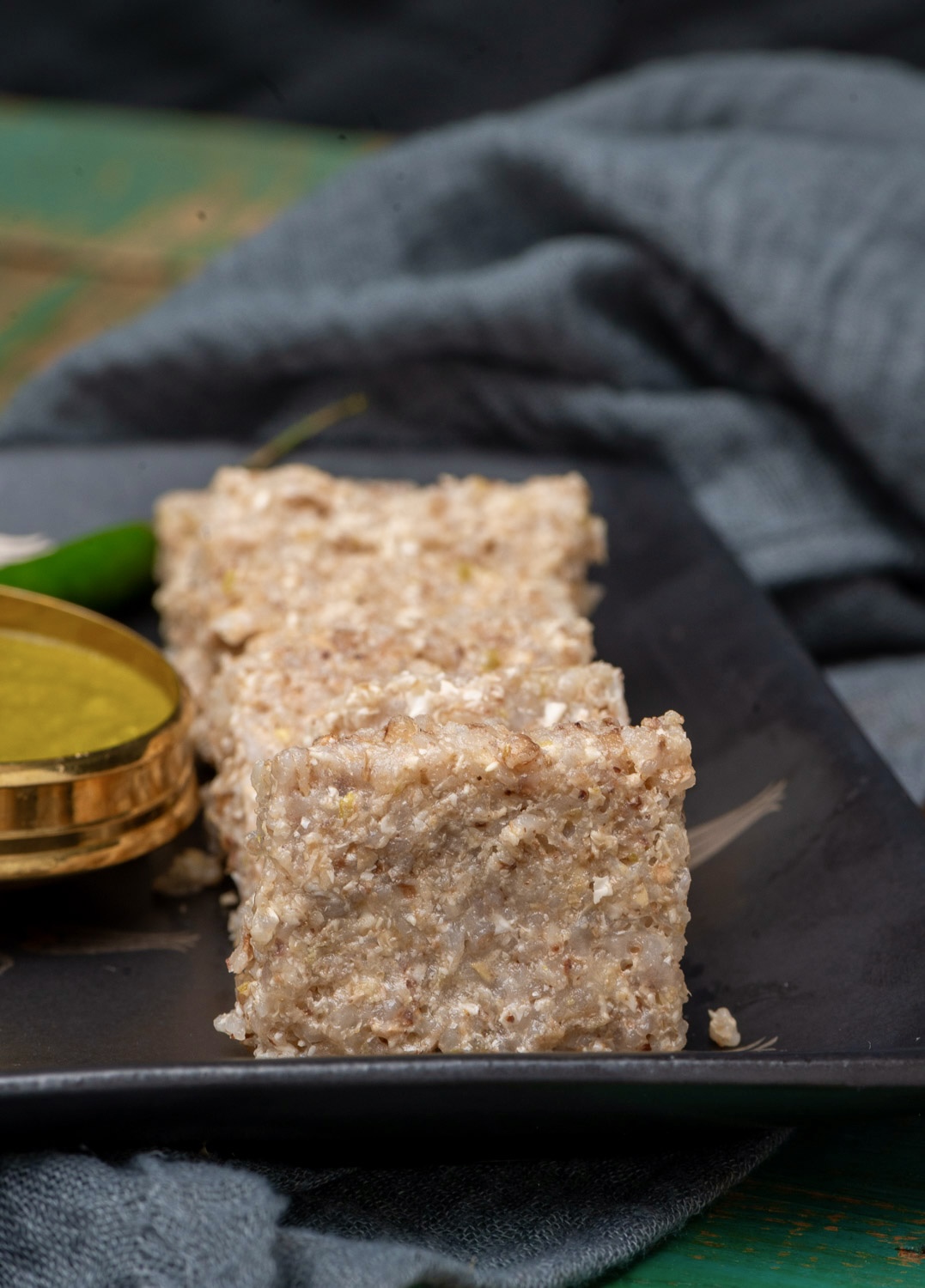
Buckwheat Dhokla
(Serves: 2)

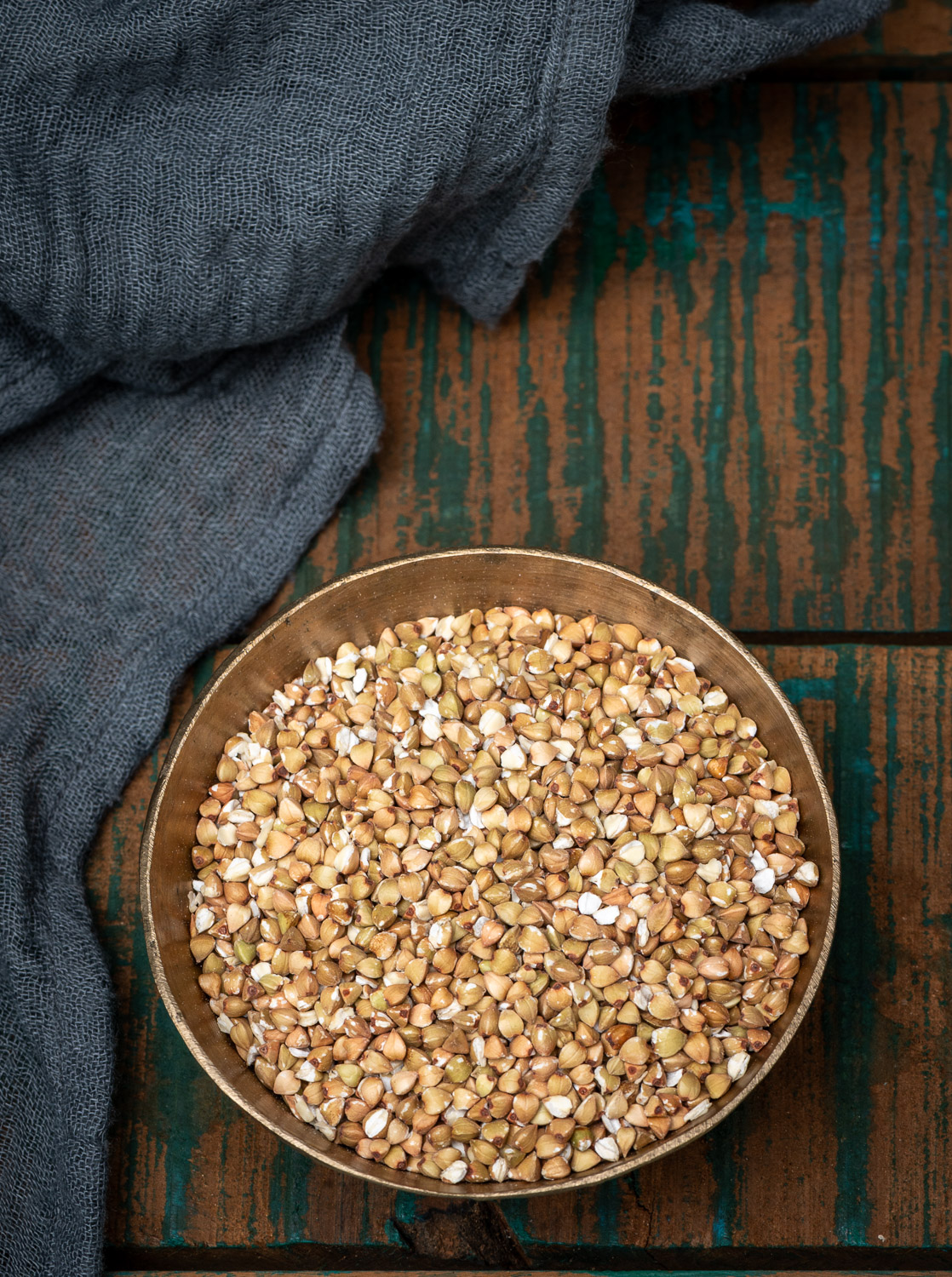
1 cup buckwheat groats
1½ cups sour buttermilk
1 teaspoon green chilli paste
½ teaspoon grated ginger
Rock salt to taste
1 teaspoon oil/ghee
A pinch of ENO fruit salt (optional)

Coarsely grind the buckwheat. Doing this for just 2-5 seconds is sufficient.

Rinse and soak the buckwheat in the buttermilk for 5-8 hours.

When ready to begin preparing the dhokla, grease a steamer plate and set it aside.

To the batter, add the ghee, salt, green chili paste and ginger. Pour the batter into the steamer plate.

Prepare the steamer and once it has heated, place the steamer plate inside. Cover.

In 15 minutes, open the steamer and insert a toothpick into the dhokla. If it comes out clean, it is ready.

Remove it from the steamer. I prefer to eat it fresh and hot at this point, but you may prefer not to. If so, allow to cool, then cut into squares. Remove from the plate.

Your buckwheat dhokla is ready to serve. It can be eaten plain or with a condiment of your choice.

If you would like to explore more traditional Gujarati dishes, I have dozens of them in my archive [hyperlink]. I hope you’ll enjoy them all!
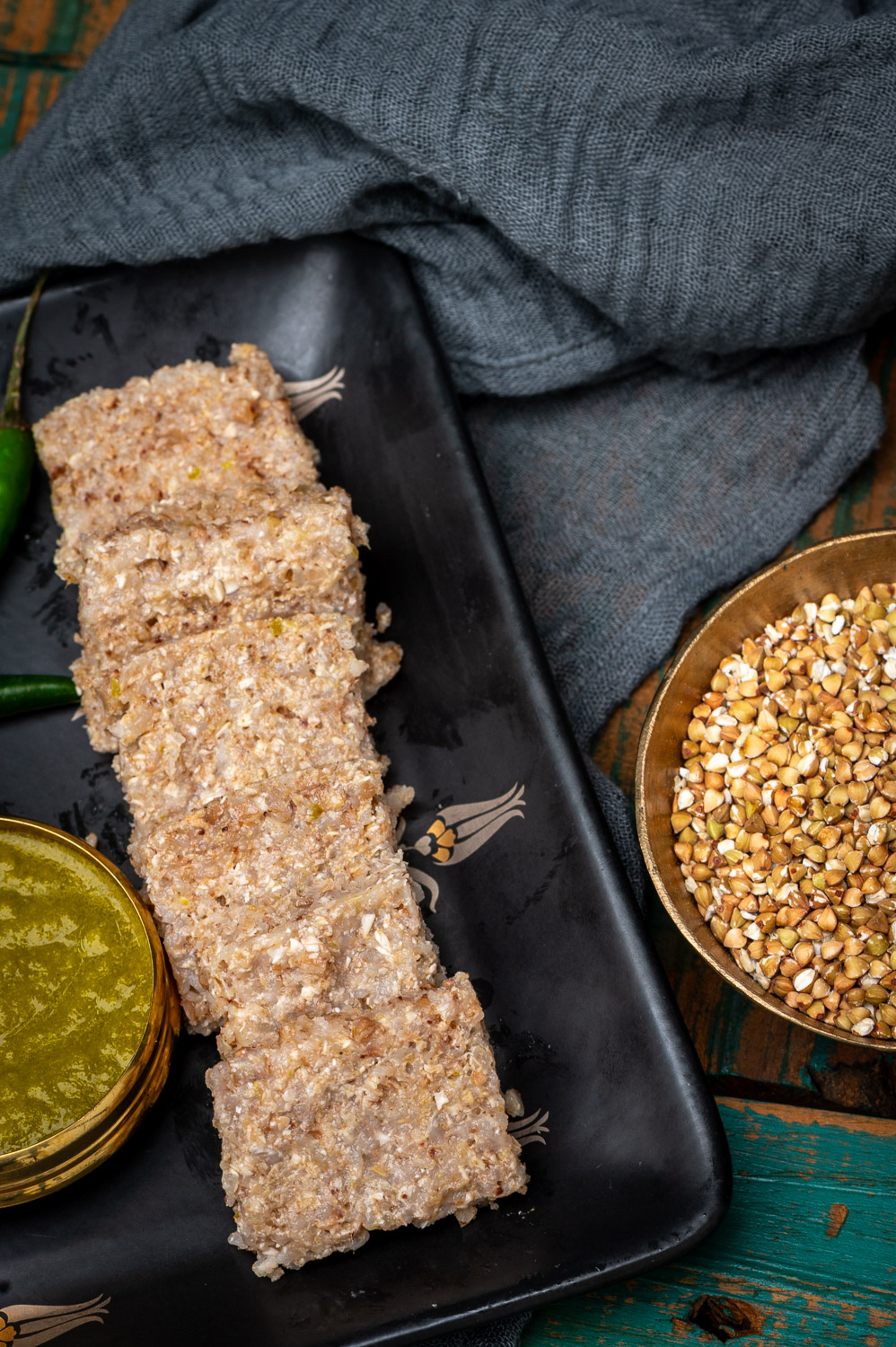
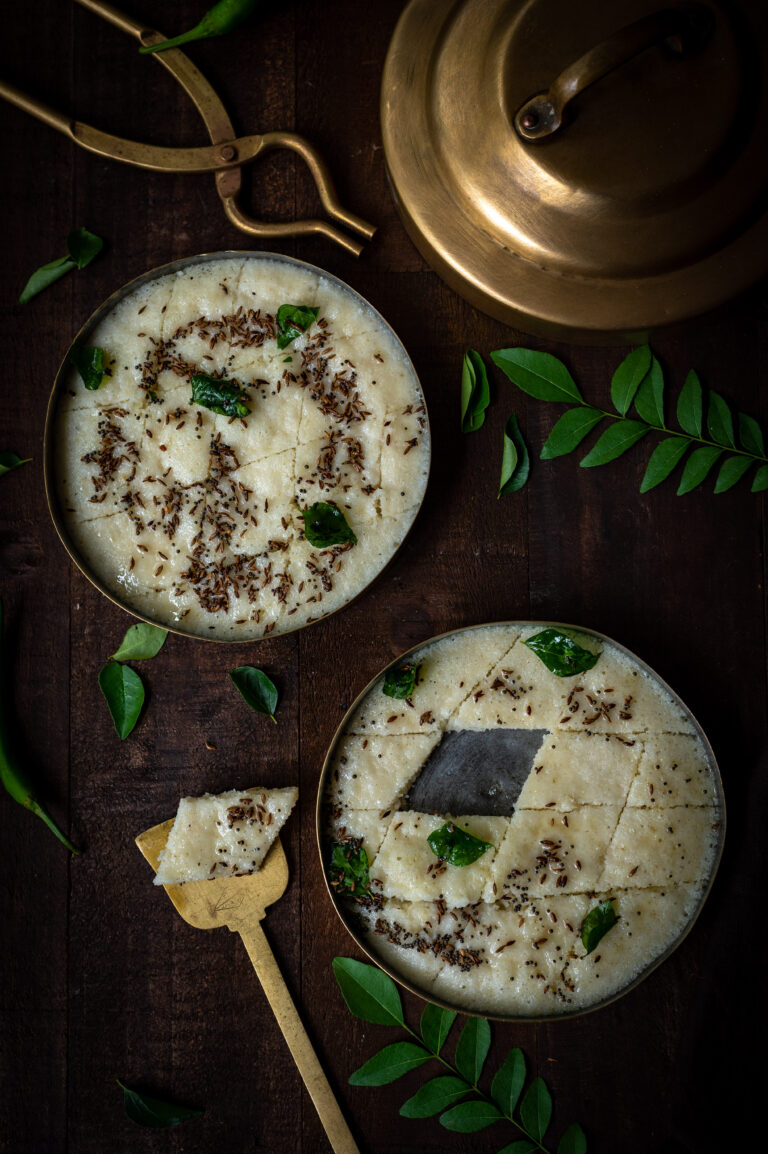
When I shared this recipe for a dhokla made of green moong a couple of years ago, I had mentioned that Gujaratis are so famous for this item of food that it’s what we are stereotypically called. “Hey, dhokla!” – there is hardly a Gujarati who hasn’t heard this phrase, just as there is hardly a Gujarati who doesn’t, as stereotyped, love this dish. Dhoklas are a kind of savoury cake, spongy in texture. There are numerous varieties of dhoklas, and the khaman dhokla (yellow in colour, and made with channa dal) is the most popular one, and the one you may be acquainted with from restaurants. But the one that Gujaratis mostly consume at home is the white dhokla, which I am sharing the recipe for today.

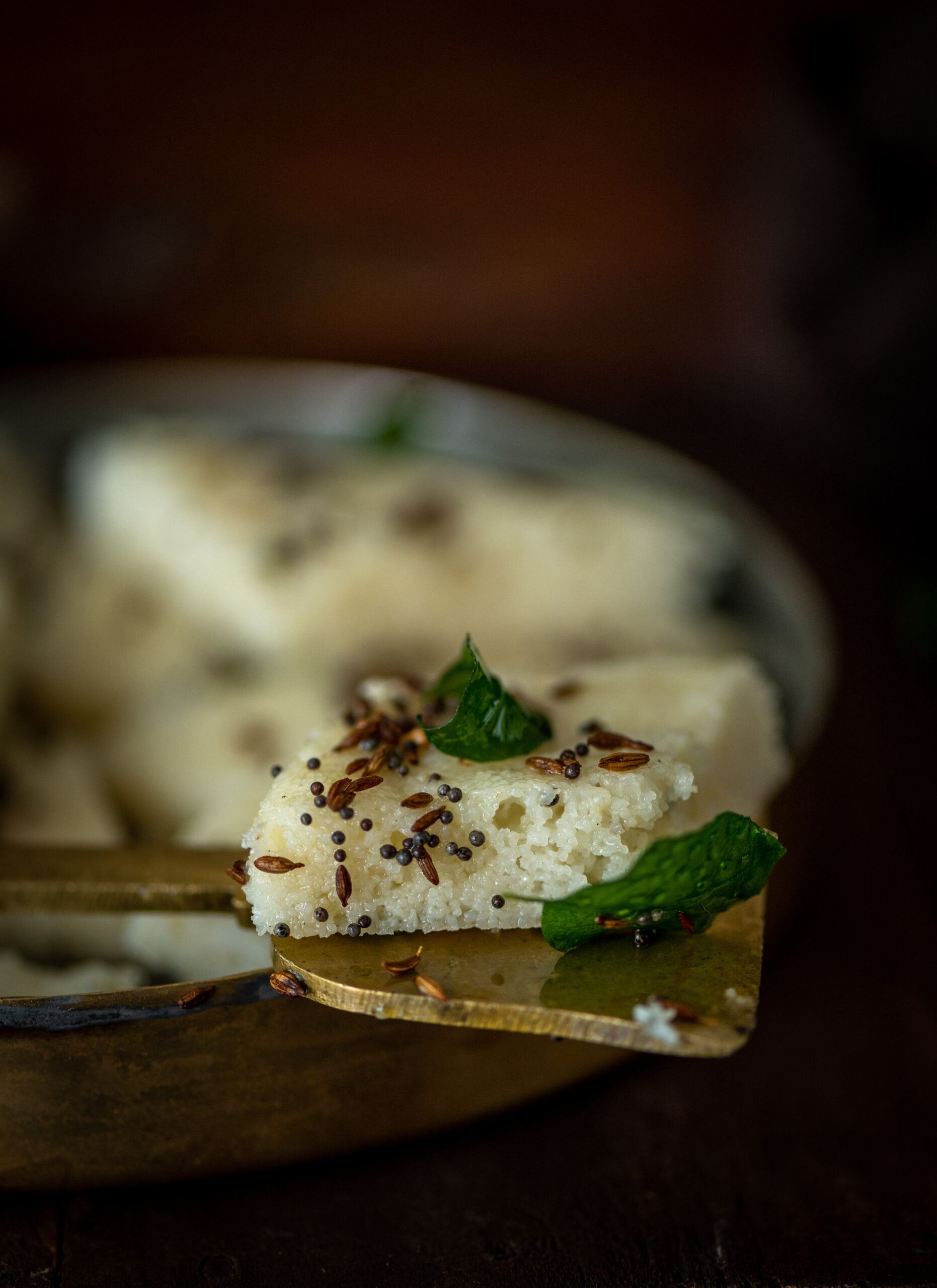
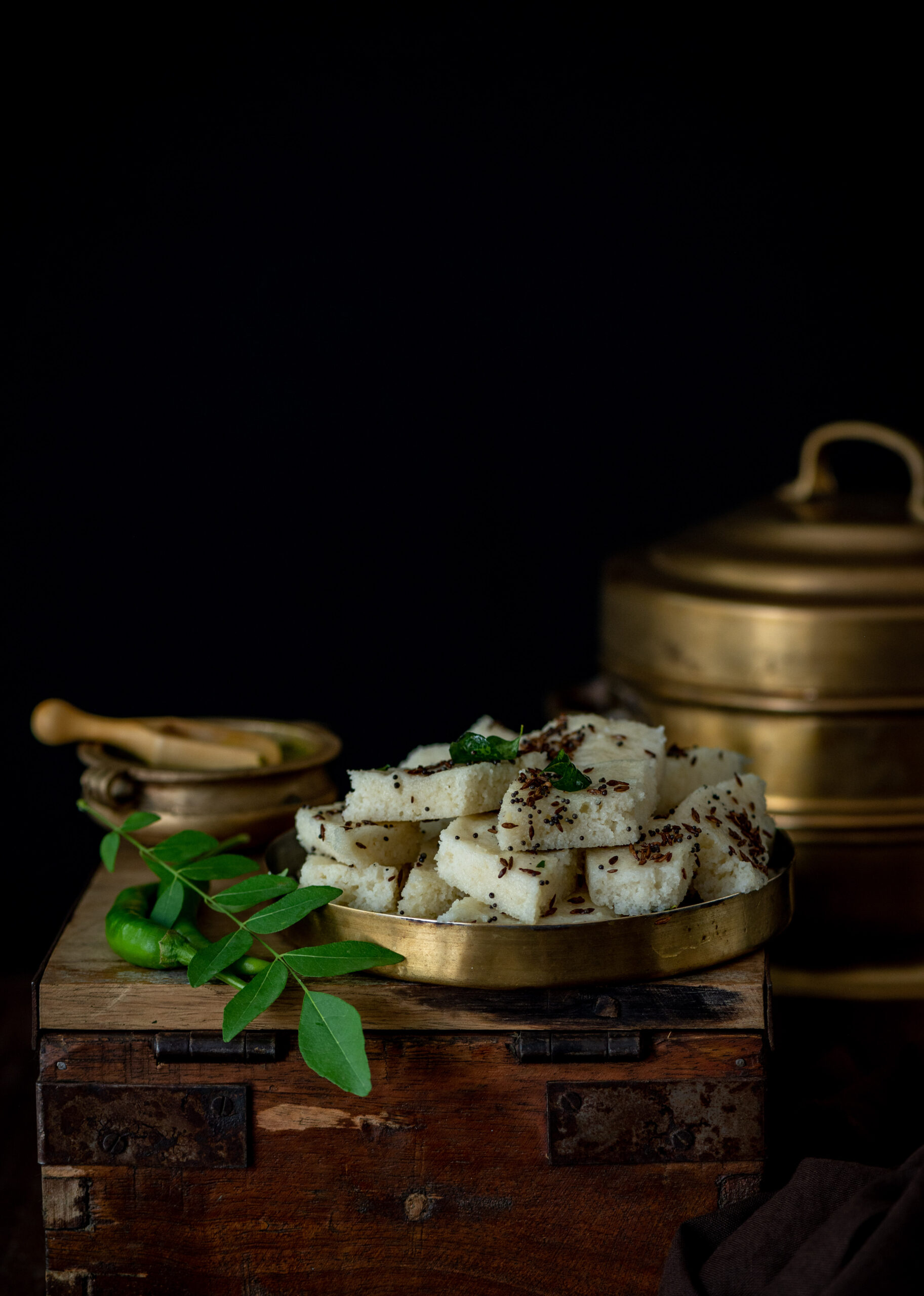
There are two kinds of white dhoklas: a version that is more tedious to prepare, which entails washing rice, drying it in the sun and then powdering it. My mother would make these traditional rice flour dhoklas often, but for a quick go-to it was always the rava dhokla. The rava dhokla is the other version of white dhokla, and the recipe that I’ll share today. It tastes quite similar to the rice flour dhokla, and has a quick and easy process. It makes for a light dinner, or as a tasty snack when you have company, and is often had with garlic chutney or a sweet mango pickle.

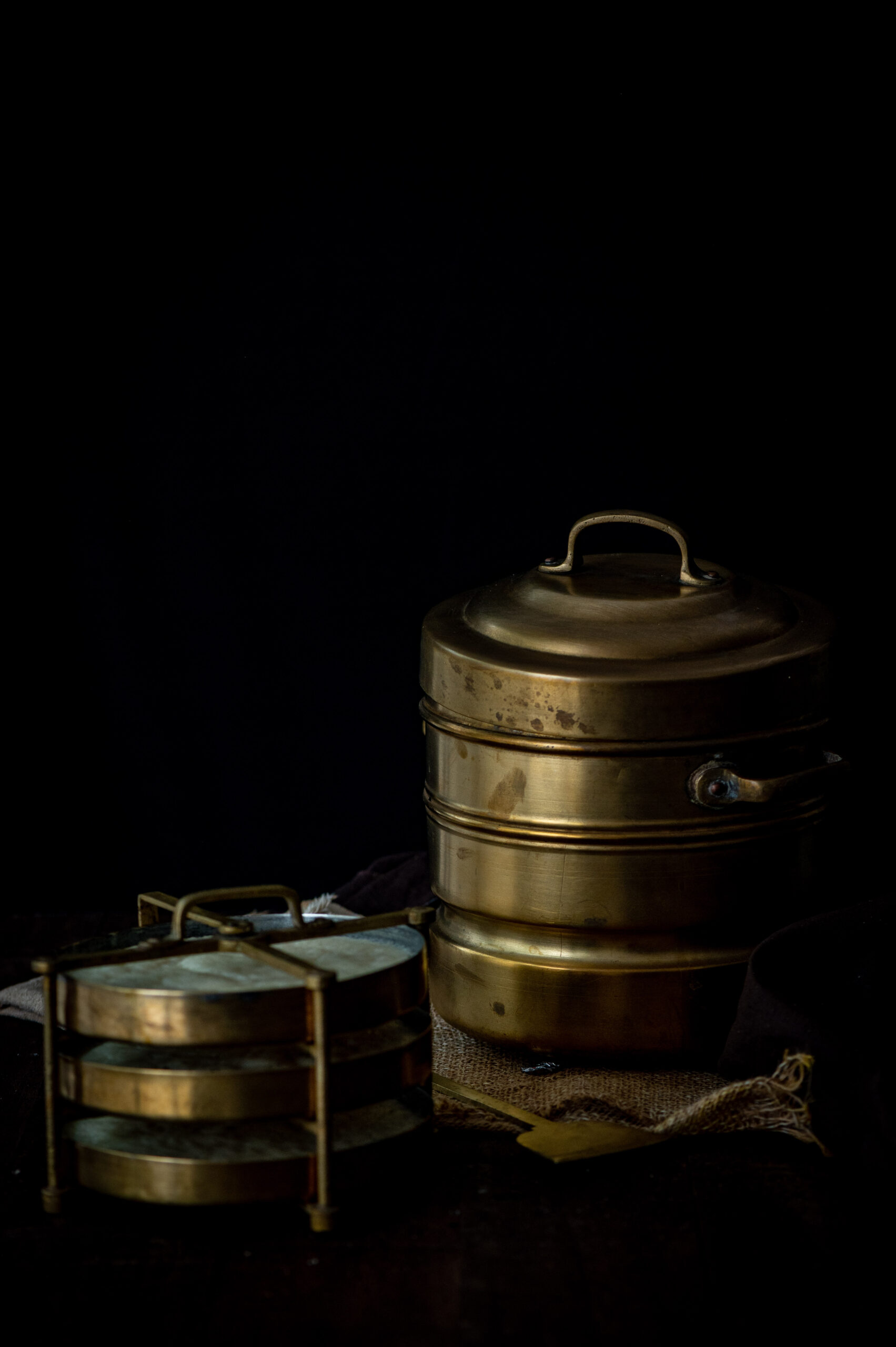
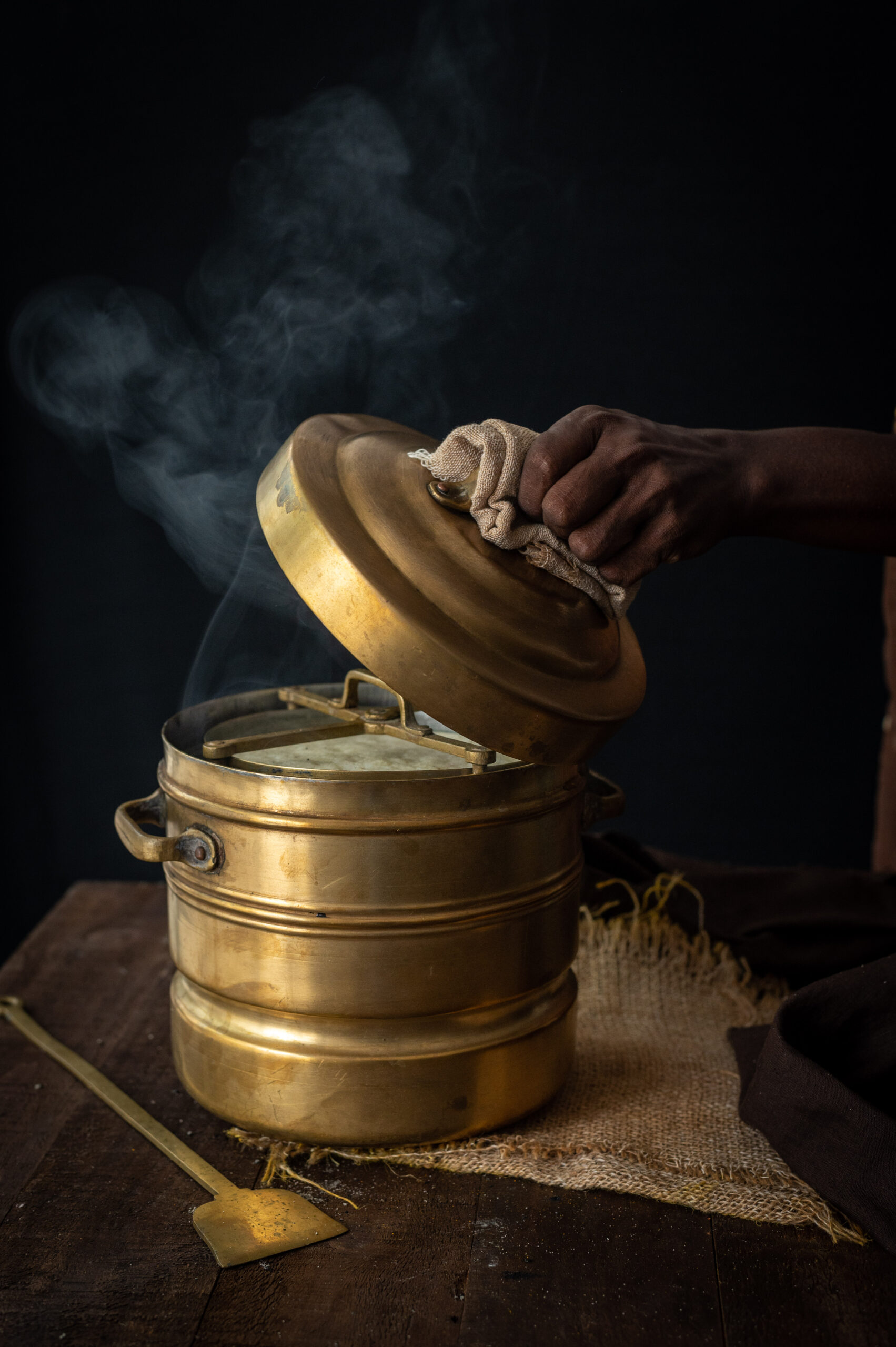
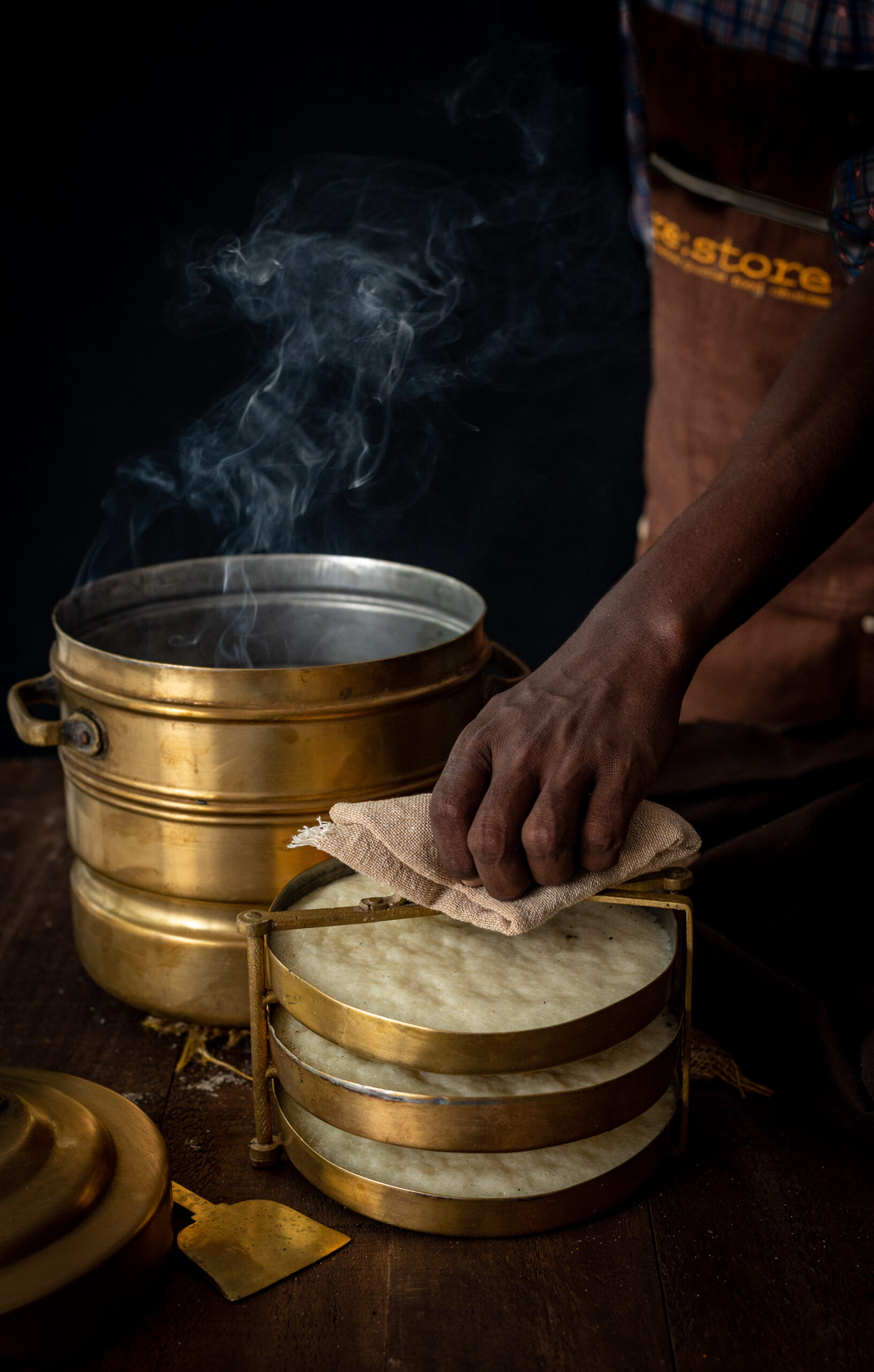
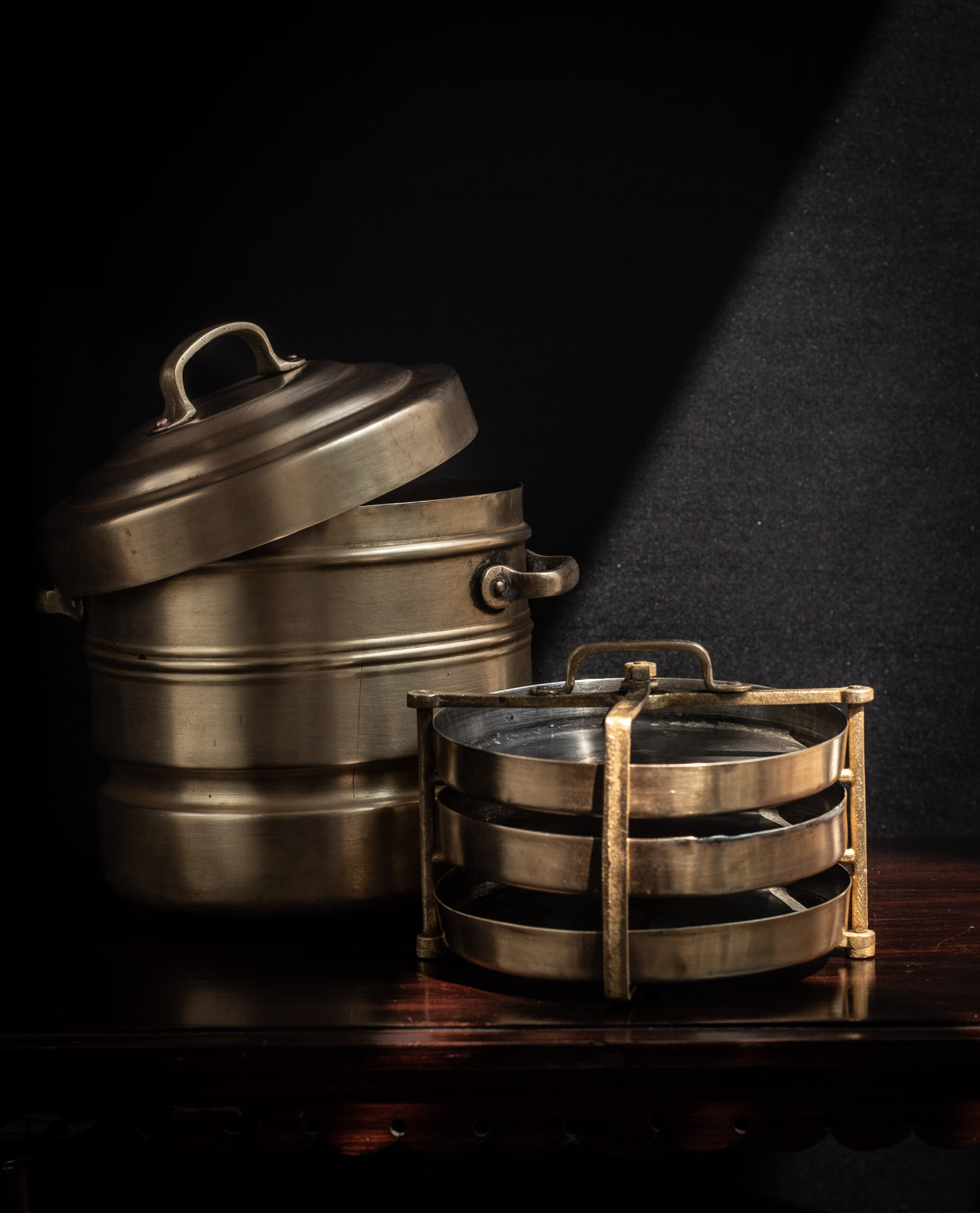
As you may know from some of my photography, I love antique kitchen objects. They are not only subjects or props to me, but are functional too. I have an old dhokla maker, one that feels like it has always been with me. I cannot remember when it entered my kitchen. Similar to an idly cooker, except flat, it has a set of plates stacked on top of each other. The dhoklas are steamed on these, then cut and served.

To be honest, I don’t use my dhokla maker very often because I don’t make dhoklas at home frequently, even though we all enjoy this dish very much. I think this is because, for me, the perfect dhokla was always my mother’s. Even when she became really old and would rarely cook, and I would send her all her meals, I would ask her to prepare just dhoklas for me. With great love, she and I had a recurrent jesting conversation in which I would make fun of her – “What’s this, why are you sitting around? Time to start training for a marathon! Or how about getting started on the cooking, and make me some dhoklas?” I would say, and she would laugh, or offer one of her famous smiles – to be followed shortly by a mouthwatering beautiful treat. My sister’s dhoklas are a close second, but as for me, I am still learning – and as always, eager to share what I know.

That reminds me also of how, not so long ago when we were all still zipping up and down the country and around the world with ease, I would pack dhoklas for short flights of under three or four hours. They travel well as they don’t need accompaniments, and the best part is that they don’t have a strong smell. The whole plane doesn’t find out that you’re eating dhoklas when you open your lunchbox. So I’d fly off to Mumbai, eating my own dhoklas in the air, and when I arrived, my sister would be ready to serve me a fresh batch of her own.  I guess it’s true what they say: no matter where we are, Gujaratis can’t get enough of a good dhokla.

White Dhokla

(Yield: Serves 2)


1 cup rava

½ cup yoghurt

1 cup + ½ cup water

Salt to taste

1 tablespoon oil

½ teaspoon ENO fruit salt

½ teaspoon green chili-ginger paste


Tempering:

2-3 tablespoons oil

¼ teaspoon mustard seeds

¼ teaspoon cumin seeds

A few curry leaves


In a bowl, add rava, yoghurt, 1 cup of water, salt, green chili-ginger paste and oil. Mix well. You will get a thick batter. Set this aside for at least half an hour.

Now, the batter would have thickened further. It needs to be of the consistency of idly batter, so add the remaining half cup of water if required.

Add the ENO fruit salt and gently mix the batter. At this point, it will be frothing.

Prepare the dhokla cooker / plates by greasing them. Then, pour the batter into the plates and steam for about 20-25 minutes with the lid on.

Remove the plates from the cooker once the batter has cooked. Allow to cool.

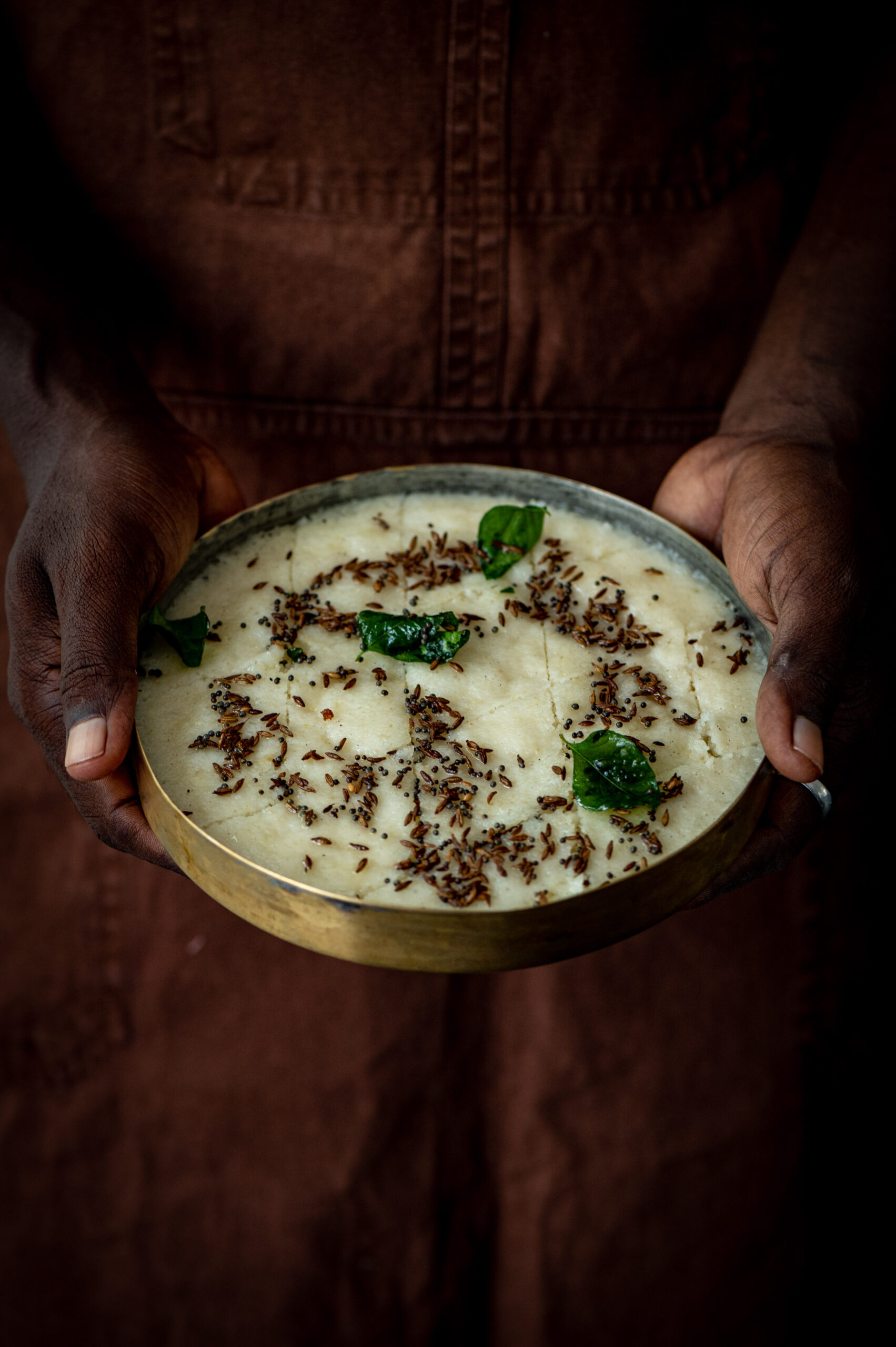
Finally, temper the dhokla. For this, heat the oil and add the mustard seeds and cumin seeds. Allow them to splutter, then add the curry leaves. Immediately, pour this hot mixture over the dhokla.

Cut and serve plain or with accompaniments of your choice. Once again, I would recommend trying out one or all of the three dips in my recent Indian condiments series. The raw mango thovayal, the lasun ki chutney or the ginger chutney will beautifully elevate the soft, spongy dhokla. I hope you’ll enjoy this delicious white dhokla – and that it will make you clearly understand why we Gujaratis love it so much! If you do, don’t forget to try out the green moong dhokla variant too. Let me know which one you prefer!

If you’ve been following my blog for a while, you may not be surprised to hear me say that green moong is my favourite among lentils (you may know it as mung bean, green gram or pachai payiru). As you’d have seen, I’m so in love with its versatility that it’s found a place in recipes as diverse as this crunchy teatime snack and in this deeply filling meal-in-a-bowl. With Republic Day this weekend, honouring the Indian constitution, I thought of how to best honour a different kind of Indian constitution – and once again, the humble yet power-packed mung bean was what came to mind.

Green is one of the three stripes of the tricolour and greenness is something that I think we need and must celebrate in this country. It’s a colour that evokes fecundity, growth and serenity. In my previous post, I talked about the harvest festival Sankranti. As a farm-owner, and someone very invested in using the goods of my garden in my kitchen, “green” is a way of life for me. I hope that this year will be good for farms and farmers everywhere, for political calmness, and for harmony and oneness with nature.

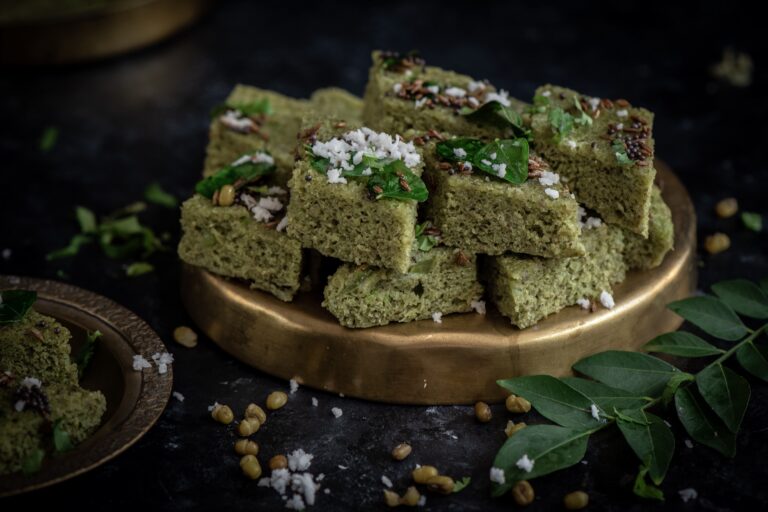
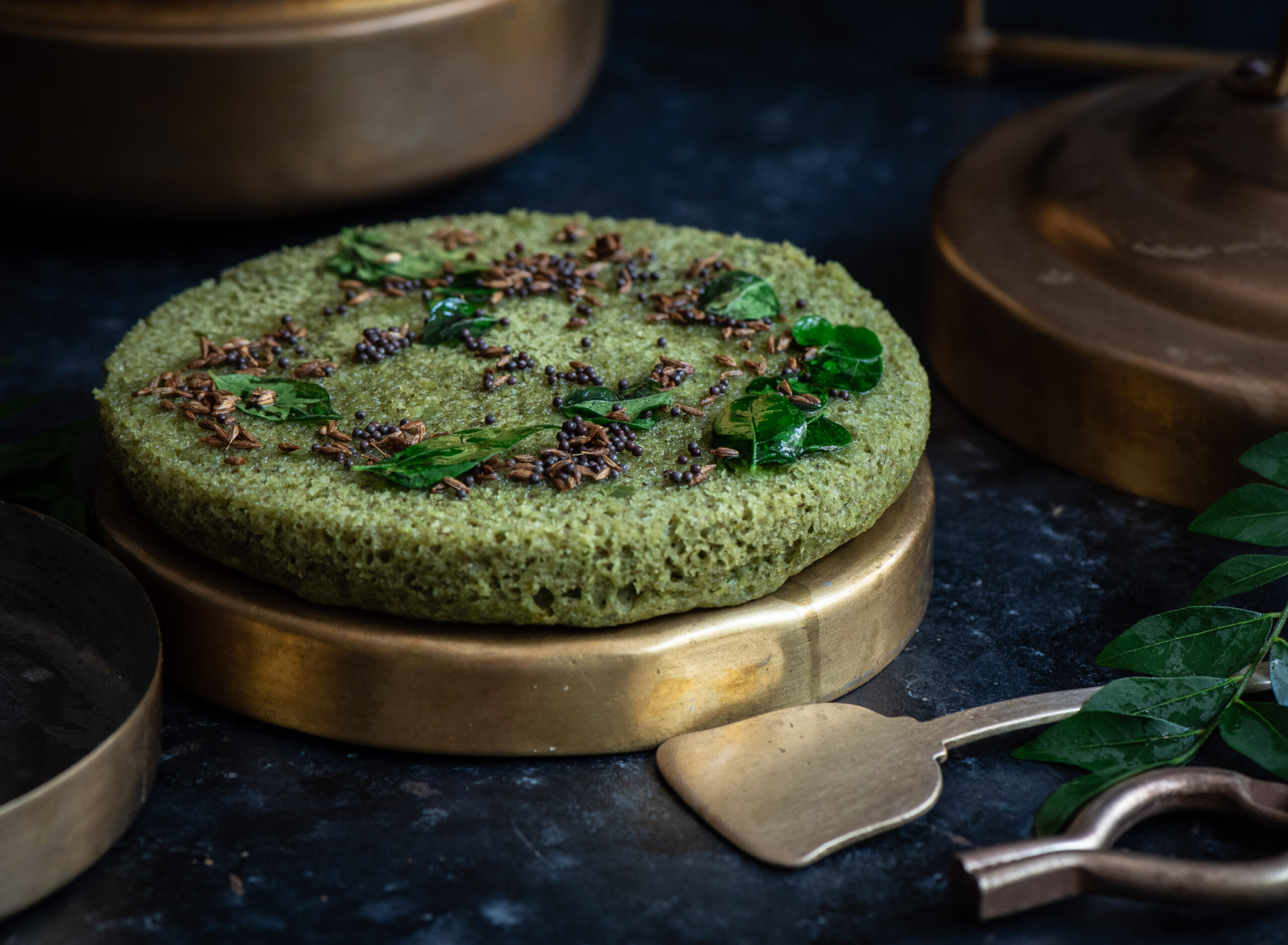
The recipe I am sharing today is for green moong dhokla – a healthy, fermented, steamed dish that can be eaten as a main course, a snack or an accompaniment. Soft and flavourful, a dhokla is so ubiquitously Gujarati that it’s a stereotype. I’ve literally heard people say “Dhokla!” when they hear what my ethnicity is. We have so many varieties, and my personal favourite is actually the buckwheat kind which is eaten on Agyaras, the eleventh day of each month which is traditionally observed by Gujarati Vaishnavites as a relaxed fast during which no grains or salt are consumed, but buckwheat, fruits, yams, potatoes and the like are allowed. I’m not one for fasting, but I always look forward to having some dhokla when I’m around someone who is!

Once again, it was my sister who taught me how to make this – one more classic item from the Gujarati cuisine that she learnt after getting married, just like this til-ka-chikki. She has a knack for making it in practically a snap of the fingers – often, I’d ask for a plate of green moong dhokla, go downstairs for a bit, and come up to see it was already prepared.

This green moong dhokla is eye-catching thanks to its colour, which is always a great way to get kids to eat something that’s good for them. As you may remember from earlier posts, moong is extremely nutritious. It is a great source of fibre, potassium, manganese, folate and various vitamins and minerals. They are also an excellent source of protein, and I would say crucial to a vegetarian or vegan diet. They are known to lower blood pressure and sugar levels, prevent heat stroke, aid digestion, reduce the risk of cardiac disease, and possibly assist in weight loss.

A dhokla could be described as a kind of savoury sponge cake, steamed rather than baked. Every kind of dhokla is delicious, in my opinion. But as a Gujarati, I’m biased. Why don’t you try this version and tell me what you think?

Green Moong Dhokla

(Yield: 15-20 pieces)

1 cup green moong (mung beans)

½ teaspoon ground green chilli paste

1 teaspoon ginger paste

2+2 tablespoons oil

1 teaspoon lemon juice

1 cup coriander leaves

½ cup capsicum

½ teaspoon sugar

½ teaspoon eno powder

½ teaspoon mustard seeds

½ teaspoon cumin seeds

A few curry leaves

Salt to taste

Grated coconut (optional)


Soak the green moong overnight. In the morning, rinse the moong, remove the water and put the beans in a blender along with salt, coriander leaves, ginger paste and green chilli paste. You may need to add approximately a ½ cup of water to allow it to grind well. The The consistency of the batter needs to be a little thicker than that of pancake, or in other words, like idly batter.

Now, add 2 tablespoons of oil, and the lemon juice and finely cut capsicum to the batter.

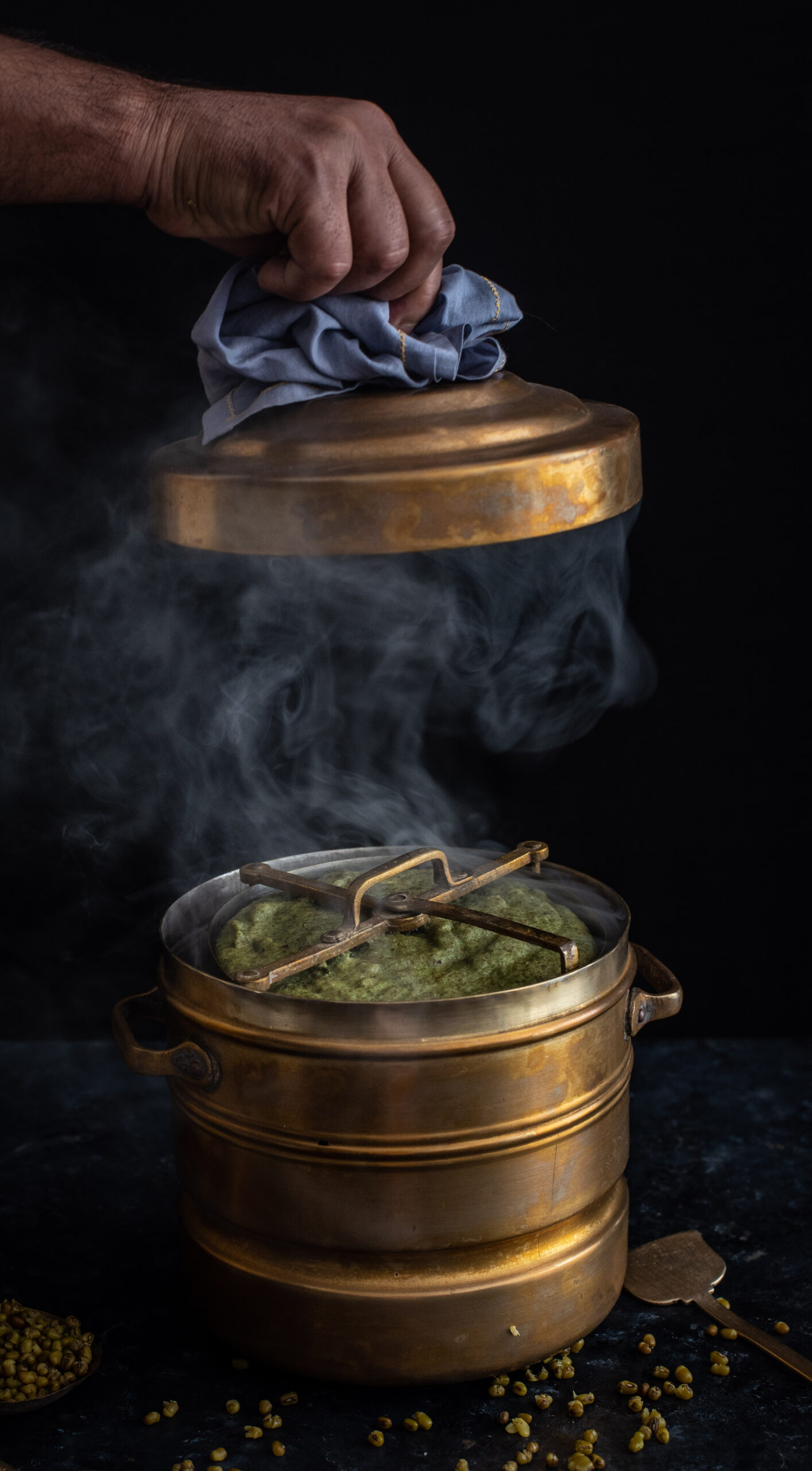
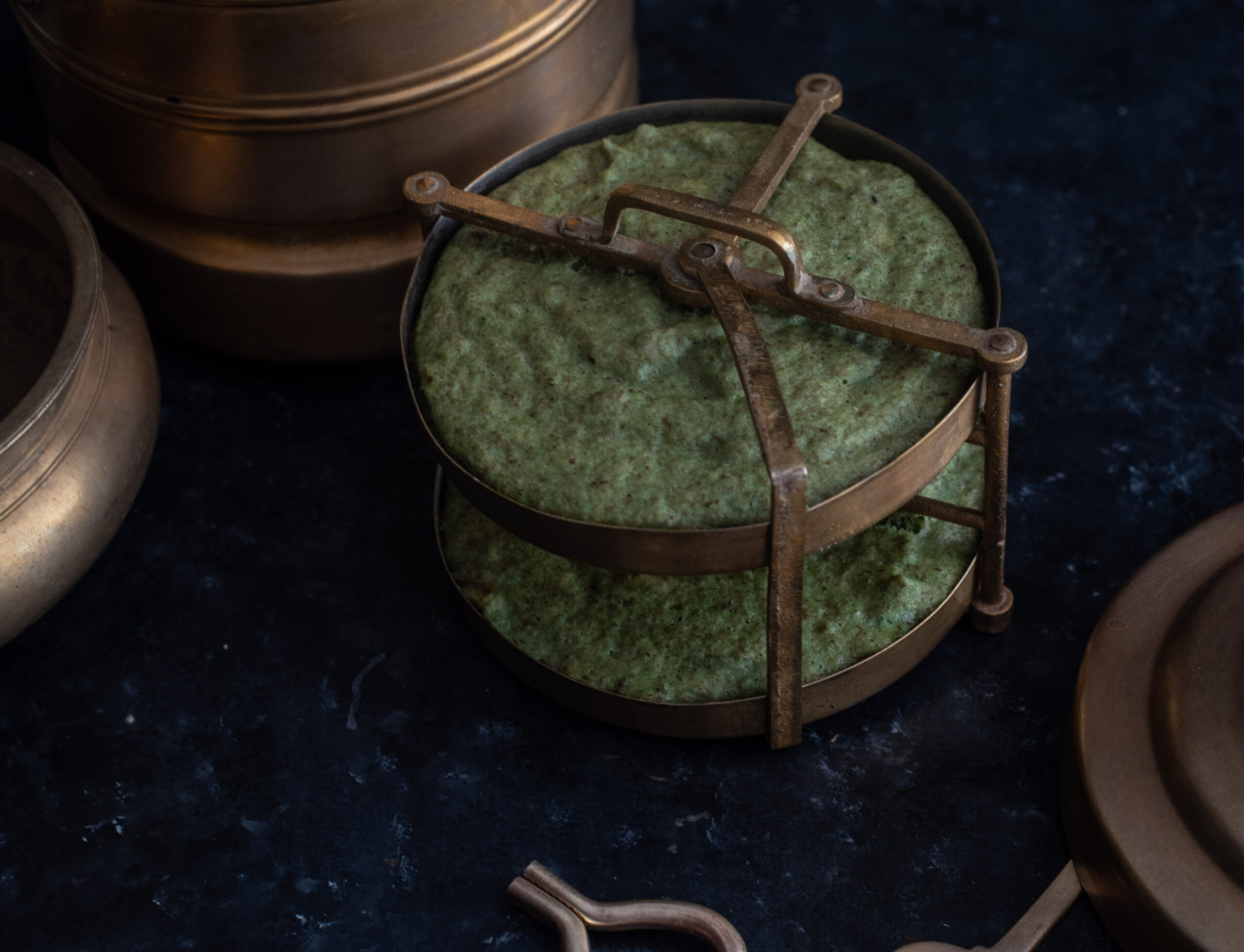
Grease a plate and keep ready. Now, add eno fruit salt to the batter and mix gently. Pour the batter onto the greased plate, cover it and steam for 15 minutes. Below, you can see a traditional Gujarati dhokla cooker which my mom gave to me. I believed it was a part of her own wedding gifts. I’d forgotten that I’d had it and could use it. It’s still in perfect condition, and so compact and ideal. You can also see how it allows for cooking in layers.

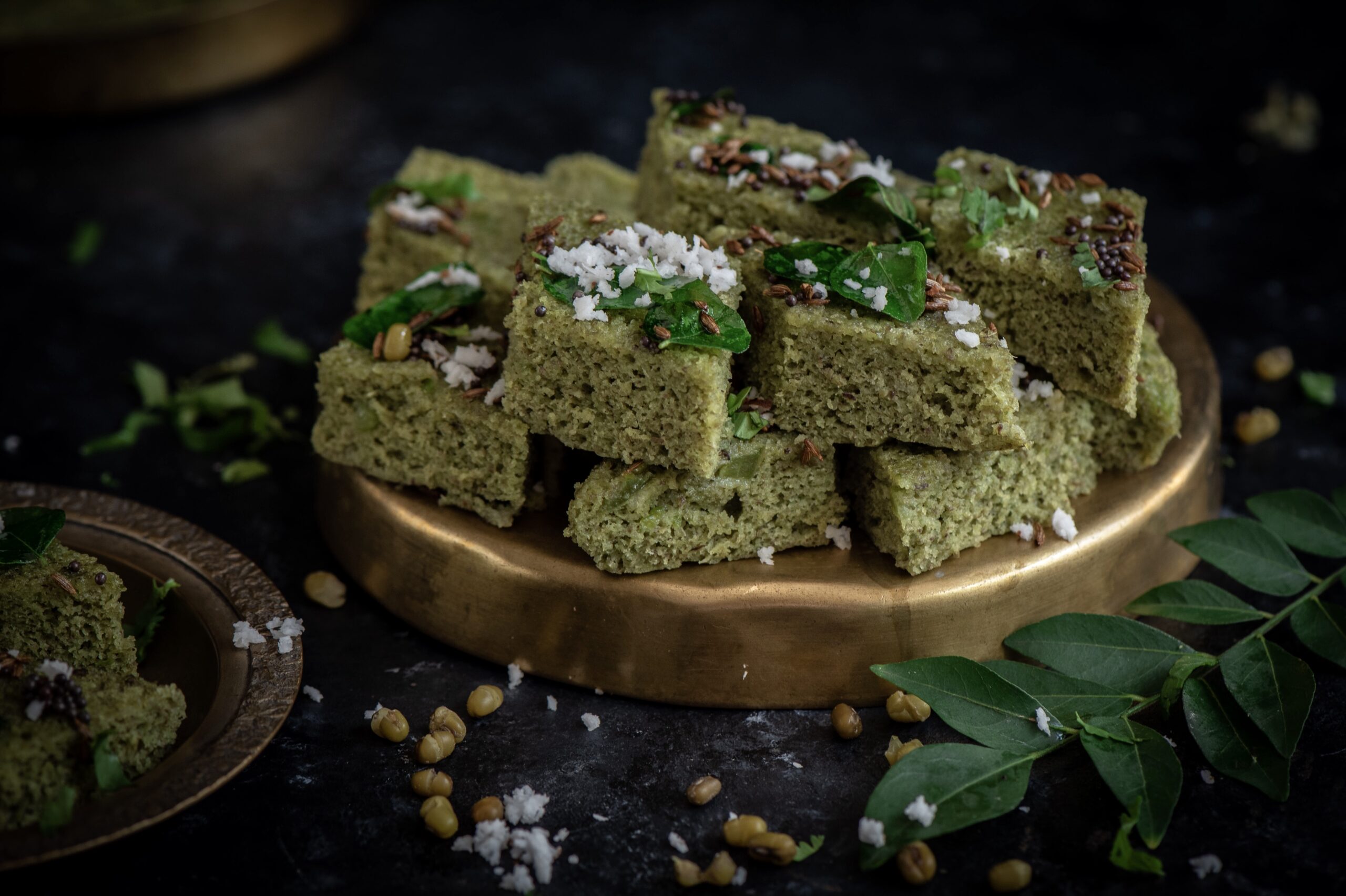
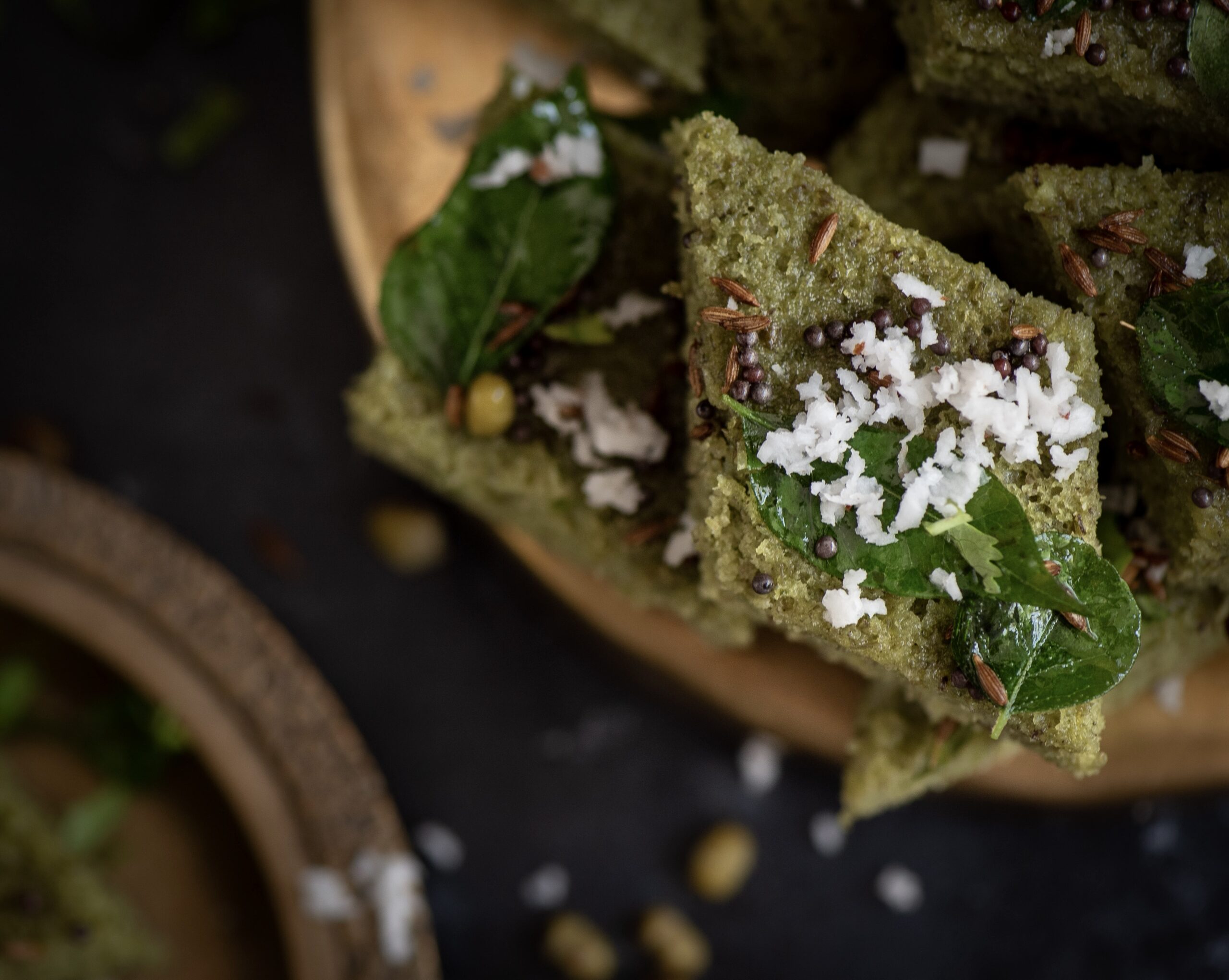
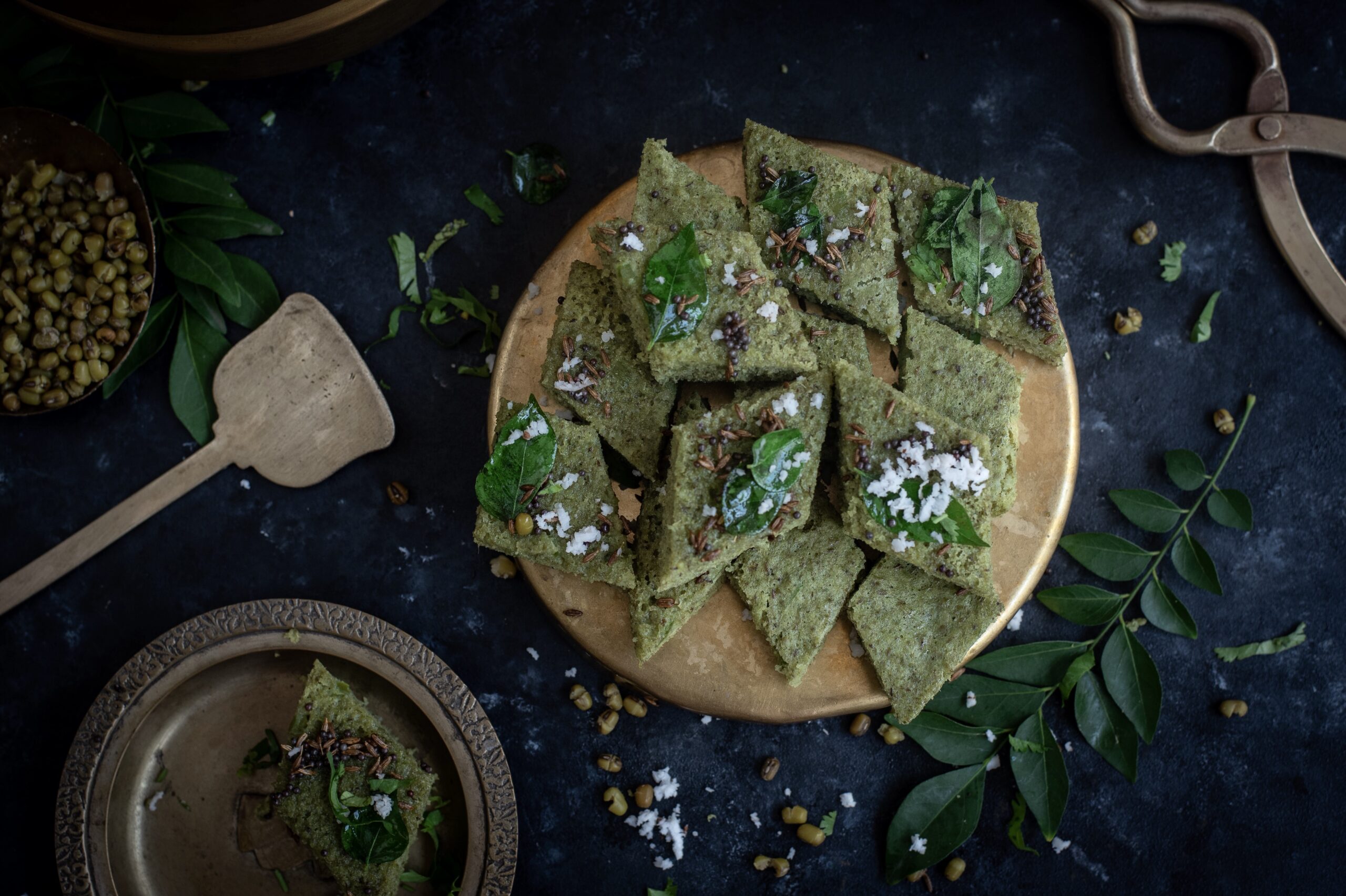
Once steamed, remove the plate and allow the dhokla to cool. Cut into a desired shape. Square or rectangular pieces are the standard. I’ve done diamonds here.

In a small pan, add the remaining oil and the cumin and mustard seeds and wait for them to splutter. Once they start to splutter, add the curry leaves. Then, pour these over the cut dhokla. Garnish with coriander leaves and some grated coconut.

The green moong dhokla is now ready to serve. Spongy, spicy, and so very nice on the eyes with that gorgeous matcha cake colour. Like I said: have a piece as a snack, a couple as a side dish, or polish off the plate and call it a full meal. But honestly, I’d be surprised if you can stop at just one. These light, fluffy but very flavourful dhoklas demand to be devoured!