Tag

vegetarian

Browsing

If you’ve been following my blog, you’d have noticed that despite my quintessentially Gujarati sweet tooth, my culinary adventures are often based on healthy eating. I hardly ever reach for a fried item first, but these banana-methi fritters are a part of our wide kitchen repertoire at home during Diwali. Perhaps one just can’t feel guilty about indulgence when it comes to special occasions! The festive season isn’t far away, so you may want to try your hand at these fritters and see if you’d like to share them with your friends and family too this year.

Growing methi (known in English as fenugreek, and in Tamil as vendeyakeerai for the leaves and vendeyam for the seeds) is as easy as throwing a few seeds in the soil and allowing them to sprout in a matter of days. This is why I can use freshly-plucked methi leaves for so many of my dishes. Alongside tulsi, lemongrass and numerous herbs, fruits and vegetables, it flourishes right in my home. Whether it’s a traditional Indian staple or a salad (Chennai’s weather makes fresh lettuce difficult to find in the city sometimes, and I love experimenting with healthy substitutes), these pretty greens are a familiar ingredient in the re:store kitchen.
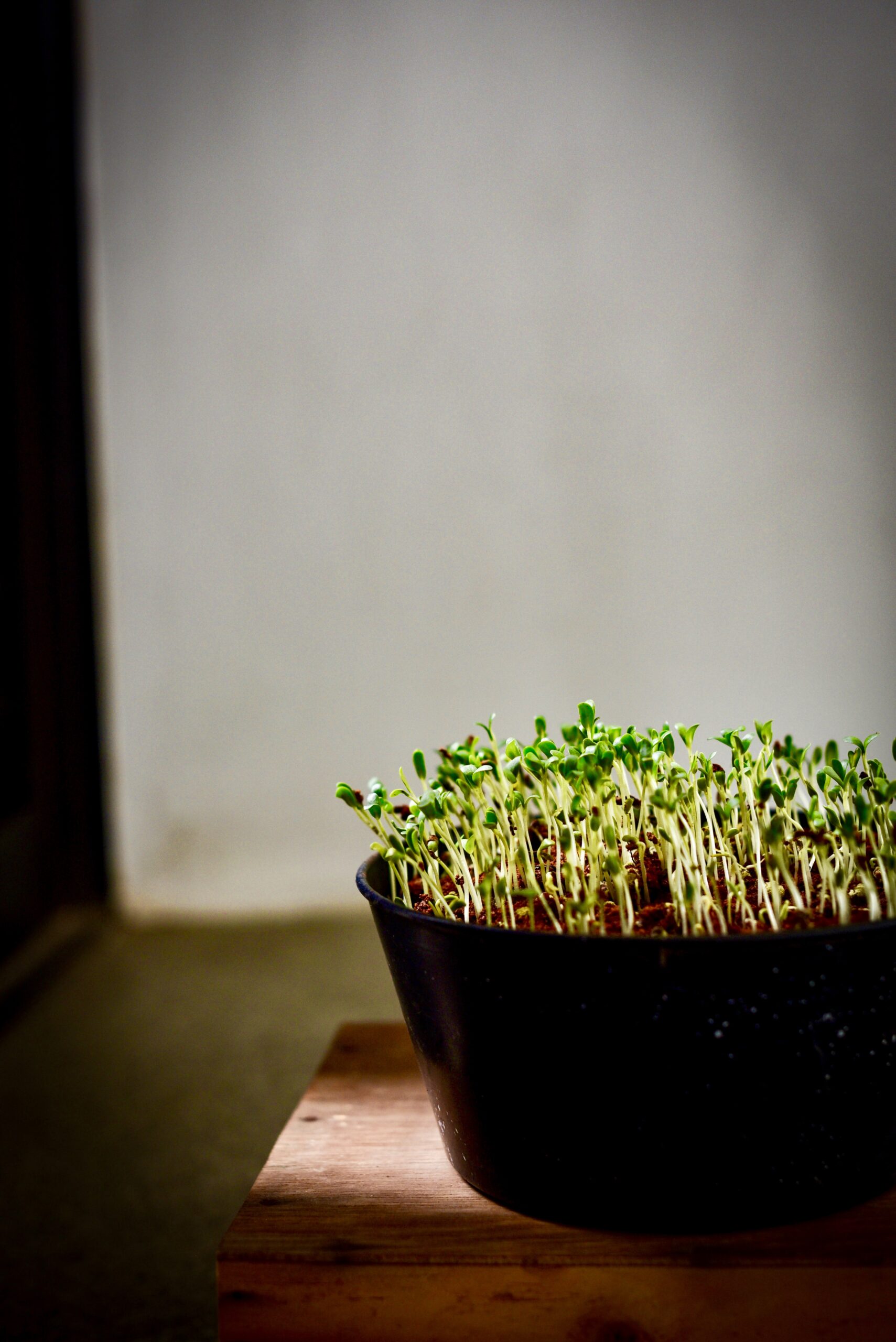
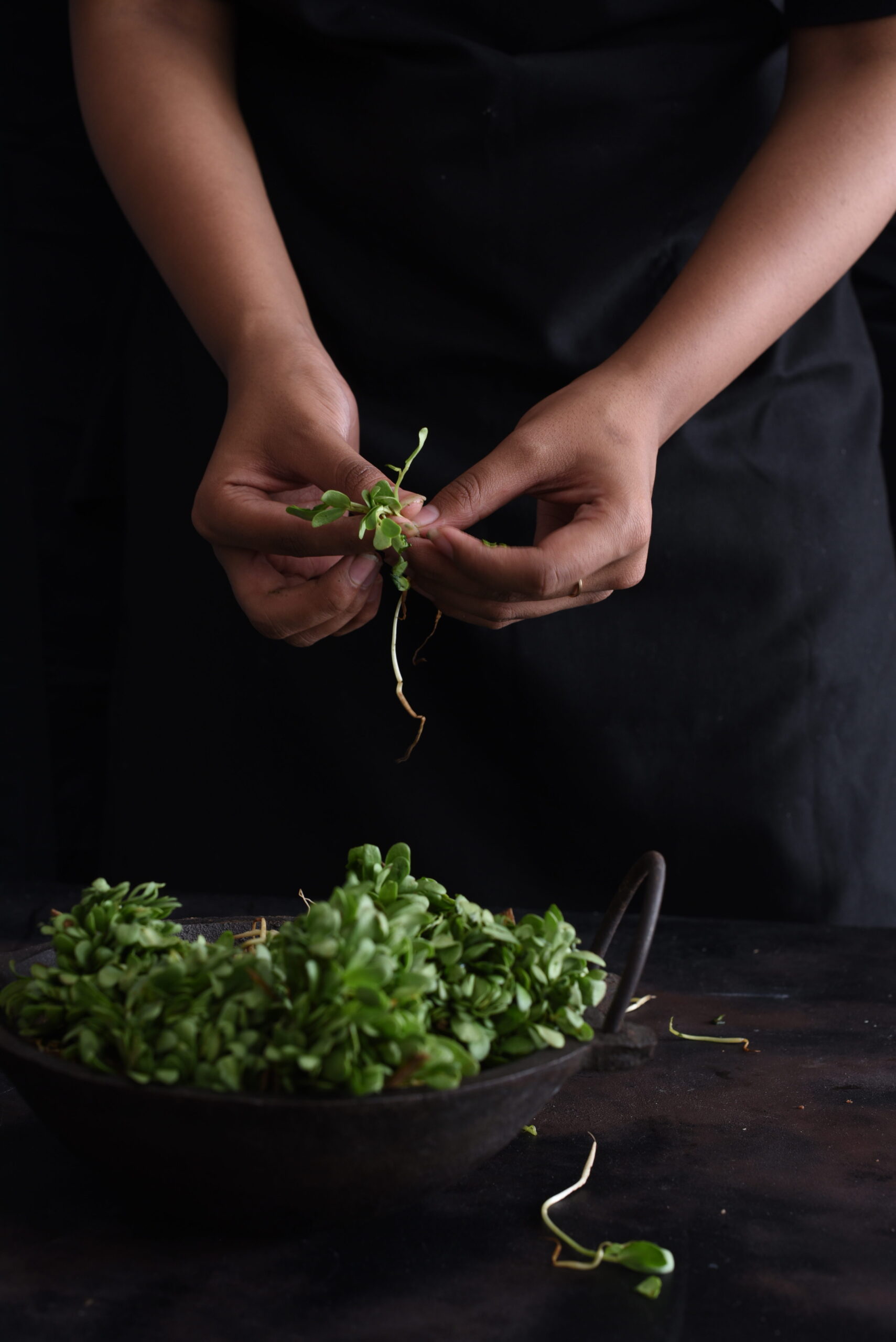
Methi has an array of health benefits. Among them, it helps improve digestion, tackle respiratory allergies, cure anaemia, and lower cholesterol and blood sugar levels (which is why it is used in diabetes management). Due to its high estrogen content, it even helps lactating mothers in the production of milk – I remember being given lots of methi laddoos after giving birth. In addition to these benefits, methi is also known to have a beautifying effect on the hair and skin when used in a paste form as a mask or conditioner.

I’m telling you all this to put a healthy spin on the recipe below – which is a fried indulgence!

The other ingredient in this spicy, crispy snack I’m about to share with you hardly needs to be promoted on the basis of health, because it is so very sweet and tasty. That filling, versatile, portable and very nutritious fruit – the banana! It just so happens that bananas are rich in potassium, fibre, antioxidants and share blood sugar-lowering, cholesterol-management and overall wellness-boosting benefits with methi.

Hundreds of banana varieties are grown in India through the year, and with Tamil Nadu being the source of 23% of the country’s supply, we really have our pick of the fruit here. In fact, the banana tree is auspicious in many Indian cultures, and has a place in wedding and fertility rituals. Similar to the coconut, its various parts have many uses. The banana flower, known as vazhaipoo, is diced and eaten in Tamil cuisine – and traditionally, South Indian food is always served on a banana leaf.

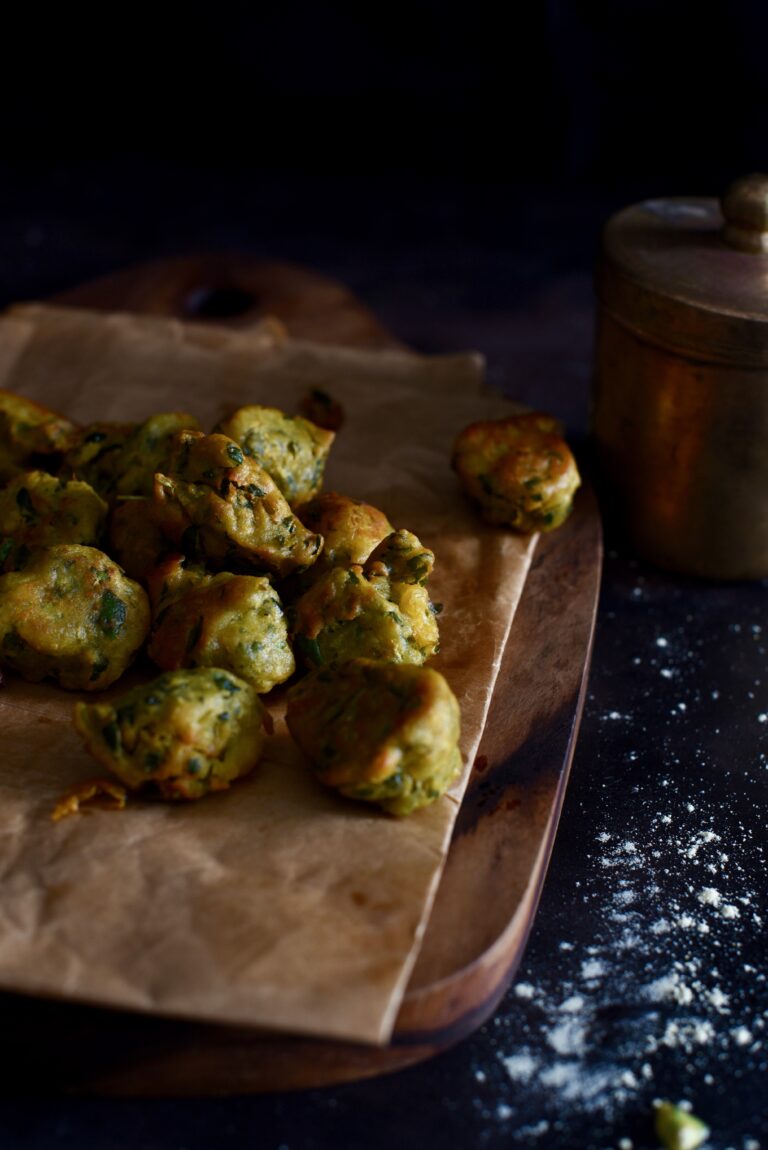
So we have here two key ingredients so nourishing that you can forget you’re chomping on fried deliciousness. Without further ado, here are my banana-methi fritters, served with a green coriander chutney.


Banana-Methi Fritters With Green Coriander Chutney

(Yield: 20-25 small fritters)

Fritters
¾ cup chickpea flour
¾ teaspoon salt
¼ teaspoon turmeric
½ teaspoon cumin powder
1 teaspoon grated ginger
1 finely chopped green chilli or 1 teaspoon chilli ginger paste
¾ cup methi leaves, washed and finely chopped
½ cup ripe banana, pulped or finely chopped
2 cups of oil + 1 tablespoon hot oil
¼ cup water

Chutney

1 cup coriander leaves, washed and finely chopped
1 green chilli
1 tablespoon peanuts
1 teaspoon lemon juice
2-3 tablespoons water
1 generous slice raw mango (optional)
Salt to taste

In a mixing bowl, add the flour, salt, turmeric, cumin, grated ginger and green chilli and mix. To this, add the banana and the methi leaves. Mix them well with your hands, adding enough water to make a paste-like consistency. Allow this batter to sit for a minimum of half an hour.

Heat the 2 cups of oil. Add 1 tablespoon of hot oil to the batter. The hot oil in the batter helps make the fritters soft. Blend well with your hands.

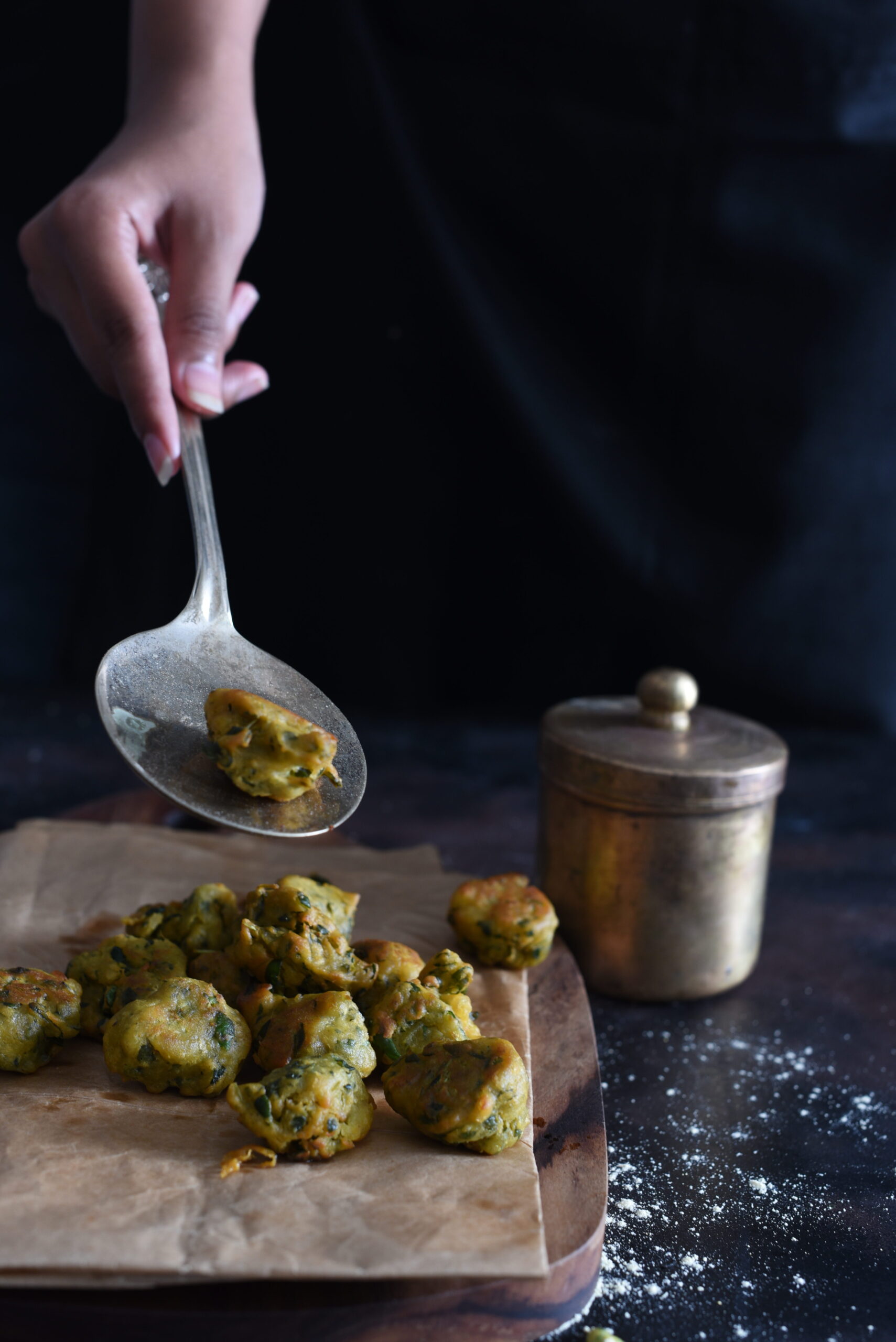
The remaining oil should be in a pan on the stove, and you can check its heat by adding just a drop of the batter into the oil to see if it sputters. If it does, the oil is ready. Lower the flame and add small spoonfuls of batter into the oil.

Keep the flame low and allow the fritters to fry well. Once the fritters have cooked on one side, flip them over using a butter knife. At this point, you may increase the flame slightly then lower it again, ensuring that the oil doesn’t get so hot that the fritters burn and blacken. You want them to be fried to a golden colour on both sides. Once this colour is achieved, remove the fritters from the stove and drop them onto an absorbent paper to remove excess oil.

Serve hot. I like to complement these crispy banana-methi fritters with a green coriander-based chutney. For this, I use coriander, green chilli, ginger, peanuts, salt, lemon juice and water, usually with a generous slice of raw mango. Simply blend all the ingredients together well in a mixer-grinder. The result is a flavourful chutney that perfectly accompanies the fried fritters.

Between the sweetness of the banana, the bitterness of the methi and the tangy kick of the chutney, you won’t be able to stop at just one! Try it for yourself and see. Let me know what you think in the comments.
India contains a diverse mix of religions, both brought from abroad and homegrown. Among the latter category is Jainism, which has been practised for thousands of years. Some of my family members belong to this religion, and as the most sacred Jain festival, a time of fasting known as Paryushana, fell this year between August 19 and August 26, I was reminded of a particular temple we used to visit when we were kids… and a specific delicacy that was served there.

As I mentioned in my previous blog post, food is ritually offered to gods in many Eastern religions. At the Mahudi or Madhupuri temple just outside Ahmedabad, the deity Ghantakarna Mahavir Dev loves a ghee-rich dessert known to Gujarati Jains as sukhudi. Gujarati Vaishnavites like myself know it as gol papdi, and offer it to the baby Lord Krishna. By whichever name you call it, it’s a very simple dish both in its preparation and in the ingredients used. It could have become a staple as a religious offering because of both reasons: any family would have been able to afford to make and serve it to God.

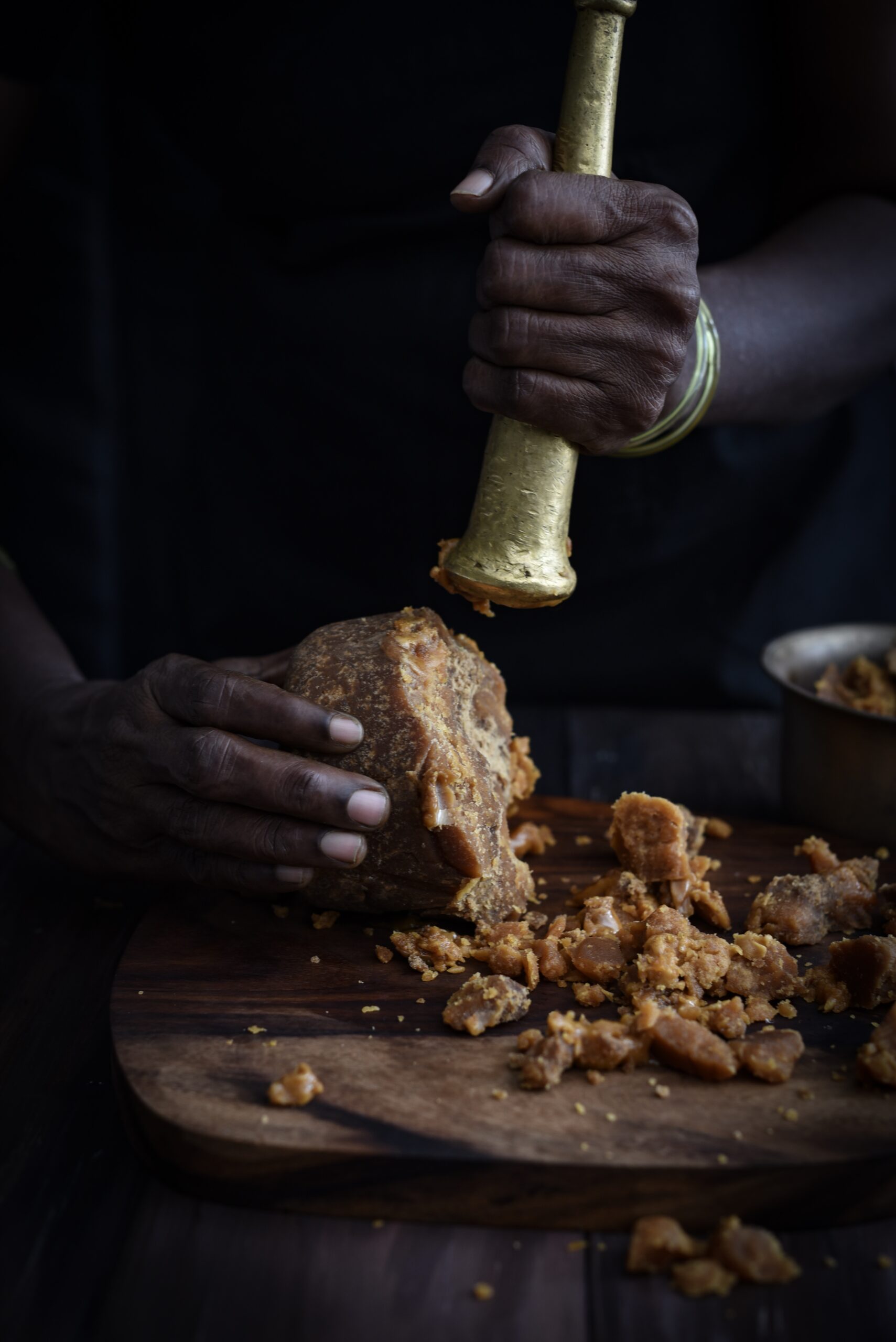
Jaggery is made of cane sugar or date palm. A sweetener that is believed to aid digestion, it is generally a healthier alternative to refined sugar. It has a cooling effect in the summer, and a warming effect in the winter. It’s a vital ingredient in Gujarati cuisine, and a pinch is used in so many dishes (even those which you wouldn’t classify as sweet) to add to the flavour. And it’s a sacred ingredient, of course – the gods certainly seem to enjoy it!

At this temple, this whole wheat and jaggery sweet is made in individual earthenware vessels. After it is offered to the deity, it is served piping hot to those who come to the temple. It is absolutely forbidden to either waste even a little or to take it outside of the temple compound. If you know you’ll be unable to finish your portion, you must give it to pilgrims rather than throw it away. And it is considered extremely bad luck to take sukhudi out of the temple – a theory which my grandmother once tested to her great surprise!

The story was recounted to me by my aunt Sam, whom I visited a couple of weeks ago. Many years ago, when Sam was still a teenager, some of the family had gone to Mahudi. When they returned, the parents and elders were chatting downstairs, while the kids played on the third floor. Sam had been sitting atop of a pile of mattresses that had been set by a window. Down below, her mother (my grandmother) was telling the others that she didn’t believe in the superstition about taking sukhudi out of the temple. Just as she firmly insisted, “Sam just brought some back for me, and nothing happened – I do not believe in such tales!” – a loud thud was heard.

Sam had fallen out of the window! Miraculously, for a fall from the third floor, she was absolutely unscathed. Her mother winced and bit back her words, and made a promise to offer sukhudi at the Mahudi temple as an appeasement. The incident ended any further attempt in my family to take sukhudi out of the Mahudi temple. Perhaps it was a coincidence, and perhaps all our beliefs are created with our own minds (I am reading Yuval Noah Harari’s amazing Sapiens: A Brief History of Humankind and it’s making me ponder such ideas deeply). Still, none of us has tempted fate since.

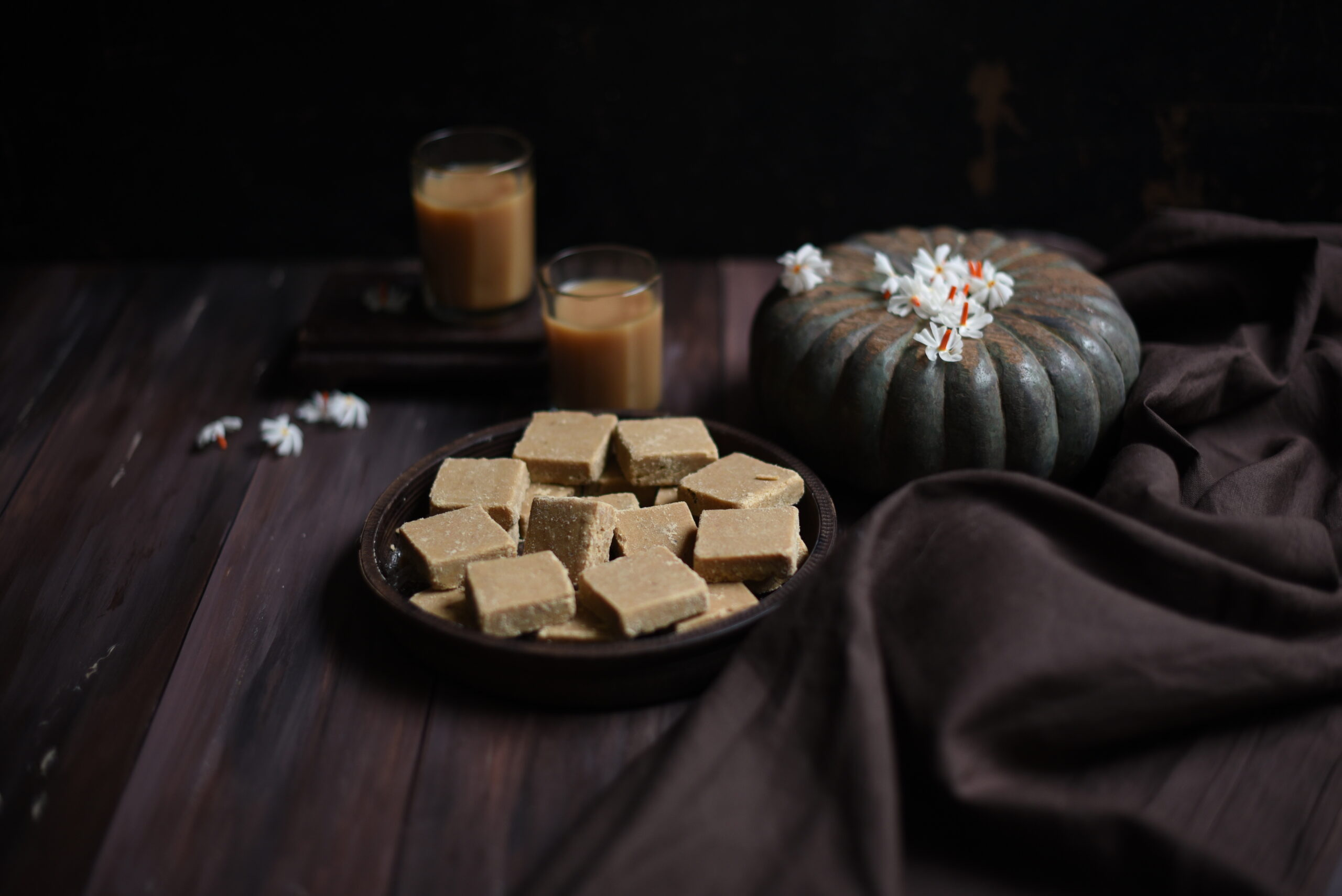
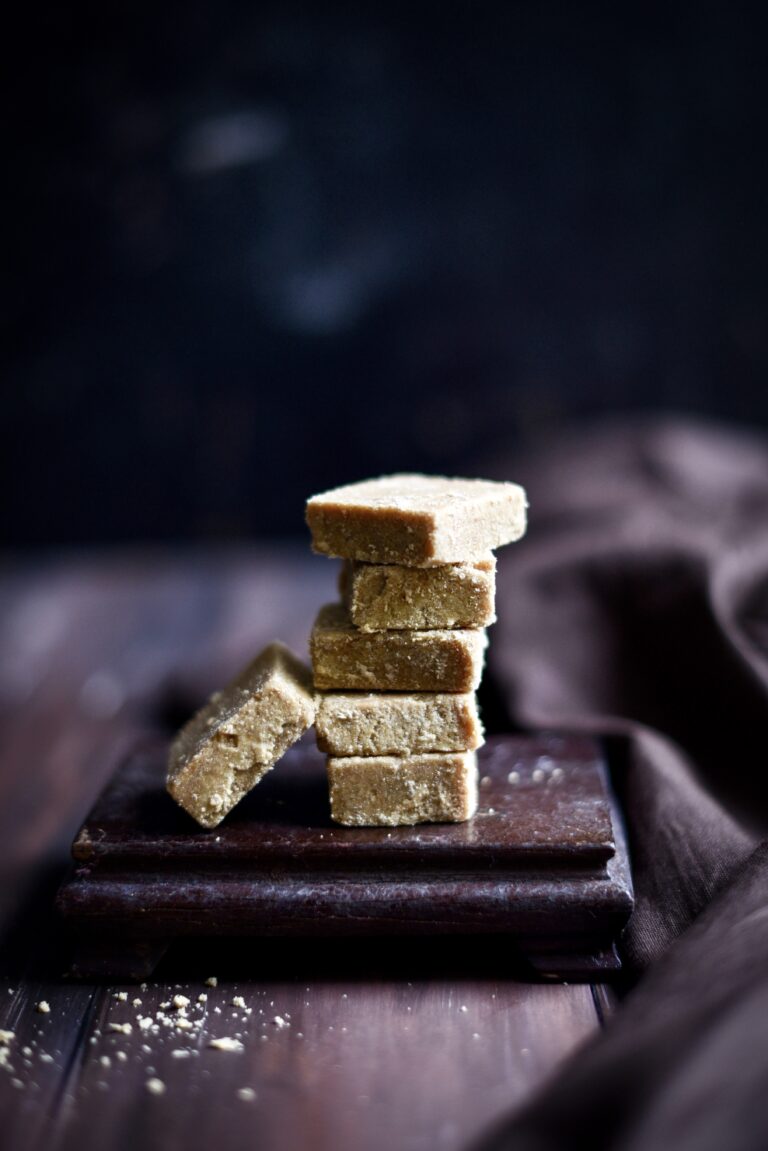
Whether you want to see these whole wheat jaggery squares as a religious offering or a treat for your sweet tooth is up to you. One thing is for certain: I hope they taste utterly divine.

Jaggery & Whole Wheat Squares

Yield: 10-15 pieces
Prep time: 20 minutes

1 cup whole wheat flour
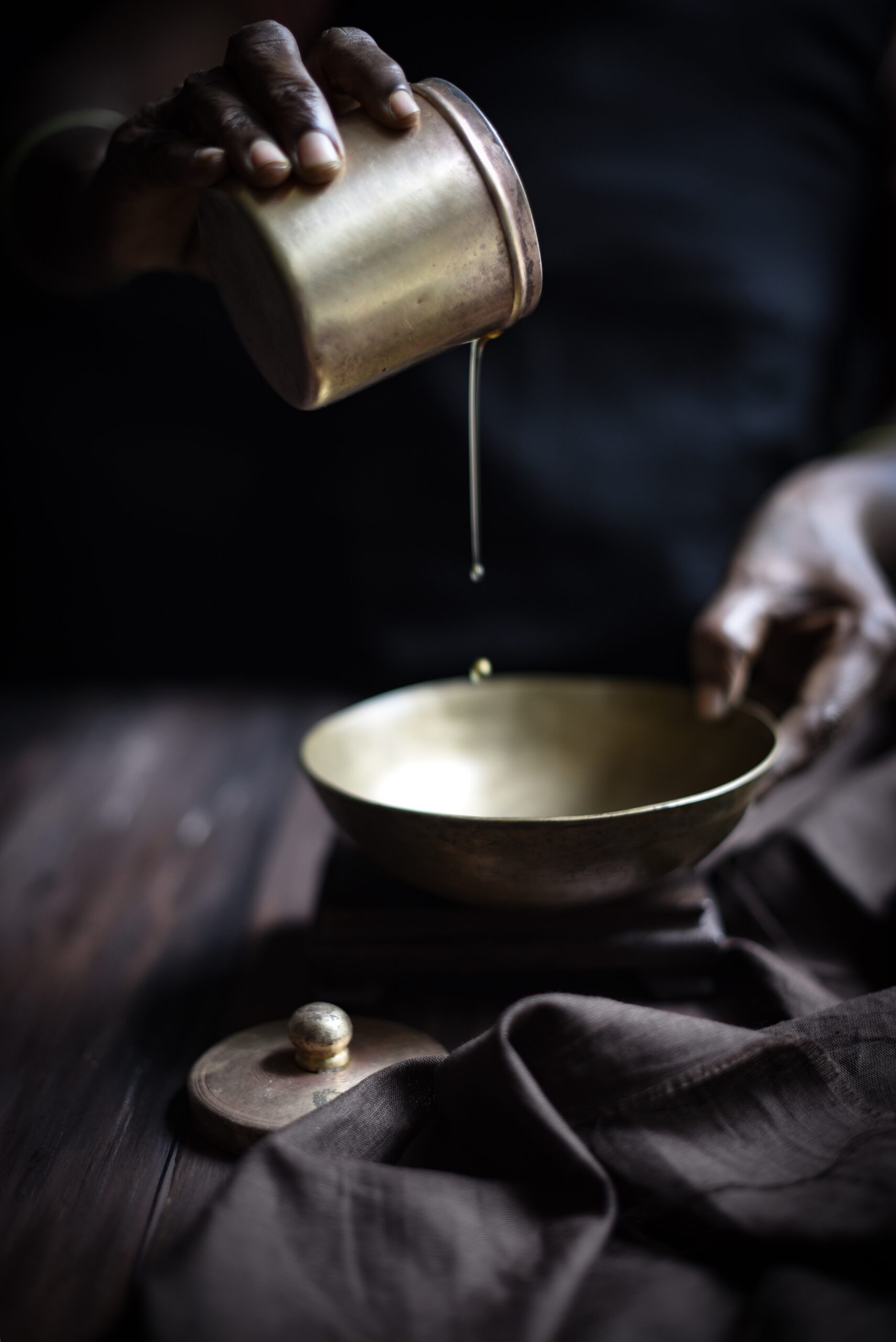
½ cup clarified butter (ghee)
¾ cup jaggery
½ teaspoon ginger powder
2 tablespoons slivered almonds

Call them whole wheat jaggery squares, call them sukhudi or call them gol papdi – these sweets are very easy to make once you have the ingredients on hand.

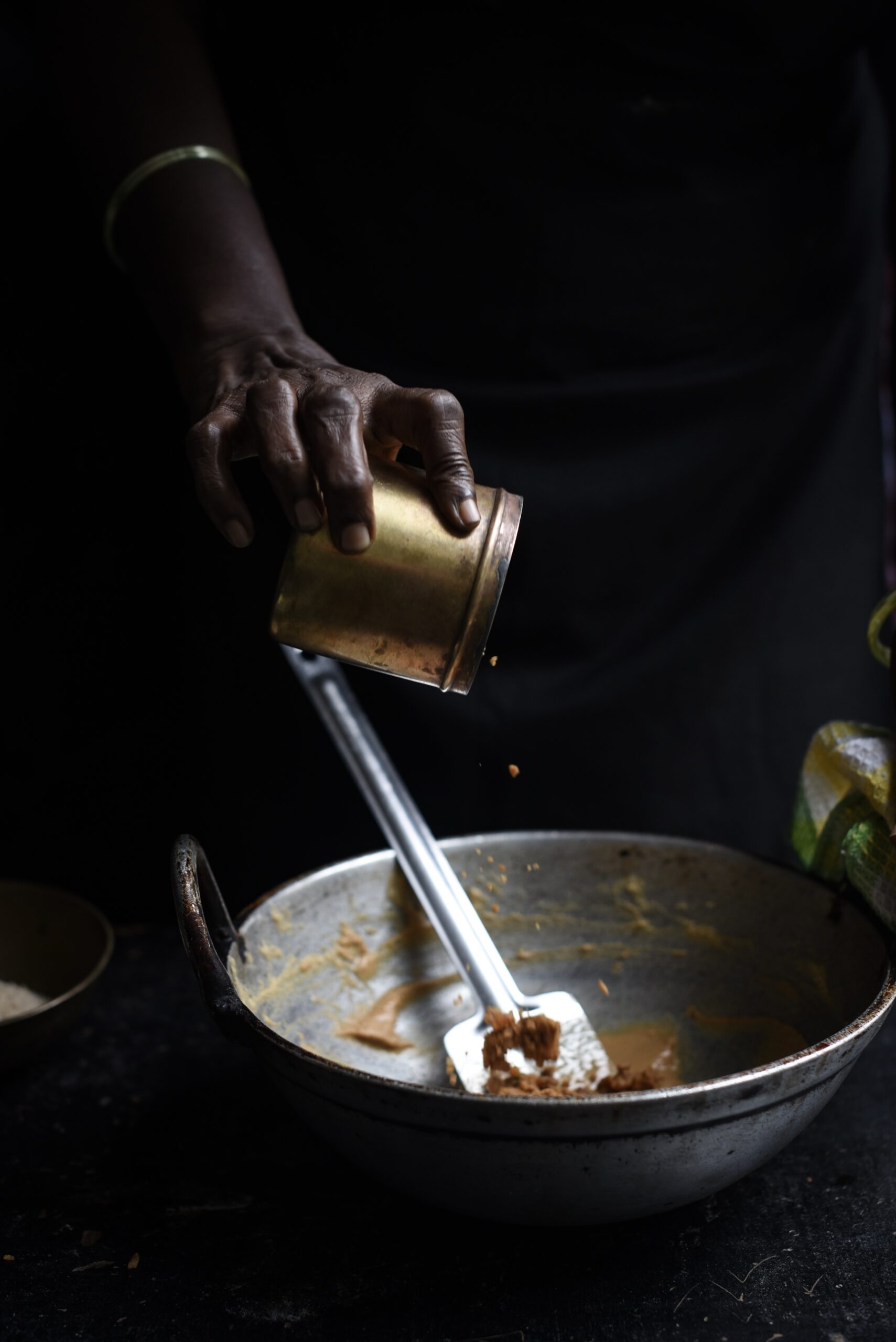
Grease a steel plate with some ghee and keep it aside. In a kadhai, or a wok-shaped pan, add ghee and allow it to melt. In a few seconds, add the whole wheat flour. With a spatula, stir and sauté until the mixture turns golden brown. This will take approximately 10-15 minutes on a medium to low flame. Remove from the stove and add the jaggery and ginger powder. As always, season to your taste – I even add cardamom, desiccated coconut, cinnamon or masala chai powder when I make this dish. Ginger in particular is something that is traditionally added during winters for its warming effect.

A word about jaggery: it varies in sweetness around the world, so you must gauge the correct amount to use when you make this dish. I had used a particularly sweet batch when I made this after talking to my aunt, and found it too cloying, then made it again to my taste. However, if you add too little jaggery, the mixture will not bind. As with any recipe, sometimes it takes more than one try to get it right.

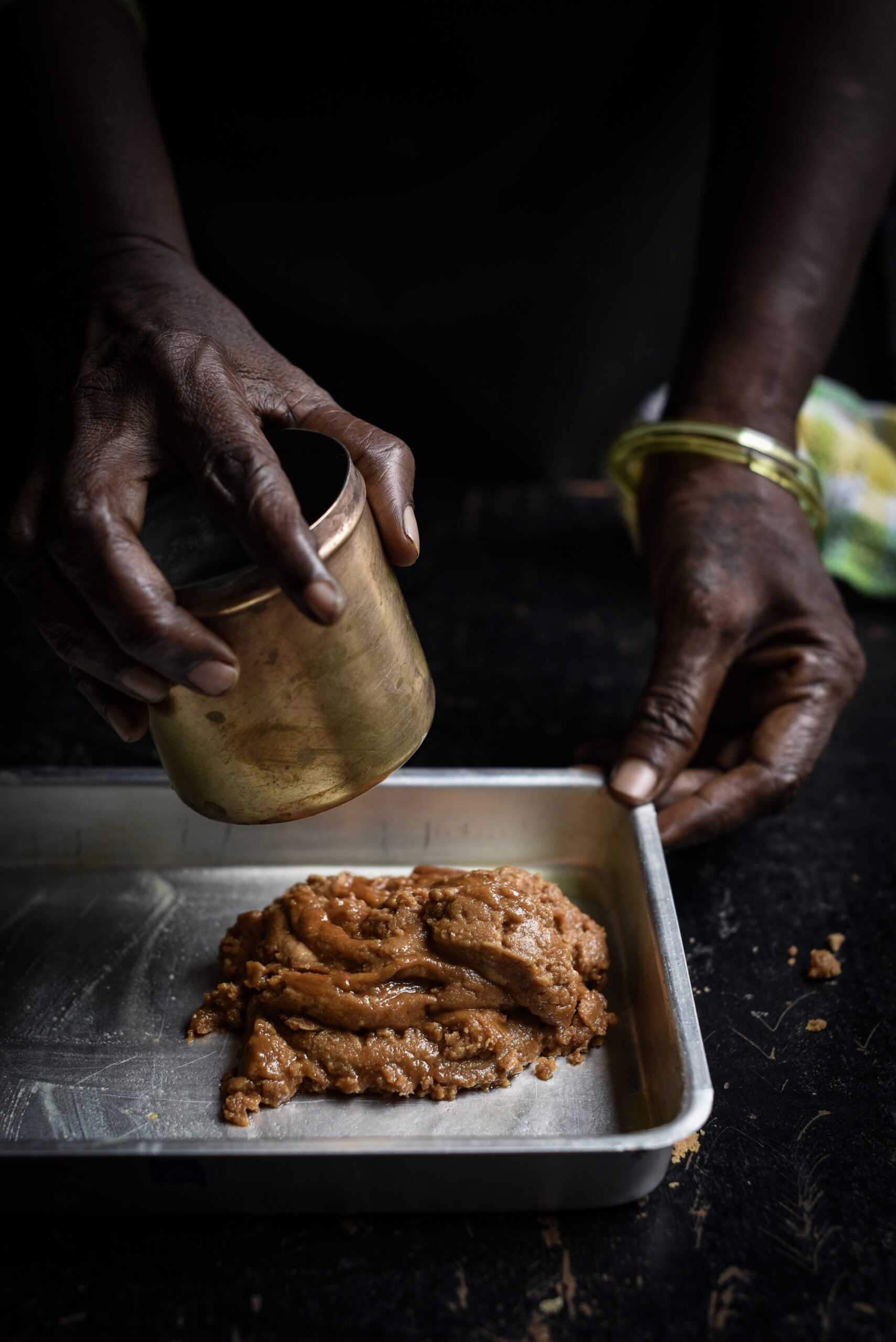
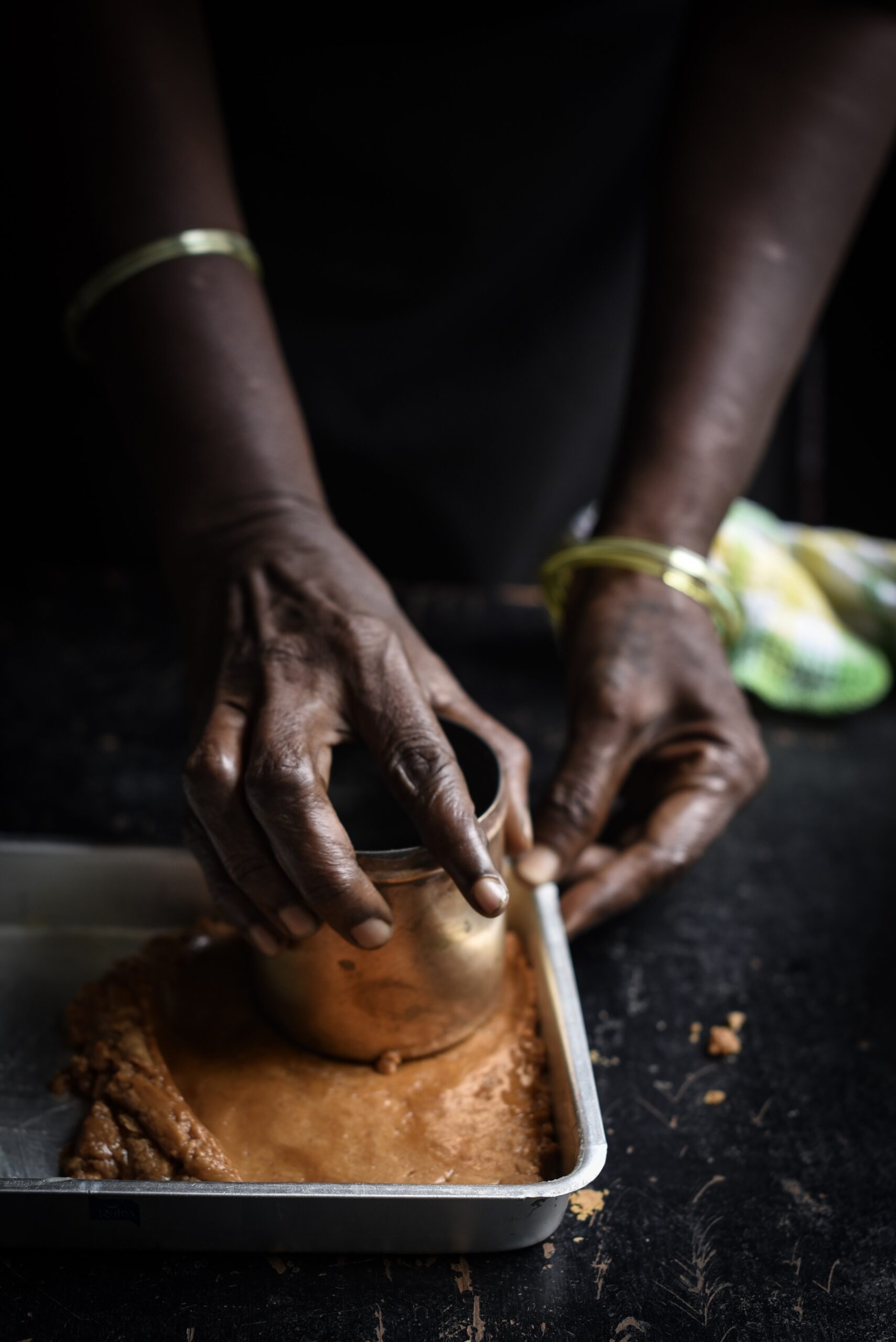
Mix well until the jaggery melts and the ginger powder or flavours of your choice are distributed evenly. While still hot, pour the mixture onto the greased plate and spread evenly. Flatten it with a cup so it evens out, and add the almond slivers on top quickly, before it begins to cool.

Then, cut into even squares and allow them to cool before transferring them to an air tight container.

These whole wheat and jaggery squares are so simple to make – all you really have to do is stir it well for it to cook properly. That’s probably why they were such a staple in my childhood, something my mom could whip up quickly and store for several days’ worth of after-school snacks. As they don’t spoil easily, gol papdi was also something we took with us when we travelled. Memories, love and a sense of security – they are contained in every bite of a cherished dish, aren’t they?

When I was a little girl, the month of Aadi in Chennai meant music being blared from temple speakers and a general atmosphere of colour and sound on the streets. Just like with the funeral processions full of flowers and drumming, I thought all of it was pure celebration. Now, as an adult, I appreciate the nuances, but there is still something about this month that catches my eye – and more accurately, my sense of smell. For temples small and large through the city make ritual offerings to the Goddess, which are then distributed to all. The scent of freshly made koozh (pronounced koo-lu), a millet-based porridge, fills the air along with devotional songs.

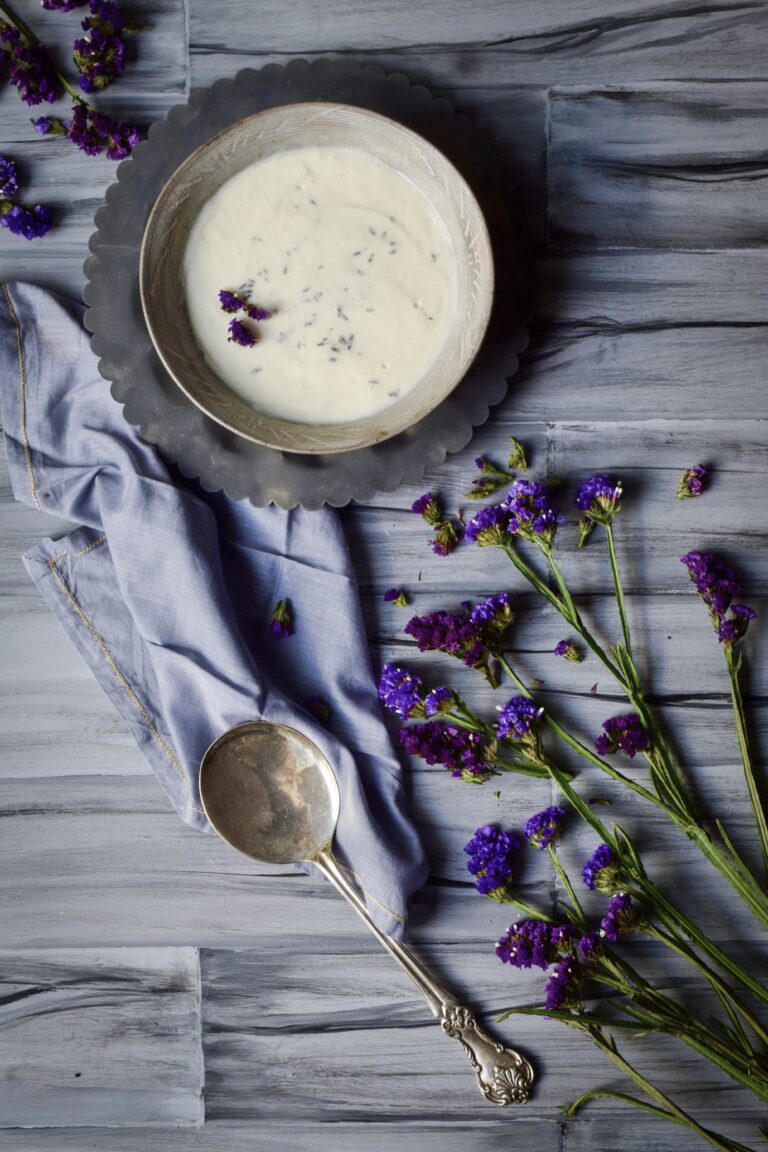
Being born and brought up in Chennai into a traditional Gujarati home has given me a more expansive way of thinking, which is what opens one’s mind to explore. There are times when I think in Tamil while I’m cooking Gujarati food! Even as the world becomes a smaller place, I love keeping local culinary customs alive – but every once in a while, my imagination will take me on an adventure in the kitchen. So it was while making shrikhand one day, a sweetened Gujarati dish made of hung curd. I’d played with various Indian flavours for shrikhand before, including mango and an almond-saffron blend. But I had just met with a friend, Siddharth Murthy, who has an organic lavender farm outside Melbourne in Australia, and he had gifted me one of my favourite foreign ingredients. Next to rose, lavender is the scent I enjoy adding most to my cakes. I wondered: how would my family like to end a meal on lavender shrikhand?

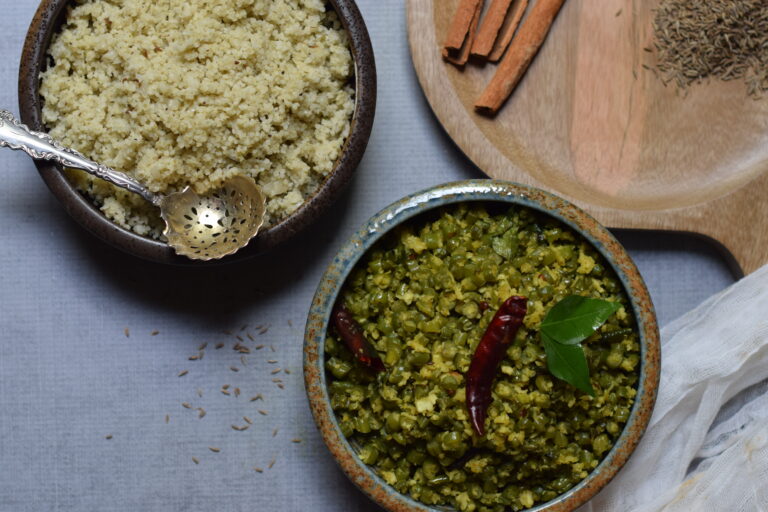
Having lived in Tamil Nadu my whole life, the traditional local cuisine has always been a part of me. Millets were a staple in ancient times, replaced more recently by rice and wheat. Unlike what most contemporary nutritionists believe, Macrobiotics suggests that rice, in moderation, does not have negative effects on health. Adding millets into one’s diet, as a healthy alternative or addition to rice, can boost the health quotient without compromising on taste. More importantly, millets are gluten-free, offering a great solution for those who are gluten intolerant.

Nowadays, the health-conscious hark on about quinoa, which is a great superfood –  however, it is not native to India. They tend to ignore the affordable local millets, which offer the same (if not a greater) amount of nutrition and could themselves be superfoods!

What does summer look and feel like in your city? Here in Chennai, temperatures have been crossing 40 °C (104 °F) – and we’re bracing for May, usually the hottest month of the year! The streets are at their sunniest and most scorching, but pleasantly lined by flowering trees and stalls selling fruit. A few weeks ago, on a short road trip, water mirages accompanied me all along the highway. As for what the season feels like: sweat, thirst and the longing for a cool breeze and a chilled beverage are our primary sensations at present. Come visit, I say – just not today!

Fortunately, there’s a method to the madness of every season. Traditional wisdom and the science of macrobiotics make the best culinary use of fruits, vegetables and grains that thrive at different times of the year. Here in the subcontinent, if there is one kind of produce that is ubiquitous with the sweltering, sultry days of summer, it’s the mango.

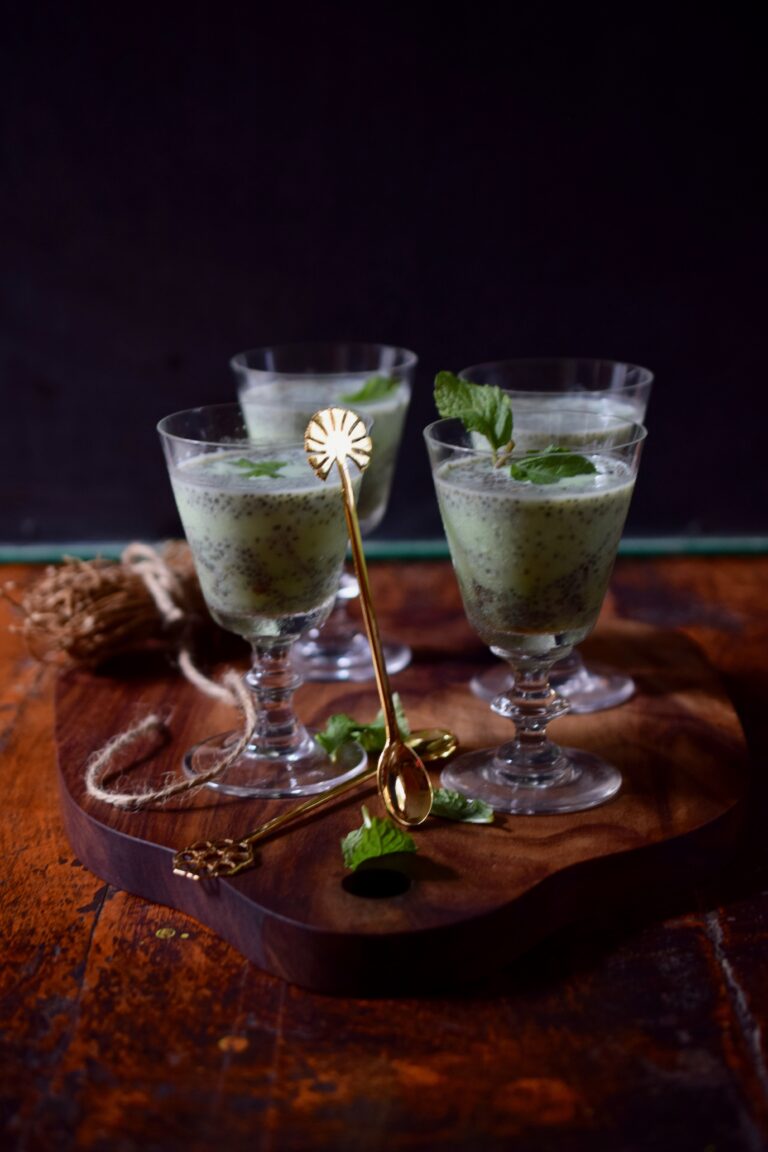
The dessert du jour is the chia seed pudding – fuss-free, and usually requiring very few ingredients. If you’re like me, you’d have gotten introduced to chia seeds because of your curiosity over the current craze of having them in puddings. The first time I tasted them, they took me back to childhood visits to Bombay and the city’s famous bright-coloured, super-sweet dessert drink known as falooda. They tasted just like the takhmaria (sweet basil) seeds I loved catching between my teeth as I slurped it down… And that’s when I had an inspiration about a very Indian twist on the done-to-death chia seed pudding.

When most people hear the word “burger”, they think of an oily, low-nutrition meal full of sauces and heavy meat, polished off with unhealthy sodas and greasy fries! But what if I told you that I can share with you how I make something that looks like the real thing, tastes just as (or more!) delicious, and doesn’t do anything but nourish your body and soul?

My vegan bean burger is an improvisation on a dish that one of my teachers at the Kushi Institute, Chris Jenkin, used to make for us for lunch sometimes, in a strictly macrobiotic style using East Asian ingredients. I love innovating in the kitchen, discovering ways to turn a dish around and make it vegetarian, vegan, gluten-free and so on. I also consider how to source ingredients that are seasonal and readily available. Call it Macrobiotics meets Madras! Here’s a perfect example of how I fine-tuned a recipe so that it makes the best sense for climactic and cultural conditions.