Tag

recipe

Browsing

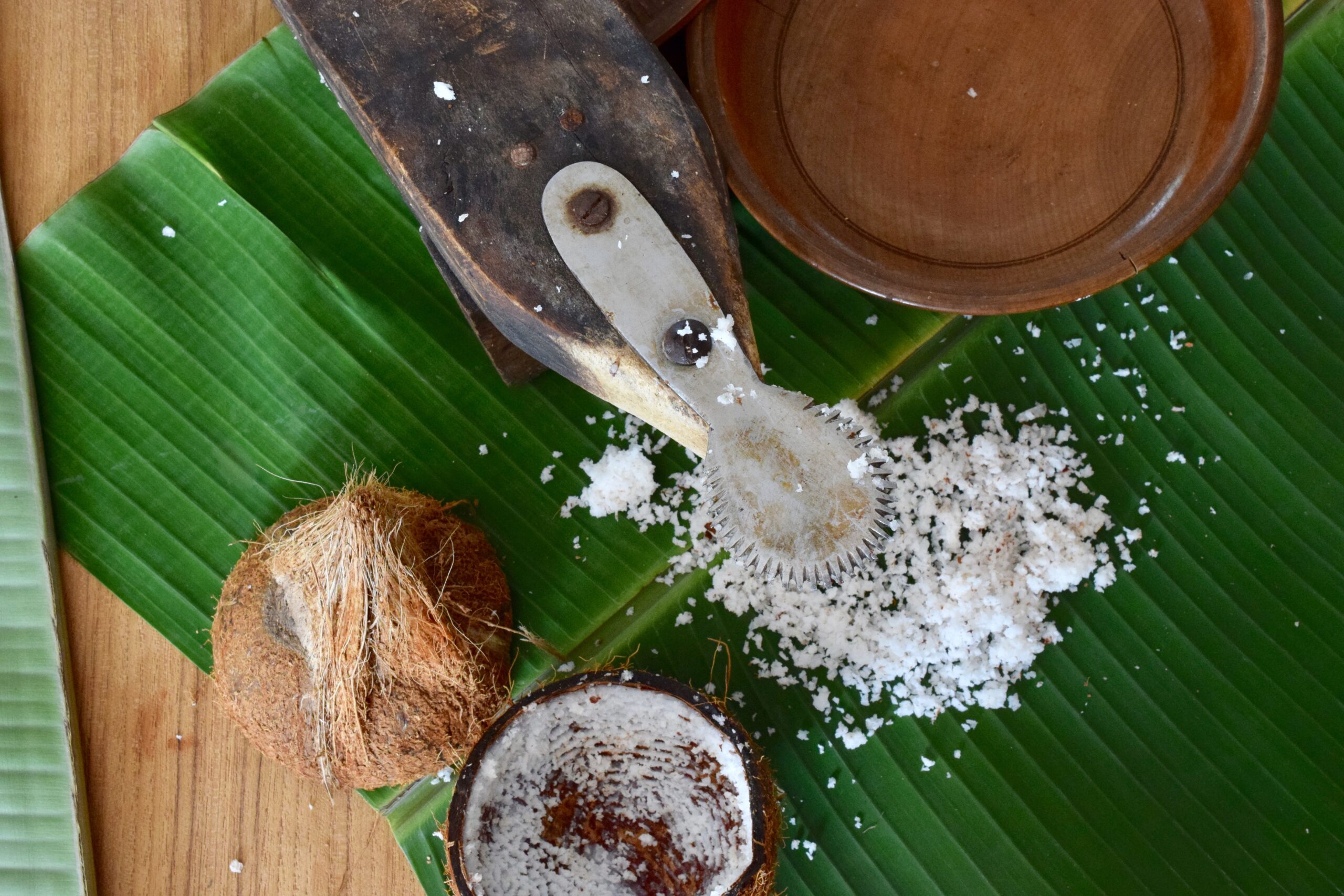
What is the most descriptive collective noun for coconuts? A cluster? A clump? A crowd? None of them quite sufficed for the copious numbers I found myself with! With five thriving trees in my garden, dangerously dropping their heavy drupes at any given moment, I responded to this abundance in the best way I know how: by bringing them into my kitchen.

So I hired a nimble man to climb up the trees to cut most of the coconuts down, and then we segregated them into tender ones, which yielded nutritious coconut water, and ripe ones with flesh that could be shaved. One of my coconut trees is also the site of an experiment of mine. I have a little basket on a lovely pulley system which takes pieces of papaya up to a nice altitude for the parrots that often flit about. It took a while to convince them that this odd contraption was actually a friendly gesture, but as with people and animals both – at the end of the day, appetite always wins!

restore shaved coconut

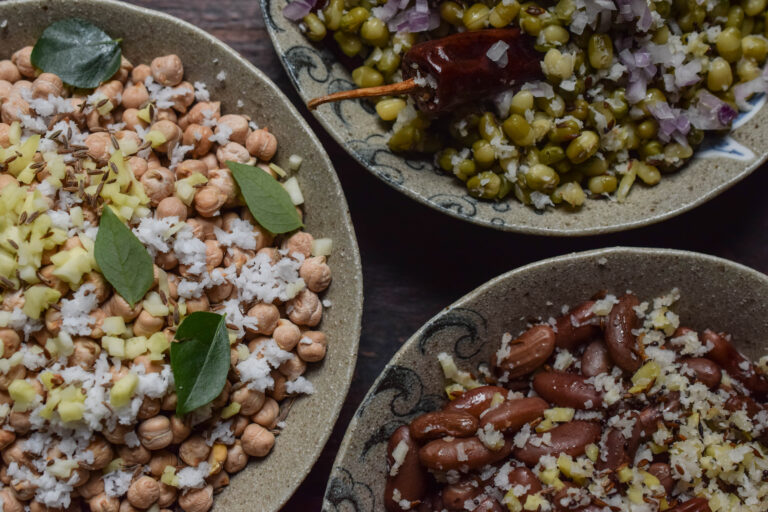
The shaved coconuts found themselves in many of my recipes: from coconut rose cupcakes (which you can order here if you’re in Chennai) to sweet-savoury kachoris (which you can make in your own kitchen, with my recipe here) and more. And in the late afternoons, those pristine white shavings of coconut were perfect for a local lentil dish: sundal.

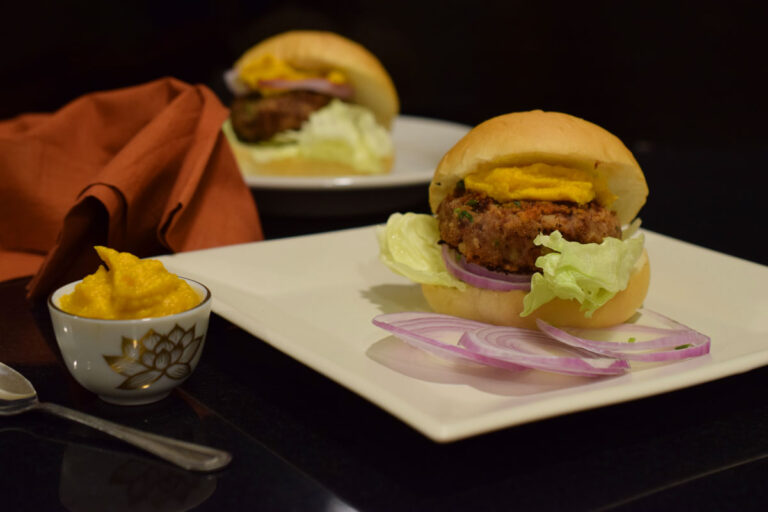
When most people hear the word “burger”, they think of an oily, low-nutrition meal full of sauces and heavy meat, polished off with unhealthy sodas and greasy fries! But what if I told you that I can share with you how I make something that looks like the real thing, tastes just as (or more!) delicious, and doesn’t do anything but nourish your body and soul?

My vegan bean burger is an improvisation on a dish that one of my teachers at the Kushi Institute, Chris Jenkin, used to make for us for lunch sometimes, in a strictly macrobiotic style using East Asian ingredients. I love innovating in the kitchen, discovering ways to turn a dish around and make it vegetarian, vegan, gluten-free and so on. I also consider how to source ingredients that are seasonal and readily available. Call it Macrobiotics meets Madras! Here’s a perfect example of how I fine-tuned a recipe so that it makes the best sense for climactic and cultural conditions.

With the monsoon, the sick season begins. The kids (and all the adults whom illness reduces to behaving like kids!) catch the flu. Coughs, colds, sneezing, sore throats – no sooner does one person in the household calm down does the next come down with a bout!

When it comes to healthcare, I’m a believer in homemade concoctions and natural wisdom. There’s a particular cough syrup that I find very effective, the basics of which I learned from Kiran Patel, an amazing Mumbai-based nutritionist whose principles of simplicity for wellbeing match mine. You will need nothing more for it than some of the most basic ingredients in your kitchen, garden or windowsill pots.

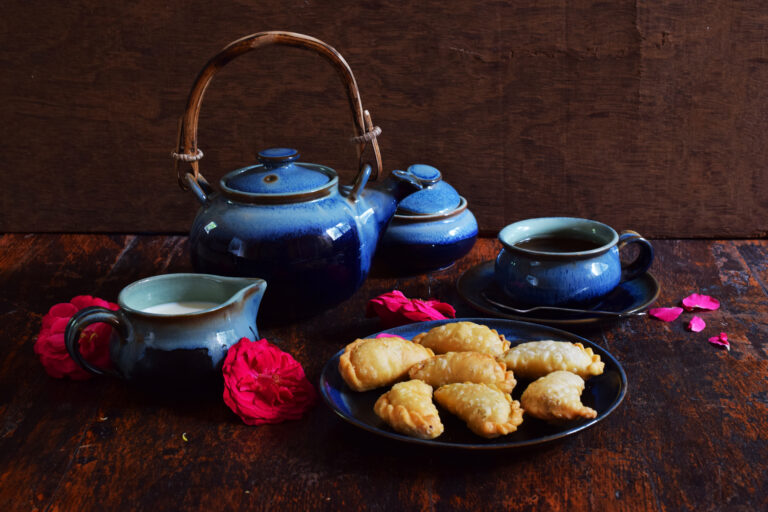
There are always beautiful things that we learn from our parents, grandparents and in-laws. The kitchen is one such space of knowledge shared and passed on. When I got married into the family (in India, due to the joint family system – one marries families, not individuals!) I had the chance to learn more than I had imagined. My mother-in-law is an educated woman who enjoys cooking, and coming from different regions of the country, she and I had different styles and methods. We would often argue about how my family would make a dish a particular way, while she would insist that her family’s recipe was better. So it was with her kachoris, a delicious regional variant of the internationally-ubiquitous samosa.