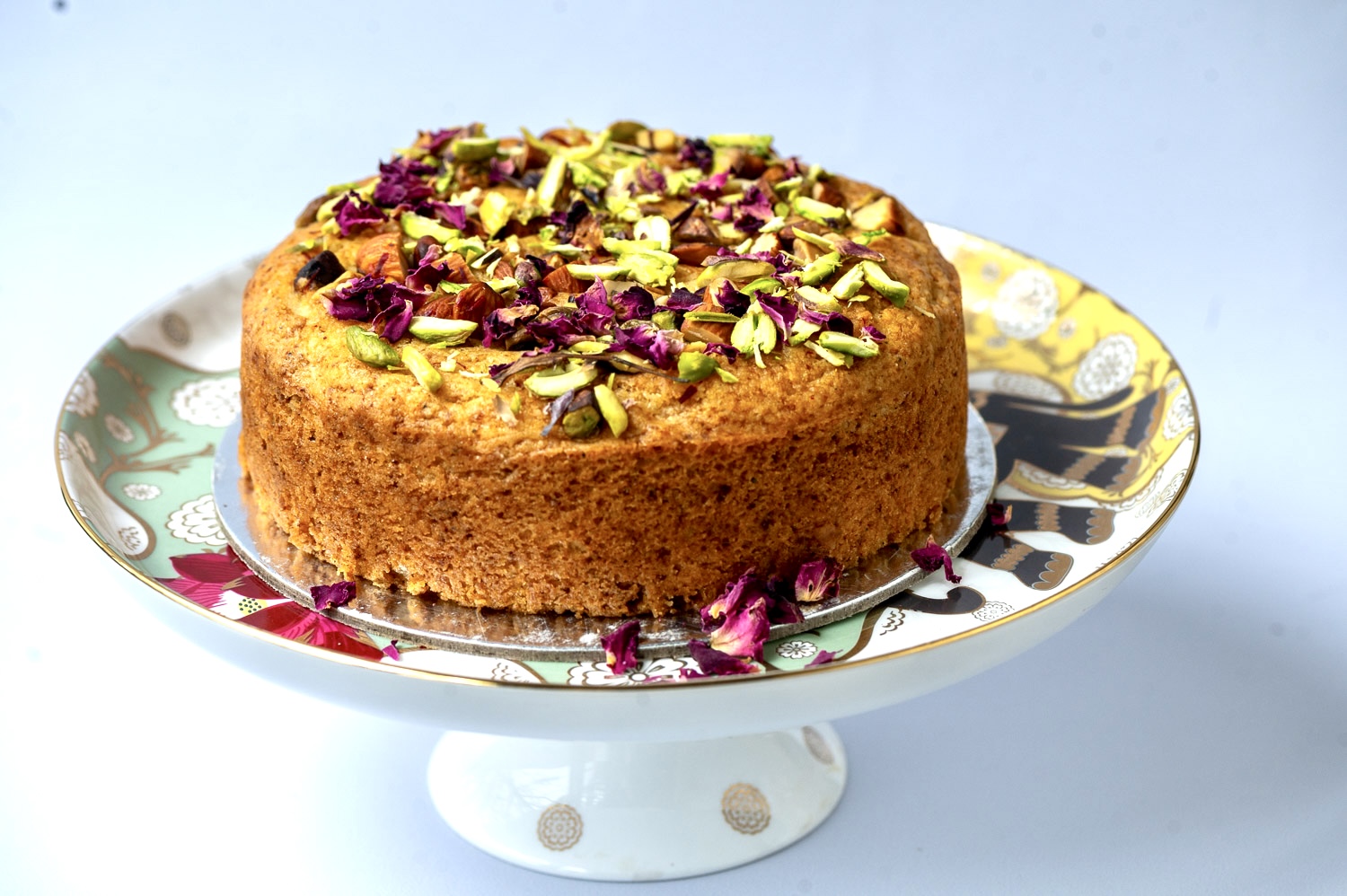
After over nine beautiful years of growing and sharing, I thought I had come to the end of an era, the completion of this blog. We had, that is, for some of you had been with me from the very beginning. I was ready to bid farewell to my life as a blogger with a full heart, and was planning the recipe that follows as the final one, when more than a few of you reached out to me privately. You shared such lovely sentiments with me; these convinced me that even as a new adventure begins, this one does not need to conclude. Rather than mark the end of the road, this eggless rose cardamom mawa cake now only represents only a shift in stride, as you’ll see when you read on…
I was able to reimagine the trajectory of this blog for the same reason that I had earlier been able to prepare for its winding down: because I had been musing for much of this past year about the concept of openness. It is the spirit of openness that allows us to experience more of life, to take big leaps and to keep ourselves motivated after every sea change. For me, launching re:store as a food delivery and bakery business out of my home was one such major transformation.
Then, a couple of years later, in October 2016, this online presence was born as a complement to the business, which continues to thrive. With this blog came so much discovery and delight as I explored my storytelling skills and found a renewed career in the visual arts as a photographer. At every step, with every post, that sense of openness carried me forward. Being open to learning, being open to experiments, being open to challenges, and more importantly, staying open in spite of them. I know that a lifestyle blog like this one – that is, a repository of memories and recipes that originate in one’s own experiences – going steady for almost a decade is unusual. I could not have come this far without so many blessings, and so much encouragement, and I am preparing to go further still.
I am at a new cusp now, choosing to focus my energies on creating a book, which has been a cherished dream of mine for a long time. It is also something that many of you requested from me over the years, only one of many ways in which you made me feel cared for and appreciated. My gratitude for your support is immense.
That support truly means the world to me, which is why the blog will continue, but with fewer posts each month, while I am concurrently working on the book.
To return to this special recipe, then: to me, it’s an amalgamation of flavours I am fond of and that are true to the essence of the re:store kitchen. This eggless cardamom rose mawa cake remains in my tradition of sharing Christmassy recipes near the end of the year. It comes from Parsi cuisine, which is known for very unusual, delicious recipes that carry an English touch. Parsis are especially known for their baking skills.
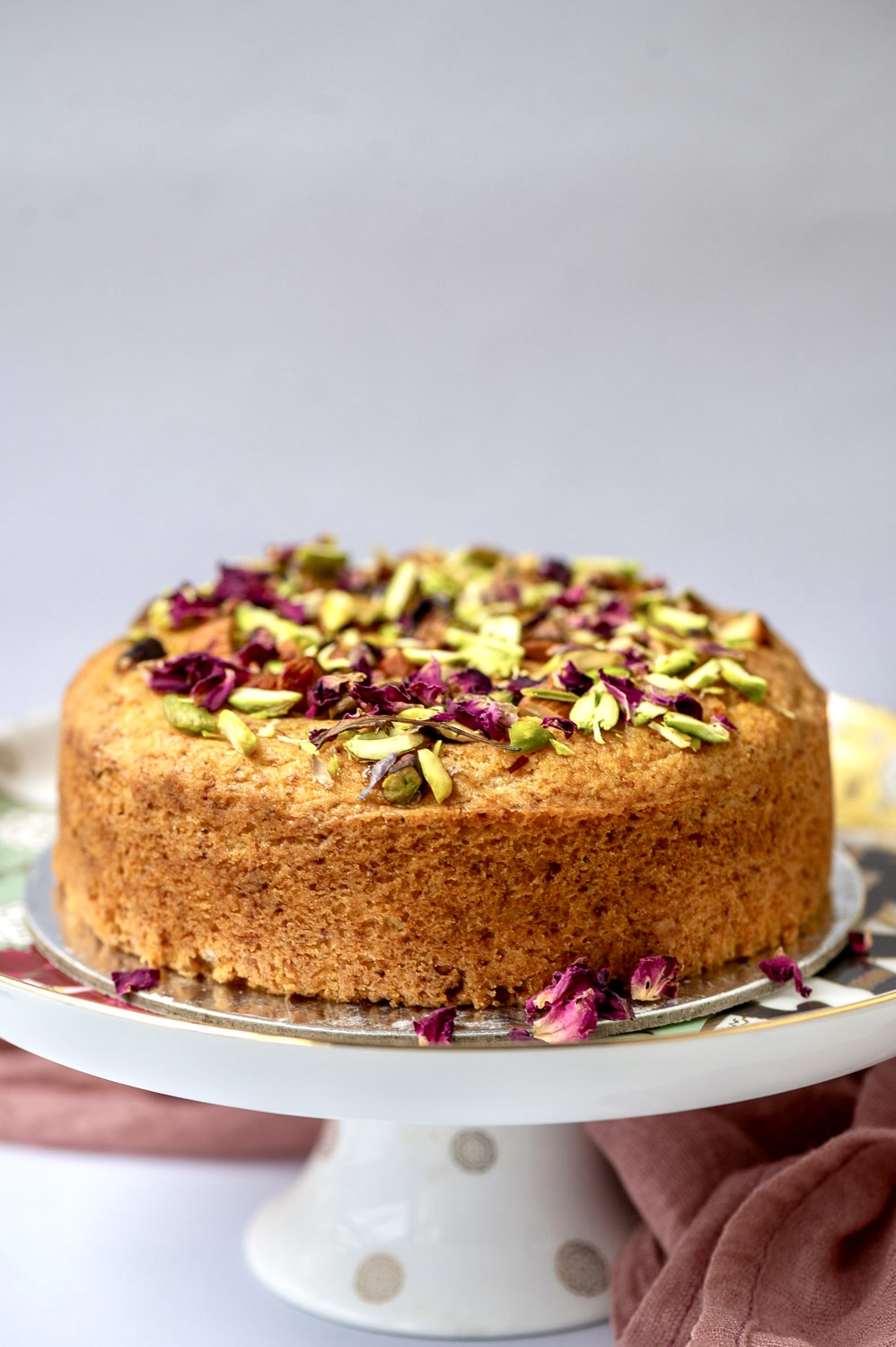
I first encountered a mawa cake at my sister’s home in Mumbai. She had ordered it from a baker there whose praises she sang, so while I could not get the recipe, I tasted it thoughtfully, trying to figure out ingredients and even aspects of the method with every bite. It was delicious, and I was eager to prepare it for my loved ones too. After much research, trial and experimentation, I perfected my own version of that cake sometime later, adding my sublime twists of cardamom and rose.
“Mawa” means milk khoya (solids) and is related to “mewa”, the word for dry fruits. This recipe contains both of them. It is an eggless recipe as that is what my sister enjoys, and I wanted to make this treat in a way that is inclusive of all my relatives and well-wishers who also prefer an egg-free diet.
My sister and I are both daughters of a terrific cook, so it is unsurprising that we both take to the kitchen. She is more traditional in her culinary style, while nothing excites me more than innovation. We have a nice balance there, and often exchange recipes. You would have noticed her being mentioned many times on this blog over the years, and of course, there is no one I owe more to in my gastronomic life than that “terrific cook” I mentioned: our mother.
She continues to be my biggest inspiration, not just in terms of how I cook, but also how curious I am and how much I love to share. One of the many things she showed me was that she always got back so much more than she gave. Here I am, doing the same thing. That is what this blog has always been about for me. Even when I have posted recipes that I ought to have kept secret, right out of the re:store menu, I have always felt that doing so would cost me next to nothing – but bring me so much good in return. And so it has.
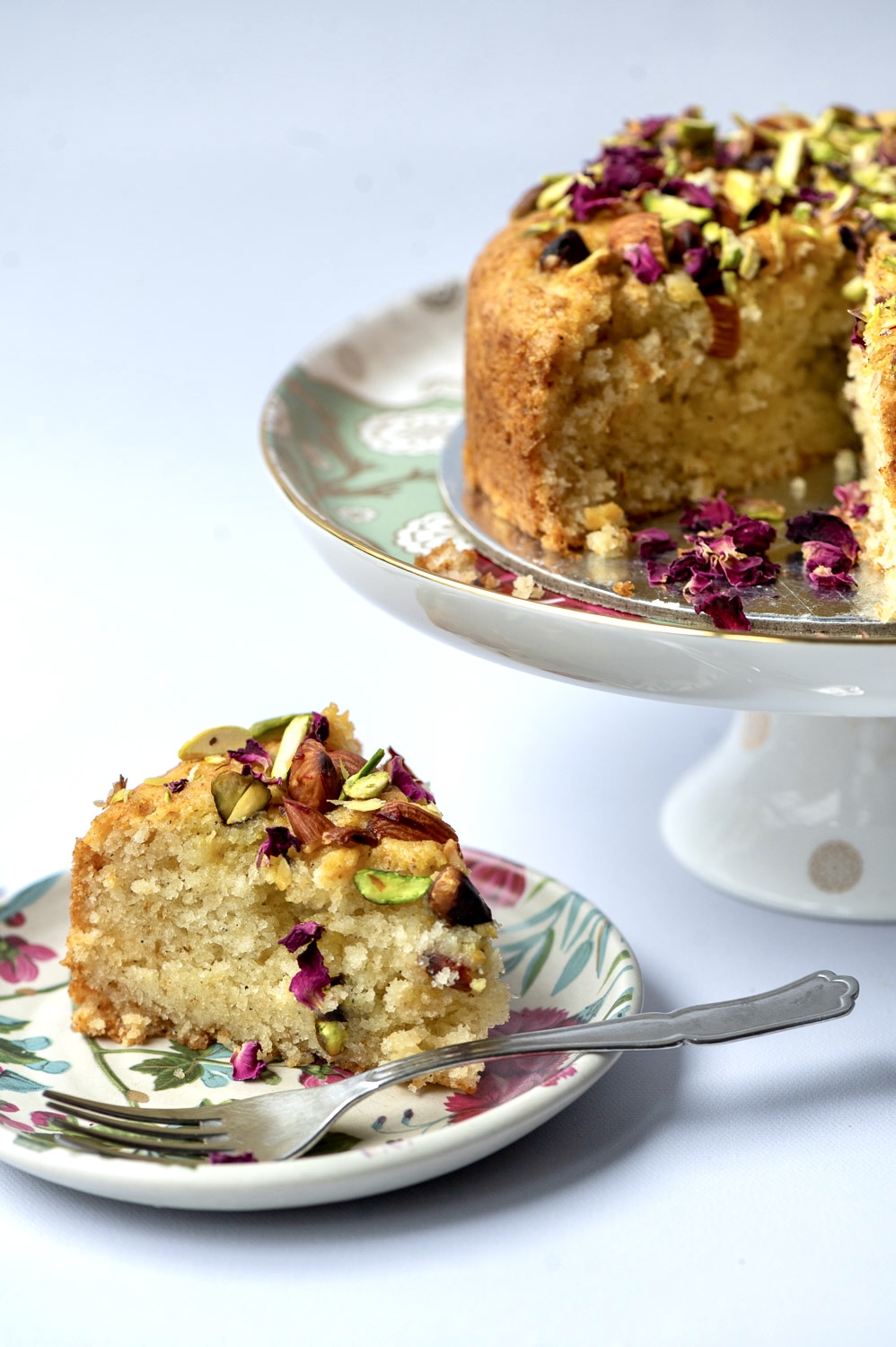
Eggless Rose Cardamom Mawa Cake
(Serves: 4)
¼ cup milk
½ teaspoon ghee
¼ cup milk powder
½ cup sugar
½ cup curd
½ cup melted butter
1 cup maida
½ teaspoon cardamom powder
1 teaspoon baking powder
¼ teaspoon baking soda
1 teaspoon rose water
A pinch of saffron
½ cup nuts and dry fruits (chopped, in slivers)
Preheat oven to 160°C and prepare the baking pan by greasing and dusting with flour.
In a non-stick pan, add the milk and ghee. Mix well. Now, add the milk powder and stir on a low flame until it thickens and the ghee separates. Set aside. This is mawa – the milk khoya that is the base of this cake.
In a bowl, add the sugar and curd. Stir well. To this, add the butter and mix. Next, add the prepared mawa and mix again, until there are no lumps.
Sieve the flour along with the baking powder, baking soda and cardamom powder.
Mix these gently into the curd mixture. Add the rose water.
Pour the batter into the pan and bake for 30-40 minutes or until a skewer comes out clean.
Allow the cake to cool for 15 minutes. Then, upturn it and let it rest on a stand.
Make tiny holes with the help of a fork on top of the cake. In a bowl, add 1 tablespoon milk and the saffron. Mix these together, then brush the liquid all over the cake. The infused milk will sink into the cake and add depth and flavour.
Your eggless rose cardamom mawa cake is ready to be served.
And there you have it – an exquisite dessert to signify not the end of an era, only an exciting new bend in the road. Here’s to keeping our hearts, minds, hands and eyes open to all the good things still to come! May our stories and journeys continue, and may they be filled with beauty and brightness.