Tag

jowar

Browsing

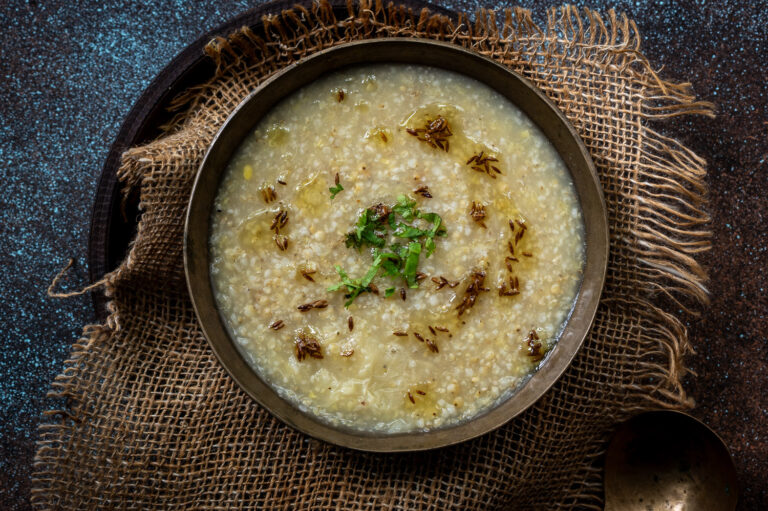
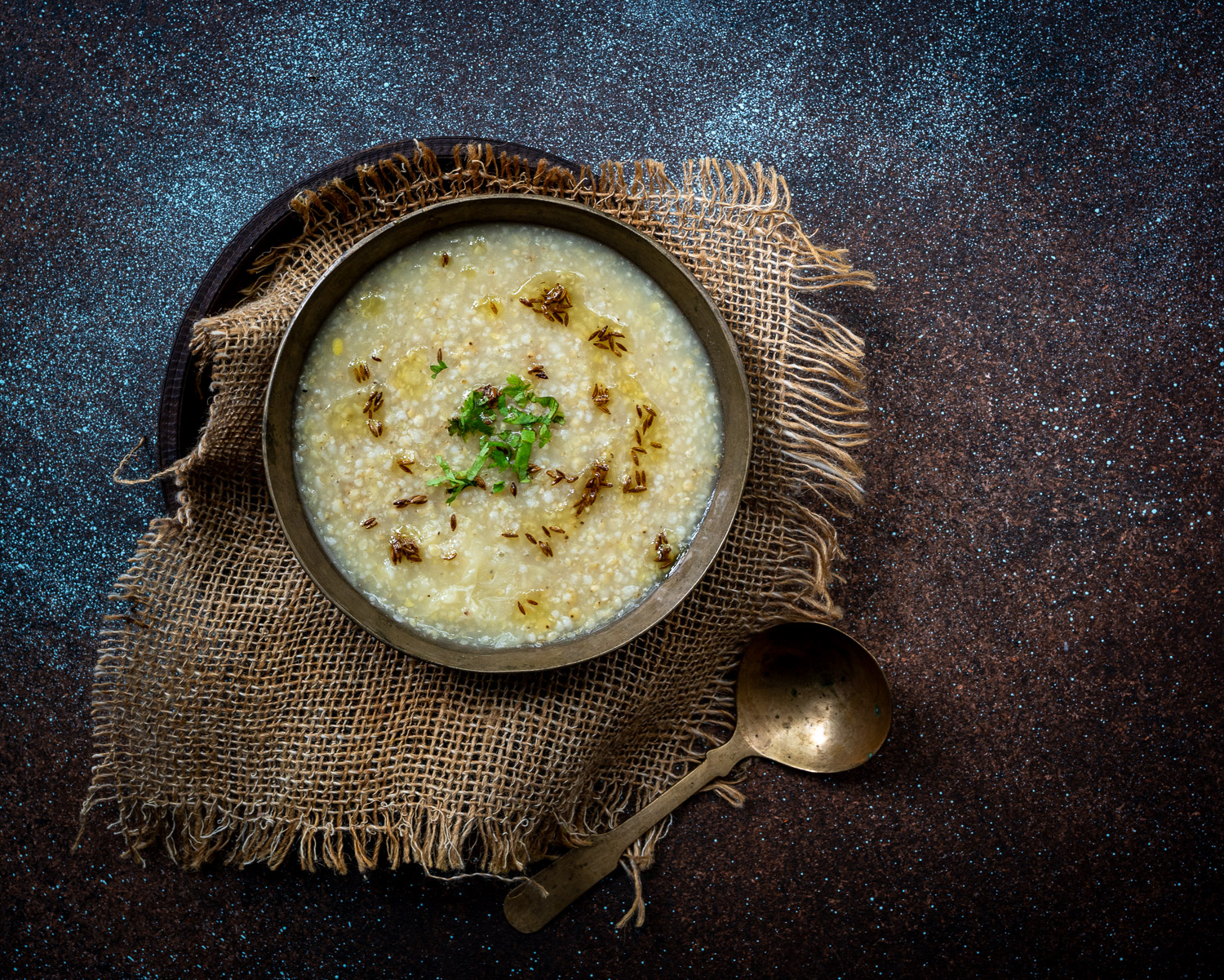
Millets have made numerous appearances on this blog. They were, traditionally speaking, widely consumed across India and have in recent years made a comeback among the health-conscious. When it comes to jowar (which you may know as sorghum), the fibre, protein and essential minerals it provides – along with the fact that it is relatively light to digest – make it an excellent choice. This jowar khichdi is a great dish to put a little energy boost into your day, and is ideal for either lunch or dinner.

In the last post, I shared the recipe for jowar roti. I had said then that the winter variant of jowar roti is bajra roti, which uses the heavier pearl millet. It is important to note that millets are not universally interchangeable. A jowar dish made for breakfast, such as for example a jowar upma, cannot become a bajra dish through mere substitution. Bajra tends to be heavier on the stomach and takes more effort to chew. One does not want to tax the system so early in the day. If at all I want to have bajra in the mornings, I will have it in roti form.

That said, you can certainly use some other millets in lieu of jowar in this khichdi form. The method will remain the same, but the cooking and soaking time (if required), will vary. A millet with smaller grains, such as little millet or foxtail millet, will cook faster and without pressure cooking. Jowar, on the other hand, benefits from a few hours of soaking. Keep these factors in mind whenever you select a millet, for any kind of dish.

When my children were younger, millets weren’t part of our regular meals. We weren’t familiar with them, and there was hesitation around the unfamiliar taste and texture. I myself only started experimenting with them a little over a decade ago. At this point, the entire family also began to enjoy them. Since then, I’ve been a strong advocate for incorporating millets into daily meals. Each kind satisfies certain nutritional requirements, and has its own taste. As with any grain, flavour pairings also make a difference. For instance: jowar is known for a subtle, slightly sweet taste, while little millet has a hint of nuttiness. My recommendation is to keep experimenting in the kitchen, always. Even when working with very traditional recipes, the learning never has to stop.
Jowar Khichdi
(Yield: Serves 2)

1 cup coarsely ground jowar
Water as required for soaking
2 cups water (for cooking)
Salt to taste
1 tablespoon ghee
½ teaspoon cumin seeds

Soak the jowar for 6-10 hours. Rinse well.

In a pressure cooker, add the soaked and rinsed jowar along with water and salt.

Cover and cook for 4 whistles. Allow to cool, then open the lid.

Heat a small tempering bowl. Add ghee and then cumin seeds. Once the seeds splutter, pour the tempering over the khichdi. Serve immediately.

Hot khichdi is a comfort food that has had other iterations on this blog, and I’m glad to share this one with you too. I hope this jowar khichdi becomes one of your preferred variants too.
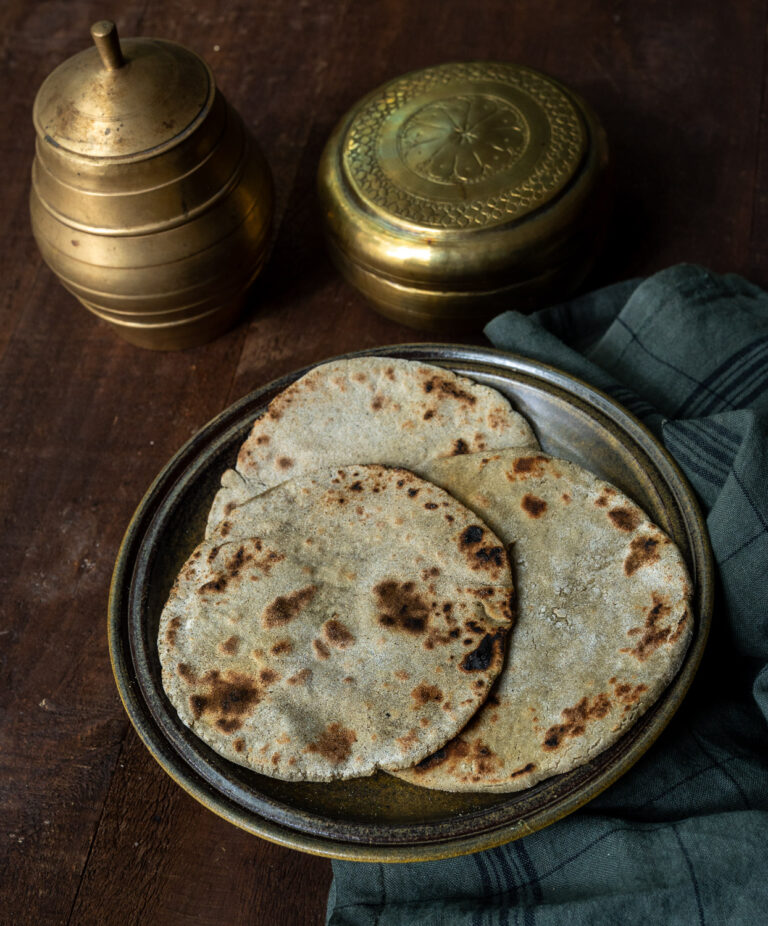
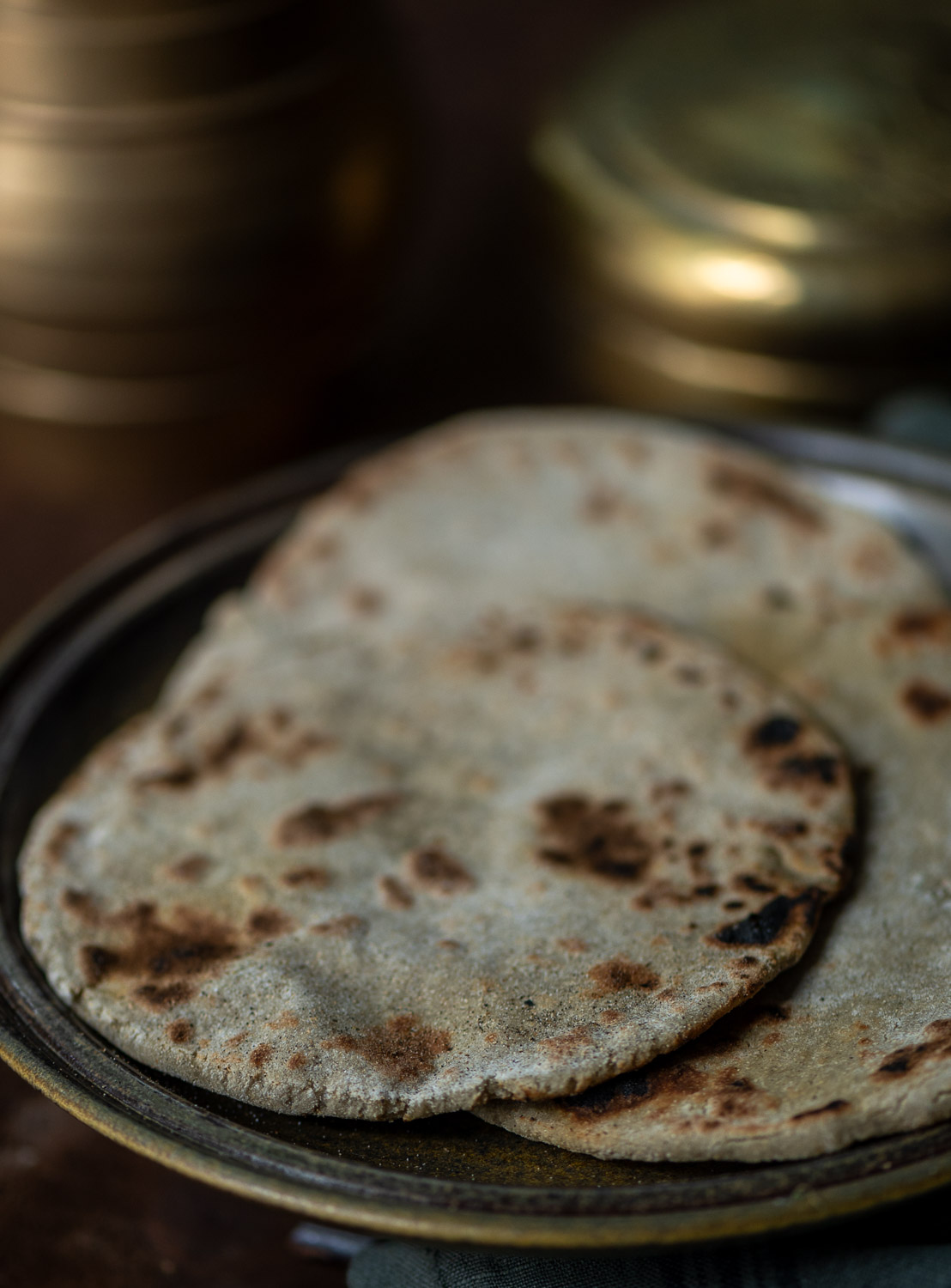
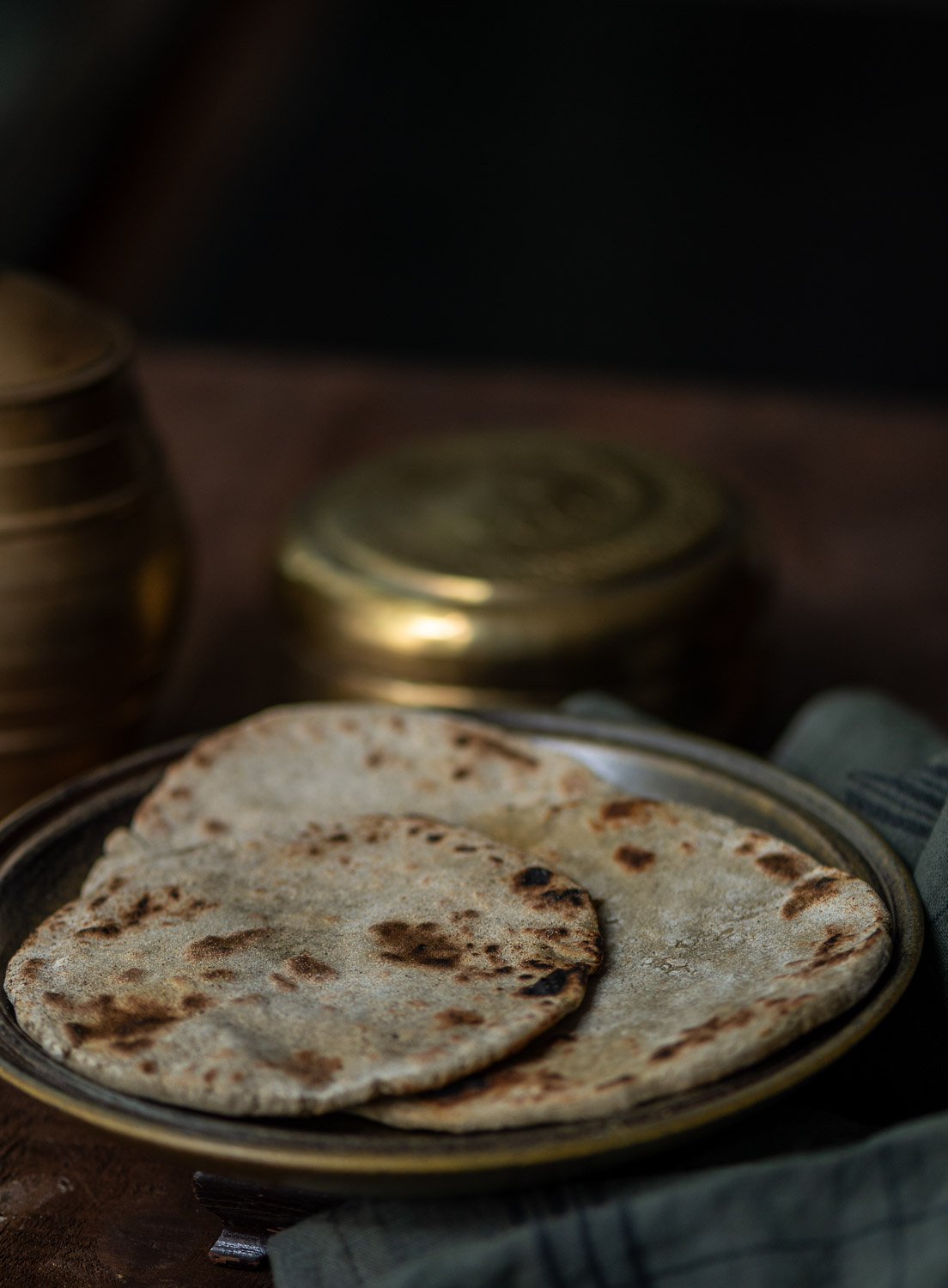
Time and again, I have spoken on this blog about how eating seasonal produce is the best thing for our bodies. We are a part of Nature, and it is intrinsic in us. We cannot look at it from the outside, or even objectively, because we belong to it. We cannot go against its flow, which is what we often try to do today. However, I believe that even as the world changes and decentres Nature, in our own lives we can actively choose – at the very least – to listen to our bodies. When we do, we will quickly realise that our hunger cravings have a rhythm with climatic cycles. Here in India, while the peak of summer is behind us, the winter is still far enough away that lighter grains are what we need. Hence, jowar (known in English as sorghum) is something I am making meals from these days. This jowar roti is an excellent use of the same, incorporating the ingredient into a daily staple.

I am fortunate to have access to very good quality, homemade jowar flour through my sister. She has a small mill in her kitchen, which she uses to prepare her own flours and powders. I have observed many other households in Mumbai doing the same. When I visited her recently, she was making jowar flour. What intrigued me was that she added a handful of soyabeans to it. I found this an interesting, and very healthy, combination. I don’t have a mill of my own back in Chennai yet, but as I teased my sister, I don’t need to, as I can just keep asking her for homemade flours. She gave me a kilo of jowar flour on that visit, and it’s being used liberally – and I’ll soon need more, as I’ve already warned her!

If jowar is used in warmer months, it is bajra (known in English as pearl millet) that is preferred in winters. Jowar is not only lighter on the digestion, but in flour form also easier to fold into roti dough. It really is so simple to make, requiring no pre-prep. All you do is add warm water, which brings out a glutinous consistency, then make the dough and roll it out immediately in order to fry it up. Bajra flour, on the other hand, tends to break apart as you roll it out due to a complete lack of gluten.

Both jowar and bajra rotis are eaten in my home. Depending on the season, one or the other will be served at lunch – except during the height of summer, when rice replaces roti altogether. Other than during that time, these two are staples, even though a wide variety of other flatbreads are brought into our meals too. I have been rolling out rotis since I was a young girl, and am able to handle different flours, but it does take practice. The trick is in the hand, and in being patient.

Jowar roti, despite being made of a lighter flour, is very filling. Just one piece, with a cup of dal or two cups of vegetables, is a perfect lunch. You don’t need anything else for hours after.

This may be why my mother would have some jowar roti during days on which she performed certain kinds of fasts, for instance. I am not entirely sure because the truth is that I paid very little attention to some of the items that my parents ate when I was a kid, and jowar roti was one of them. My siblings and I would screw up our noses when we saw it, so our mother always prepared regular whole wheat rotis for us instead of these healthier ones. I regret not having eaten jowar roti back then, but I am grateful that I learned how to make it.

Exposure plays such an important role in what we reach out to – or return to – in terms of food as we grow older. What we saw being prepared or consumed as children, whether we appreciated it or not, stays with us and informs our choices later on. Sometimes, I think about whether my kids – now grown and with homes of their own – will ask for these recipes when they have children of their own, whom they will of course want to provide the best of everything to. That is one of the core reasons behind this blog: it is my legacy to my loved ones, just as much as it is my offering to anyone in the world who seeks the comfort of a well-made meal.

Jowar Roti
(Yield: 3 pieces)

1 cup jowar flour

1/2 cup water

A pinch of salt

In a bowl, add the flour. To this, add water and salt. Mix all the ingredients with your fingertips and massage well, binding them all together. Make 3 balls of the dough and set aside.

Using your palms, roll out the balls. Sprinkle some flour onto the rolling board, and add some flour on top of each ball as well. Gently roll out the balls into flat discs. 

Heat a roti pan and add 1 disc at a time. If the roti is thick, then keep your flame on low or medium and cook the roti on both sides.

Now, with the help of tongs, place the roti on the stove or directly on the flame and allow to cook until spots appear. Set aside.

Repeat with the remaining balls.

Serve with hot ghee and/or along with subzi or pickle.

Stay tuned for another jowar-based recipe that I’ll share here soon. You may also wish to explore other millet dishes that I’ve shared over the years.

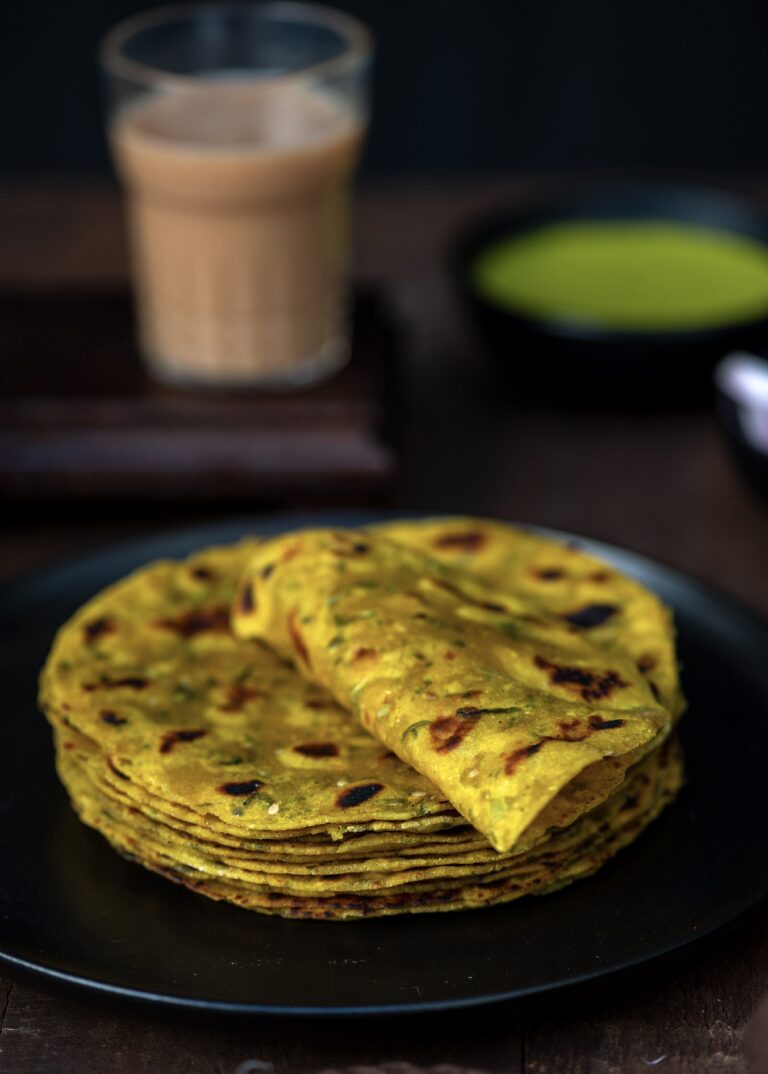
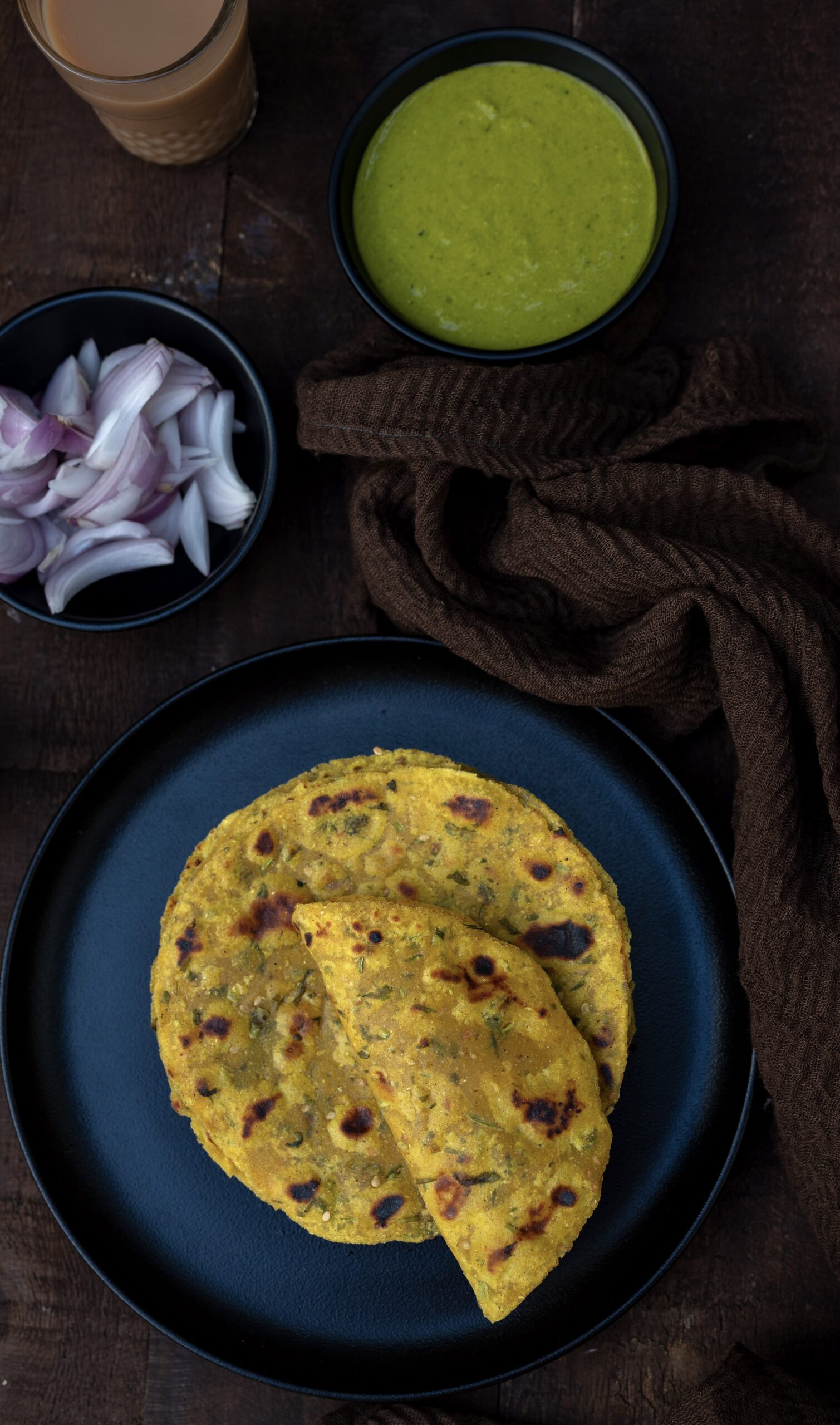
Several years ago, close to when I began this blog, I had shared a post on a variety of Gujarati flatbreads. The ones featured therein were just a small selection. There are hundreds of kinds of flatbreads in India, and even within different communities or regions, each family will have its own version. The thepla in particular has many types. It is basically a masala flatbread, and may have additions of grated vegetables or flavourings. Bottle gourds and leafy greens, of all different sorts, are often used. Here, I share with you a recipe for jowar methi thepla. It uses fenugreek leaves (methi) and sorghum millet (jowar) alongside the standard wheat, which makes it richly nutritional.

I prefer to use fresh methi, but dried kasoori methi will also work. If you’d like to totally substitute the methi, you can do so with any spinach. In my version of this flatbread, I make it with green chilli paste. My sister likes to use red chilli powder instead, which gives it a darker colour. Traditionally, jowar (sorghum) is replaced by bajri (pearl millet) in winters, as the latter is more warming. You can use the same method below to make bajri methi thepla.

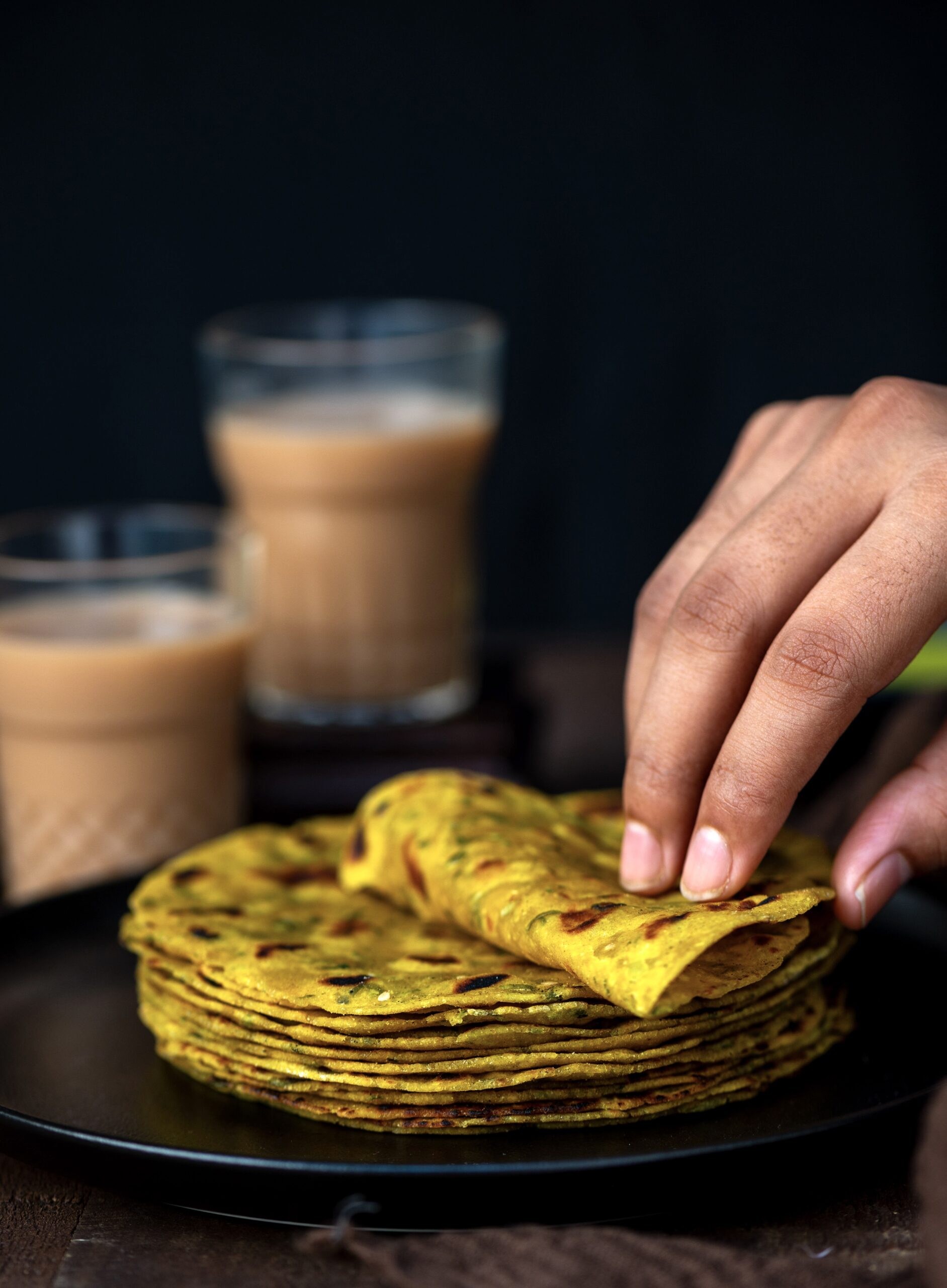
Theplas go well with pickles, vegetables, curries and gravies (a potato and tomato gravy pairs nicely, for instance). They are also great by themselves, or as an accompaniment to a cup of chai. They are perfect for school and office tiffin boxes – applying some chhundo on one, rolling it up and packing it makes for an easy lunch. However, they are more traditionally eaten at dinner time, and I think this is because they don’t go well with dals, which are usually served in the afternoon. There are no hard and fast rules about theplas because convenience is the key to their popularity. They keep for a few days, and travel well. I often make a pile of theplas and carry them with me during short trips, so that I can avoid eating outside food.

As for jowar methi thepla specifically, I’ve had it all my life and so I take it for granted. Only if I sat down to think about it would I really be able to list the memories associated with it. It was frequently served at home for dinner, eaten as leftovers for breakfast, or carried to school for lunch. It was just a part of everyday life, and it still is. I hope it finds a regular place in your meals too.

Jowar Methi Thepla

(Yield: 12 pieces)

1 cup whole wheat flour

½ cup jowar flour

Salt to taste

1 tablespoon oil

½ teaspoon turmeric

½ teaspoon sesame seeds

1 teaspoon cumin and coriander powder

1 teaspoon green chilli paste

1 tablespoon yoghurt

½ cup chopped methi leaves (or any spinach)

Water to bind dough (approximately 1 cup)

Oil for pan frying


Add all the ingredients to a mixing bowl. Knead and bind the dough with water, pouring it a little at a time. Ensure the dough is neither too soft nor too hard.

Leave the dough covered for at least 30 minutes. Then, make even-sized balls from it. You will get roughly 12.

Roll each ball out with the help of flour into flat round discs.

Shallow fry them on a hot griddle with the help of some oil. Make sure the oil is added to the edges, as this way the thepla will not dry out.

Store the theplas in a covered box and consume within three days.

While there are endless variations on theplas themselves, all Gujarati homes will invariably have theplas available on a more or less daily basis. I hope you will explore more of my thepla recipes on this blog, and I’d especially suggest that you take a look at the taco theplas, if you’re feeling in the mood for some fusion fun, and this khichdi thepla that makes great use of leftovers.