“Do you know a cure for me?”
“Why yes,” he said, “I know a cure for everything. Salt water.”
“Salt water?” I asked him.
“Yes,” he said, “in one way or the other. Sweat, or tears, or the salt sea.”
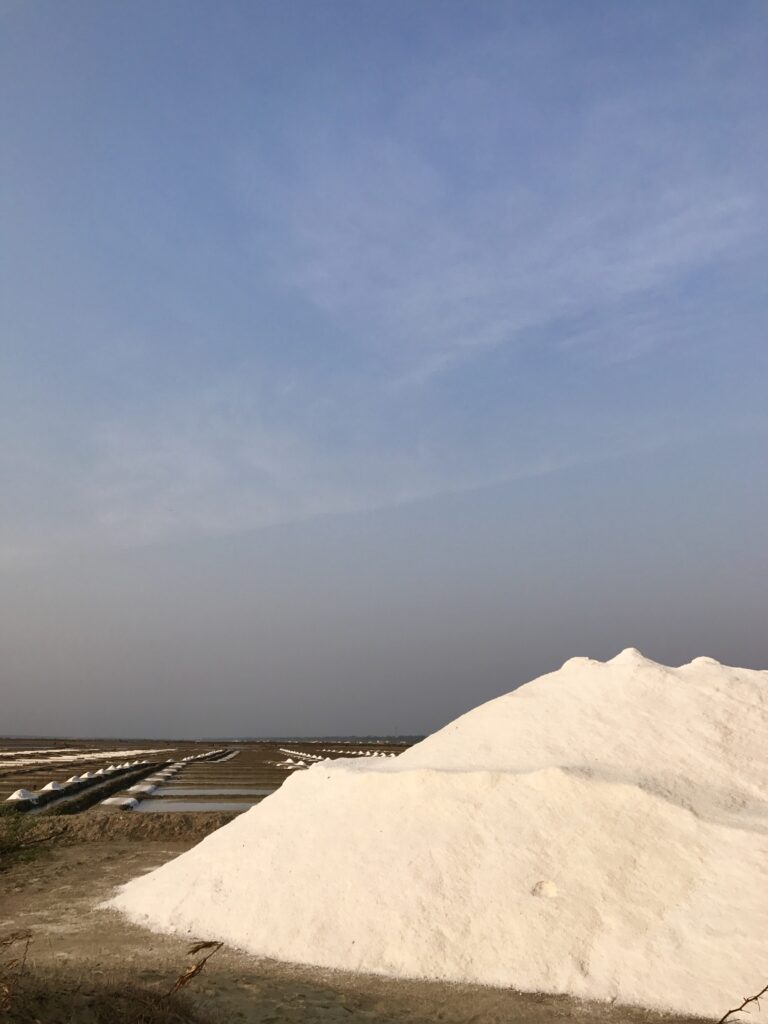
These words from Seven Gothic Tales, the first book by the Danish writer Isak Dinesen (best known for Out Of Africa), came to mind on that mirage-filled drive to Marakkanam in the South Indian summer heat. Anyone who has ever driven from the metropolitan hub of Chennai to the quaint former French colony of Pondicherry along Tamil Nadu’s East Coast Road has noticed Marakkanam. Even if you do not know the village’s name, it’s impossible to miss the great heaped mounds of white salt glistening under the sun, lining the highway.
Salt. That condiment so precious to humankind that it has even been a form of wealth, measured at different times as either taxes or wages. The ancient Romans had a “salarium” (“sal” – “salt”), as part of a worker’s remuneration, as people were paid partly in salt. This is where the English language gets both the word “salary” and the idiom “worth his salt”. Closer to home, the monarchs of the Chola dynasty demanded a salt tax, known as “uppayam”. The historian Ramachandran Nagaswamy has spoken of epigraphic evidence showing how the same was paid from Marakkanam, making the salt industry in this village both an ancient and continuous activity. In modern Indian history, Gandhi’s salt march on March 12 1930 was a dramatic turning point in the independence struggle. In protest of the unfairly high British salt tax, he led the march from Dandi, Gujarat, to the Arabian Sea. There, he declared that a symbolic handful of sea salt would bring the end of colonial rule.
That afternoon, unlike so many journeys on that highway, I careened off the beaten path and entered the sprawling salt pans of Marakkanam to find out more….
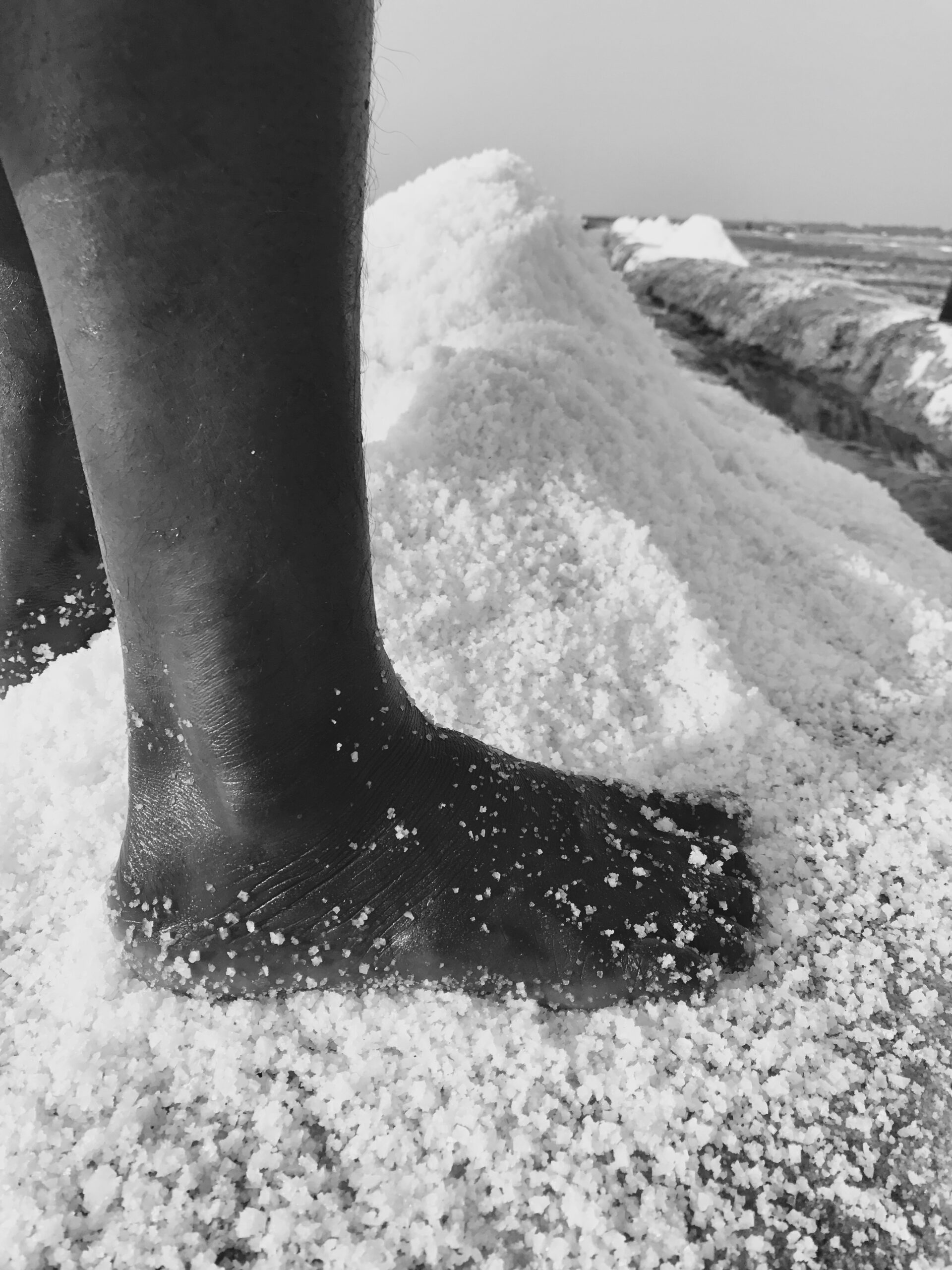
Salt. The most quintessential of all ingredients. So quintessential that we take it for granted. So quintessential that its absence alone can strip a dish of all taste. Saltiness is one of the five basic human tastes.
I’ve said before that curiousity is the cornerstone of every interesting kitchen. But it cannot end simply with flavours and ingredients. When I trained in the culinary science of macrobiotics at the Kushi Institute, I honed this need to know and to ask questions, because every single thing you put into a dish carries its own energies and its own properties. So what does salt contain? The scientific answer is that it is a mineral which contains sodium chloride (NaCl). In Marakkanam, I searched for a deeper answer by talking to people whose livelihoods are to harvest it.
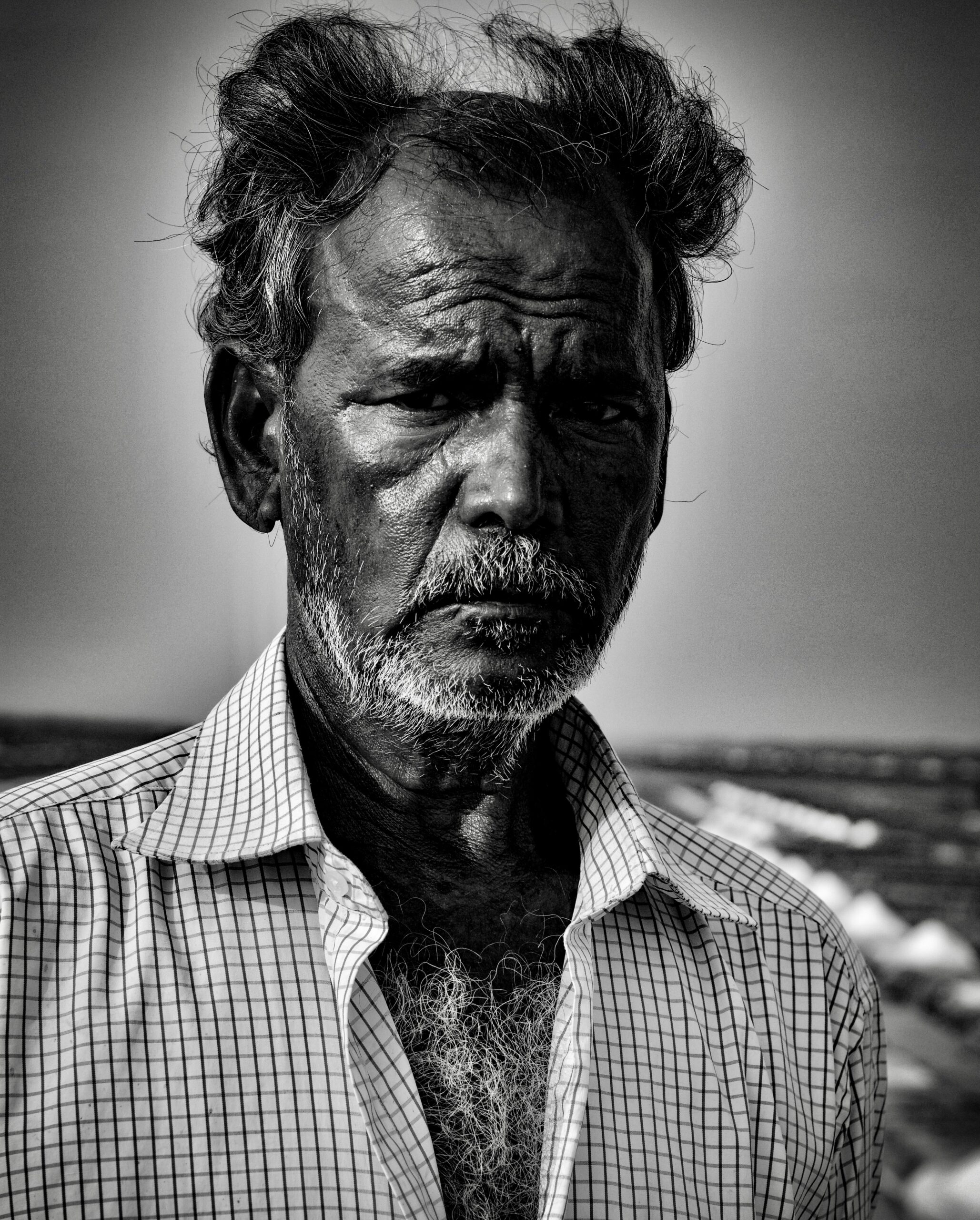
That afternoon, I was fortunate to meet P. Nallathamby, a supervisor of a 3500 acreage of salt pans staffed by 2000 workers. I caught them during their second shift of the day: they rise early and work from 6am to 9am, then return at 1pm to continue. Both women and men work the salt pans. Mr. Nallathamby has been in this line of work for 40 years, having joined his father and brother in the same at the age of 18. But things have been difficult in the salt business for around 8 years, owing to various reasons such as rising diesel prices, increased labour costs and neglect from the central government, which leases out the pans to individuals.
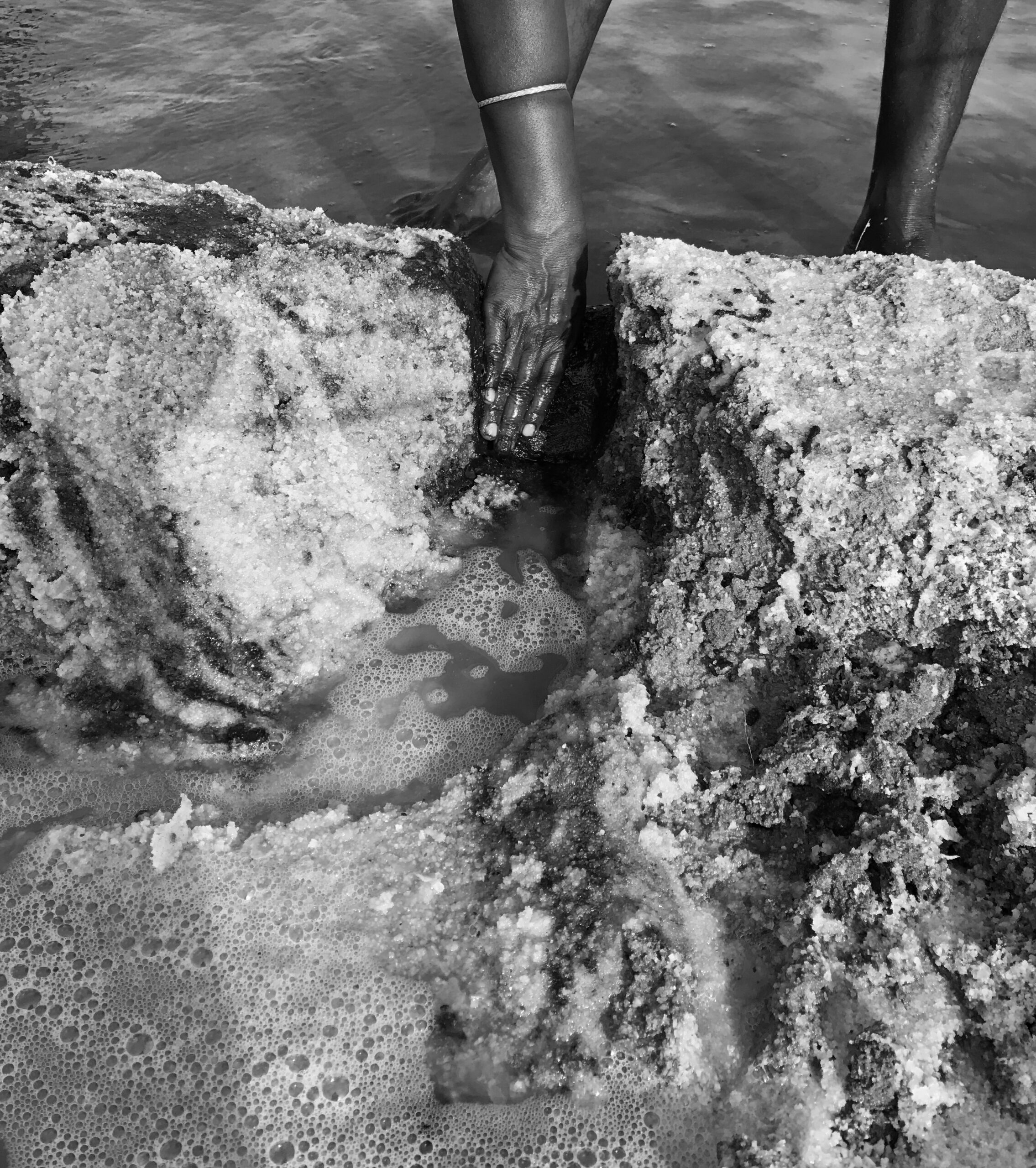
The harvest season runs from January to May. In January, the salt pans are like a lake owing to recent rains. It takes about a month to dry out, then the harvest begins. Every three days, the flats are scraped, as you can see in this video, and the photographs below.
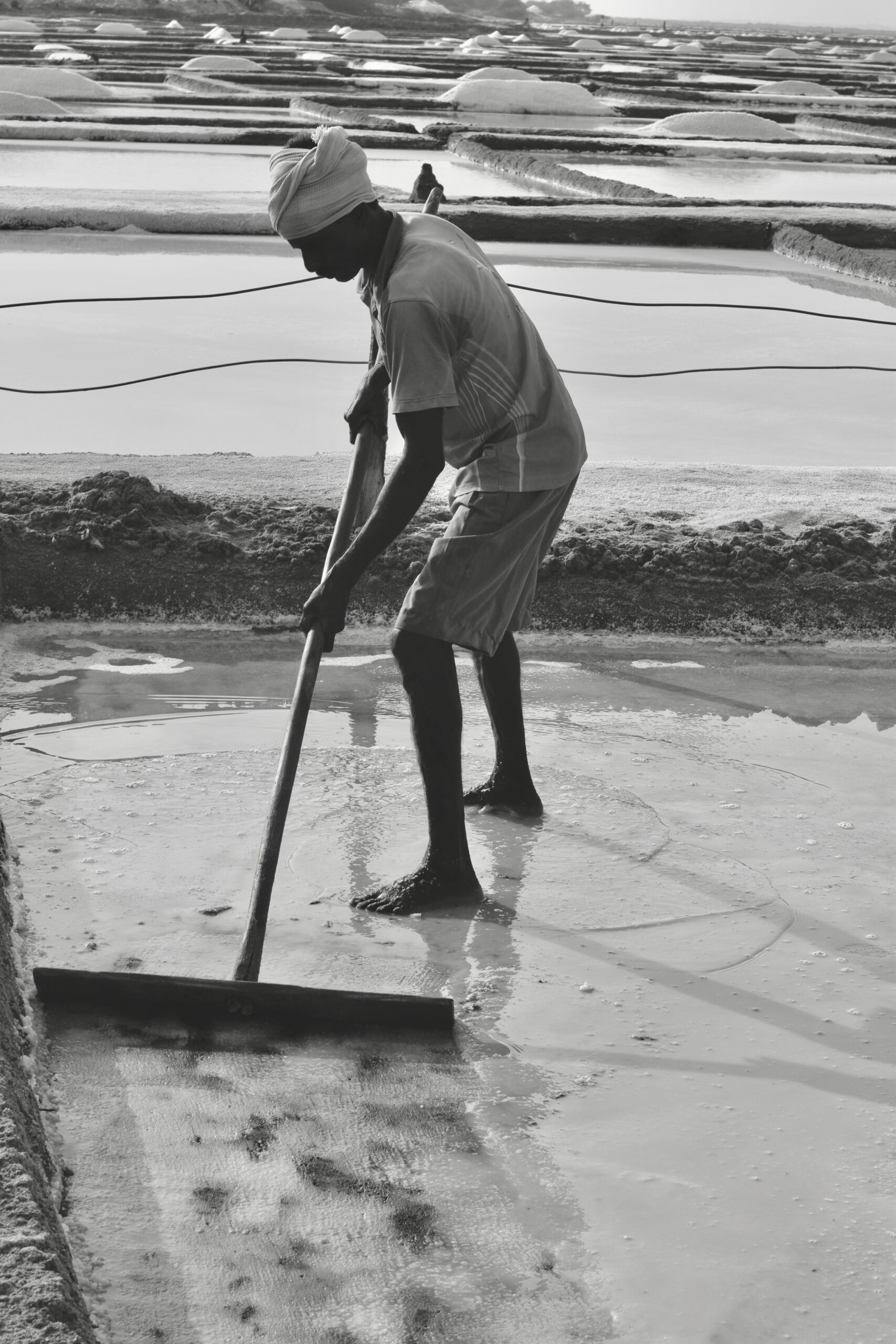
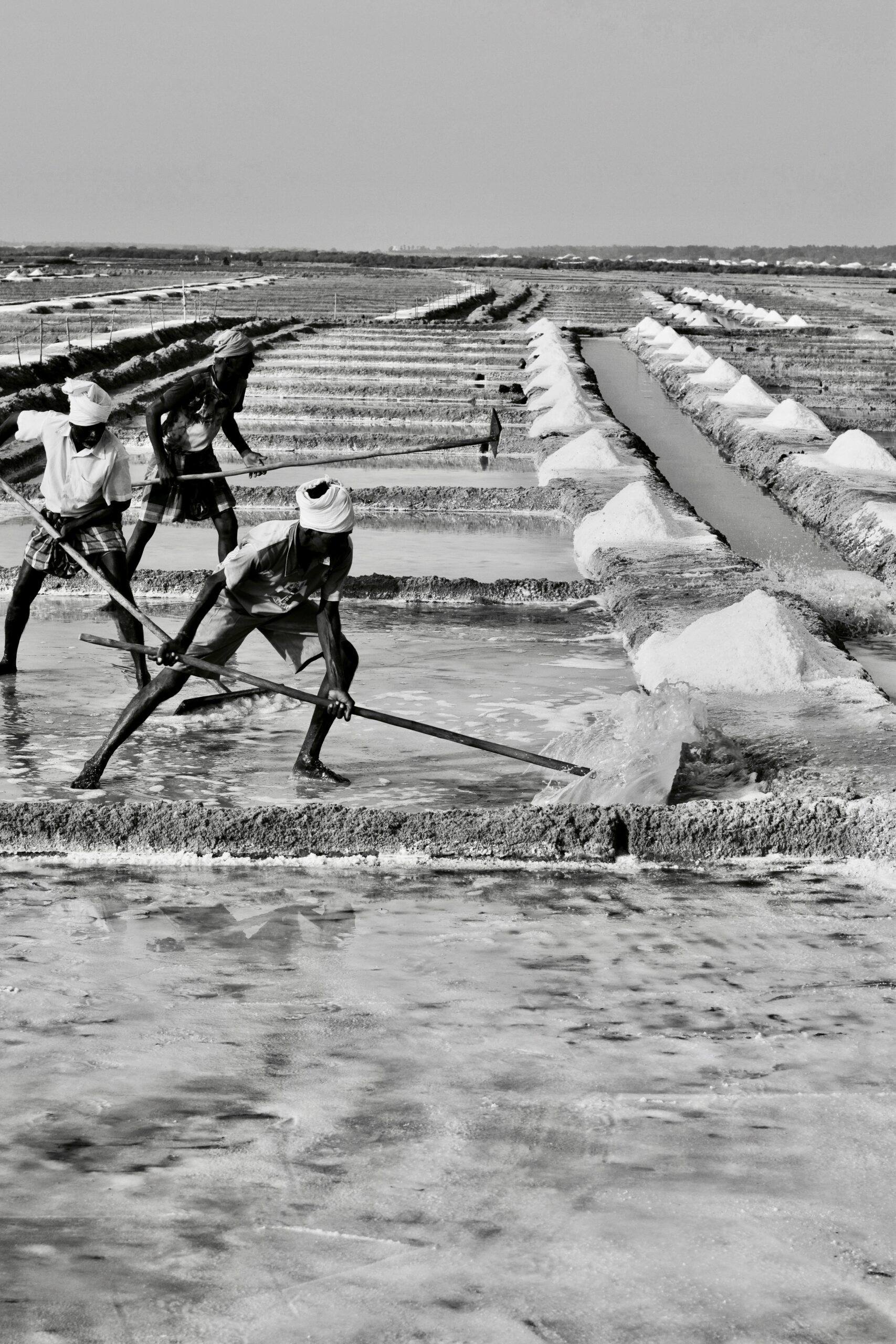
The salt is collected in small mounds along the grids of the pans, then in the huge mounds that are visible from the highway. Water from the earth or sea is added to the pans as necessary, such as between April and May. The process is entirely water-dependent, but ironically, no work can take place during times of rain. The mounds of salt wait for the daily lorries that come to purchase and take them away to be traded not just in Tamil Nadu and Pondicherry but in Kerala, Andhra Pradesh and Karnataka too. You may be surprised to know that a whopping 110 kilograms of salt is sold for just 130 rupees (approximately USD$2).
Mr. Nallathamby describes his 40 years in this line of work as uneventful. Even the great tsunami of 2004 did not have a negative effect on this coastal business. For six or seven months every year, the salt pans thrive. After all, come rain or shine, it’s an ingredient the world cannot do without.
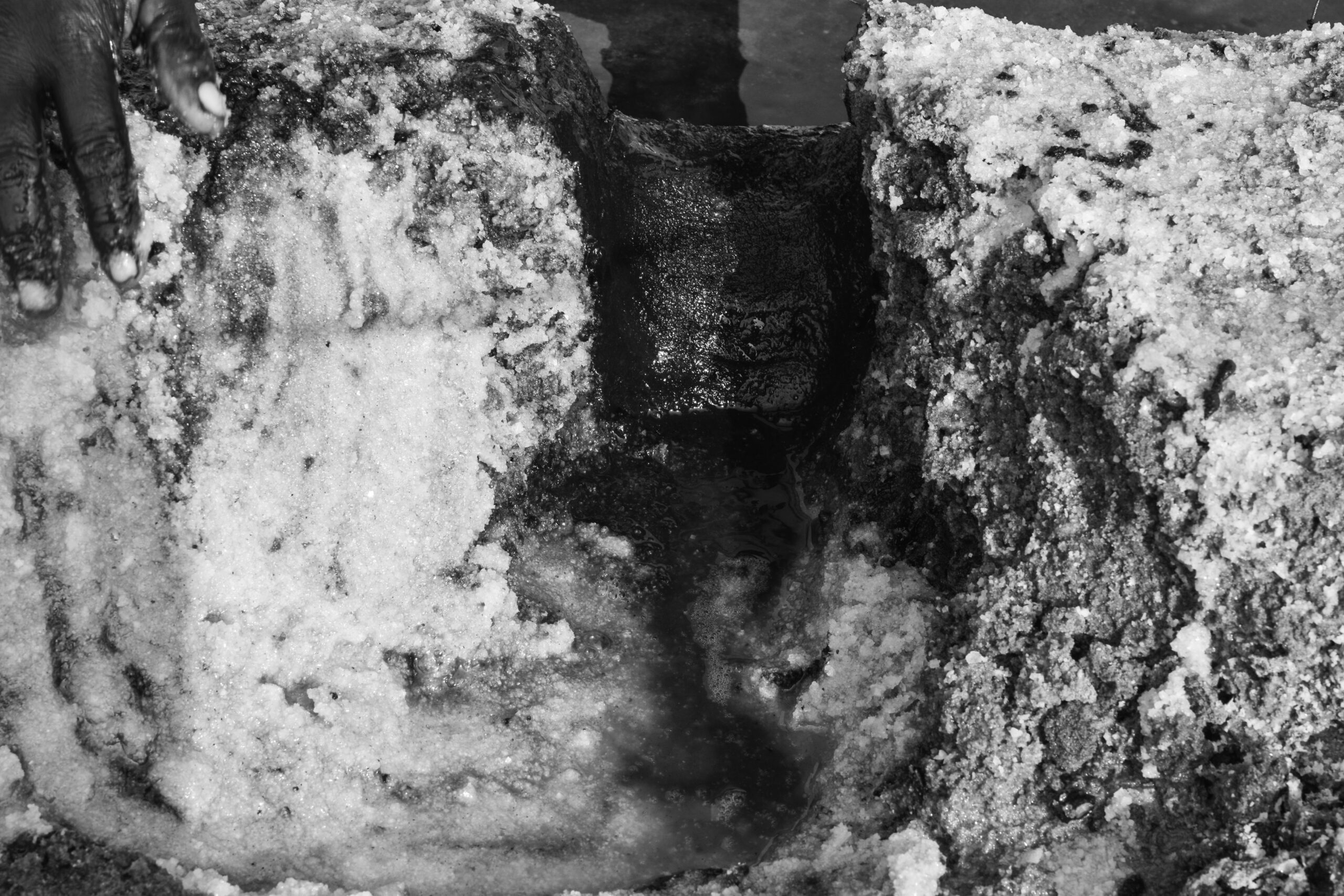
In Marakkanam, it is rock salt (which is not to be powdered) that is harvested. As you may remember from this recent summer-friendly recipe, rock salt contains many nutrients and works well as a digestive.
The salt pans of Marakkanam are quite amazing to behold: a contrast between grains so small and a landscape so large.
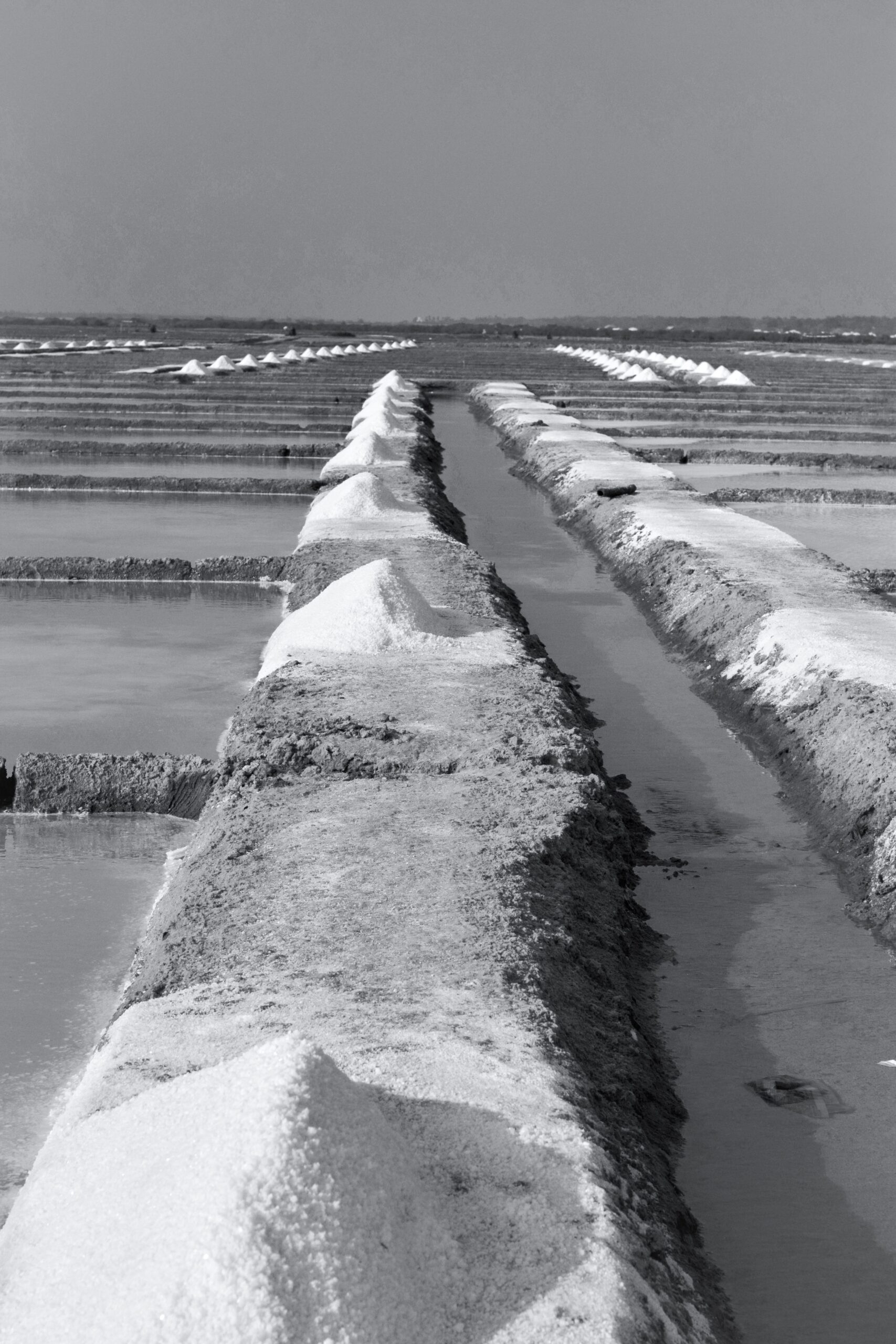
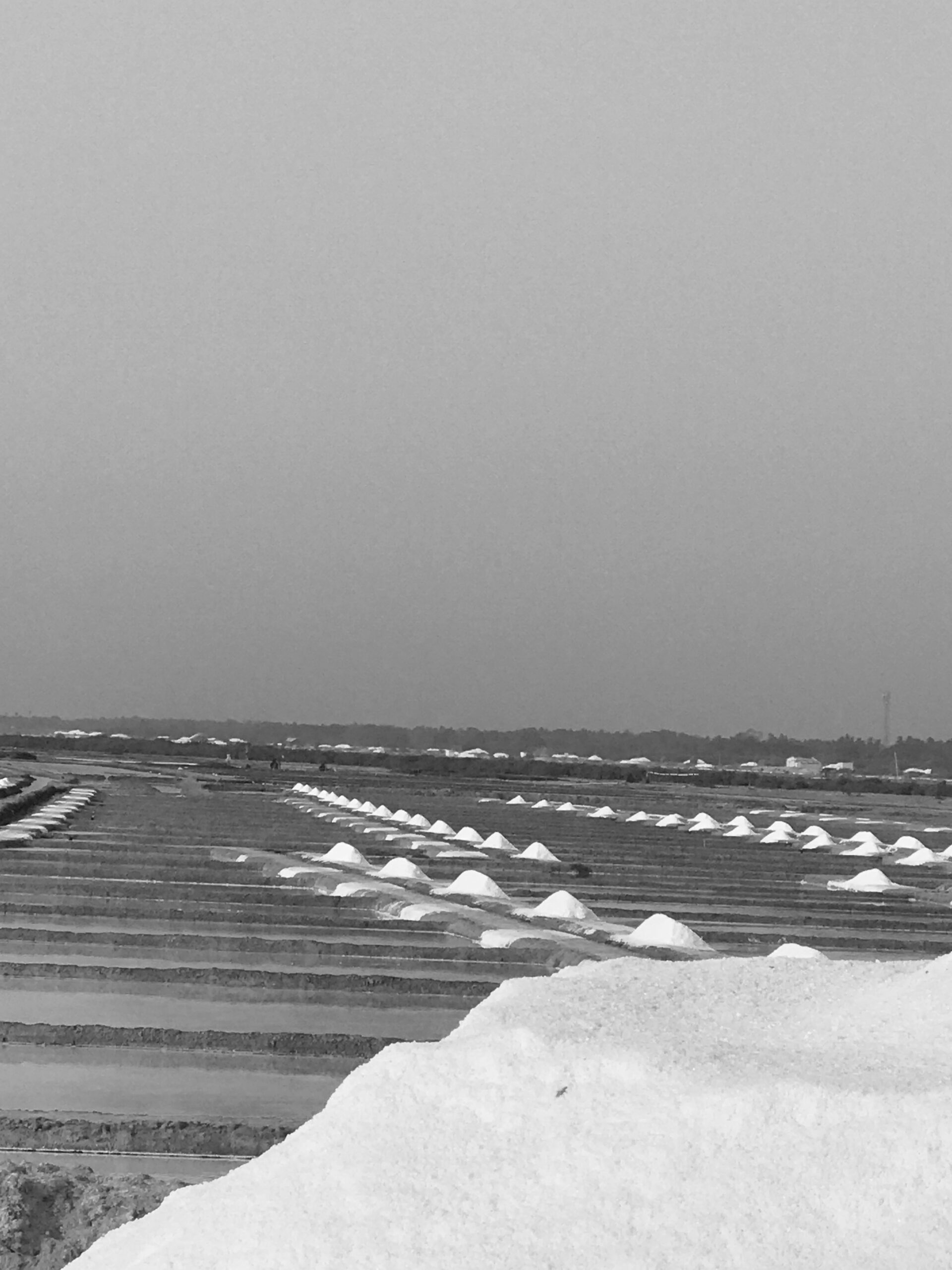
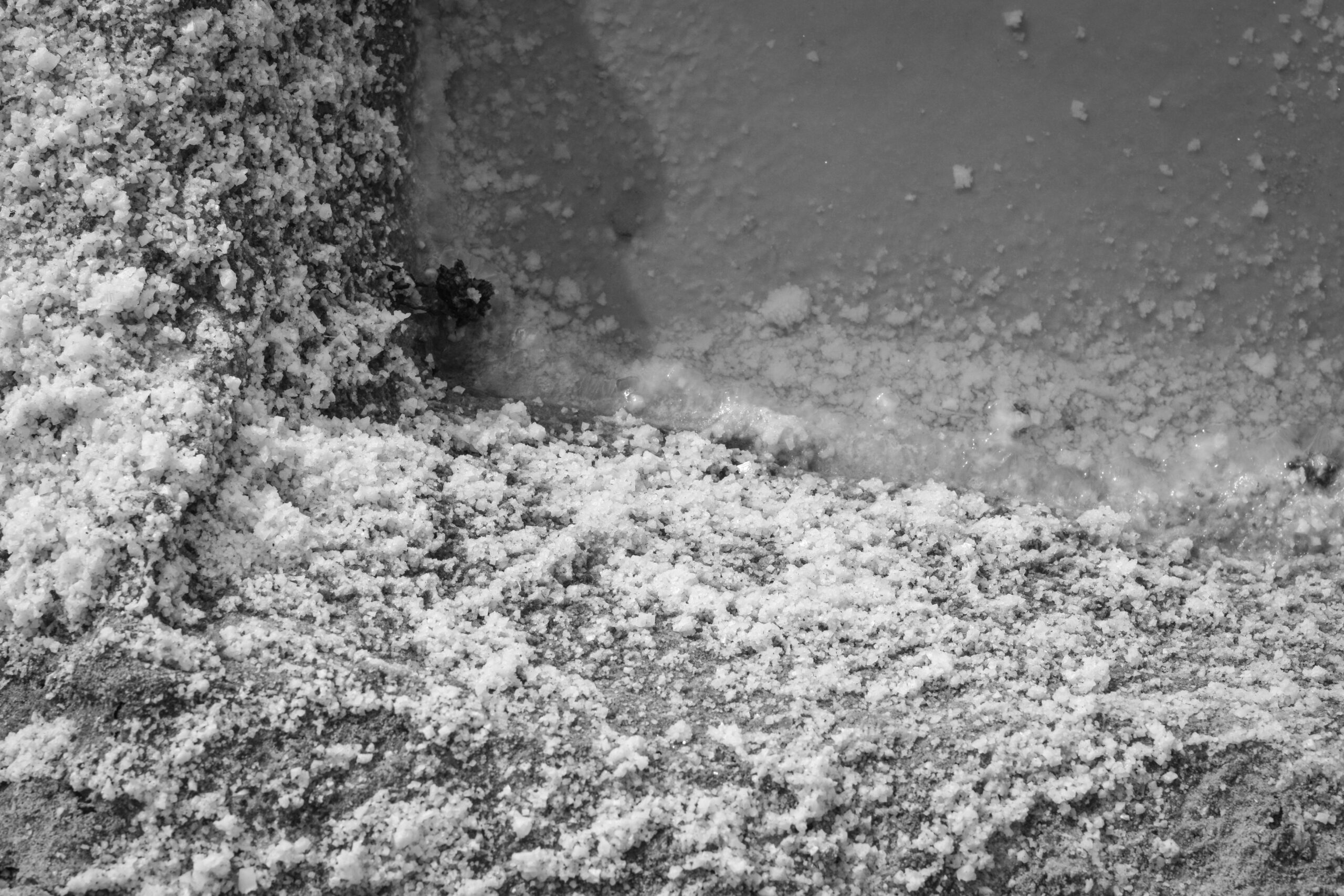
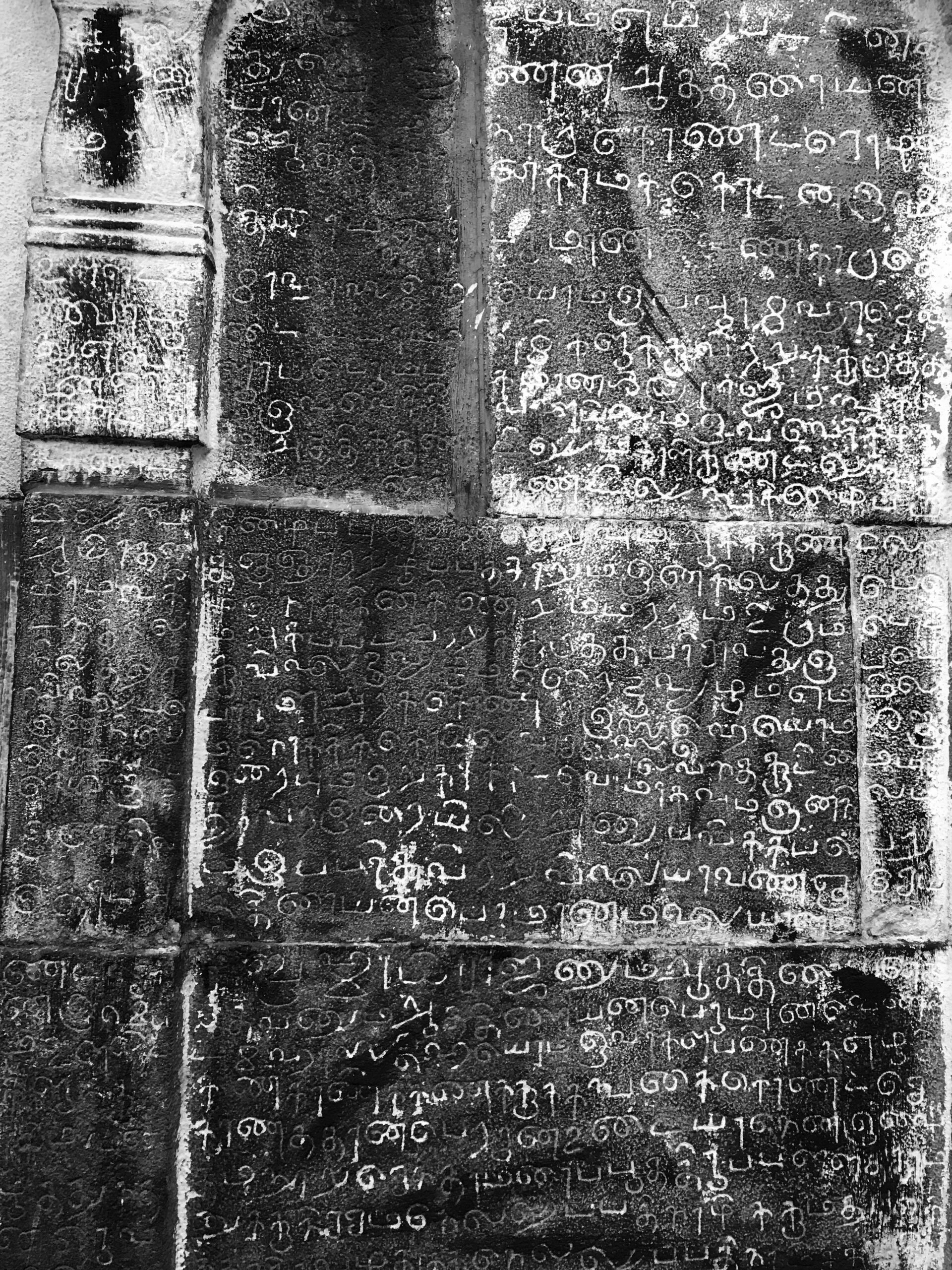
Every year, from the first harvest of the season, a small salt Ganesha is shaped by hand. He is then allowed to dissolve back into the salt pans. While it was the wrong time of year to witness this, my visit to Marakkanam did end with a quick stop at the 1000 year old Bhoomeeshwarar temple, dating to the Chola dynasty. I had been told that the temple’s inscriptions had mention of the salt trade in this area even a millennium ago. The priest said he didn’t think there was anything of that kind there, but sometimes we don’t know what’s right under our noses. Like salt, I suppose – that ubiquitous condiment we often only think about if it’s missing.
I’m not sure if salt was mentioned on them, but what struck me about the inscriptions all over the temple’s inner compound was this: how much the wear and tear of centuries on stone had made it look as though salt was on them. In between the chiselled spaces. In the air… and everywhere.
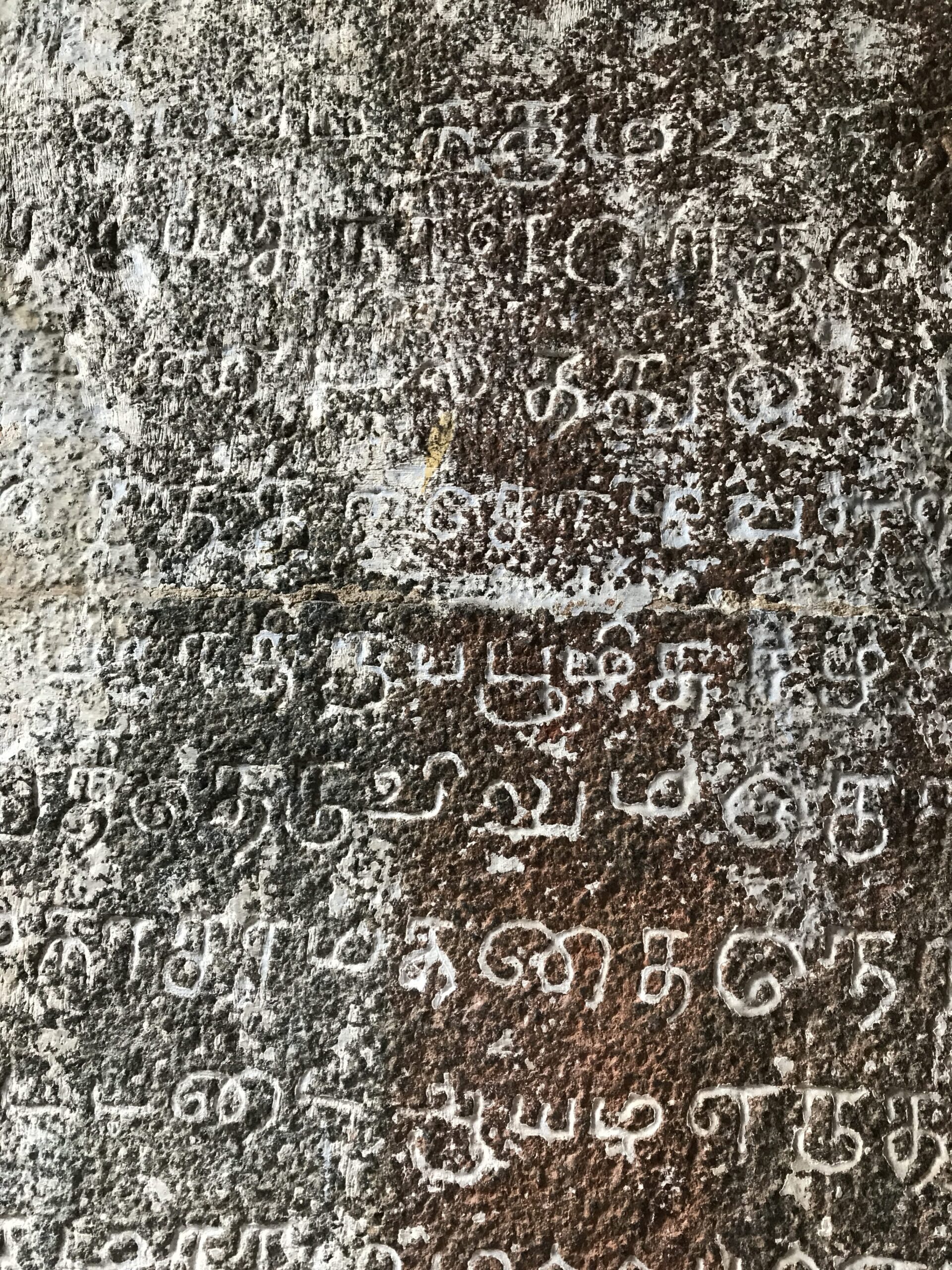
I had wondered about salt since childhood, that staple of every meal. My mother had taught me that in the precise quantity, it cooks vegetables faster. For years, on every long weekend drive to Pondicherry, I had watched the white salt mounds pass by and wondered about them too. Now, armed with my camera and my curiousity, I had discovered more. That indispensible ingredient comes from somewhere: the labour of people like Mr. Nallathamby and his staff. From those huge mounds that can be seen on the highway to the small pinch that is baked into our daily bread, how much we take for granted.